Navigating airplane carry on rules requires balancing airline-specific baggage dimensions with strict airport security regulations governing liquids, electronics, and prohibited items. Most airlines permit one personal item and one overhead carry-on bag, provided they adhere to standardized weight and size thresholds while complying with international transport security guidelines.
Understanding the mechanics of air travel logistics begins with distinguishing between regulatory mandates set by aviation security authorities and commercial baggage policies enforced by individual air carriers. While government agencies dictate what substances and materials may cross security checkpoints, airlines establish maximum dimensions, weight limits, and fee structures for items brought into the aircraft cabin. Passengers must satisfy both sets of criteria to avoid unexpected gate-check fees, item confiscation, or security delays.
Successfully preparing for a flight involves examining ticket class allowances, measuring bag dimensions accurately, organizing toiletries for rapid screening, and understanding how special items like musical instruments or medical devices are accommodated. By addressing these operational parameters proactively, travelers can streamline their airport experience and ensure compliance across domestic and international itineraries.
Understanding Security Agency Regulations Versus Airline Baggage Policies
Air travelers frequently encounter two distinct frameworks when packing for a flight: governmental aviation security rules and commercial airline baggage policies. Government bodies—such as the Transportation Security Administration (TSA) in the United States, the European Union Aviation Safety Agency (EASA), or the Civil Aviation Authority (CAA) in the United Kingdom—focus primarily on passenger safety, prohibited weapons, explosive materials, and hazardous substances. Their rules apply universally across all flights departing from regulated airports, regardless of the airline operating the aircraft.
Conversely, commercial baggage policies govern the physical dimensions, weight, and quantity of bags a passenger can bring into the cabin. These policies vary significantly by airline, ticket class, and aircraft type. A low-cost carrier might permit only a small under-seat personal item for a base fare, charging extra for an overhead roller bag, whereas a full-service legacy carrier typically includes both a standard roller bag and a personal item in economy tickets.
Cabin Baggage Framework
- Security Regulations
- Set by government agencies
- Focus: Safety & prohibited items
- Universal across airports
- Governs liquids & electronics
- Airline Policies
- Set by individual carriers
- Focus: Size, weight, fees
- Variable by ticket class
- Governs bag dimensions
Travelers must reconcile these frameworks by ensuring that any bag meeting an airline's size limits also contains items that comply with security screening protocols. Failure to meet security standards results in confiscation at the checkpoint, whereas failure to meet airline standards results in gate-checking fees or boarding denial.
Standard Carry-On Dimensions and Weight Limitations
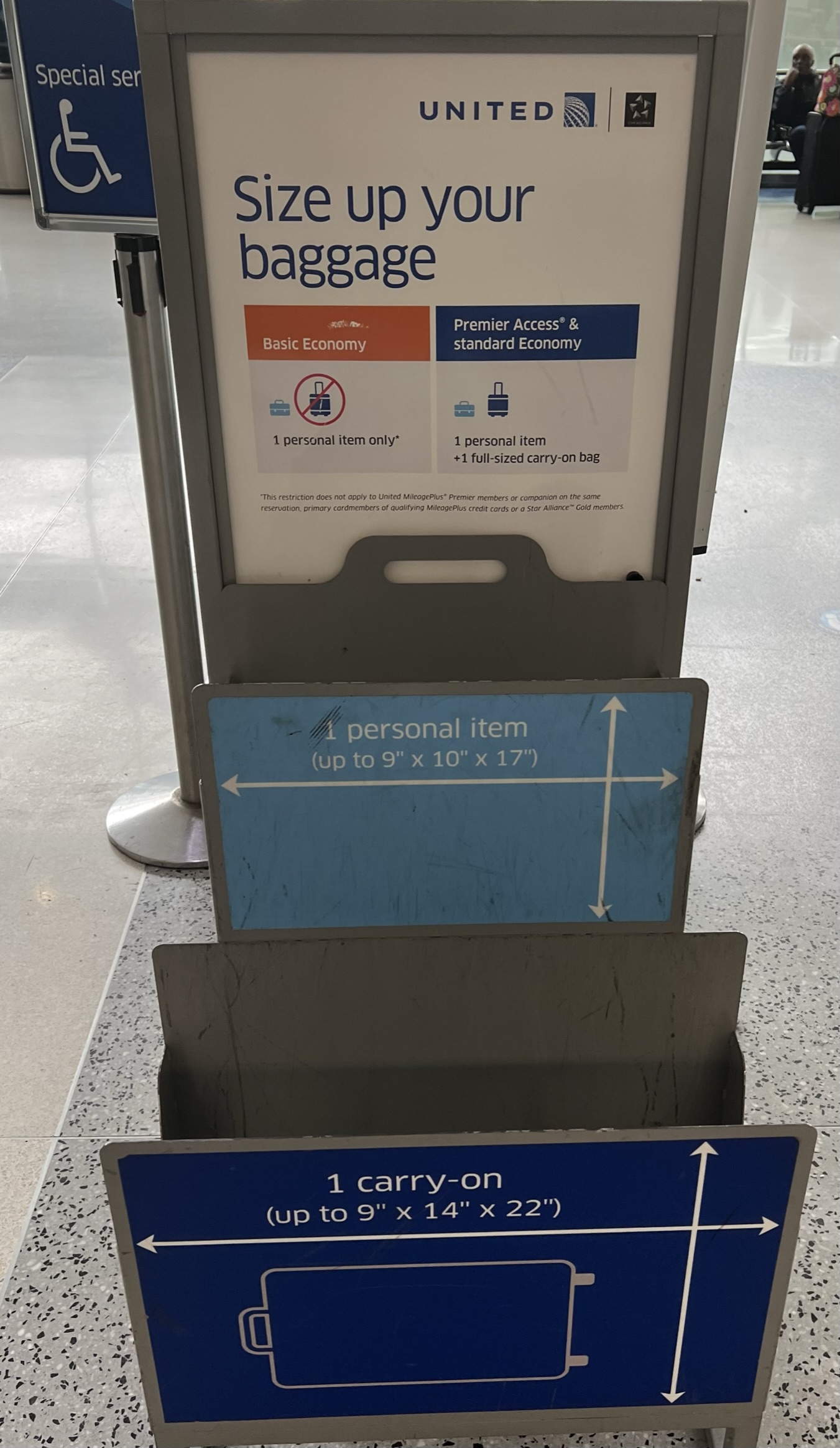
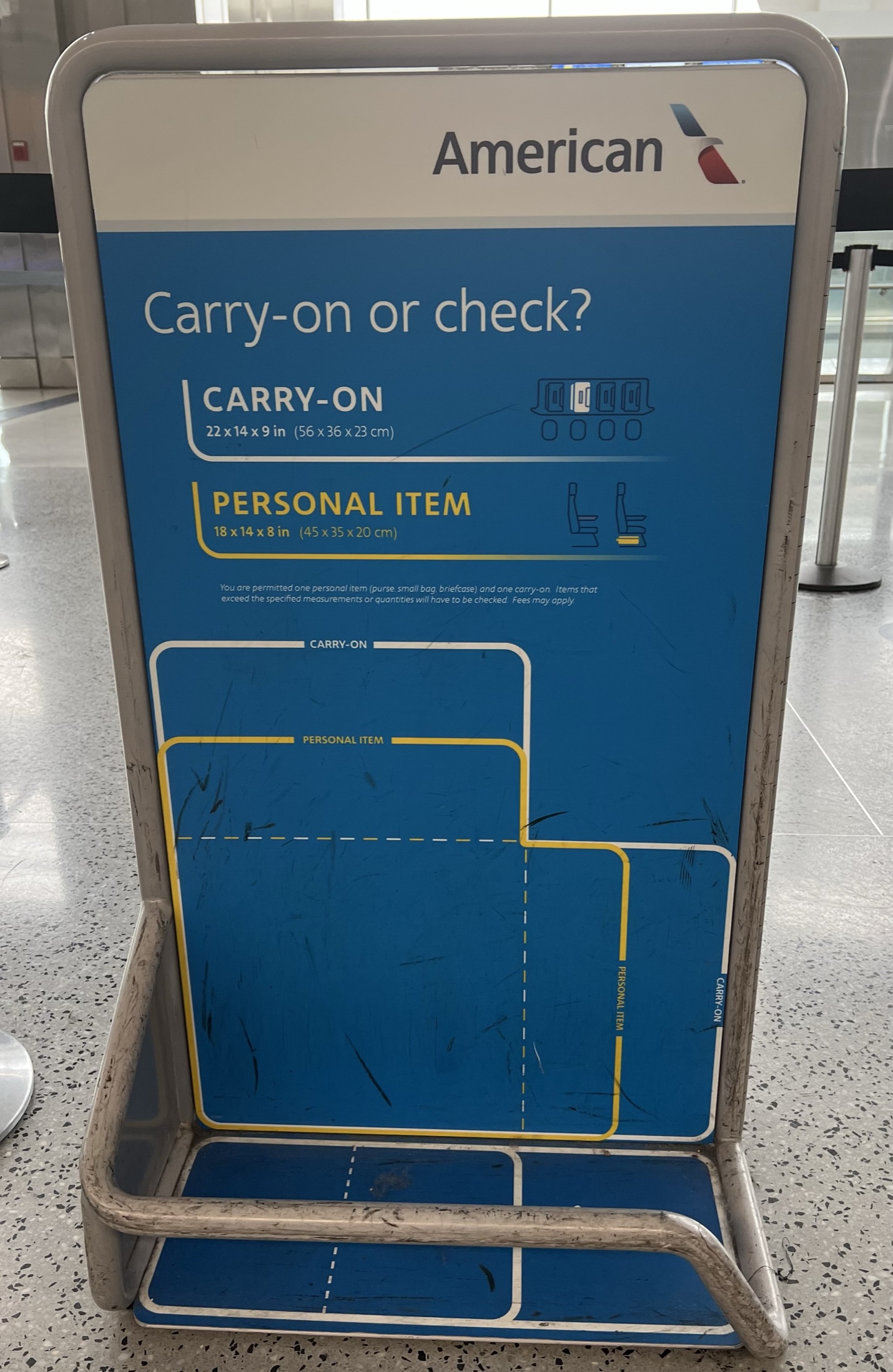
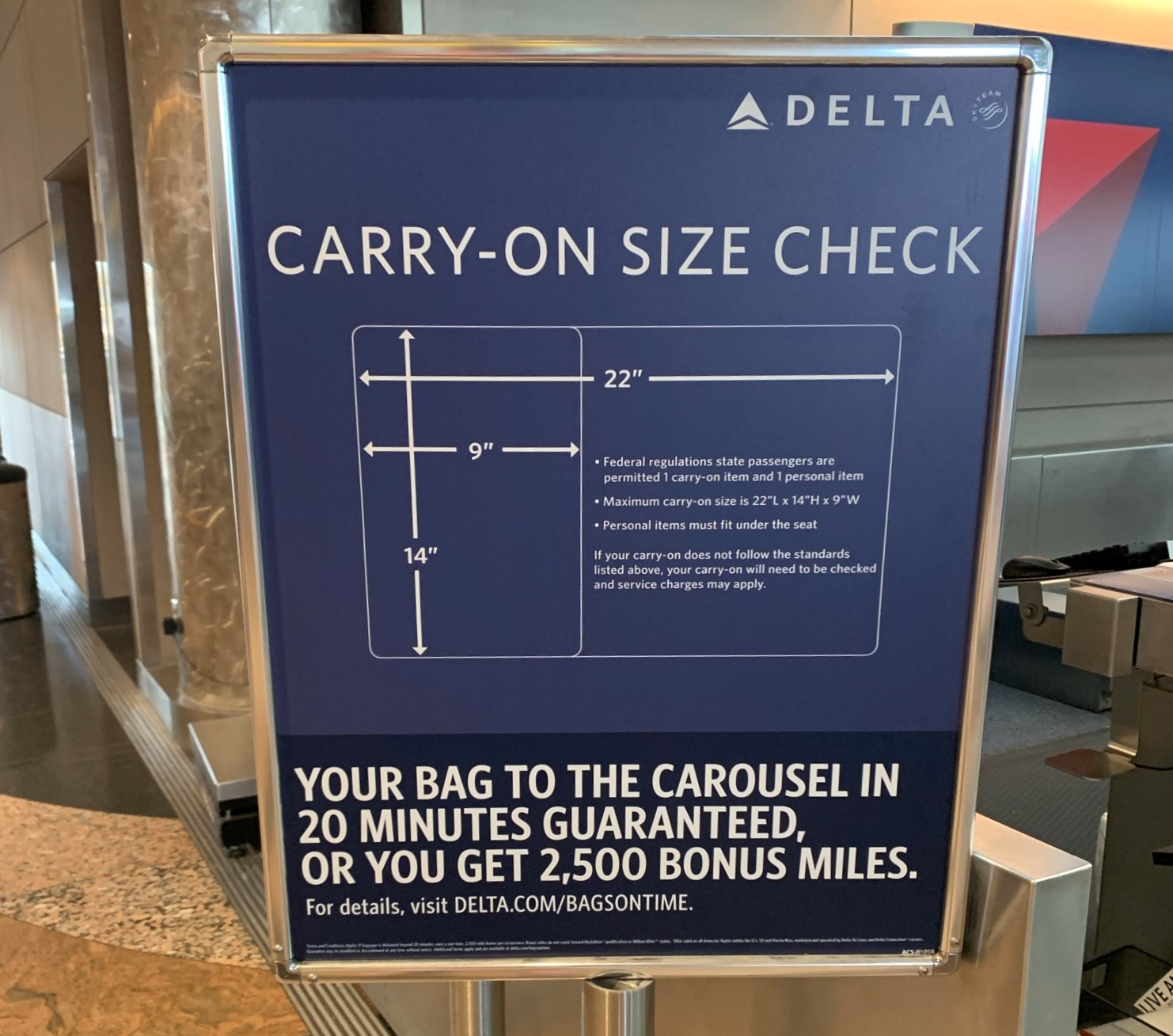
Airlines enforce strict dimensional boundaries to ensure that all carry-on baggage fits securely into overhead storage bins or beneath the passenger seat. Standard overhead carry-on dimensions typically hover around 22 x 14 x 9 inches (56 x 36 x 23 cm), including wheels, handles, and side pockets. Personal items, such as backpacks, purses, or laptop bags, must be significantly smaller—often restricted to roughly 17 x 13 x 8 inches (43 x 33 x 20 cm)—to fit entirely under the seat in front of the traveler.
Weight limits represent another critical variable. While many major US domestic carriers do not enforce a strict weight limit for overhead carry-ons as long as the passenger can lift the bag into the bin unassisted, international carriers and regional airlines frequently enforce rigorous weight ceilings. These limits often range from 15 to 22 pounds (7 to 10 kilograms) total for cabin baggage. Exceeding these thresholds can trigger mandatory checked-bag status and associated penalty fees at the boarding gate.
| Airline Class / Type | Overhead Bag Max Dimensions | Personal Item Max Dimensions | Typical Weight Limit |
|---|---|---|---|
| Major US Domestic Economy | 22 x 14 x 9 in (56 x 36 x 23 cm) | 17 x 13 x 8 in (43 x 33 x 20 cm) | None (must be self-liftable) |
| International Legacy Carrier | 21 x 14 x 9 in (55 x 35 x 25 cm) | 16 x 12 x 6 in (40 x 30 x 15 cm) | 15–22 lbs (7–10 kg) |
| Low-Cost Carrier (Base Fare) | Fee applies / Varies | 16 x 14 x 8 in (40 x 35 x 20 cm) | 22 lbs (10 kg) combined max |
| First / Business Class | Two overhead bags permitted | Standard personal item allowed | Higher limits apply (up to 30 lbs) |
Measuring bags accurately before arriving at the airport prevents operational disputes. Travelers should measure from the absolute outermost edges, accounting for protruding wheels and expandable zippers. Utilizing an airport sizing frame or test box near the check-in counters offers a definitive check before passing security.
The 3-1-1 Liquids Rule and Toiletries Management
The 3-1-1 liquids rule remains one of the most widely recognized security mandates for air travel. Established to mitigate liquid explosive threats, this regulation governs all liquids, aerosols, gels, creams, and pastes carried through security checkpoints into the aircraft cabin.
Under this standard, individual containers holding liquids or gels must not exceed 3.4 fluid ounces (100 milliliters). Placing a 5-ounce container that is only half full into a carry-on bag is prohibited; the physical capacity of the container itself dictates compliance, not the volume of remaining contents. All qualifying containers must fit comfortably inside a single, transparent, resealable plastic quart- or liter-sized bag. Each passenger is restricted to one such bag, which must be removed from luggage and placed separately on the X-ray belt during the screening process.
| Item Category | Carry-On Status | Specific Requirements |
|---|---|---|
| Gels, Pastes, & Creams | Allowed | Must be $\le$ 3.4 oz (100 ml) in a 1-quart transparent bag |
| Baby Formula & Milk | Allowed in larger quantities | Exempt from 3.4 oz limit; subject to screening |
| Prescription Medications | Allowed in larger quantities | Must be declared to security officers prior to screening |
| Alcoholic Beverages | Restricted | $\le$ 24% ABV allowed freely; 24%–70% ABV limited to 5 liters per passenger in unopened retail packaging |
Exemptions to the 3-1-1 rule exist for essential non-prescription and prescription medications, baby formula, breast milk, and specialized nutritional items required during flight. Passengers carrying these exempted items must declare them to security personnel before screening begins. These items may undergo additional screening technologies, such as digital scanners or vapor analysis, without requiring container transfer.
Electronic Devices and Battery Management in the Cabin
Portable electronic devices—including laptops, tablets, e-readers, smartphones, and digital cameras—are universally permitted in carry-on baggage. In many cases, security agencies actively mandate that passengers transport certain electronics in the cabin rather than checked luggage.
Lithium-ion and lithium-metal batteries, which power most modern consumer electronics, present a documented thermal runaway risk. Consequently, regulatory bodies require spare batteries and external power banks (portable chargers) to be transported exclusively in carry-on baggage, never in checked luggage. When stored in the cabin, spare batteries must be protected against short-circuiting by keeping them in their original retail packaging, taping over exposed terminals, or placing individual batteries in separate plastic bags.
During security screening, laptops, tablets, and larger gaming consoles typically must be removed from their protective sleeves or bags and placed flat in a separate bin for X-ray examination. Passengers should verify that all electronic devices are charged sufficiently to power on if requested by security personnel, as unpowered devices may be subject to additional inspection or temporary confiscation.
Prohibited Items and Restricted Goods in Cabin Baggage
Identifying prohibited items before packing prevents security delays and potential legal penalties. Security checkpoints enforce strict prohibitions against firearms, realistic replica weapons, sharp objects, martial arts equipment, explosive devices, and flammable chemical substances.
While everyday items like safety razors and nail clippers are generally permitted in carry-on bags, utility knives, box cutters, multi-tools with blades, and scissors with blades exceeding specific length thresholds (typically 4 inches from the pivot point) are banned from the cabin. Sporting goods such as baseball bats, golf clubs, and hiking poles must be checked rather than carried on, as they can be classified as blunt or bludgeoned weapons.
Chemical and flammable restrictions extend to aerosol sprays (other than personal care items), fireworks, lighter fluid, and certain camping equipment containing fuel residues. Travelers uncertain about a specific tool, souvenir, or chemical product should consult official airport security search tools or mobile applications before departure to verify its classification.
Traveling with Special Items, Medical Gear, and Assistance Equipment
Passengers frequently require specialized medical equipment, mobility devices, or professional gear during air travel. Regulatory agencies and airlines accommodate these necessities under specific compliance frameworks that often bypass standard carry-on restrictions.
Medical devices such as CPAP machines, portable oxygen concentrators (POCs), breast pumps, and dialysis units generally do not count toward standard carry-on limits. However, passengers traveling with medical equipment must verify that battery-powered devices meet airline-specific technical approvals and carry sufficient battery life for the duration of the flight plus a safety margin. Documentation from a physician may be requested, particularly for continuous oxygen use during flight operations.
Mobility aids—including folding wheelchairs, walkers, canes, and crutches—can be brought directly to the aircraft door in most instances, where they are stowed in the cargo hold or cabin closet depending on aircraft configuration. Musical instruments are another specialized category; airlines are typically obligated to permit small instruments like violins in overhead bins or under seats, provided they fit standard dimensions. Larger instruments, such as cellos or guitars, may require purchasing a dedicated passenger seat or checking them as fragile baggage.
Troubleshooting Common Carry-On Compliance Issues at the Airport
Encountering a carry-on dispute at the airport checkpoint or boarding gate can disrupt travel plans. Common issues include unexpected weight checks at international check-in desks, oversized bags failing dimensional verification, and forgotten liquids exceeding volume allowances.
Carry-On Troubleshooting Steps
- Assess the issue: Weight, dimensions, or liquid volume
- Reorganize contents: Wear bulky clothing or transfer heavy items to a personal item
- Utilize duty-free exemptions if applicable
- Negotiate a gate check proactively if space is exhausted
- Verify airline policy documents for appeal if needed
When faced with a bag that exceeds weight or size limitations, travelers should employ immediate remediation strategies. Wearing heavier garments such as jackets or boots during check-in reduces carry-on weight. Transferring dense items—such as books, electronics, or toiletries—from a roller bag into a personal backpack often resolves minor weight discrepancies.
If an item is confiscated at a security checkpoint due to liquid volume violations, passengers occasionally have the option to exit the secure area, check the item in a luggage bag, and rescreen, time permitting. Maintaining digital copies of airline baggage contracts on a mobile device also empowers passengers to address discrepancies calmly and accurately with gate personnel.
Frequently Asked Questions About Airplane Carry-On Rules
Are backpacks counted as personal items or carry-on bags?
A backpack counts as a personal item if it is compact enough to fit entirely underneath the seat in front of you. However, a large frame or hiking backpack that exceeds under-seat dimensions must be stored in the overhead bin, classifying it as a standard carry-on bag subject to overhead size limits.
Can I bring food through airport security in my carry-on?
Solid foods, such as sandwiches, fruit, baked goods, and dry snacks, are permitted through airport security checkpoints. Liquid or gel-based foods—including yogurt, soup, peanut butter, and preserves—must comply with the 3-1-1 liquids rule, meaning they must be housed in containers of 3.4 ounces or less and fit inside a single quart-sized bag.
What happens if my carry-on bag is too big at the boarding gate?
If an agent determines your bag exceeds size or weight limits at the gate, you will typically be required to check the bag into the aircraft cargo hold. This often incurs a gate-checked baggage fee, and depending on the airline's policy, the bag may not arrive at your final destination carousel until regular checked baggage is processed.
Are medications exempt from the liquid restrictions?
Prescription and over-the-counter medications in liquid, gel, or aerosol form are exempt from the 3-1-1 rule's 3.4-ounce limit. Passengers may carry reasonable quantities through security, but they must declare these medications to security personnel separately from the standard quart-sized bag before screening begins.
Can I carry a power bank in my checked luggage?
No. Lithium-ion power banks and spare lithium batteries are strictly prohibited in checked luggage due to fire safety risks. They must be transported exclusively in your carry-on or personal bag brought into the aircraft cabin.
Do children's ticket fares include a carry-on allowance?
Carry-on allowances for infants and children depend on the ticket type purchased. Infants traveling on an adult's lap generally do not receive a standard carry-on allowance, though airlines commonly permit diaper bags, collapsible strollers, and car seats to be checked at the gate free of charge.
Practical Next Steps for Packing Your Cabin Baggage
Before heading to the airport, verify your specific airline's current baggage dimensions and fare class inclusions using their official mobile application or website. Weigh your packed bags using a portable luggage scale to ensure compliance with both domestic and international limits. Organize all liquids into a clear, quart-sized plastic bag and place your electronics in accessible outer compartments to facilitate a rapid and compliant security screening experience.