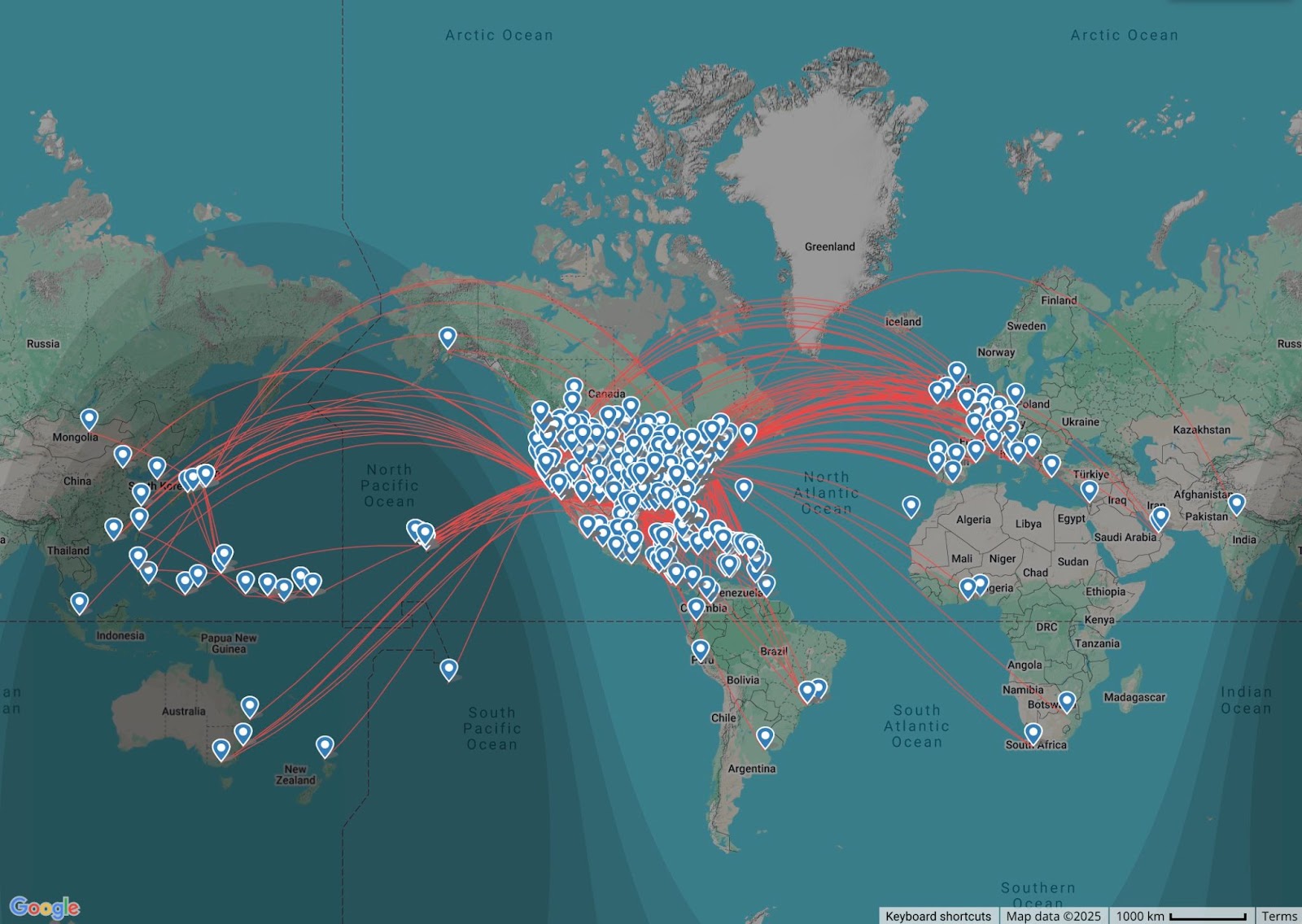
Airlines and flying encompass a vast global network of commercial carriers, regulatory bodies, and operational procedures designed to transport passengers and cargo safely across the world. Understanding how this intricate system functions requires a close examination of flight planning, booking protocols, passenger rights, safety regulations, and the mechanical infrastructure that keeps modern aviation moving forward.
The Evolution and Structure of Modern Commercial Aviation
Commercial aviation is built upon a foundation of strict international standards, complex route networks, and economic models that balance passenger demand with operational costs. At the core of this industry are the airlines themselves, which generally operate under two primary business frameworks: legacy carriers and low-cost carriers (LCCs). Legacy airlines typically offer network connectivity through hub-and-spoke systems, providing multi-class cabins, frequent flyer programs, and global alliance partnerships. Conversely, low-cost carriers frequently utilize point-to-point routing, streamlined single-class fleets, and ancillary pricing models where passengers pay separately for seat selection, checked baggage, and onboard amenities.
Regulatory oversight ensures that safety remains uniform across international borders. The International Civil Aviation Organization (ICAO), a specialized agency of the United Nations, establishes global standards and recommended practices for air navigation, infrastructure, and flight inspection. Regional bodies, such as the Federal Aviation Administration (FAA) in the United States and the European Union Aviation Safety Agency (EASA) in Europe, enforce these baseline standards while implementing localized rules regarding airspace management, pilot certification, and aircraft airworthiness.
Understanding airline economics helps clarify why ticket pricing fluctuates constantly. Yield management systems use sophisticated algorithms to adjust seat prices in real-time based on historical demand, booking velocity, seat capacity, and proximity to departure. This means two passengers sitting in identical seats may pay vastly different fares depending on when they purchased their tickets and the flexibility of their fare class.
Booking, Ticketing, and Fare Classes Explained
Securing a flight involves navigating a tiered system of fare classes, ticket rules, and distribution channels. Whether booking directly through an airline website, via a global distribution system (GDS), or through a third-party online travel agency (OTA), travelers must understand the restrictions attached to their purchased fare.
Basic economy fares generally offer the lowest upfront cost but come with severe restrictions. Passengers holding these tickets typically cannot select seats in advance, cannot change or refund their tickets, and may be restricted from bringing a full-sized carry-on bag into the cabin. Main cabin or economy standard fares, while slightly more expensive, usually permit advance seat selection, standard carry-on allowances, and paid or free change flexibility depending on route and carrier policies. Premium economy, business class, and first-class tickets offer progressively higher levels of comfort, including wider seats that recline into fully flat beds, priority boarding, lounge access, and enhanced dining options.
| Fare Class Category | Advance Seat Selection | Change/Cancellation Flexibility | Checked Baggage Allowance | Cabin Bag Restrictions |
|---|---|---|---|---|
| Basic Economy | Usually restricted or fee-based | Typically non-changeable/non-refundable | Fee-based | Often limited to personal item only |
| Standard Economy | Included | Fee-based changes; strict refund rules | Varies by route and alliance | Standard overhead bag included |
| Premium Economy | Included | Flexible options available | Typically two checked bags | Standard overhead bag included |
| Business / First | Included | Fully flexible / refundable | Two to three heavy bags included | Multiple priority items allowed |
When purchasing tickets, passengers should carefully review the contract of carriage—the legal agreement between the airline and the traveler. This document outlines the airline's liabilities regarding delays, cancellations, lost baggage, and denied boarding compensation.
Navigating Airport Procedures, Security, and Boarding
Preparing for a flight requires adherence to strict airport procedures designed to maintain aviation security and ensure on-time departures. Arriving at the airport with adequate time—typically two hours for domestic flights and three hours for international journeys—allows passengers to complete check-in, bag drop, and security screening without undue stress.
Security checkpoints managed by agencies such as the Transportation Security Administration (TSA) in the United States require travelers to present a valid boarding pass and government-issued photo identification. Screening protocols mandate the separation of certain items, such as large electronic devices and liquids packed in containers exceeding 3.4 ounces (100 milliliters), which must comply with the standard 3-1-1 liquids rule. Enrolled traveler programs like TSA PreCheck or international equivalents (such as Global Entry) allow pre-vetted passengers to utilize expedited lanes where they typically leave shoes, belts, and lightweight jackets on, while keeping laptops inside their bags.
Boarding processes are structured to load aircraft efficiently, usually starting with passengers requiring medical assistance, families with small infants, active-duty military personnel, and elite frequent flyer tier members, followed by general zones based on seat location. Gate agents verify boarding passes and identification before passengers cross the jet bridge or board a tarmac bus to the aircraft.
Passenger Rights, Compensation, and Delay Management
Flight disruptions—ranging from minor schedule adjustments to extended cancellations and missed connections—are an inherent operational challenge in commercial aviation. When disruptions occur, passenger protections vary significantly depending on the jurisdiction in which the flight operates.
In the European Union, Regulation (EC) No 261/2004 provides robust rights for travelers departing from an EU airport or arriving at an EU airport on an EU-regulated carrier. Under these rules, passengers experiencing cancellations or long delays may be entitled to financial compensation ranging from €250 to €600, alongside the right to care (meals, refreshments, and hotel accommodation when necessary). Extraordinary circumstances, such as severe weather events, air traffic control restrictions, or sudden security threats, generally exempt airlines from paying cash compensation, though they remain obligated to provide care and rerouting options.
In the United States, airline obligations are governed by Department of Transportation (DOT) regulations and individual airline customer service commitments. While US law does not mandate cash compensation for weather- or mechanical-related delays, recent regulatory updates require airlines to provide automatic cash refunds for domestic flights delayed by three hours or international flights delayed by six hours when the passenger chooses not to travel. Reviewing airline-specific commitments and utilizing travel insurance policies can provide additional financial protection against unexpected itinerary interruptions.
Health, Safety, and In-Flight Comfort
Maintaining personal well-being during air travel requires proactive planning, particularly on long-haul intercontinental routes. Aircraft cabins are pressurized to altitudes equivalent to approximately 6,000 to 8,000 feet, and the humidity levels inside modern airliners are kept intentionally low to prevent structural corrosion of the aircraft frame. This dry environment can lead to dehydration and fatigue, making adequate water intake essential.
Deep vein thrombosis (DVT), a condition involving blood clots in deep veins typically located in the legs, represents a recognized risk during prolonged periods of immobility. Medical professionals recommend that passengers on long-haul flights periodically walk the cabin aisle, perform seated leg exercises, and avoid constrictive clothing to promote healthy circulation.
Air quality inside modern commercial aircraft is managed through advanced Environmental Control Systems (ECS). These systems utilize High-Efficiency Particulate Air (HEPA) filters capable of capturing 99.97% of airborne microbes, dust particles, and bacteria, refreshing the cabin air mix with a combination of outside bleed air and filtered recirculation every two to three minutes.
Frequently Asked Questions About Flying
What documents are required for international air travel?
International travel requires a valid passport with a minimum validity period—often six months beyond the planned return date—along with any necessary visas, transit documents, or electronic travel authorizations mandated by the destination country. Passengers must verify entry requirements directly through official government portals or embassy websites before departure.
How are baggage size and weight limits enforced?
Airlines enforce strict linear dimension limits (length plus width plus height) and weight caps for both carry-on and checked baggage. Exceeding these limits at the check-in counter or boarding gate frequently results in heavy excess baggage fees or mandatory gate-checking of bags.
What should I do if my checked luggage is lost or damaged?
If luggage fails to arrive at the destination carousel, passengers must file a Property Irregularity Report (PIR) with the airline's baggage service desk before leaving the airport terminal. Keeping baggage claim checks, boarding passes, and receipts for essential items purchased during the delay is critical for processing compensation claims.
Can I bring electronic devices and lithium batteries onboard?
Most portable electronic devices, such as laptops, tablets, and smartphones, are permitted in both carry-on and checked luggage. However, spare lithium-ion batteries and power banks are strictly prohibited in checked bags and must be carried exclusively in the aircraft cabin to mitigate fire risks.
How do I select the safest seats on an airplane?
Statistical safety studies conducted by aviation authorities indicate that commercial air travel is exceptionally safe regardless of seating location. Emergency exit rows provide additional legroom and direct egress routes, but occupants must meet specific physical and linguistic criteria to assist crew members during an emergency evacuation.
What happens if I miss my connecting flight through no fault of my own?
When a single ticket covers multiple connecting flights, the issuing airline is legally and operationally responsible for rebooking the passenger onto the next available flight to the destination. Passengers should immediately visit the airline's transit desk or customer service center to obtain updated boarding passes and arrange meal vouchers or hotel accommodations if the delay extends overnight.
Ensuring Seamless Travel Execution
Preparing for air travel effectively requires combining a thorough understanding of ticketing rules with proactive arrival and baggage strategies. Reviewing airline policies, monitoring flight status applications in real-time, and keeping essential identification and travel documents easily accessible will minimize friction at every stage of the journey. By maintaining awareness of operational realities and passenger rights, travelers can navigate the global aviation network with confidence and security.