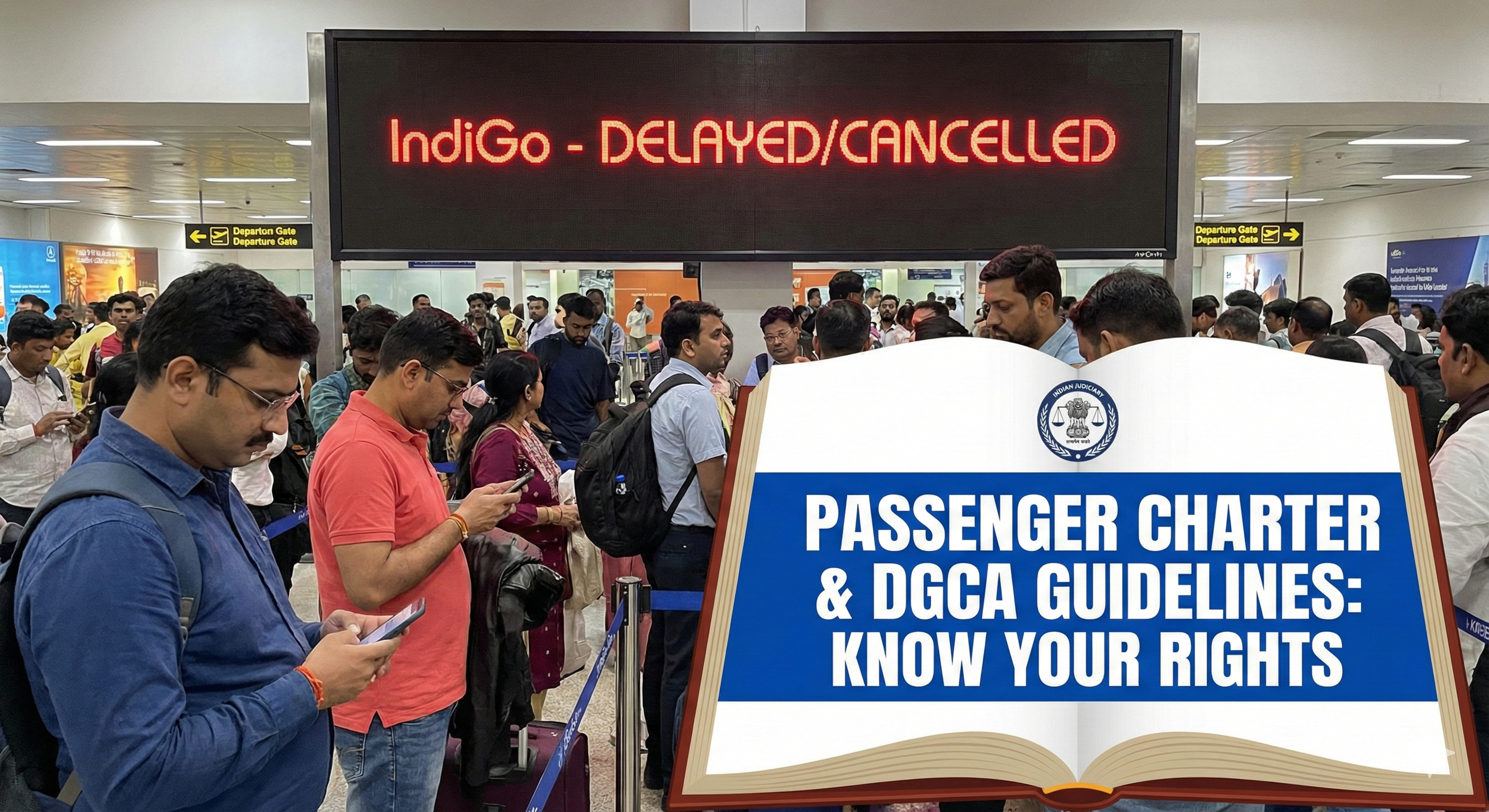
Navigating airline rights ensures passengers receive fair treatment, compensation, or alternative arrangements during flight cancellations, extensive delays, or denied boarding. Passenger protection frameworks depend heavily on departure jurisdictions, operating carriers, and ticketing conditions, making it essential to identify applicable legal standards before traveling.
The Foundations of Commercial Aviation Passenger Rights
Commercial aviation operates under a complex matrix of international treaties, domestic statutes, and carrier-specific conditions of carriage. Historically, the global airline industry treated flight disruptions as operational risks outside of carrier liability, leaving travelers with few options beyond rebooking. Over the last few decades, regulatory bodies worldwide recognized the imbalance of power between large multinational carriers and individual consumers, establishing baseline statutory protections.
Understanding these rights requires examining where a journey begins and ends. Unlike consumer protection laws for retail goods, which generally apply where the buyer resides, airline passenger protections are territorial. A flight departing from a European Union airport falls under different mandates than a domestic itinerary within the United States or a flight originating in Asia. Furthermore, international conventions such as the Montreal Convention govern liability for lost baggage, injuries, and flight delays on a global scale, superseding local laws in specific multi-jurisdictional contexts.
Regional Regulatory Frameworks and Jurisdictional Scope
The scope of a passenger's legal entitlements depends primarily on the governing jurisdiction of the flight. No single universal code applies to every commercial route, meaning travelers must evaluate protections based on origin, destination, and the airline's operational base.
European Union Regulations (EC 261/2004)
Regulation (EC) No 261/2004 remains one of the most comprehensive passenger protection frameworks globally. It applies to all flights departing from an EU airport, regardless of the airline's nationality, and to flights arriving in an EU airport operated by an EU-regulated carrier. Under this framework, passengers facing cancellations, long delays exceeding three hours, or denied boarding due to overbooking may be entitled to statutory cash compensation ranging from €250 to €600, alongside mandatory care provisions such as meals, communication access, and hotel accommodations.
United States Department of Transportation Standards
In the United States, passenger rights are overseen by the Department of Transportation (DOT). Unlike the EU, US federal regulations historically did not mandate fixed cash compensation for general flight delays or cancellations within domestic airspace. Instead, US regulations focus heavily on mandatory refunds when an airline cancels a flight or makes a significant schedule change and the passenger chooses not to travel. Recent rulemakings by the DOT have reinforced automatic refund requirements, prohibiting carriers from forcing vouchers on passengers during major disruptions.
International Agreements and the Montreal Convention
For long-haul international travel, the Montreal Convention of 1999 governs carrier liability for passenger injury, baggage delay, destruction, or loss, and financial damages resulting from flight delays. It establishes a uniform system of liability, setting limits denominated in Special Drawing Rights (SDRs). Unlike EC 261, the Montreal Convention does not provide fixed compensation for delayed flights unless the passenger can prove actual financial damages resulting directly from the delay, subject to the carrier's defense that it took all reasonable measures to prevent the damage.
Common Flight Disruptions and Statutory Remedies
When travel plans go awry, passengers encounter distinct operational scenarios that trigger specific legal remedies. Knowing what accommodations or financial payouts are legally required prevents travelers from accepting inadequate resolutions.
| Disruption Type | Primary Statutory Remedy (EU / US Baseline) |
|---|---|
| Flight Cancellation | Full refund or rerouting + care + statutory payout (if notice is under 14 days and not caused by extraordinary circumstances). |
| Denied Boarding (Overbooking) | Voluntary voucher negotiation OR involuntary denial compensation + immediate rerouting or refund. |
| Delay (3+ Hours) | Right to care (meals, drinks, communication) and compensation if reaching final destination 3+ hours late (EU rule). |
| Baggage Loss or Damage | Liability coverage up to statutory limits under the Montreal Convention (approx. 1,288 SDRs). |
Flight cancellations trigger immediate options for a complete refund of the unused ticket portion or alternative transportation to the final destination under comparable conditions. If the cancellation notification occurs less than two weeks before scheduled departure, European regulations mandate statutory compensation unless the airline proves the disruption stemmed from "extraordinary circumstances," such as severe weather events, air traffic control restrictions, or sudden security risks. Mechanical failures, by contrast, are generally classified as internal operational events for which airlines remain liable.
Denied boarding occurs most frequently when airlines overbook flights. If passengers are bumped involuntarily, carriers must seek volunteers first before denying boarding to others. Involuntary denied boarding triggers immediate compensation and rerouting obligations. Passengers should ensure they receive written documentation detailing the reason for denied boarding, as this paperwork is essential for subsequent claims processing.
Baggage Rights, Delays, and Loss Protocols
Baggage mishandling is a frequent source of passenger frustration and financial loss. When checked luggage fails to arrive at the baggage carousel, airlines are obligated to trace the item and deliver it to the passenger's temporary or permanent address.
Under the Montreal Convention, airlines are liable for damaged, delayed, or lost baggage up to a threshold defined in Special Drawing Rights (currently capped around 1,288 SDRs, subject to periodic adjustments). Passengers experiencing delayed luggage may purchase essential items—such as toiletries and basic clothing—and submit receipts for reimbursement, provided the expenses are reasonable and necessary. To secure these rights, travelers must file a Property Irregularity Report (PIR) at the airport service desk before leaving the baggage reclaim area. Formal written claims must then be submitted within strict statutory deadlines, typically within 21 days for delayed baggage and 7 days for damaged items.
Documenting Disruptions and Filing Effective Claims
Securing compensation or refunds requires meticulous record-keeping and adherence to carrier procedures. Passengers should retain boarding passes, booking references, baggage claim tags, and any written or digital communication from the airline regarding the disruption.
When a disruption occurs, requesting a written statement from airline personnel detailing the exact reason for the delay or cancellation prevents carriers from later altering their justification. Submitting a claim directly through the airline's official online portal or customer service channel is the standard first step. If the airline fails to respond within a reasonable window, or denies a valid claim incorrectly, passengers can escalate the dispute to the relevant national enforcement body (NEB) or aviation authority in the jurisdiction where the flight originated or landed. Utilizing specialized third-party compensation agencies is also an option, though these services typically retain a percentage of the recovered payout as a contingency fee.
Frequently Asked Questions
What should I do immediately if my flight is canceled at the airport?
Approach the airline's customer service desk or gate agents immediately to request written confirmation of the cancellation reason. Ask for alternative rerouting to your destination as soon as possible, or request a full refund if you choose to abandon travel. Ensure you are provided with food vouchers, communication access, and hotel accommodations if your new flight departs the following day.
Are airlines required to pay compensation for weather-related delays?
Generally, no. Weather events are classified as extraordinary circumstances or acts of God outside the airline's control. However, airlines must still provide basic care provisions, such as meals and refreshments during long waiting periods, even if financial compensation is waived.
How long do I have to file an airline compensation claim?
Filing deadlines vary significantly by jurisdiction and governing law. Under European rules (EC 261), deadlines are determined by the statute of limitations of the specific EU member state handling the case, typically ranging from one to six years. For international itineraries governed by the Montreal Convention, the strict limitation period for legal action is two years from the date of arrival or scheduled arrival.
Does travel insurance cover flight disruptions better than airline rights?
Comprehensive travel insurance policies often cover broader scenarios than statutory airline rights, including missed connections due to traffic, illness, or third-party tour cancellations. Insurance policies may also provide faster payouts or emergency medical benefits that standard carrier liability rules do not address. Reviewing policy wordings helps determine whether filing with the airline or the insurer is more advantageous.
Can an airline force me to accept a voucher instead of a cash refund?
Under major regulatory regimes such as those enforced by the US DOT and EU aviation authorities, airlines cannot force passengers to accept travel vouchers or credits when a flight is canceled and the passenger requests a monetary refund. Passengers retain the legal right to a cash refund to the original form of payment.
Strategic Next Steps for Resolving Travel Disputes
Protecting your travel investment requires proactive verification before departure and calm, methodical execution when disruptions occur. Always verify the regulatory framework governing your specific ticket route, keep copies of all travel documentation, and log every interaction with carrier representatives. Should a dispute arise that the airline refuses to resolve in accordance with statutory guidelines, escalate the matter promptly to the appropriate national regulatory authority or seek professional legal guidance to secure your rightful compensation.