Mastering airline etiquette ensures a smoother, more respectful travel experience for everyone onboard, covering essential norms from pre-boarding preparation and luggage management to seat recline courtesy, noise control, and mindful personal hygiene in tight shared spaces.
Air travel brings hundreds of strangers together in a confined, pressurized metal tube for hours at a time, making adherence to unwritten social norms and formal regulations essential for a peaceful journey. As commercial aviation continues to evolve, the rules of modern airline etiquette have expanded beyond basic politeness to encompass digital awareness, environmental mindfulness, and spatial mindfulness. Whether you are a seasoned frequent flyer or preparing for your first commercial flight, understanding how to navigate shared cabins with consideration prevents friction, reduces stress, and fosters a more civilized atmosphere at 35,000 feet.
The Foundations of Pre-Boarding and Terminal Courtesy
Long before the aircraft doors close, passenger behavior in the airport terminal and during the boarding process sets the tone for the entire journey. Etiquette begins at the security checkpoint, where efficiency dictates community peace. Experienced travelers prepare their electronics, liquids, and outerwear before reaching the conveyor belt bins, minimizing delays for the passengers waiting behind them. Lingering in front of security lanes to reorganize backpacks or tie shoes creates immediate bottlenecks and unnecessary frustration.
When the time comes to board, respecting the designated airline boarding groups prevents chaotic bottlenecks at the gate. Airlines implement zone or group systems to streamline aircraft weight distribution and cabin flow. Crowding the gate area before your group is called—often referred to as "gate lice"—clogs pathways and creates confusion for gate agents.
Once on the jet bridge, maintaining a steady, forward-moving pace ensures the boarding queue does not stall. As you step onto the aircraft, pause briefly only to locate your seat row, rather than coming to a dead stop in the aisle with a large backpack still slung over your shoulders, which risks striking seated passengers.
Navigating Overhead Bin Real Estate and Luggage Management
Overhead bin space is one of the most contentious resources in modern commercial aviation. Because airlines frequently charge for checked baggage or encourage carry-on-only travel to save time upon arrival, bin space has become scarce. Proper luggage etiquette requires balancing personal convenience with the collective needs of fellow passengers.
First, standard carry-on bags should be placed in the overhead bins wheels-first or sideways, depending on the airline's specific fleet configuration, allowing maximum capacity for everyone. Personal items—such as backpacks, briefcases, and purses—must fit entirely underneath the seat directly in front of you. Placing a small backpack in the overhead bin alongside a rolling suitcase deprives another traveler of necessary space for their primary bag.
Furthermore, monitoring your luggage size and weight before arriving at the airport prevents awkward mid-aisle negotiations. If an aircraft is running low on bin space and gate agents request volunteers to check carry-ons for free, accepting this request graciously helps the boarding process run smoothly. Never move another passenger's belongings within an overhead bin to make room for your own items without asking nearby passengers for assistance or clarification.
Spatial Awareness and the Great Seat Recline Debate
Sharing a row of seats requires a delicate balance of territorial boundaries and mutual compromise, particularly regarding armrests and seat reclining. The perennial debate over whether it is socially acceptable to recline an airline seat has no single legal answer, but etiquette dictates a nuanced approach.
| Seat Feature | Etiquette Guideline | Practical Rationale |
|---|---|---|
| Middle Seat Armrests | Middle seat passenger has primary claim to both armrests. | Window and aisle passengers have alternate sides (walls and aisles) for physical relief. |
| Seat Recline | Check behind you before reclining; keep upright during meals. | Prevents spilling food on the tray table behind and respects personal workspace. |
| Window Shade Control | Consult neighbors; respect cabin darkness protocols during long-haul flights. | Direct sunlight can disrupt sleep or blind neighboring passengers on screens. |
| Aisle Incursions | Keep elbows, feet, and bags inside your designated seat perimeter. | Prevents tripping hazards and accidental collisions with passing beverage carts. |
When it comes to armrests, the unwritten social contract dictates that the middle seat passenger—who enjoys neither the outside view nor the freedom of the aisle—receives primary claim to both shared armrests. Aisle and window passengers should utilize their outer armrests while keeping elbows tucked inward.
If you choose to recline your seat, common courtesy dictates that you check behind you to ensure the passenger is not working on a laptop or eating, and you should always return the seat to the upright position during meal services. Sudden, aggressive reclining can damage laptops and startle fellow travelers, so a slow, mindful motion is always preferred.
Acoustic and Digital Etiquette in a Shared Cabin
With nearly every passenger carrying smartphones, tablets, and laptops, managing auditory footprints is critical. Sound travels easily through aircraft cabins, and ambient engine noise often prompts travelers to speak louder than they realize or turn up headphone volumes to unsafe levels.
All audio—whether music, movies, podcasts, or video games—must be listened to exclusively through headphones. Playing media out loud through device speakers is a major breach of airline etiquette. Similarly, phone calls should be avoided while onboard; while some jurisdictions permit phone use while parked at the gate, voice calls during flight remain prohibited or highly disruptive in a cramped cabin environment.
When speaking with travel companions or flight attendants, keep your voice at a conversational volume, especially during red-eye or overnight flights when most passengers are trying to sleep. Snoring is naturally outside an individual's control, but using snore-relief strips or adjusting sleeping positions can mitigate disruptions for seatmates.
Olfactory Mindfulness and Personal Hygiene
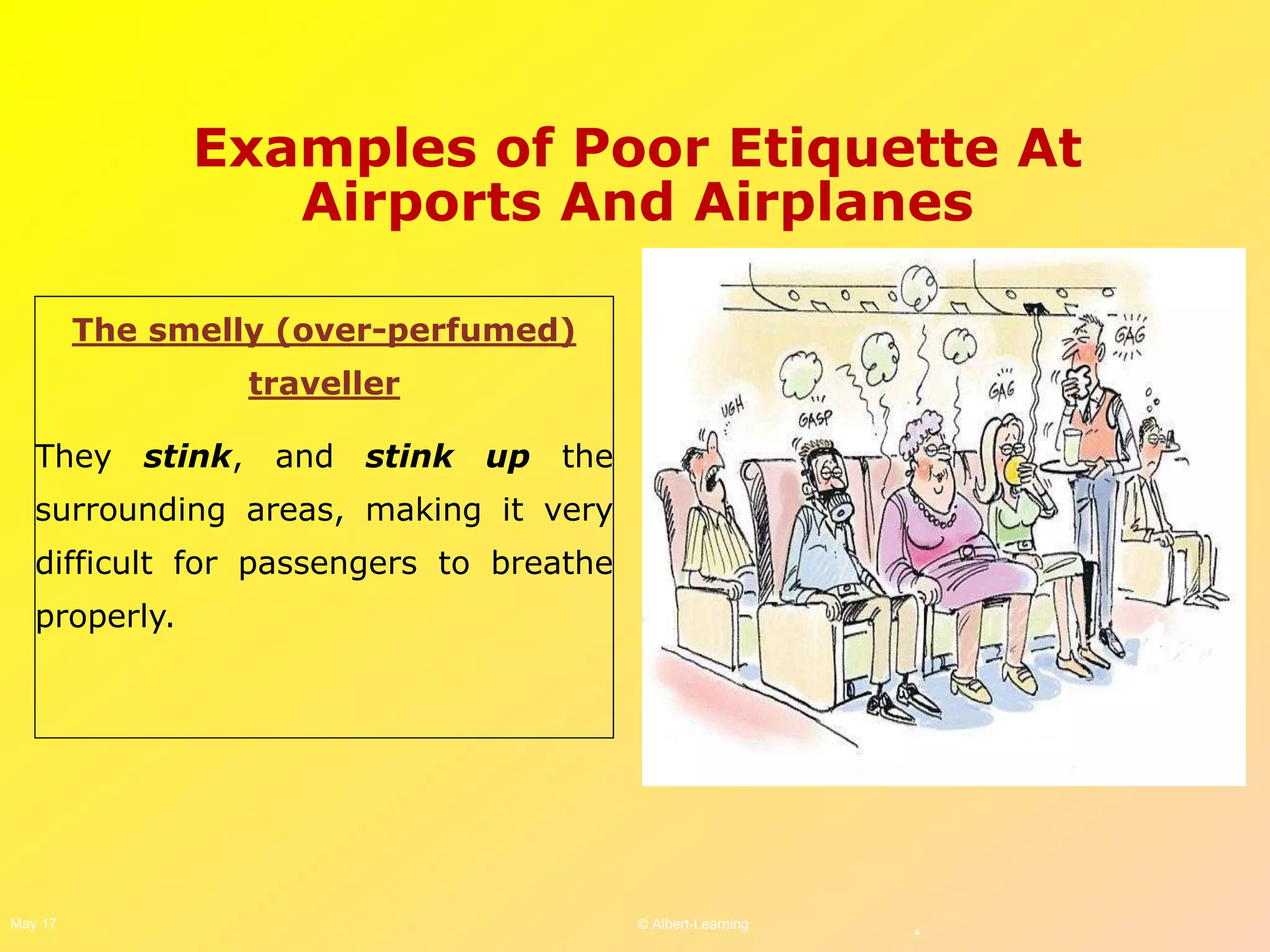
Airplanes recirculate cabin air through sophisticated HEPA filtration systems, but enclosed spaces still accumulate odors quickly. Olfactory mindfulness is a vital yet frequently overlooked pillar of airline etiquette, ensuring that your personal choices do not negatively impact the physical comfort of those around you.
Avoid wearing heavy perfumes, colognes, or strongly scented lotions before boarding. Passengers with chemical sensitivities, asthma, or motion sickness can experience severe physiological distress from overpowering fragrances in a confined environment.
Food choices also demand careful consideration. While bringing your own snacks is a smart way to bypass airline catering costs or dietary restrictions, avoid packing foods with pungent, lingering odors such as hard-boiled eggs, strong cheeses, canned fish, or heavily spiced garlic dishes. Opt instead for clean, neutral, non-aromatic snacks like nuts, fruit, granola bars, or sandwiches.
Interacting with Flight Crew and Fellow Passengers
The flight crew's primary legal and operational mandate is passenger safety, not hospitality service. Treating flight attendants and gate agents with patience, kindness, and respect is non-negotiable. Simple courtesies—such as making eye contact, removing headphones when placing a drink order, handing trash directly to flight attendants during collection passes, and saying thank you—go a long way toward maintaining a positive environment.
When navigating disputes over seats, overhead space, or reclining, approach the situation with calm communication rather than aggression. If an issue escalates or becomes uncomfortable, never attempt to resolve it physically; instead, discreetly notify a flight attendant to mediate the situation professionally.
Common Etiquette Pitfalls to Avoid
Even well-intentioned travelers can inadvertently commit common etiquette errors that cause friction during a flight. Being aware of these pitfalls allows you to adjust your behavior proactively.
- Blocking the aisle during boarding or deplaning: Rushing out of your row the moment the plane lands and attempting to push past rows ahead of you creates chaos. Wait patiently for your row and the preceding rows to exit in an orderly fashion.
- Leaning over seatbacks: Grabbing the top of the seat ahead of you to pull yourself up or stabilize yourself when standing up sends a jarring motion through the seat frame. Use the armrests or fuselage structure instead.
- Ignoring tray table cleanliness: Leaving excessive trash, sticky spills, or used tissues on the tray table forces cabin crew to spend extra time clearing your space. Dispose of your rubbish using the bags provided by flight attendants during trash collections.
- Slamming window shades open suddenly: In-flight cabin awakenings caused by someone suddenly snapping open a window shade to flood a darkened cabin with glaring sunlight can ruin sleep for dozens of passengers. Open shades gradually if necessary.
Fostering a Civilized Air Travel Culture
Ultimately, modern airline etiquette relies on empathy, patience, and shared responsibility. By respecting physical boundaries, managing personal noise and odors, supporting crew members, and exercising grace when unexpected delays occur, every passenger contributes to a safer and more pleasant journey for everyone onboard.