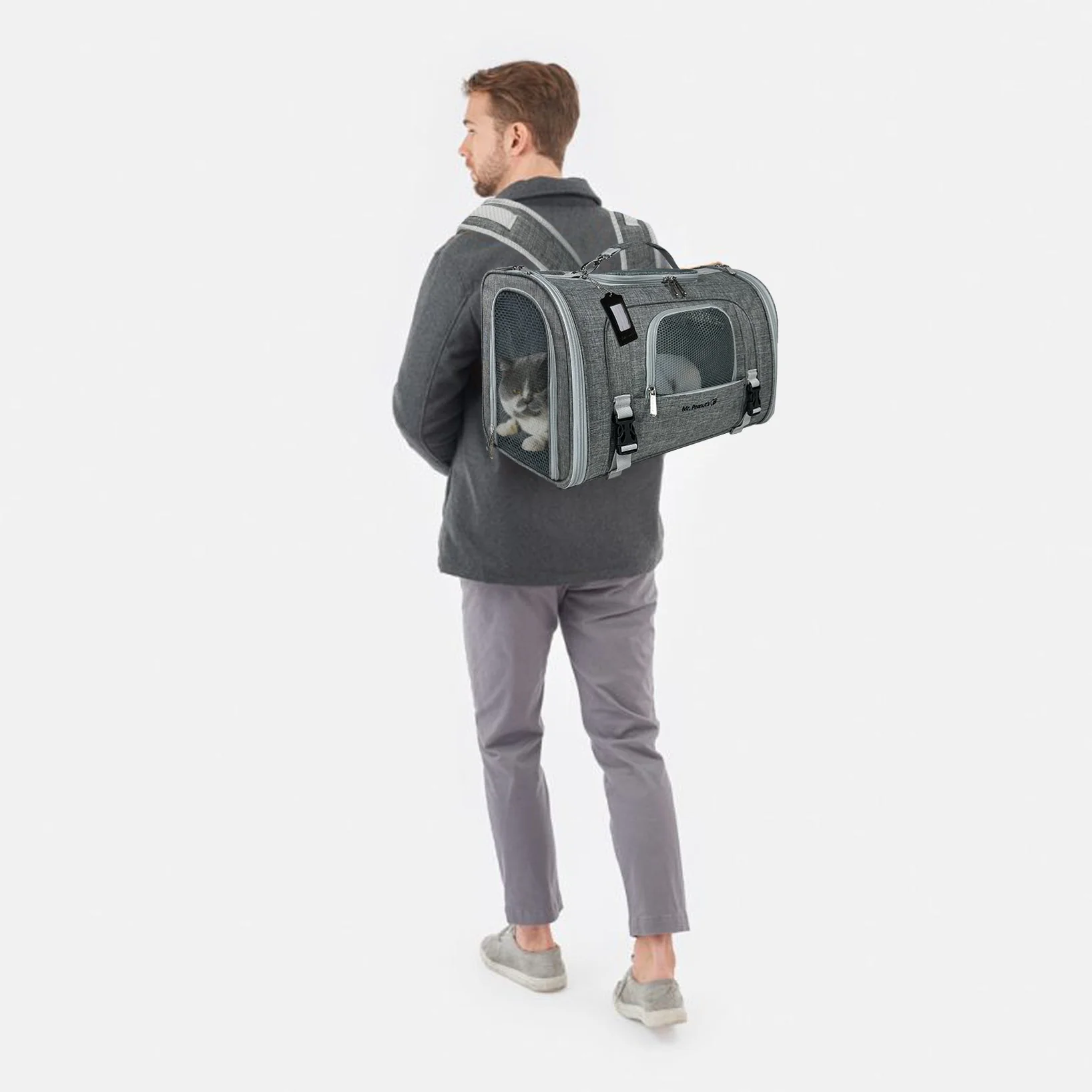
Choosing airline compliant carriers involves matching soft-sided or hard-sided pet travel containers to specific Federal Aviation Administration guidelines and individual airline policies regarding dimensions, ventilation, and under-seat clearance. Securing a smooth journey requires understanding that cabin storage space varies dramatically by aircraft model, meaning compliance demands meticulous measurement, proper material selection, and deliberate pre-flight acclimatization for your pet.
Understanding Airline Compliant Carrier Requirements and Standards
Navigating the market for airline compliant carriers begins with a fundamental realization: there is no single universal standard enforced by every commercial airline. While the Federal Aviation Administration (FAA) sets broad safety baselines for animal transport, individual carriers retain the autonomy to establish their own strict parameters regarding dimensions, structural rigidity, and material composition. Most major commercial airlines publish specific limits for cabin pet containers, typically hovering around 17 to 19 inches in length, 10 to 12 inches in width, and 8 to 11 inches in height for soft-sided models. These maximums are dictated by the physical clearance of the space beneath the aircraft seat directly in front of you.
Beyond raw dimensions, structural requirements form the core of compliance. A compliant carrier must feature adequate ventilation on at least two to four sides, constructed from durable, tear-resistant mesh that prevents claws from snagging while ensuring unhindered airflow. The floor of the carrier must be leak-proof, typically managed via a removable, washable absorbent pad or tray, and structurally sound enough to prevent sagging when the animal is lifted or shifted. Zippers must include secure locking mechanisms or clips to prevent clever pets from nudging them open mid-flight. Furthermore, airlines explicitly require that the animal can comfortably stand, turn around, and lie down in a natural position inside the carrier without touching the top or sides. Failing this basic comfort test can result in a denial of boarding at the gate, regardless of whether the carrier's exterior measurements technically meet the airline's published maximums.
Soft-Sided Versus Hard-Sided Carriers: Which Design Wins?
When evaluating airline compliant carriers, travelers generally choose between soft-sided and hard-sided configurations, each presenting distinct operational trade-offs. Soft-sided carriers dominate the in-cabin market because their flexible frames allow them to compress vertically by one to two inches to fit beneath tighter seat spaces, such as those found in aisle or window positions on regional jets. Constructed from durable canvas, ballistic nylon, or specialized microfiber, these flexible models often feature multiple zippered storage pockets for travel documents, waste bags, and treats. They also tend to fold flat for storage when not in use. However, their pliable nature means they lack the rigid impact protection of molded plastic, making them unsuitable for cargo hold travel and potentially vulnerable if heavily compressed by shifting cargo or passenger luggage nearby.
Hard-sided carriers, manufactured from heavy-duty molded plastics with metal hardware and wire-mesh doors, are rarely permitted in the aircraft cabin due to their rigid dimensions, which cannot compress to accommodate varying under-seat clearances. Instead, hard-sided models serve as the mandatory standard for checked baggage or cargo hold transport under International Air Transport Association (IATA) guidelines. These containers offer superior structural integrity, shielding the animal from external impacts and preventing accidental escapes. They also feature bolted assembly points, secure spring-loaded door latches, and integrated water bowls clipped to the interior door. Choosing between these two styles depends entirely on whether your animal is traveling in the cabin with you or flying in the temperature-controlled cargo compartment.
| Carrier Type | Primary Use Case | Dimension Flexibility | Ventilation Quality | Structural Protection |
|---|---|---|---|---|
| Soft-Sided Canvas | In-Cabin Travel | High (Compressible) | Excellent (Multi-side mesh) | Moderate (Flexible frame) |
| Molded Plastic | Cargo / Checked | None (Rigid structure) | Good (Perforated sides) | Maximum (Impact resistant) |
| Expandable Mesh | In-Cabin Travel | Variable (Zip-out sections) | High (Expanded airflow) | Moderate (Semi-rigid frame) |
| Wire-Frame Fabric | In-Cabin / Ground | Low (Fixed corners) | Superior (Open mesh panels) | Low-Moderate |
Critical Dimensions and Aircraft Seat Constraints
Measuring your pet and matching those dimensions to airline compliant carriers requires precision, as gate agents frequently check compliance using sizing templates or visual inspections. To measure your pet correctly, place the animal on a flat surface and measure from the tip of the nose to the base of the tail (excluding the tail length itself), and from the top of the head (or the tips of the ears for upright breeds) down to the floor. Add two to three inches of clearance to these measurements to establish the minimum interior volume your pet requires.
Aircraft seating configurations introduce variable geometry that complicates compliance. Bulkhead seats, emergency exit rows, and seats located adjacent to window or aisle positions often feature structural impediments beneath them, such as life jacket pouches, entertainment system boxes, or narrow footwells. For instance, a carrier measuring 10 inches in height might slide effortlessly beneath a mainline Boeing 737 window seat but fail to clear the electronic box mounted under the middle seat of an Airbus A320. Consequently, seasoned travelers select carriers slightly smaller than the absolute maximum dimensions permitted by the airline's written policy. This safety margin ensures that even on cramped regional aircraft operated by partner airlines, the carrier slips smoothly into place without requiring disruptive force or drawing the scrutiny of flight crew.
Preparing Your Pet for Carrier Confinement
Securing an airline compliant carrier is only half the battle; ensuring your pet remains calm and cooperative throughout the transit process requires a structured acclimatization schedule. Sudden confinement in an unfamiliar, enclosed space surrounded by strange engine noises, vibrations, and shifting crowds triggers acute anxiety in many domestic animals. To mitigate this stress, introduce the carrier weeks before your scheduled departure date. Leave the carrier open in a frequently used living area with a familiar blanket or toy inside, allowing your pet to explore, nest, and associate the structure with positive experiences and safety.
Once your pet shows comfort entering the carrier voluntarily, begin closing the mesh flap for short intervals while offering verbal praise and high-value treats. Progressively extend the duration of closed confinement, eventually picking up the carrier and walking around the house or taking short trips in a stationary or moving vehicle. This simulation builds vestibular tolerance and familiarizes the animal with the sensation of motion while enclosed. Veterinary guidance should be sought early if your pet exhibits severe claustrophobia, destructive chewing, or prolonged panic behaviors. While mild natural calming supplements are popular, most commercial airlines and veterinary associations discourage pharmaceutical sedation for flying due to potential cardiovascular and respiratory complications caused by cabin pressure shifts at cruising altitude.
Airline Documentation, Health Certificates, and Booking Protocols
Meeting administrative requirements is just as critical as selecting physical airline compliant carriers. When traveling domestically within the United States or internationally, most commercial carriers require specific paperwork to verify the health and vaccination status of the animal. For domestic flights, many airlines do not routinely demand a health certificate at the check-in counter, though they reserve the right to request proof of current rabies vaccination. Conversely, international destinations and certain states enforce rigorous quarantine rules and mandate a USDA-accredited veterinarian-issued health certificate, often signed within 10 days of travel, alongside microchip verification and specific parasite treatments.
The booking protocol itself demands immediate action once your travel dates are confirmed. Major commercial airlines enforce strict quotas on the total number of pets allowed in the passenger cabin per flight—typically ranging from two to six animals total, split between first class and economy. Because of these caps, securing your ticket online does not automatically guarantee your pet a spot in the cabin. You must contact the airline's reservation desk immediately after ticket purchase to pay the pet fee, register the carrier dimensions and weight, and lock in the cabin reservation. Arriving at the airport with an airline compliant carrier and a valid ticket without prior pet registration can lead to denied boarding if the cabin pet quota has already been met.
Frequently Asked Questions About Airline Compliant Carriers
What happens if my carrier exceeds the airline's size limits at the boarding gate?
If a gate agent determines that your carrier violates size restrictions, the airline may refuse to let the animal board the aircraft. In some cases, if the animal can travel safely in the cargo hold and space permits, the airline may reclassify the pet as checked baggage and charge an additional fee, though many carriers prohibit this switch at the gate. Selecting a carrier with flexible, compressible dimensions minimizes this risk.
Can I use a wheeled carrier or pull-cart for in-cabin pet transport?
Wheeled carriers are generally permitted by airlines, provided the entire assembly—including the wheels and telescoping handle—fits completely within the specified under-seat dimensions. However, because wheels add vertical height, many wheeled models fail clearance tests unless the wheels are removable or the fabric base is flexible enough to compress under pressure.
Are soft-sided expandable carriers allowed to remain expanded during the flight?
Expandable carriers featuring pull-out mesh sections are widely accepted for terminal waiting areas, taxiing, and takeoff, but flight attendants almost universally require the expandable sections to be zipped closed once the aircraft pushes back and during the flight. This ensures the carrier remains fully within the designated under-seat footprint without blocking aisle access or foot space.
Do airline pet fees cover round-trip travel or just one way?
Airlines assess pet fees on a one-way basis for each flight segment. If you are booking a round-trip itinerary with a connection on a partner airline, you may incur separate fees for each leg of the journey, depending on the individual carrier's fare structure and ticketing rules.
How much should my pet and carrier weigh combined for in-cabin travel?
Most commercial airlines set a combined weight limit ranging from 20 to 30 pounds for the pet and the carrier combined, though some carriers do not enforce a strict combined weight limit as long as the animal fits comfortably inside the container and the container fits beneath the seat. Always review the specific weight caps published by your ticketing airline before departure.
Final Travel Preparation and Airport Execution
Executing a seamless journey with an airline compliant carrier requires methodical planning on the day of travel. Arrive at the airport well in advance of standard domestic guidelines to allow sufficient time for check-in counter verification, security screening, and potential administrative delays. At the TSA security checkpoint, you will be required to remove your pet from the carrier so that the empty fabric or plastic container can be processed through the X-ray machine. To prevent an accidental escape in a chaotic airport environment, fit your pet with a secure harness and a secondary leash before stepping up to the screening area, allowing you to maintain control while carrying your animal through the metal detector. By maintaining strict attention to dimensional accuracy, structural durability, administrative compliance, and animal preparation, you ensure a safe and stress-free transit experience for both you and your traveling companion.