Airflow measured in cubic feet per minute, or CFM, quantifies the volume of air that moves past a specific point within one minute, serving as the universal standard for sizing heating, ventilation, air conditioning, and industrial exhaust systems. Determining the correct CFM ensures that indoor spaces maintain optimal air quality, thermal comfort, and pressure relationships without wasting energy or overworking mechanical equipment.
What is Airflow CFM and Why Does It Matter?
Airflow CFM represents a fundamental metric in fluid dynamics and mechanical engineering. It measures volumetric flow rate rather than air velocity, meaning it accounts for both the speed of the air and the cross-sectional area of the duct, vent, or opening through which it travels. One CFM equals a volume of air measuring one foot wide, one foot high, and one foot long moving past a fixed point every sixty seconds.
Understanding this metric matters because inadequate CFM leads to poor indoor air quality, hot or cold spots, equipment strain, and excessive energy consumption. Conversely, oversized airflow can create uncomfortable drafts, excessive noise, and moisture control issues in humid climates. Whether designing a residential HVAC system, installing a kitchen range hood, or balancing commercial ventilation, calculating accurate CFM requirements prevents costly retrofits and ensures compliance with building codes and standards established by organizations like the American Society of Heating, Refrigerating and Air-Conditioning Engineers.
How to Calculate CFM Requirements for Specific Spaces
Calculating the required CFM for a room or building depends on the volume of the space and the frequency of air exchanges needed to maintain air quality. Different environments demand distinct air change rates per hour based on their usage, occupancy levels, and internal heat loads.
To find the baseline CFM for a standard residential room, multiply the length, width, and height of the room in feet to determine the total cubic footage. Next, multiply that volume by the desired number of air changes per hour, and divide the result by sixty to convert hours into minutes. For example, a living room measuring twenty feet long, fifteen feet wide, and eight feet high contains 2,400 cubic feet of space. If the application requires six air changes per hour, the calculation proceeds as follows:
$$\text{Cubic Feet} = 20 \times 15 \times 8 = 2,400$$
$$\text{Hourly Volume} = 2,400 \times 6 = 14,400$$
$$\text{CFM} = \frac{14,400}{60} = 240$$
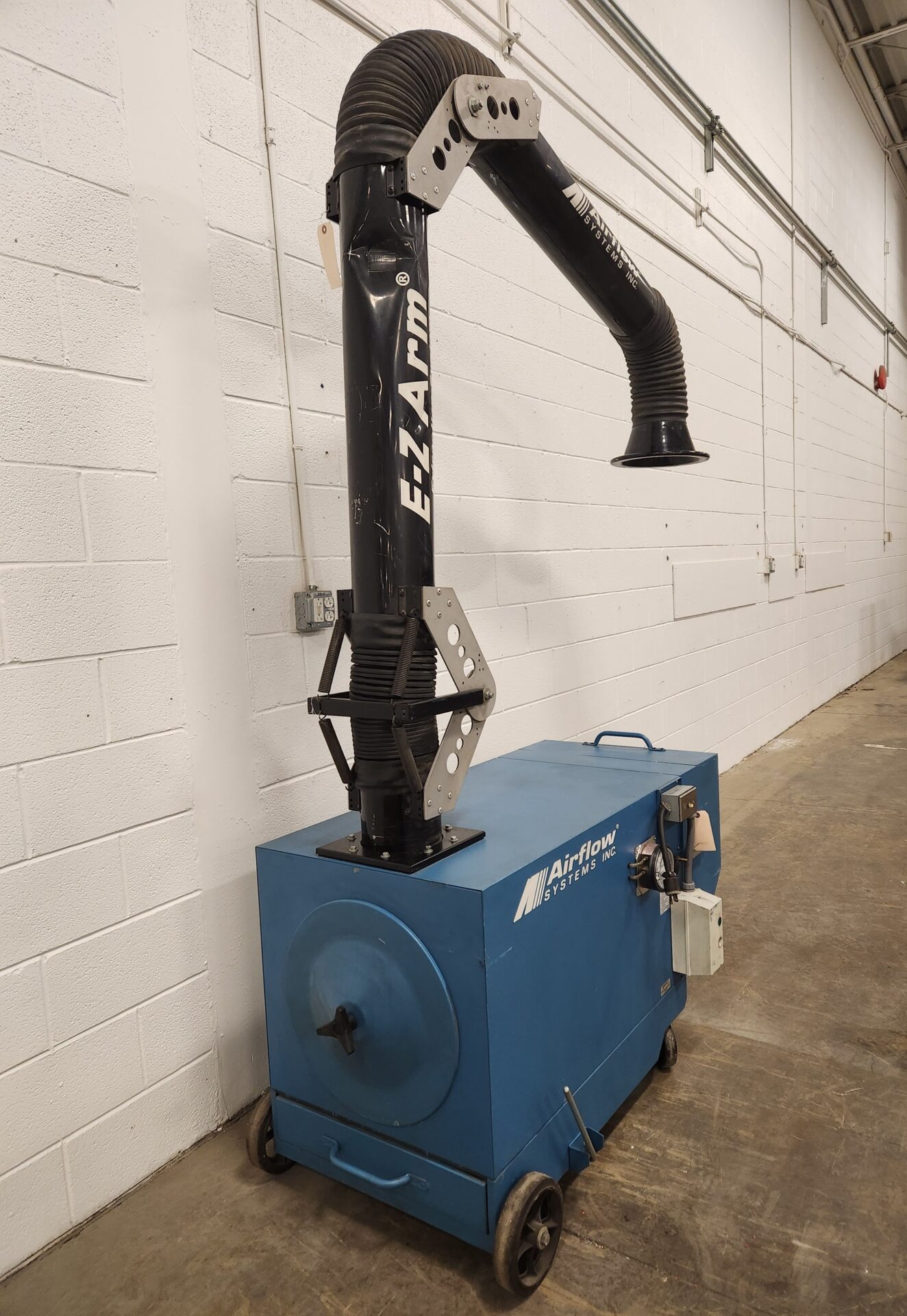
Specialized areas such as commercial kitchens, bathrooms, and workshops require specific formulas that account for moisture generation, cooking equipment heat output, or hazardous particulate removal. Kitchen exhaust hoods, for instance, are often sized by linear footage of the cooking surface or by thermal output rather than simple room volume.
| Application Type | Recommended Air Changes per Hour (ACH) or Basis | Typical CFM Range | Primary Objective |
|---|---|---|---|
| Residential Living Room | 4 to 6 ACH | 100 – 300 CFM | Thermal comfort and freshness |
| Residential Bathroom | 8 to 10 ACH or minimum standard | 50 – 100 CFM | Moisture and odor extraction |
| Commercial Kitchen | Thermal output and capture velocity | 300 – 1,500+ CFM | Grease, smoke, and heat removal |
| Workshop or Garage | 6 to 10 ACH | 200 – 600 CFM | Dust, fume, and chemical dilution |
| Office Conference Room | 8 to 12 ACH | 150 – 500 CFM | $\text{CO}_2$ dilution and odor control |
Key Factors That Restrict and Influence Airflow
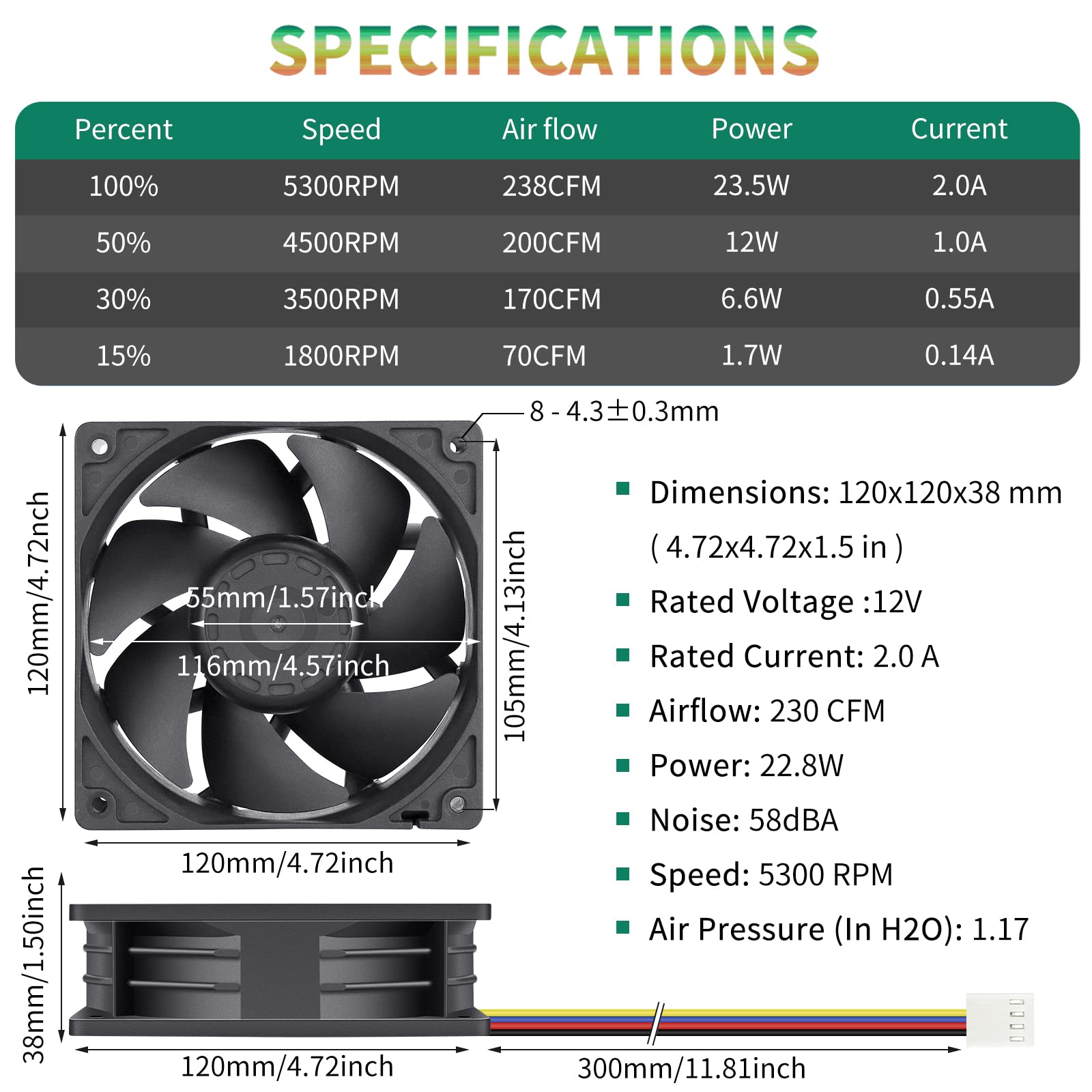
Even when a blower motor or fan is rated for a high CFM output, real-world installations rarely achieve their theoretical maximums due to systemic resistance. Air moving through ducts encounters friction against duct walls, turbulence at bends, and pressure drops across filters and grilles.
Static pressure, measured in inches of water column, quantifies the resistance that air handlers must overcome to move air through a distribution network. As static pressure increases, the actual CFM delivered by a blower decreases unless the fan speed or motor power increases to compensate. Flexible ductwork, sharp ninety-degree elbows, collapsed or crushed channels, and dirty air filters significantly inflate static pressure.
| Resistance Factor | Impact on System CFM | Mitigation Strategy |
|---|---|---|
| Dirty Air Filters | Severe reduction | Replace or clean filters regularly |
| Flexible Duct Bends | Moderate to severe drop | Keep runs straight and taut |
| Undersized Supply Grilles | Increased static pressure | Select grilles matched to design CFM |
| Long Duct Runs | Gradual pressure loss | Increase duct diameter to lower friction |
Tools and Methods for Measuring CFM in the Field
Verifying actual airflow requires specialized instruments because human perception cannot accurately gauge volumetric flow rates. HVAC technicians and energy auditors rely on several standardized testing devices to measure CFM at supply diffusers, return grilles, and exhaust vents.
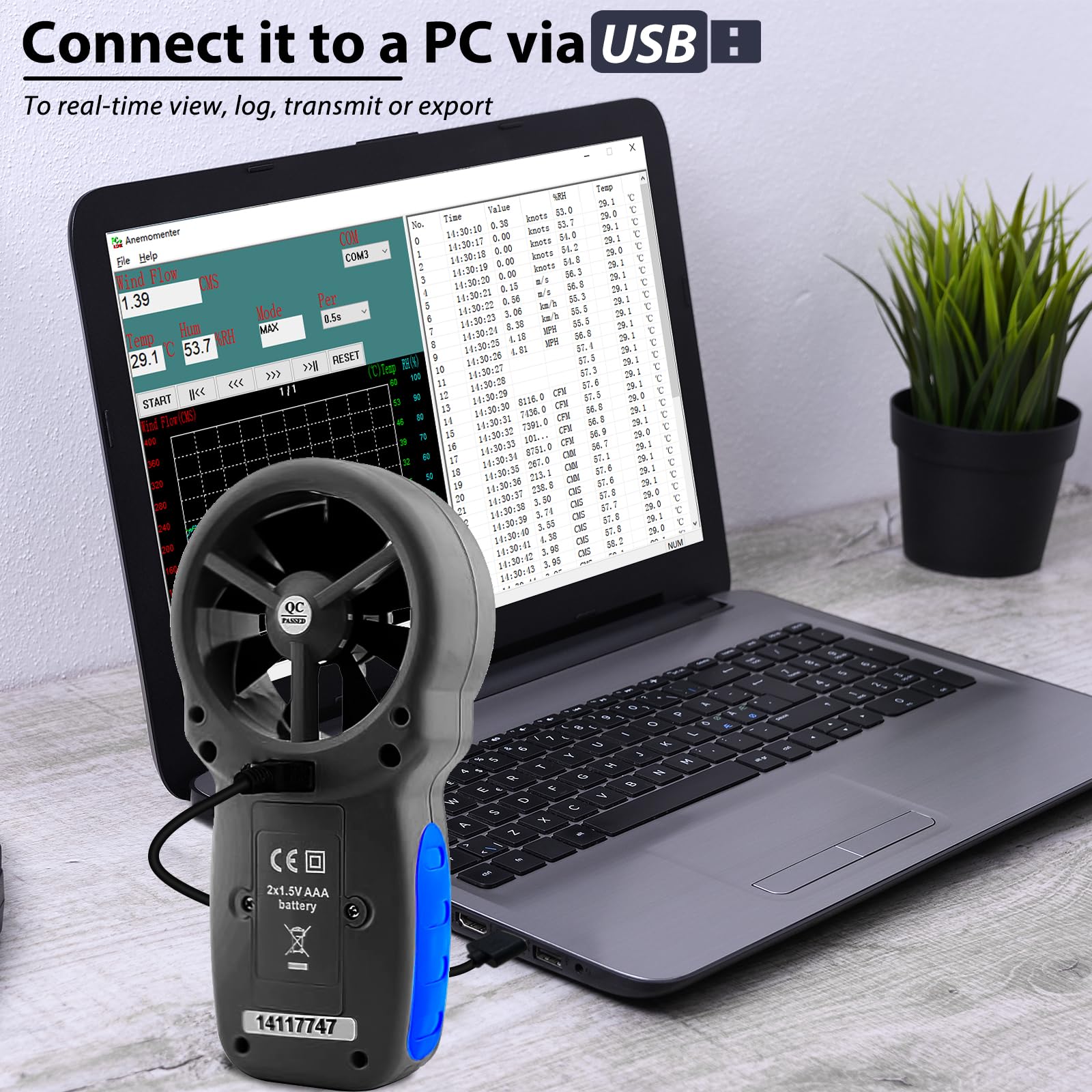
An anemometer, particularly a rotating vane anemometer or thermal hot-wire anemometer, measures air velocity in feet per minute. By multiplying the average measured velocity by the cross-sectional area of the duct or register in square feet, technicians calculate the actual CFM.
Another primary tool is the flow hood, or balometer, which places a large fabric hood directly over a supply or return register. The hood captures all air leaving or entering the register and channels it through an internal sensor matrix that reads CFM directly on a digital display. This method eliminates manual mathematical conversions and provides rapid, accurate readings for balancing commercial and residential air distribution systems.
Common Mistakes in Airflow Design and Balancing
System designers and installers frequently make preventable errors that compromise airflow performance and increase energy consumption. Recognizing these pitfalls helps ensure long-term system reliability.
One frequent mistake is assuming that fan motor horsepower dictates actual airflow. A high-horsepower motor cannot force adequate CFM through an undersized duct system restricted by high static pressure. Another common error involves failing to balance supply and return airflows, which creates negative or positive building pressure. Excessive negative pressure can draw unconditioned outdoor air through building envelopes, pull combustion gases back down chimneys, and introduce radon or moisture into living spaces. Additionally, neglecting to account for altitude is a critical oversight; air density decreases at higher elevations, requiring larger fans or adjusted motor speeds to move an equivalent mass of air.
How to Optimize Your System for Maximum CFM Efficiency
Maximizing airflow efficiency requires a holistic approach that addresses equipment selection, distribution pathways, and routine maintenance protocols. Start by ensuring that your ductwork is properly sized, sealed with mastic or approved foil tape, and insulated to prevent thermal losses and pressure leaks.
Schedule routine maintenance checks to clean evaporator coils, inspect blower wheels for dust accumulation, and replace air filters according to manufacturer guidelines. If your space feels stuffy or temperatures remain uneven despite regular maintenance, hire a certified professional to perform a duct pressurization test and balance the system using a flow hood or anemometer. Taking these steps protects your mechanical equipment from premature burnout and maintains a healthy indoor environment.
Frequently Asked Questions About Airflow CFM
How does duct size affect CFM output?
Duct size directly dictates the volume and velocity of air a system can transport. Smaller ducts restrict airflow by increasing friction and static pressure, which forces blower motors to work harder while delivering fewer CFM. Conversely, oversized ducts can cause air velocity to drop too low, leading to poor distribution and temperature stratification.
What is the difference between CFM and static pressure?
CFM measures the volumetric flow rate of air moving through a system per minute. Static pressure measures the resistance or backpressure that air encounters against duct walls, filters, and fittings. While CFM represents the output volume, static pressure represents the physical force the blower must overcome to achieve that volume.
Can I increase the CFM of my existing HVAC fan?
You can sometimes increase CFM by upgrading to a higher-efficiency blower motor, cleaning dirty coils and filters, or removing restrictions in the ductwork. However, increasing fan speed on a duct system that is not engineered for higher flow will spike static pressure, increase noise, and potentially damage the motor.
How many CFM do I need for a whole-house ventilation system?
Whole-house ventilation requirements are typically calculated using formulas from ASHRAE Standard 62.2, which combine the total floor area of the home and the number of bedrooms. A common baseline formula adds 75 CFM for basic continuous ventilation, though exact requirements vary based on climate and occupancy.
Why is my airflow CFM dropping over time?
A gradual drop in CFM usually stems from progressive airflow restrictions, such as loaded air filters, dust buildup on blower fan blades, ductwork collapse, or loose joints in the supply and return networks. Routine inspections help identify these restrictions before they cause equipment failure.