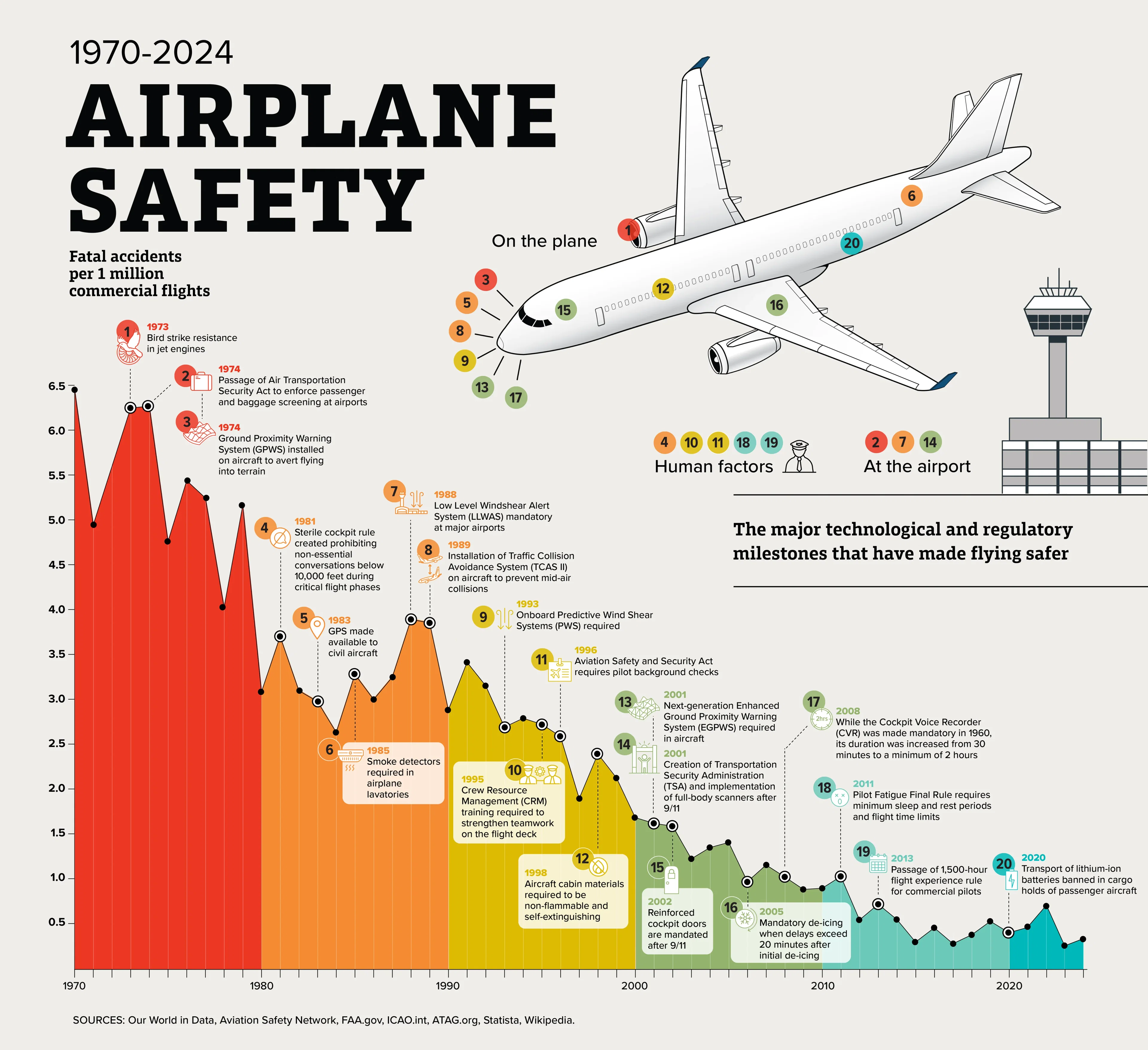
Aircraft safety encompasses a multidisciplinary approach to accident prevention, survivability enhancement, and regulatory enforcement across global aviation networks. By integrating advanced engineering redundancy, rigorous pilot training, and standardized air traffic management, commercial and private aviation achieves exceptionally low casualty rates per passenger mile.
Modern aviation safety is governed by a robust framework of international treaties, national regulatory bodies, and continuous technological innovation. When examining aircraft safety, researchers and aviation professionals look at how structural integrity, mechanical systems, human factors, and meteorological forecasting interact to maintain high levels of flight reliability. The discipline relies on data-driven investigations, mandatory incident reporting, and predictive maintenance to mitigate risks before they compromise flight operations.
Regulatory Frameworks and International Oversight Bodies
The foundation of global aircraft safety rests on international cooperation and standardized legal mandates. The International Civil Aviation Organization (ICAO), a specialized agency of the United Nations, establishes the baseline Standards and Recommended Practices (SARPs) codified within the nineteen annexes of the Chicago Convention. These standards cover everything from personnel licensing and rules of the air to airworthiness and accident investigation.
National authorities enforce these international baselines while implementing supplementary regional rules tailored to domestic airspace complexities. Notable regulators include the Federal Aviation Administration (FAA) in the United States and the European Union Aviation Safety Agency (EASA). These organizations issue Type Certificates for new aircraft designs, Airworthiness Directives (ADs) for mandatory fleet modifications, and operational specifications for air carriers. Compliance with these directives is non-negotiable for commercial operators seeking to maintain their Air Operator Certificates (AOC).
Beyond initial certification, regulatory oversight requires continuous surveillance of airline maintenance facilities, flight crew training logs, and dispatch procedures. Safety Management Systems (SMS) are now universally mandated for commercial operators, shifting the regulatory paradigm from reactive compliance to proactive hazard identification and risk mitigation. An SMS framework requires airlines to maintain non-punitive reporting systems where employees can log safety concerns without fear of retribution, fostering an organizational culture dedicated to transparency.
Mechanical Redundancy and Airframe Engineering
Aircraft are engineered with multiple layers of mechanical and electrical redundancy to ensure that a single component failure does not lead to catastrophic loss of control. Critical systems—such as flight controls, hydraulic actuators, and electrical power generation—typically feature dual, triple, or quadruple redundancy. For instance, modern commercial transport category aircraft utilize multiple independent hydraulic systems operating at high pressures to move heavy control surfaces like ailerons, elevators, and rudders. If one hydraulic pump or engine fails, cross-feed valves and backup electric pumps maintain full control authority.
Structural integrity testing begins long before an aircraft enters commercial service. Manufacturers subject full-scale airframes to static and dynamic fatigue testing in specialized water tanks, simulating tens of thousands of flight cycles of pressurization, takeoff loads, and landing impacts. Materials science plays a vital role here, transitioning from traditional aluminum alloys to advanced composite materials like carbon-fiber-reinforced polymers. These composites offer superior fatigue resistance and strength-to-weight ratios, though they require specialized non-destructive testing (NDT) techniques such as ultrasonic inspection during routine maintenance checks.
| System Component | Redundancy Level | Primary Function | Failure Mitigation Strategy |
|---|---|---|---|
| Flight Control Actuation | Triple/Quadruple | Manages ailerons, elevators, rudders | Independent hydraulic and electric power loops |
| Electrical Generation | Dual/Triple Bus | Powers avionics, de-icing, cabin systems | Constant speed drive generators and Ram Air Turbine (RAT) |
| Avionics Navigation | Dual Flight Management Systems | Route planning and instrument approach | Dual inertial reference units coupled with GPS/SBAS |
| Engine Power Plants | Twin or Quad Engine | Generates thrust for flight | Extended-range twin-engine operational performance standards (ETOPS) |
Human Factors and Crew Resource Management
Historically, the majority of aviation accidents involved human error rather than mechanical failure. To combat this, the aviation industry pioneered Crew Resource Management (CRM) in the late 1970s and 1980s, transforming cockpit culture from a rigid hierarchical structure into a collaborative team environment. CRM trains pilots and flight attendants to communicate effectively, manage fatigue, recognize cognitive biases, and cross-check each other's actions without regard to rank or seniority.
Pilot training programs have similarly evolved from basic stick-and-rudder instruction to sophisticated scenario-based training utilizing Full Flight Simulators (FFS). These high-fidelity simulators replicate exact cockpit environments, motion dynamics, and complex weather phenomena. Simulators allow flight crews to practice hazardous emergencies—such as engine fires, severe wind shear, hydraulic failure, and dual-engine flameouts—in a zero-risk environment. Furthermore, Line-Oriented Flight Training (LOFT) places crews in realistic, unscripted flight scenarios to evaluate their decision-making, resource management, and adherence to standard operating procedures (SOPs).
Fatigue risk management systems (FRMS) represent another critical human factors milestone. Regulatory bodies enforce strict limitations on flight duty periods, minimum rest requirements, and cumulative monthly flying hours. Airlines must account for circadian rhythms, time-zone transitions, and time-of-day variables when scheduling crews to ensure alertness and cognitive readiness throughout every flight leg.
Advanced Avionics and Collision Avoidance Technologies
Modern flight decks are equipped with sophisticated electronic instrumentation and automated safety nets designed to prevent human piloting errors from resulting in accidents. The Traffic Alert and Collision Avoidance System (TCAS) actively interrogates the transponders of nearby aircraft, generating visual and auditory resolution advisories if a potential mid-air collision is projected. TCAS coordinates directly with compatible systems on other aircraft, automatically directing one pilot to climb while instructing the other to descend.
Ground Proximity Warning Systems (GPWS) and Enhanced Ground Proximity Warning Systems (EGPWS) use radar altimeters, internal GPS databases, and terrain mapping to prevent Controlled Flight Into Terrain (CFIT)—an accident scenario where an airworthy aircraft is inadvertently flown into the ground, water, or an obstacle. EGPWS provides real-time visual displays and voice alerts (such as "PULL UP" or "TERRAIN AHEAD") giving flight crews precious seconds to initiate a recovery maneuver.
| Technology | Primary Purpose | Operational Mechanism |
|---|---|---|
| TCAS | Mid-air collision avoidance | Interrogates transponders of surrounding aircraft to issue advisories |
| EGPWS | CFIT prevention | Compares real-time GPS position with onboard terrain databases |
| ADS-B Out/In | Airspace surveillance | Broadcasts precise GPS position and receives real-time traffic data |
| Autoland Systems | Low-visibility operations | Couples autopilot directly to Instrument Landing System (ILS) beams |
Emergency Response, Evacuation, and Survivability
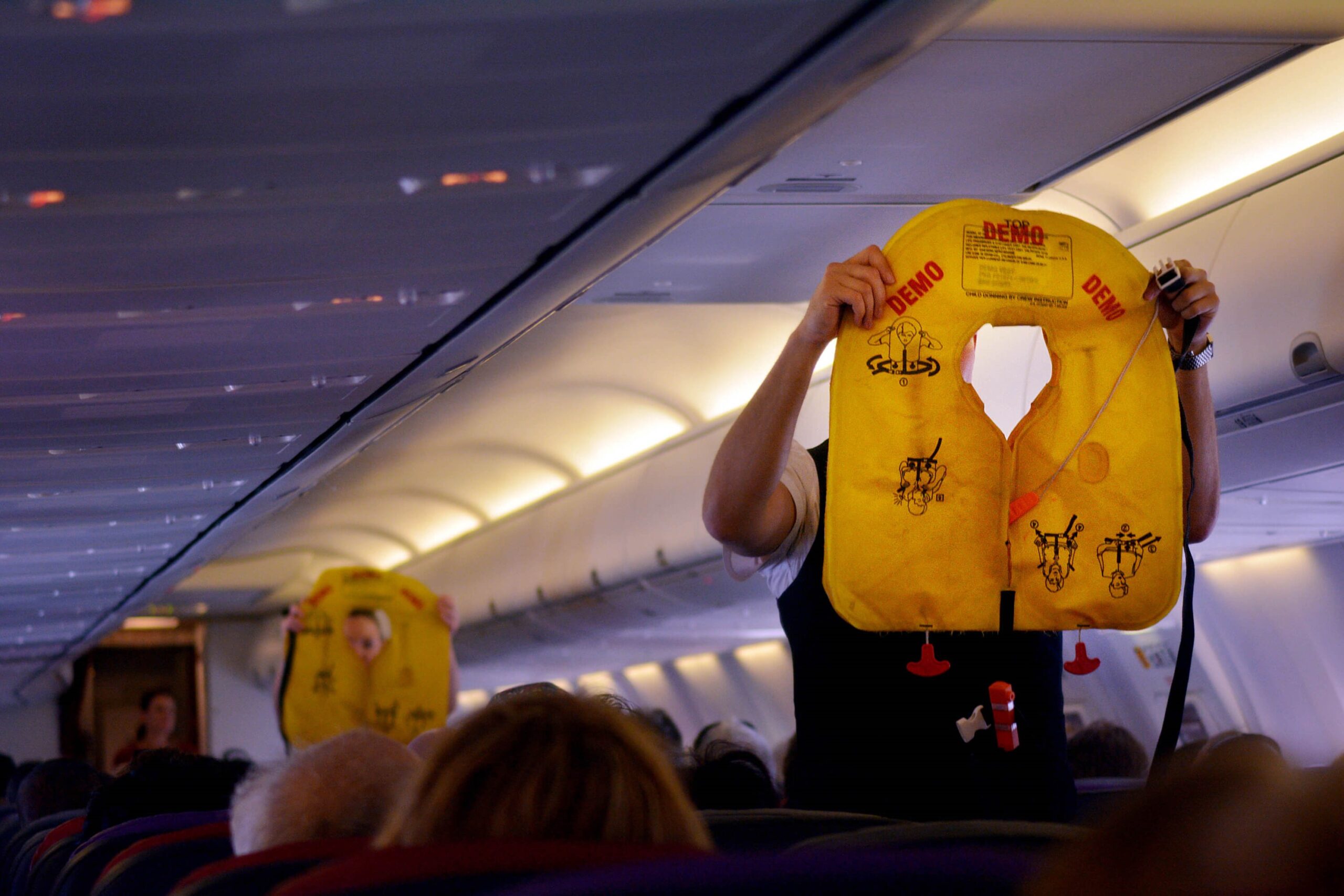
Despite extensive preventive measures, aviation safety engineering extends to post-accident survival. Airframe interior materials are rigorously tested for fire resistance, smoke emission, and toxicity, buying critical minutes for passenger evacuation during a ground incident. Cabin emergency exit paths are marked with photoluminescent strips and low-level lighting designed to remain visible under thick smoke conditions.
Evacuation slide systems, deployed from aircraft doors positioned several meters above the ground, must be capable of inflating in under six seconds and evacuating a full wide-body cabin within 90 seconds using only 50 percent of available exits. Certification standards require manufacturers to demonstrate compliance through rigorous evacuation trials under simulated emergency conditions prior to public carrier deployment.
Emergency Locator Transmitters (ELTs) are permanently installed on commercial and general aviation airframes to assist search and rescue operations. Modern ELTs operate on the 406 MHz frequency, transmitting digitally coded identification signals directly to the Cospas-Sarsat satellite network. These signals provide search and rescue coordination centers with precise geographical coordinates, reducing response times in remote or maritime environments.
How to Verify Airline and Operator Safety Records
Passengers, corporate travel managers, and logistics coordinators often need to evaluate the safety standing of specific commercial airlines. While major carriers undergo rigorous international audits, verifying independent safety data requires consulting recognized oversight registries rather than relying solely on marketing claims or consumer review platforms.
- Review Regulatory Audit Status: Check whether the airline holds active certification from primary authorities such as the FAA or EASA, or if they appear on restricted air carrier lists (such as the EU Air Safety List).
- Examine IOSA Registration: Look for carriers registered under the IATA Operational Safety Audit (IOSA) program. IOSA is an internationally recognized evaluation system designed to assess the operational management and control systems of an airline.
- Investigate National Accident Databases: Consult public databases maintained by independent government bodies such as the National Transportation Safety Board (NTSB) in the United States or equivalent national transport boards to review historical incident reports.
- Inspect Fleet Age and Maintenance Profiles: Analyze the average age of the airline's operating fleet and verify whether their maintenance is performed internally or outsourced to certified Part 145 repair stations.
Frequently Asked Questions
What makes commercial air travel statistically safer than other forms of transportation?
Commercial aviation maintains a remarkably low accident rate due to a combination of heavy regulatory oversight, mandatory system redundancies, rigorous pilot training, and a strict safety culture driven by continuous data analysis. Unlike highway travel, where drivers operate with variable skill levels and unpredictable variables, commercial flights are operated by highly trained professional crews adhering to strict operational protocols within a managed air traffic control environment.
What is an Airworthiness Directive and who issues them?
An Airworthiness Directive is a legally enforceable regulation issued by a national aviation authority, such as the FAA or EASA, to notify aircraft owners and operators of unsafe conditions. These directives typically mandate specific inspections, modifications, or operational limitations to be performed on a particular aircraft model, engine, propeller, or appliance before further flight.
How do flight data recorders and cockpit voice recorders function?
Flight Data Recorders (FDRs) and Cockpit Voice Recorders (CVRs)—commonly known as black boxes—are hardened electronic devices designed to withstand extreme impact forces, high temperatures, and deep-sea immersion. FDRs continuously log dozens of operational parameters including altitude, airspeed, control surface positions, and engine performance, while CVRs capture crew communications and ambient cockpit sounds. Investigators use these data streams to reconstruct the sequence of events leading up to an incident or accident.
What is ETOPS and why is it important for aircraft safety?
ETOPS stands for Extended-range Twin-engine Operational Performance Standards. Originally established to govern twin-engine aircraft flying routes that took them far from emergency diversion airports, ETOPS certification requires operators to prove that an aircraft's engines and systems possess exceptional reliability. An airline must demonstrate that a twin-engine jet can safely fly and land on a single operational engine for extended periods—ranging from 120 to over 370 minutes—before being cleared for transoceanic or remote continental routes.
How do airlines manage pilot fatigue during long-haul flights?
Airlines manage pilot fatigue through structured Fatigue Risk Management Systems (FRMS) that dictate maximum duty days, mandatory rest periods between shifts, and cumulative flight hour caps. On ultra-long-haul flights exceeding standard crew endurance limits, airlines utilize augmented flight crews consisting of three or four pilots. These crews rotate duties, utilizing dedicated onboard rest facilities or bunk compartments to ensure that operating pilots remain fully rested during critical phases of flight.
Ensuring Ongoing Compliance and Operational Vigilance
Maintaining high safety standards in aviation requires constant vigilance from all stakeholders, including manufacturers, operators, regulators, and flight crews. Organizations must continuously analyze operational data from flight operations quality assurance (FOQA) programs to identify minor anomalies before they manifest as mechanical failures or procedural deviations. Prioritizing proactive risk management, transparent reporting, and adherence to international standards remains the most effective strategy for preserving the integrity of global air transport.