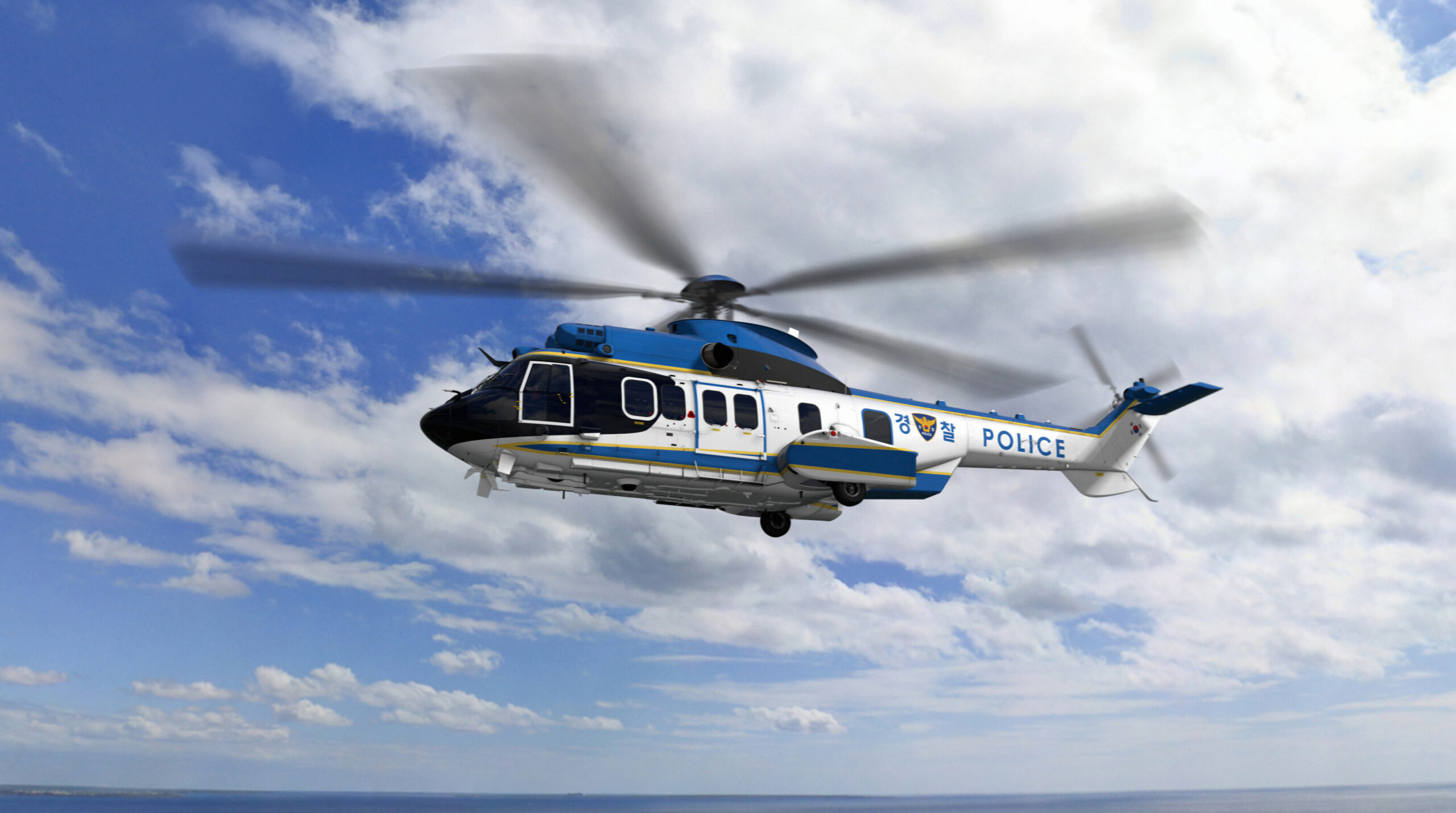
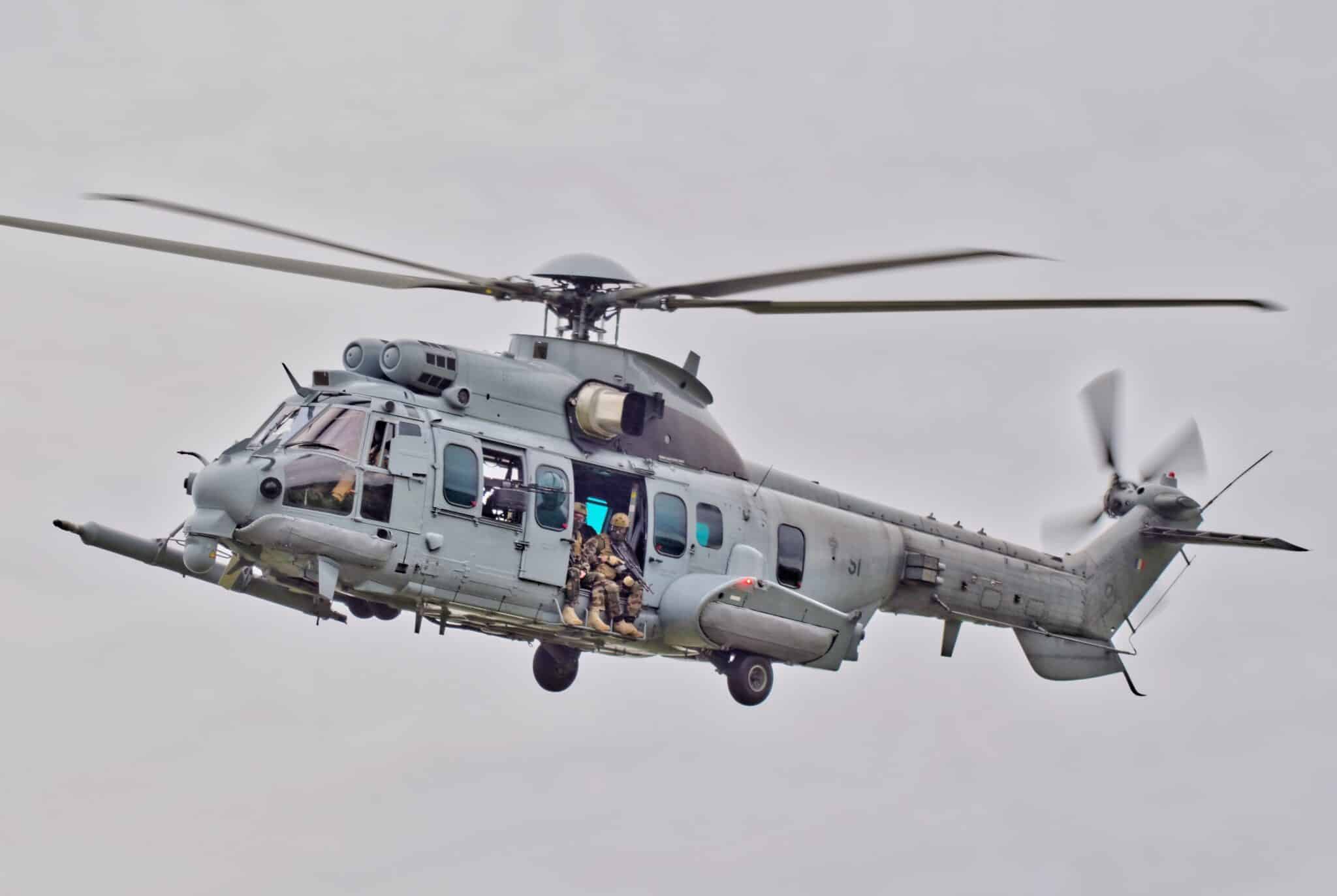
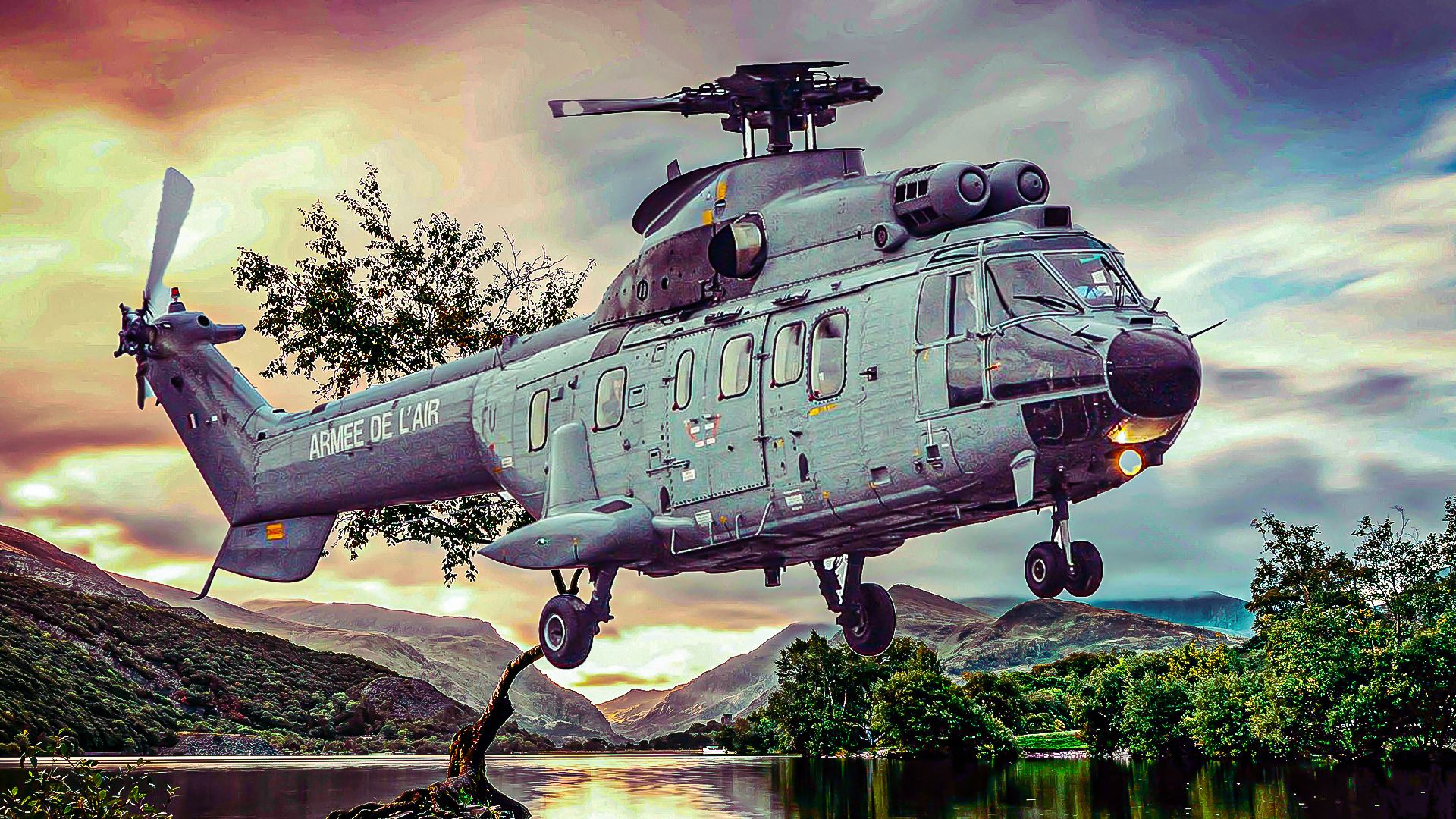
The Airbus H225 Super Puma is a twin-engine, long-range passenger and heavy-lift utility helicopter designed to serve demanding industrial sectors, including offshore oil and gas transport, search and rescue operations, and military utility missions. Representing the pinnacle of the Eurocopter/Airbus Helicopters Cougar family, the H225 delivers exceptional payload capacity, advanced digital avionics, and high-altitude performance across extreme operational environments.
Engineering Heritage and Evolution from the Puma Family
The Airbus H225—originally designated as the Eurocopter EC225 Super Puma—traces its lineage directly back to the Aérospatiale SA 330 Puma, a medium-lift utility transport that first flew in 1965. Recognizing the market demand for a larger cabin, heavier payload capacity, and superior range, manufacturers evolved the platform through several generations, culminating in the AS332 Super Puma and eventually the modern H225.
The primary leap from the AS332 L2 to the H225 involved a complete redesign of the main rotor system. Engineers introduced a newly shaped, five-blade aerodynamic main rotor utilizing composite materials. This innovation significantly reduced vibration levels within the cabin, lowered exterior noise signatures, and improved lift efficiency at maximum takeoff weight. Additionally, the transmission system was reinforced to handle increased torque from two modern turboshaft engines, allowing the aircraft to lift heavy external loads and transport up to 19 passengers comfortably over extended maritime distances.
Powerplants and Flight Deck Avionics Architecture
At the heart of the H225's heavy-lift capability are two Safran Makila 2A (or upgraded 2A1) turboshaft engines. Each engine is managed by a dual-channel Full Authority Digital Engine Control (FADEC) system, which continuously optimizes fuel flow, prevents over-temperature conditions, and provides automatic engine backup control in the event of primary computer failure. This high power output ensures category A performance, enabling the aircraft to safely continue flight or execute a controlled landing following an engine failure, even when operating near maximum gross weight.
The cockpit features a modernized glass flight deck designed around a four-axis digital autopilot. This advanced autopilot system integrates seamlessly with dual-duplex flight management systems (FMS), electronic instrument displays, and tactical radios. For precision operations in low-visibility or offshore environments, the flight deck supports flight director coupling down to hover, significantly reducing pilot workload during complex search and rescue winching operations or instrument meteorological conditions (IMC) approaches.
Core Technical Specifications and Performance Metrics
Understanding the operational boundaries of the H225 requires a close examination of its structural dimensions, weights, and performance envelopes. The aircraft is engineered to balance high cruising speeds with substantial fuel endurance, making it a preferred choice for long-range transport missions.
| Technical Parameter | Specification Measurement |
|---|---|
| Max Takeoff Weight (Internal) | 11,000 kg (24,251 lbs) |
| Max Takeoff Weight (External Sling) | 11,200 kg (24,691 lbs) |
| Useful Load Capacity | Up to 5,500 kg (depending on configuration) |
| Powerplant (Twin) | Safran Makila 2A1 turboshafts |
| Maximum Cruise Speed | 157 knots (291 km/h) |
| Never Exceed Speed (Vne) | 175 knots (324 km/h) |
| Standard Range (Internal Tanks) | Approx. 457 nautical miles (847 km) |
| Service Ceiling | 19,980 feet (6,090 meters) Density Altitude |
Operational Roles: Offshore Transport, SAR, and Public Service
The versatility of the H225 allows it to transition between vastly different industrial and governmental sectors without requiring structural modifications. In the offshore energy sector, oil and gas operators rely on the aircraft to shuttle personnel and supplies from mainland heliports to deepwater production platforms hundreds of miles out to sea. The spacious cabin accommodates specialized seating arrangements, emergency flotation gear, and life rafts required for extended over-water flights.
Beyond commercial energy logistics, the H225 serves extensively in combat search and rescue (CSAR), civil search and rescue (SAR), and disaster relief. Government agencies and military branches utilize its all-weather capability, night-vision goggle (NVG) compatible cockpit lighting, and dual rescue hoist systems to extract survivors from turbulent seas, mountainous terrain, or disaster zones. The cabin's ample volume also permits the installation of intensive care medical equipment, transforming the helicopter into a flying intensive care unit for critical patient evacuations.
Safety Enhancements, Regulatory Oversight, and Fleet History
Operating heavy-lift helicopters in hostile weather and remote maritime regions demands stringent safety protocols. Following historical fleet grounding events and rigorous airworthiness directives issued by the European Union Aviation Safety Agency (EASA) and other international regulators, Airbus Helicopters implemented comprehensive redesigns to critical components. These interventions included enhanced main gearbox structural integrity monitoring systems, advanced health and usage monitoring systems (HUMS), and modified component inspection intervals.
Today, operators benefit from real-time data streaming that tracks drivetrain vibrations, thermal trends, and pilot control inputs. This predictive maintenance approach ensures potential mechanical anomalies are detected and resolved long before they impact flight safety. Furthermore, training programs for H225 flight crews incorporate full-flight simulators replicating engine failures, severe weather windshear, and emergency offshore ditching procedures.
Comparing the H225 to Alternative Heavy-Lift Helicopters
When fleet managers evaluate heavy-lift procurement options, the Airbus H225 is frequently compared against other market leaders, such as the Sikorsky S-92 and the Leonardo AW101. Each platform offers distinct engineering philosophies tailored to specific mission profiles.
- Airbus H225: Excels in maximum payload-to-weight efficiency, cabin volume flexibility, and high-altitude/hot-weather performance. Its five-blade rotor system minimizes vibration, enhancing passenger comfort on long transit legs.
- Sikorsky S-92: Renowned for its exceptionally large cabin cross-section, robust bird-strike-resistant airframe, and strong presence in North American and European offshore sectors. It features a traditional four-blade main rotor and dual General Electric CT7 engines.
- Leonardo AW101: A three-engine heavy-lift platform providing massive internal volume and exceptional safety margins through tri-motor redundancy, though typically accompanied by higher operating and acquisition costs.
Evaluating Mission Suitability and Fleet Integration
Deploying the Airbus H225 Super Puma into an existing commercial or governmental fleet requires a careful assessment of infrastructure, training investments, and maintenance pathways. Organizations must evaluate whether their current hangar facilities, ground support equipment, and refueling capabilities can accommodate a multi-role heavy-lift aircraft of this scale.
Fleet operators should establish direct partnerships with authorized Airbus service centers to ensure reliable access to spare parts, blade balancing tools, and component overhauls. While the upfront capital expenditure and ongoing maintenance tracking demands are substantial, the H225 delivers unmatched productivity when deployed on high-utilization offshore routes or demanding emergency response missions where payload capacity and range cannot be compromised.
Frequently Asked Questions About the Airbus H225
How many passengers can the Airbus H225 Super Puma carry?
The H225 can be configured to seat up to 19 passengers in a standard density arrangement, or fewer passengers in VIP configurations with executive seating and increased luggage capacity.
What is the maximum range of the H225 without refueling?
With standard internal fuel tanks, the H225 has a maximum range of approximately 457 nautical miles (847 kilometers). This range can be extended utilizing auxiliary fuel tanks for long-range over-water or ferry flights.
Are there military variants of the H225 Super Puma?
Yes, the military designation is the Airbus H225M (formerly EC225M). It is equipped with tactical communication systems, self-protection suites, and provisions for door-mounted weaponry used by armed forces worldwide.
What engines power the Airbus H225?
The aircraft is powered by two Safran Makila 2A or 2A1 turboshaft engines controlled by dual-channel FADEC systems to ensure high performance and reliability under heavy loads.
How does the H225 differ from the older AS332 Super Puma?
The H225 features a completely redesigned five-blade composite main rotor, upgraded Safran Makila engines with greater torque limits, a reinforced main gearbox, and a modern glass cockpit with a four-axis digital autopilot.