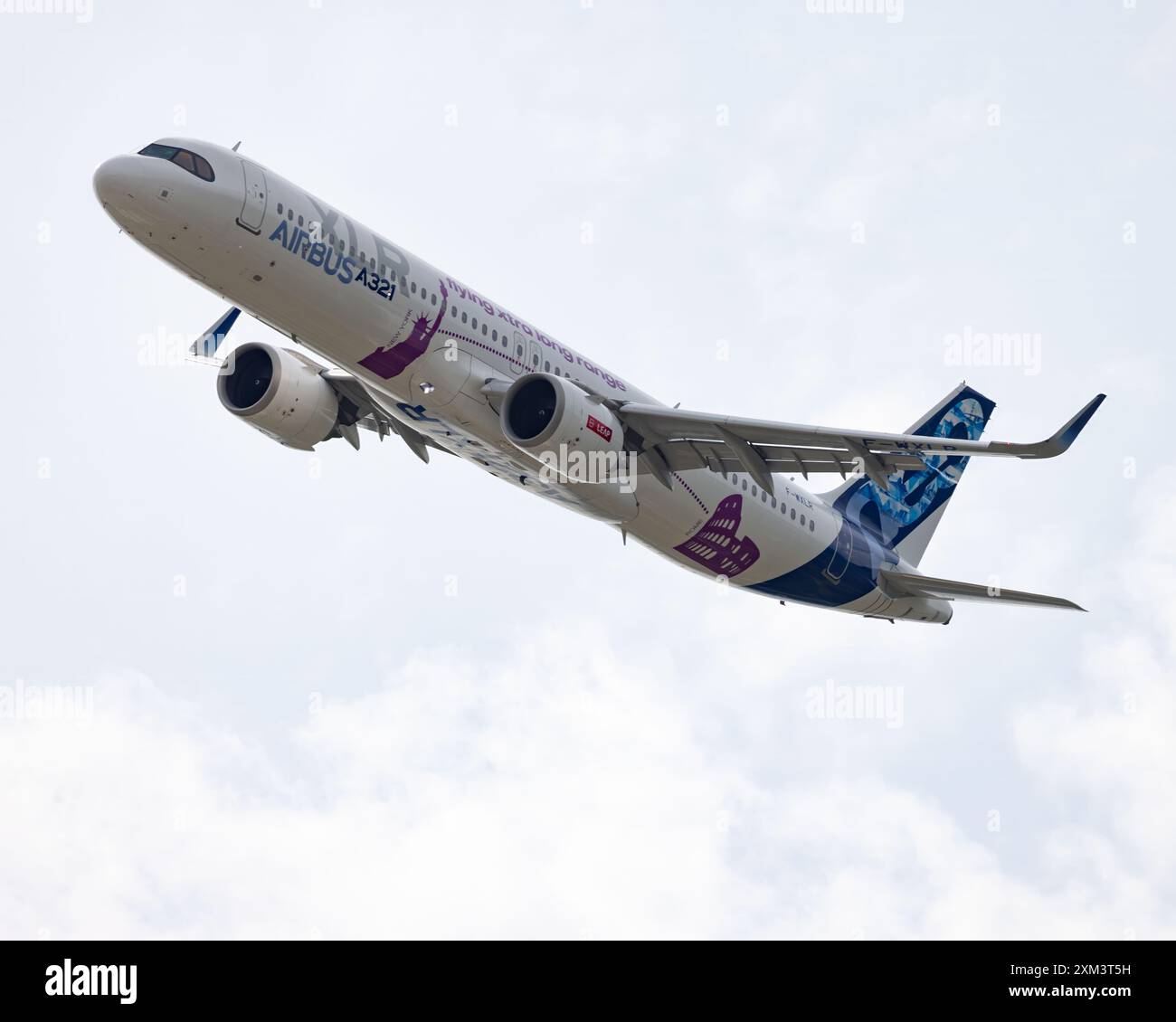
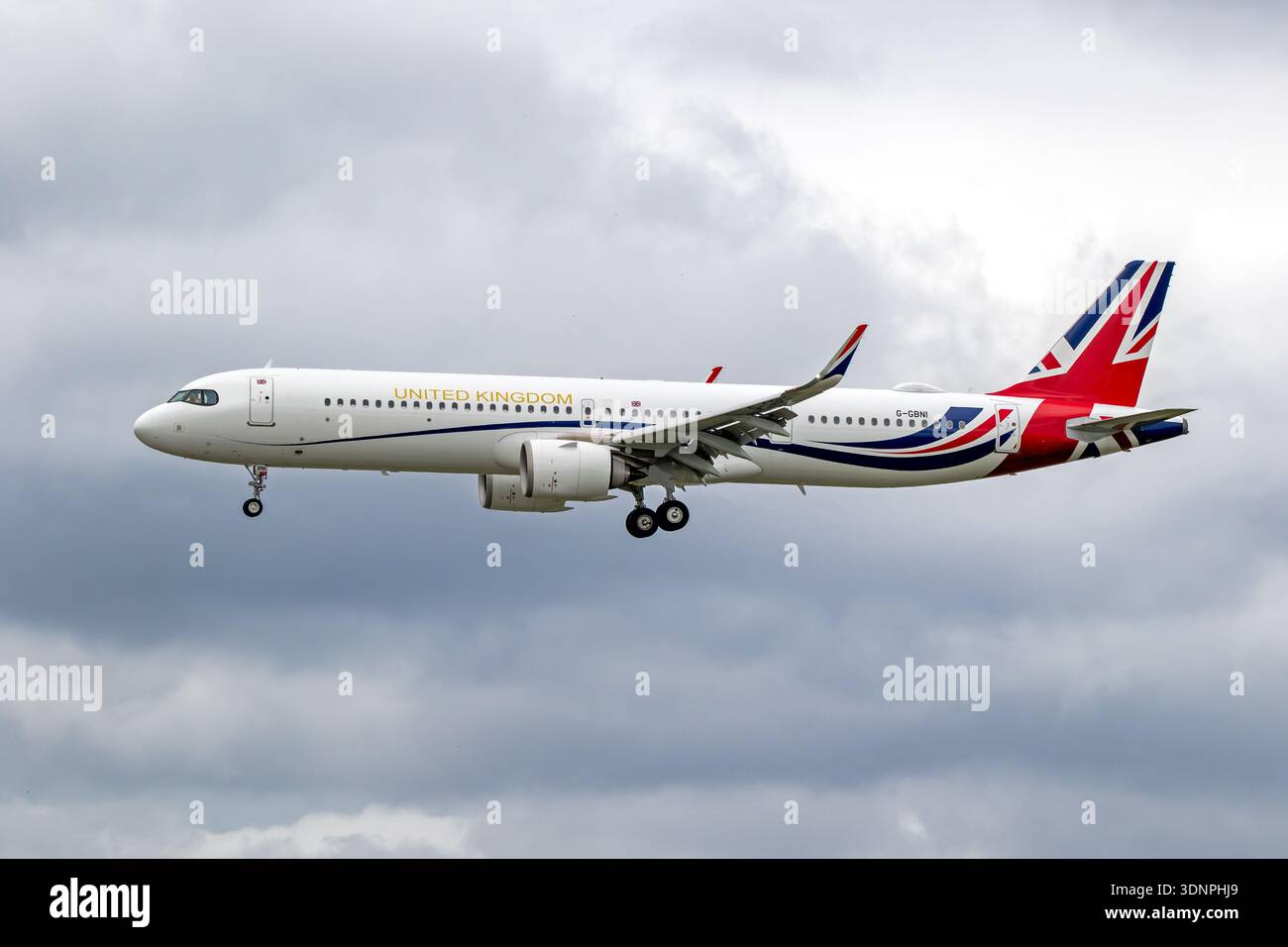
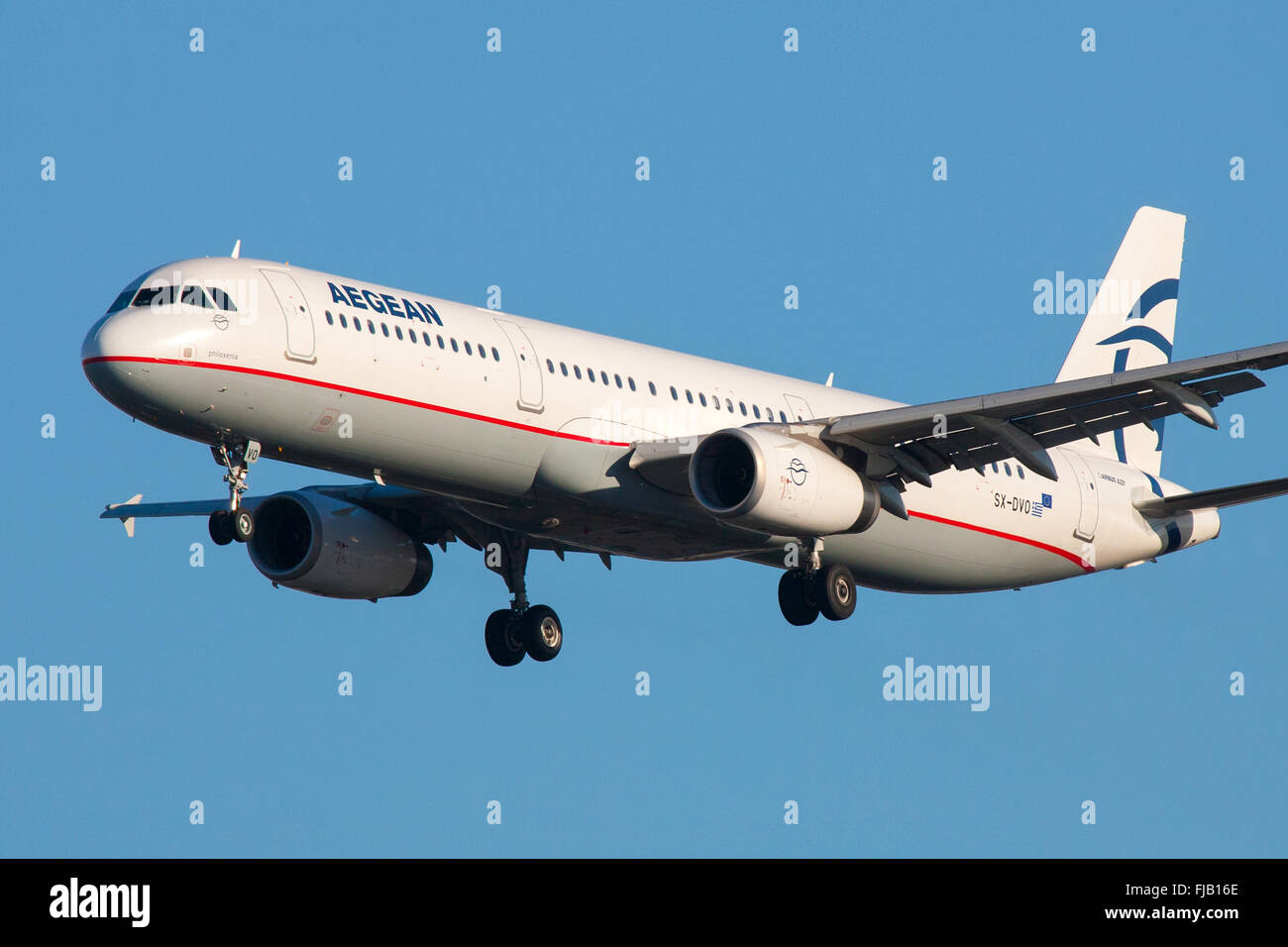
The Airbus A321 is a stretch-variant, narrow-body twinjet airliner developed by Airbus, renowned for its operational flexibility, high passenger capacity, and central role in reshaping short- to medium-haul commercial aviation. As the largest member of the foundational A320 family, the aircraft bridges the gap between regional single-aisle jets and wide-body long-haul airframes.
Introduction to the Airbus A321 Family
The commercial aviation landscape shifted significantly when manufacturers sought higher density and extended range from single-aisle platforms. Introduced to commercial service in 1994, the Airbus A321 was designed to meet airline demands for increased capacity on high-density domestic and regional routes without transitioning to wide-body aircraft. By extending the fuselage of the popular A320, Airbus created an airframe capable of carrying up to 240 passengers in a high-density configuration while sharing a common type rating with its sister aircraft. This commonality allows airlines to train pilots and maintenance crews interchangeably across the A320 family, driving down operational overhead.
Over the decades, the platform has evolved from its original International Aero Engines (IAE) V2500 and CFM International CFM56 powered variants into the modern, highly efficient Airbus A321neo (New Engine Option) family. The introduction of advanced turbofan engines, coupled with large wingtip devices known as Sharklets, transformed the aircraft's economic profile. Today, variants like the A321LR (Long Range) and the A321XLR (Extra Long Range) routinely fly transcontinental and transatlantic routes that were once the exclusive domain of wide-body twins like the Boeing 767 or Airbus A330.
Airframe Design and Structural Engineering
At the structural level, the Airbus A321 features a monocoque fuselage engineered from aluminum alloys, with extensive use of composite materials for secondary structures, fairings, and control surfaces. The fuselage is lengthened by 6.94 meters compared to the base A320 model, achieved through plug inserts forward and aft of the wing box. This stretch required structural reinforcement of the floor beams, landing gear, and wing attachment points to manage the increased maximum takeoff weight (MTOW).
The wing design incorporates a supercritical airfoil optimized for high subsonic cruise speeds, typically Mach 0.78 to Mach 0.82. Unlike smaller narrow-bodies, the A321 utilizes double-slotted Fowler flaps to ensure excellent low-speed lift characteristics during takeoff and landing, maintaining safe approach speeds despite its heavier operating weight. The empennage features a conventional configuration with a low-mounted horizontal stabilizer and a tall vertical fin, providing positive directional stability throughout the flight envelope.
Cockpit Avionics and Flight Control Systems
The flight deck of the Airbus A321 is standardized across the entire A320 family, utilizing a pioneering digital fly-by-wire (FBW) control architecture. Introduced to commercial aviation by Airbus in the 1980s, the FBW system replaces traditional mechanical cables and pulleys with electrical signaling transmitted through flight control computers. These computers continuously monitor flight parameters and enforce flight envelope protections, preventing the crew from executing maneuvers that would exceed structural stress limits, stall the aircraft, or experience excessive bank angles.
Pilots interact with the aircraft via side-stick controllers rather than traditional central control columns, opening up sightlines to the glareshield and primary flight displays. The instrument panel is dominated by Electronic Instrument System (EIS) screens, featuring Primary Flight Displays (PFD) and Navigation Displays (ND). In modern A321neo flight decks, these have been upgraded to large-format multi-function liquid crystal displays. Dual Head-Up Displays (HUD) are also increasingly integrated, enhancing low-visibility operations and situational awareness during critical phases of flight.
Engine Options and Propulsion Evolution
Propulsion choices have defined the operational capabilities of the Airbus A321 across its production lifecycle. Initial production models relied on legacy powerplants:
- CFM International CFM56-5: Known for mechanical reliability and widespread global support infrastructure.
- International Aero Engines (IAE) V2500-A5: Optimized for high-thrust requirements of the stretched airframe, delivering competitive specific fuel consumption during mid-range cruise segments.
The technological leap arrived with the A321neo program, which introduced next-generation powerplants offering double-digit reductions in fuel burn and nitrogen oxide emissions, alongside a significantly reduced noise footprint. Airlines choose between two distinct powerplants for the neo variant:
- CFM International LEAP-1A: Utilizes advanced woven carbon-fiber fan blades and a unique dual-axis configuration to optimize thermal efficiency.
- Pratt & Whitney GTF (PW1100G-JM): Features a revolutionary geared turbofan architecture, allowing the turbine fan to rotate at a different speed from the low-pressure compressor and turbine, maximizing bypass ratio and fuel economy.
Operational Performance and Technical Specifications
Understanding the envelope of the Airbus A321 requires examining key performance metrics across its primary generations. The following table contrasts standard technical characteristics of the classic A321-200 with the ultra-long-range A321XLR.
| Technical Parameter | Airbus A321-200 (Classic) | Airbus A321XLR |
|---|---|---|
| Length | 44.51 meters (146 feet) | 44.51 meters (146 feet) |
| Wingspan (with Sharklets) | 35.80 meters (117 feet 5 inches) | 35.80 meters (117 feet 5 inches) |
| Maximum Takeoff Weight (MTOW) | 93,500 kg (206,100 lbs) | 101,000 kg (222,660 lbs) |
| Typical Seating (2-Class) | 185 to 200 passengers | 180 to 220 passengers |
| Maximum Range | Approx. 3,200 nautical miles | Up to 4,700 nautical miles |
| Primary Powerplants | CFM56-5B or IAE V2500 | CFM LEAP-1A or Pratt & Whitney PW1100G |
Cabin Configurations and Passenger Experience
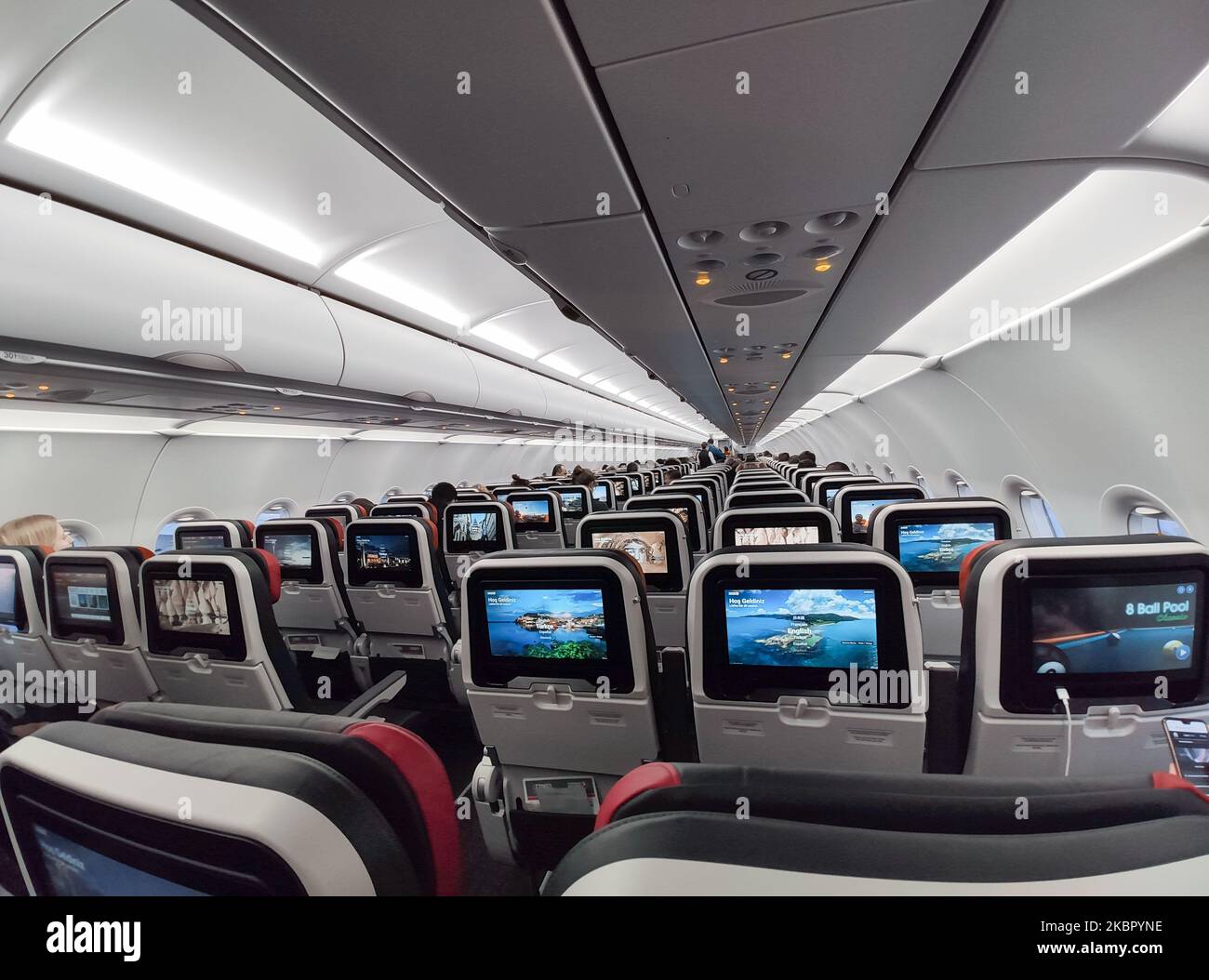
The interior cross-section of the Airbus A321 features a cabin internal width of 3.70 meters, offering airlines greater flexibility in seating arrangements compared to competing narrow-body aircraft. Standard economy layouts typically utilize a 3-3 abreast configuration, while premium transcontinental routes often incorporate lie-flat business class seats in a 2-2 or 1-1 layout.
Airbus introduced the Airspace cabin concept for the A321neo, bringing wide-body design elements to the single-aisle market. Key features of the Airspace interior include redesigned overhead baggage bins with significantly increased storage capacity, customizable ambient LED lighting programs that reduce jetlag, modern lavatory designs with touchless features, and wider aisle clearances that speed up passenger boarding and deplaning.
Evolution of Range: From Regional Workhorse to Transatlantic Routes
The evolution of the A321 into long-haul operations represents one of the most significant shifts in modern commercial airline strategy. Traditional hub-and-spoke networks relied on wide-body aircraft to cross oceans, but high seat-mile costs made many secondary city pairs economically unviable. Airbus addressed this by developing specialized long-range derivatives.
The A321LR introduced additional fuel tank capacity and structural weight allowances, extending range to 4,000 nautical miles. Building directly on this foundation, the A321XLR integrates a permanent Rear Center Tank (RCT) for additional fuel storage, optimized wing trailing-edge flaps, and an increased maximum takeoff weight of 101 metric tons. This configuration enables non-stop operations spanning up to 4,700 nautical miles, allowing carriers to connect points such as interior North America to Western Europe, or Western Europe to Central Asia, using a single-aisle aircraft.
Frequently Asked Questions About the Airbus A321
What is the passenger capacity of an Airbus A321?
The passenger capacity of an Airbus A321 varies widely based on the airline's interior configuration. In a typical two-class layout (business and economy), it accommodates between 180 and 200 passengers. In a high-density, single-class low-cost carrier configuration, the maximum certified limit is up to 244 passengers, subject to emergency exit door arrangements.
How does the A321neo differ from the older A321ceo?
The A321neo (New Engine Option) differs primarily through the integration of modern, high-bypass turbofan engines—either the CFM LEAP-1A or Pratt & Whitney GTF—and standard large wingtip Sharklets. These updates yield a fuel burn reduction of approximately 15 to 20 percent per seat, reduced carbon emissions, lower cabin noise levels, and extended flight range capabilities compared to the older A321ceo (Current Engine Option).
Can the Airbus A321 fly transatlantic routes?
Yes, specific long-range variants of the aircraft can operate transatlantic routes. While standard older A321 models are restricted to short- and medium-haul domestic or regional sectors, the newer A321LR and A321XLR variants feature increased fuel capacity and higher takeoff weights. These capabilities permit non-stop transatlantic crossings between eastern North American cities and western European hubs safely and economically.
Do A320 and A321 pilots require separate type ratings?
No, pilots do not require separate type ratings to fly both aircraft. Due to Airbus's design philosophy of operational commonality, the A320 family shares a single type rating. Pilots qualified on the A320 can transition to flying the A321 through minor differences training, significantly reducing airline training costs and scheduling complexity.
What maintenance challenges are unique to the A321 airframe?
Maintenance operations for the A321 generally mirror those of the A320 family, but technicians must account for the specific structural loads placed on the lengthened fuselage. Particular attention is paid during heavy maintenance checks to the floor beam reinforcements, wing-to-fuselage attachment points, and landing gear assemblies due to the higher maximum takeoff weights of neo and long-range variants.
Optimizing Fleet Integration and Route Planning
Airlines evaluating narrow-body acquisitions must balance passenger yield, trip cost, and stage-length economics when deploying the Airbus A321. Because the airframe offers seat counts comparable to older wide-body types at a fraction of the trip cost, route planners can frequency-upgrade thin regional routes or open point-to-point long-haul corridors that cannot support wide-body capacity. Operators should conduct rigorous route-cost analyses comparing daily utilization rates, airport gate turnaround times, and crew scheduling commonality across existing single-aisle fleets to maximize return on investment.