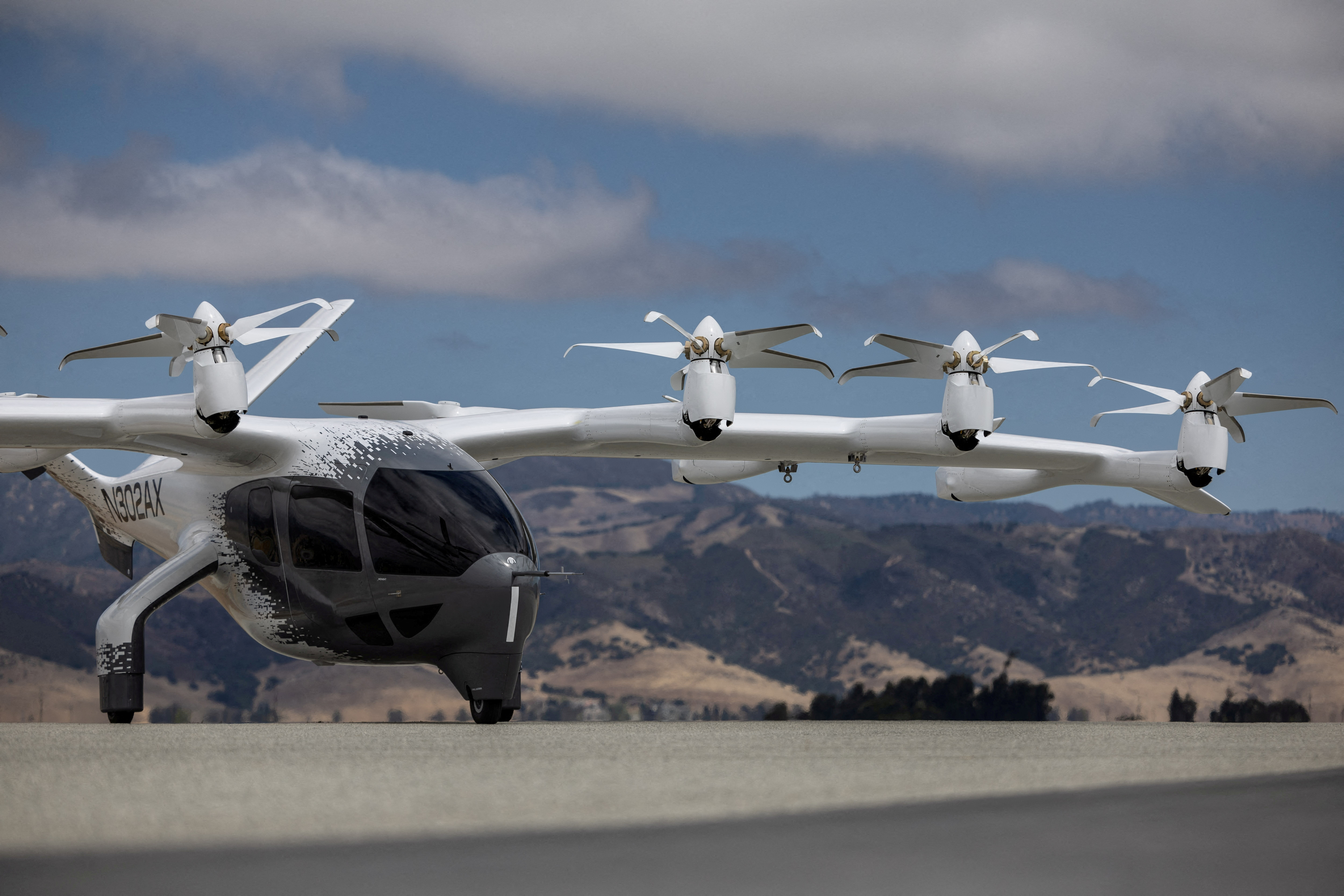
An air taxi is an electric or hybrid-electric aircraft designed to provide short-haul, point-to-point urban and regional passenger transit. Operating primarily via electric Vertical Take-Off and Landing (eVTOL) systems, air taxis utilize distributed electric propulsion to deliver lower acoustic signatures, reduced direct operating costs, and zero zero-direct-emission operations compared to conventional rotorcraft.
Core Concepts and Classification: What Defines an Air Taxi?
The term "air taxi" historically described non-scheduled, small-aircraft charter flights under traditional aviation rules. In contemporary aerospace engineering and urban transit planning, the designation specifically refers to Advanced Air Mobility (AAM) and Urban Air Mobility (UAM) aircraft engineered for high-frequency, short-range transportation. These aircraft leverage distributed electric propulsion (DEP), placing multiple smaller motors and propulsors across the airframe to achieve redundancy, aerodynamic efficiency, and reduced noise profiles.
Air taxi architectures depart fundamentally from conventional fixed-wing aircraft and single-rotor helicopters. Rather than relying on a single complex main rotor assembly or heavy turbofan engine, an eVTOL air taxi distributes mechanical work across multiple electric motor units. This structural design mitigates single-point mechanical failures, eliminates complex mechanical gearboxes in many configurations, and allows precise control via digital flight control systems (fly-by-wire).
| Component | Air Taxi System Components |
|---|---|
| Propulsion System | Distributed Electric Motors (DEP) |
| Flight Control | Triple-Redundant Digital Fly-By-Wire |
| Energy Storage | High-Density Battery Packs / Thermal Systems |
| Operational Rules | FAA Powered-Lift SFAR / EASA SC-VTOL |
| Ground Infrastructure | Vertiports (FATO, TLOF, High-Power Charging) |
Modern air taxis are categorized into three primary architectural frameworks:
- Vectored Thrust: Aircraft utilize tilting rotors or wings that point vertically during take-off and landing, then transition horizontally for cruise flight. This configuration offers high aerodynamic efficiency and longer range, though it introduces mechanical complexity in the tilt mechanisms.
- Lift + Cruise: Aircraft feature independent propulsion systems for vertical lift and forward cruise. Dedicated vertical rotors handle hover and power down during wing-borne forward flight, where separate pusher or puller propellers take over. This design balances mechanical simplicity with moderate cruise efficiency.
- Multirotor: Aircraft rely entirely on fixed pitch or variable pitch vertical rotors for both lift and directional vectoring, lacking a conventional fixed wing. While mechanically straightforward, multirotors suffer from lower aerodynamic efficiency and limited cruise speed, restricting their application to ultra-short urban hops.
Regulatory Certification and Airworthiness Standards
Commercial deployment of air taxis requires rigorous airworthiness certification and operational approval from civil aviation authorities. Because eVTOL aircraft combine flight characteristics of both rotorcraft and fixed-wing airplanes, safety regulators established novel regulatory frameworks tailored to "powered-lift" category aircraft.
Regulatory Framework Comparison
In the United States, the Federal Aviation Administration (FAA) designates powered-lift aircraft under the Special Class airworthiness framework of Title 14 of the Code of Federal Regulations (14 CFR Part 21.17(b)). To govern commercial operations and pilot training, the FAA issued the final Special Federal Aviation Regulation (SFAR) for Powered-Lift, establishing operational criteria under 14 CFR Part 135 (Commuter and On Demand Operations). The FAA's Innovate28 operational vision outlines the integration path for early commercial operations in metropolitan environments, prioritizing existing infrastructure and piloted operations.
In Europe, the European Union Aviation Safety Agency (EASA) established the Special Condition for Small-Category VTOL Aircraft (SC-VTOL). EASA divides certifications into two distinct categories:
- Basic Category: Applies to non-commercial or lower-risk operations, requiring a probability of catastrophic failure lower than $10^{-6}$ per flight hour.
- Enhanced Category: Applies to commercial passenger transport over congested areas (cities), demanding a safety level equivalent to commercial jetliners with a failure rate of less than $10^{-9}$ catastrophic events per flight hour.
- Civil Aviation Regulatory Paths
- FAA Framework
- 14 CFR Part 21.17(b)
- 14 CFR Part 135 SFAR
- FAA Innovate28 Roadmap
- EASA Framework
- SC-VTOL Standards
- Enhanced ($10^{-9}$)
- Basic Category
- FAA Framework
Airspace Integration and Unmanned Traffic Management
Air taxis must integrate into existing Air Traffic Management (ATM) environments while accommodating high-density routing in low-altitude urban airspace (typically below 3,000 feet Mean Sea Level). Initial commercial operations rely on traditional Instrument Flight Rules (IFR) or Visual Flight Rules (VFR) using existing helicopter routes and air traffic control channels.
For scaled commercial deployment, aviation bodies are implementing Unmanned Aircraft System Traffic Management (UTM) and Advanced Air Mobility Interoperability Frameworks. These digital systems rely on automated data exchange between aircraft operators, third-party Supplemental Data Service Providers (SDSPs), and air navigation service providers (ANSPs) to manage dynamic airspace reservations, micro-weather tracking, and automated deconfliction.
Vertiport Infrastructure and Power Grid Requirements
The physical infrastructure enabling air taxi operations is known as a vertiport. Vertiports differ from helipads due to their specialized requirements for rapid electrical charging, high passenger throughput, and unique acoustic management protocols.
| Zone | Vertiport Operational Zones |
|---|---|
| TLOF Area | Touchdown and Lift-Off zone optimized for structural loads. |
| FATO Area | Final Approach and Take-Off clear air space envelope. |
| Charging Hub | Liquid-cooled Megawatt Charging System (MCS) integration. |
| Terminal Zone | TSA/Security screening, passenger staging, and baggage handling. |
Physical Zoning and Spatial Design
Vertiport designs adhere to standardized guidance, such as FAA Engineering Brief No. 105 (Vertiport Design). Facilities are organized into distinct functional operational zones:
- Touchdown and Lift-Off (TLOF) Area: The load-bearing structural surface upon which the aircraft lands or takes off.
- Final Approach and Take-Off (FATO) Area: The cleared airspace boundary surrounding the TLOF designed to contain the aircraft during initial climb out or final approach maneuvers.
- Staging and Taxi Areas: Dedicated parking bays equipped with high-rate power connections, allowing passenger embarking and disembarking without obstructing active FATO zones.
High-Rate Electrical Infrastructure
The operational viability of electric air taxis hinges on rapid turn-around times, requiring megawatt-level charging systems. Standard electric vehicle chargers (50–350 kW) are insufficient for commercial aircraft turnover. Air taxi networks utilize the Megawatt Charging System (MCS), governed by standards from SAE International under specifications such as SAE AS6968.
- High-Power Grid Connection (13.2 kV / 33 kV)
- Substation Transformer
- Stationary Battery Energy Storage System (BESS)
- Liquid-Cooled Megawatt Charger (MCS)
- eVTOL Aircraft Pack
Vertiport charging systems must deliver peak powers between 1.0 MW and 2.5 MW to replenish aircraft batteries from 20% to 80% State of Charge (SoC) within 10 to 15 minutes. To avoid destabilizing local municipal power grids during peak rapid charging, vertiport facilities integrate local Battery Energy Storage Systems (BESS). BESS units buffer power continuously from the utility grid at lower wattages and discharge rapidly into the aircraft during charging cycles.
Technical Architecture Comparison
Different aircraft designs manage energy, speed, and mechanical complexity in distinct ways. The following matrix outlines the operational specifications across major eVTOL air taxi architectures.
| Feature / Metric | Vectored Thrust | Lift + Cruise | Multirotor | Tiltwing |
|---|---|---|---|---|
| Typical Cruise Speed | 200–300 km/h | 150–220 km/h | 90–130 km/h | 220–300 km/h |
| Operational Range | 100–250 km | 80–160 km | 20–50 km | 120–220 km |
| Mechanical Complexity | High (Actuators, pivots) | Moderate (Dual powertrains) | Low (Fixed-pitch rotors) | High (Full wing rotation) |
| Hover Efficiency | Moderate | Moderate to Low | High | Moderate |
| Cruise Efficiency | Very High | High | Low | Very High |
| Payload Capacity | 4–6 Passengers | 4–5 Passengers | 2–4 Passengers | 4–6 Passengers |
| Primary Advantage | High speed & long range | Simple conversion mechanics | Low mechanical risk | Excellent transition control |
| Primary Limitation | Complex flight controls | Drag penalty from idle rotors | Inefficient forward flight | Wing-stall transition dynamics |
Economic Viability, Direct Operational Costs, and Passenger Fares
The financial model of air taxi networks targets a shift from high-cost luxury aviation to scaled, accessible mass transportation. Direct Operating Costs (DOC) for air taxis are substantially lower than legacy turbine helicopters due to three main factors:
| Driver | Direct Operating Cost Drivers |
|---|---|
| Energy Conversion | Electric motor efficiency ~90% vs. Turboshaft engine ~25–30%. |
| Maintenance Costs | No complex swashplates, main gearboxes, or high-temp turbines. |
| Crew Overhead | Single-pilot initial ops transitioning toward autonomy. |
- Energy Conversion Efficiency: Electric motors convert over 90% of stored electrical energy into mechanical work, whereas small turboshaft engines operate at 25% to 30% thermal efficiency. Fuel cost per seat-mile is reduced by approximately 60% to 75% when utilizing grid electricity instead of Aviation Turbine Fuel (Jet A-1).
- Maintenance Requirements: Distributed electric propulsion systems eliminate high-maintenance components such as swashplates, complex main rotor gearboxes, and multi-stage turbines. The reduction in moving parts decreases scheduled maintenance labor and overhauls.
- Crew and Autonomy Scaling: Early commercial operations rely on a single certified pilot per aircraft. As flight automation matures, transitions toward remote pilot oversight and full autonomous operation aim to remove pilot payroll and crew-weight penalties, lowering operational expenditures per seat-mile.
Cost Trajectory Comparison
- Seat-Mile Cost ($) vs. Scale Maturation:
- $9.00: Helicopter Charter
- $4.00 to $6.00: Initial Air Taxi Ops
- $0.50: Simple Rideshare Baseline
Initial commercial air taxi services launch at price points comparable to premium black-car ground transit or helicopter charter services (approximately $4.00 to $6.00 per passenger-mile). Scale production of airframes, prolonged battery life cycles, and autonomous integration are designed to drive operational target costs down toward $1.50 to $2.50 per seat-mile, making air taxis cost-competitive with ground-based ride-hailing services over congested routes.
Operational Challenges and Environmental Considerations
Despite rapid technical progress, air taxi systems must address key physical, environmental, and operational constraints before achieving large-scale deployment.
Battery Energy Density and Thermal Management
The primary engineering constraint for electric aviation is specific energy (energy stored per unit mass). Aviation jet fuel provides approximately 12,000 Watt-hours per kilogram (Wh/kg), whereas current state-of-the-art aviation-grade lithium-ion battery packs yield 250 to 300 Wh/kg at the pack level.
- Energy Density Comparison (Wh/kg):
- Jet Fuel (Jet A-1): 12,000 Wh/kg
- Solid-State (Target): 450–500 Wh/kg
- Lithium-Ion (Current): 250–300 Wh/kg
This energy storage differential imposes strict weight limits on air taxis, restricting passenger payload and operational reserves. Additionally, rapid charging and high-power vertical climb profiles generate substantial heat. Aircraft thermal management systems must maintain battery cell temperatures within safe operating thresholds (typically below 60°C) to prevent thermal runaway and avoid accelerating electrochemical degradation.
Acoustic Footprints and Noise Profiling
Community acceptance of urban air mobility depends heavily on noise reduction. Traditional helicopters produce low-frequency rotor blade vortex interactions (BVI) that travel long distances, reaching sound pressure levels of 80 to 90 dBA at 500 feet.
Air taxis mitigate acoustic profiles by using smaller rotor diameters operating at lower tip speeds (typically below Mach 0.5). Distributed electric propulsion allows digital flight controllers to phase-shift rotor revolutions, altering acoustic frequencies so they blend into ambient urban background noise. Modern eVTOL aircraft aim for operational noise signatures below 65 dBA at 500 feet, representing a quadrupling of perceived quietness relative to conventional rotorcraft.
- Sound Pressure Levels at 500 Feet Altitude (dBA):
- Conventional Helicopter: 85–90 dBA
- Target Urban Ambient: 65–70 dBA
- Target eVTOL Profile: 60–65 dBA
Frequently Asked Questions
How do air taxis differ from conventional helicopters?
Air taxis primarily use distributed electric propulsion across multiple rotors rather than a single main rotor powered by a internal combustion or turboshaft engine. This distributed setup enhances safety through redundancy, lowers operational noise by operating at lower rotor tip speeds, eliminates direct combustion emissions, and significantly reduces maintenance overhead.
What regulatory approvals are required to operate a commercial air taxi route?
An air taxi operator must secure airworthiness type certification for the aircraft model (e.g., FAA Part 21.17(b) or EASA SC-VTOL), air carrier operational certification (such as FAA Part 135), localized vertiport airspace authorizations, and adherence to environmental impact standards under municipal land-use and aviation guidelines.
Are commercial air taxis currently fully autonomous or piloted?
Initial commercial air taxi services operate with a single onboard pilot to comply with existing civil aviation regulations and ensure public trust. Industry roadmaps plan a phased transition toward remote pilot supervision and full autonomy as flight management automation, vehicle-to-everything (V2X) communications, and regulatory frameworks mature.
How safe are eVTOL air taxis compared to commercial airliners?
Civil aviation authorities require commercial air taxis operating in high-density urban zones to meet safety standards comparable to commercial airliners. For instance, EASA's SC-VTOL (Enhanced Category) demands a failure probability of less than one catastrophic failure per billion flight hours ($10^{-9}$). Distributed motors, fly-by-wire controls, and full-aircraft ballistic recovery parachutes provide additional layers of safety.
What infrastructure is required to build an urban vertiport?
A functional vertiport requires a structurally reinforced landing pad (TLOF), an obstacle-free approach/departure flight path (FATO), high-voltage electrical interconnects supported by battery energy storage systems (BESS) for rapid megawatt charging, dedicated passenger handling terminals, security checkpoints, and integrated micro-weather sensing hardware.
Practical Action Plan: Evaluating Advanced Air Mobility Readiness
For municipal planners, aviation operators, and real estate developers looking to assess and implement air taxi capabilities, follow this operational roadmap:
- AAM Infrastructure Implementation:
- Phase 1: Feasibility
- GIS Airspace Assessment
- Noise Contour Modeling
- Phase 2: Power Grid
- Interconnect Analysis
- Battery Storage (BESS)
- Phase 3: Integration
- FAA/EASA Compliance
- Automated Traffic (UTM)
- Phase 1: Feasibility
- Conduct Airspace and Micro-Siting Feasibility Studies: Utilize Geographic Information System (GIS) mapping to evaluate obstacle clearance envelopes, visual landing corridors, and noise propagation contours around candidate landing zones. Ensure alignment with local zoning ordinances and federal flight path criteria.
- Audit Electrical Grid Capacity: Contact regional power utilities early to perform interconnect capability assessments. Determine if candidate sites can supply steady 1 MW to 3 MW loads without triggering localized grid instability, and plan for site-level Battery Energy Storage Systems (BESS) where grid capacity is constrained.
- Define Regulatory Compliance Protocols: Establish air carrier operational structures under local requirements (e.g., FAA Part 135 or EASA Air Operations rules). Align vertiport designs directly with standardized codes such as FAA Engineering Brief No. 105 or EASA Prototype Technical Design Specifications for Vertiports.
- Integrate Digital Airspace Management Tools: Prepare ground operations for digital traffic coordination by embedding Unmanned Aircraft System Traffic Management (UTM) protocols, automated micro-weather telemetry stations, and real-time fleet management networks.