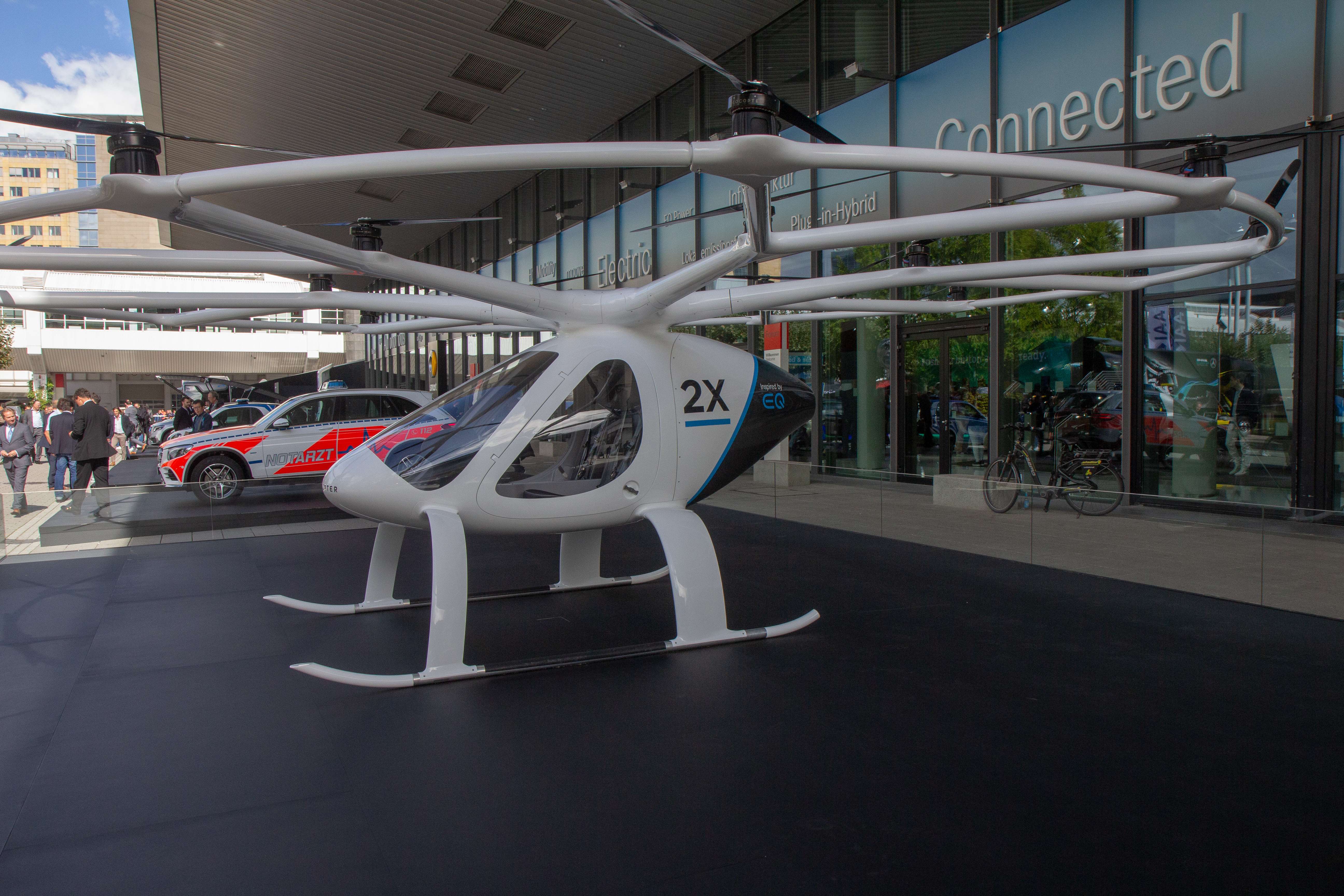
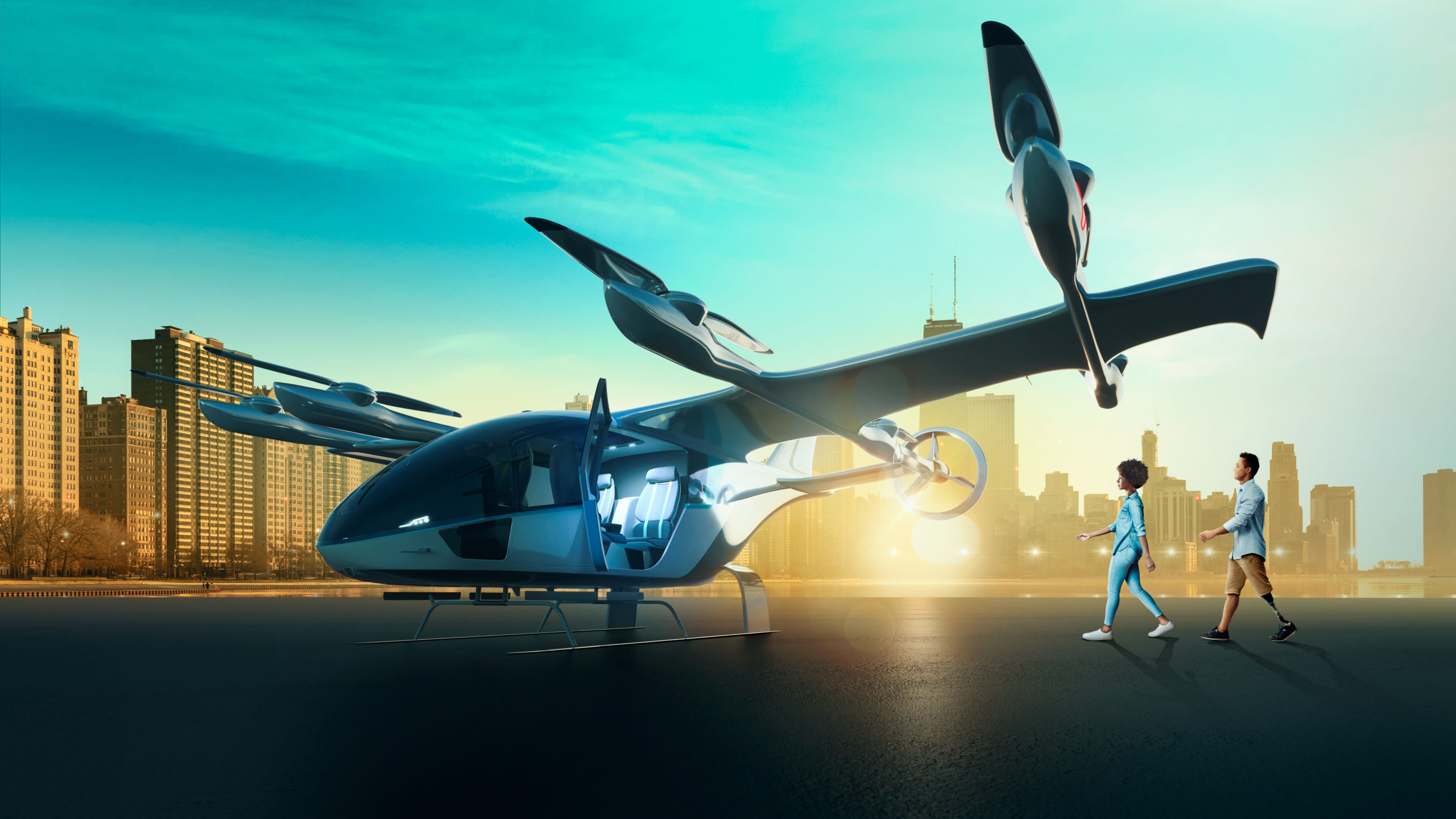
Urban Air Mobility (UAM) utilizes electric Vertical Takeoff and Landing (eVTOL) aircraft to transport passengers and cargo across congested metropolitan regions at low altitudes. While Uber popularized the commercial vision through its Uber Elevate division before selling it to Joby Aviation, real-world operation relies on strict FAA airworthiness certifications, specialized vertiport infrastructure, high-density battery technology, and integrated air traffic management system deployment.
The Evolution of Urban Air Mobility: From Uber Elevate to Aerospace Integration
The concept of high-frequency intra-city aerial transport moved from science fiction into serious engineering in 2016, when Uber published its seminal white paper on Urban Air Mobility. The company outlined a vision where commuters could tap a smartphone button to request a point-to-point journey combining ground ride-hailing with low-noise, electric aerial transport. This initiative, organized under the Uber Elevate brand, catalyzed significant venture capital and aerospace interest, establishing the software-driven concept of aerial ride-sharing.
However, building an aerospace transportation network requires fundamentally different capital structures, long-term testing cycles, and regulatory approvals than software-based ride-hailing. In late 2020, Uber transferred its Uber Elevate business unit to Joby Aviation, an eVTOL developer. As part of this transaction, Uber invested heavily in Joby and secured agreements to integrate their respective services. Under this ecosystem model, passengers will eventually book multi-modal journeys within the Uber mobile application, while aerospace original equipment manufacturers (OEMs) operate and maintain the certified aircraft hardware.
This consolidation marked a crucial industry shift: moving away from marketing claims about immediate mass transport toward the rigorous aerospace development required to satisfy global aviation authorities.
How eVTOL Aircraft Work: Propulsion, Acoustics, and Range Constraints
At the core of the urban air taxi ecosystem is the electric Vertical Takeoff and Landing (eVTOL) aircraft. Unlike conventional helicopters, which rely on a single primary rotor assembly and a tail rotor, eVTOL designs utilize Distributed Electric Propulsion (DEP). DEP allows engineers to position multiple smaller electric motors across the airframe, providing high operational redundancy, lower mechanical complexity, and dramatically reduced acoustic signatures.
- Conventional Helicopter:
- Single Heavy Rotor System
- High Acoustic Signature (80–90 dBA at 500 ft)
- Complex Mechanical Swash
- Single Point of Failure
- eVTOL Aircraft (DEP):
- Multiple Electric Rotors
- Distributed Power Lines
- Low Acoustic Signature (60–65 dBA at 500 ft)
- High System Redundancy
Acoustic Performance and Community Noise Limits
The primary operational blocker for legacy urban helicopter services is noise pollution. Traditional helicopters generate low-frequency acoustic pulses that penetrate structure walls and exceed community noise acceptance thresholds, frequently resulting in municipal flight restrictions.
eVTOL aircraft address this by using smaller, lower-rpm propellers that shift noise output to higher frequency bands, which dissipate rapidly over distance. Target acoustic levels for commercial air taxis sit between 60 and 65 dBA during hover at a 500-foot altitude—roughly equivalent to standard background city traffic—and drop even lower in forward wing-borne flight.
Battery Energy Density and Operational Limits
Despite advances in propulsion design, energy density remains the primary physical constraint on operational range. Current commercial-grade lithium-ion cell chemistry yields an energy density around 250 to 300 Watt-hours per kilogram ($Wh/kg$), compared to aviation jet fuel ($Jet\ A-1$), which yields over 12,000 $Wh/kg$.
Consequently, modern eVTOL aircraft are optimized for short-to-medium regional corridors:
- Typical Mission Profiles: 15 to 50 miles per leg.
- Reserve Requirements: Regulatory mandates require a minimum 20-to-30-minute energy reserve upon landing.
- Turnaround Constraints: Rapid charging systems must replenish battery capacity in 10 to 15 minutes during passenger disembarkation to maintain fleet utilization economics.
Certification and Regulatory Liftoff: The Airworthiness Bottleneck
Before an air taxi can carry paying passengers, its manufacturer must obtain three distinct certifications from civil aviation authorities, such as the Federal Aviation Administration (FAA) in the United States or the European Union Aviation Safety Agency (EASA) in Europe:
Type Certification: Approval of the physical aircraft design, proving it meets rigorous safety, operational, and structural standards.
Production Certification: Approval of manufacturing facilities, supply chains, and quality assurance systems to ensure every produced aircraft matches the approved type design.
Air Carrier Certification (Part 135): Regulatory clearance for the operating company to execute commercial, non-scheduled air transport services for compensation.
Type Certification (Design & Airworthiness Safety Compliance)
Production Cert. (Manufacturing Quality & Consistency)
Part 135 Air Carrier (Commercial Operations & Fleet Flight Clear)
The regulatory framework for these aircraft has evolved substantially. The FAA treats winged eVTOL aircraft under the powered-lift category, employing standard airworthiness criteria via 14 CFR Part 21.17(b), alongside operational integration plans mapped in regulatory roadmaps such as Innovate28.
Concurrently, EASA evaluates aircraft under its Special Condition for Small-Category VTOL Aircraft (SC-VTOL). EASA requires a catastrophic failure rate probability lower than $10^{-9}$ per flight hour for airships operating in densely populated environments—matching the safety standards required of commercial passenger airliners like the Boeing 737 or Airbus A320.
Initial commercial operations require piloted configurations. While long-term software roadmaps anticipate fully autonomous passenger flights, civil regulators require human pilots in the cockpit during initial deployments to manage complex air traffic situations, micro-meteorological anomalies, and off-nominal events.
Key Players, Configurations, and Technical Specifications
Different developers have adopted distinct engineering approaches to resolve the trade-offs between hovering efficiency and forward cruising speed. The three dominant design architectures are:
- Tilt-Rotor / Vectoring Thrust: Rotors tilt horizontally for vertical takeoff and pivot forward for high-speed, wing-borne cruise flight.
- Lift-plus-Cruise: Dedicated vertical rotors handle hover and power down during forward flight, which relies on a independent horizontal pusher propeller.
- Multicopter: Fixed vertical rotors with no forward wing, maximizing hover simplicity at the expense of range and speed.
| Developer | Aircraft Model | Architecture | Passenger Capacity | Target Range | Acoustic Target (Hover) | Core Market Focus |
|---|---|---|---|---|---|---|
| Joby Aviation | S4 | Tilt-Rotor (6 Rotors) | 4 + 1 Pilot | Up to 100 miles | ~65 dBA @ 500 ft | Urban ride-share, airport shuttles |
| Archer Aviation | Midnight | Tilt-Rotor (12 Rotors) | 4 + 1 Pilot | Up to 100 miles | ~45 dBA (Cruise) | Rapid urban point-to-point transit |
| Beta Technologies | ALIA-250 | Lift-plus-Cruise | 5 + 1 Pilot (or Cargo) | Up to 250 miles | ~60 dBA @ 500 ft | Regional cargo, medical, & passenger |
| Volocopter | VoloCity | Multicopter (18 Rotors) | 1 + 1 Pilot | Up to 22 miles | ~65 dBA @ 390 ft | Short intra-city feeder routes |
Infrastructure Demands: Vertiports, Grid Load, and Pricing Reality
An air taxi network cannot function without physical infrastructure nodes called vertiports. Unlike standard helipads, fully equipped vertiports must manage higher operations per hour, integrated security screening, precise passenger flow pathways, and specialized electrical infrastructure.
- Vertiport Ecosystem:
- High-Power Charging (1MW+ Grid)
- Airspace Integration (UTM Software & FAA ATC)
- Passenger Processing & Screening
Grid Infrastructure and Megawatt Charging Systems
Charging an eVTOL fleet rapidly between 20-minute flights places high demands on local municipal electrical grids. Vertiports require Megawatt Charging Systems (MCS) capable of delivering high-voltage direct current (DC) to power battery systems without degrading internal cell chemistry. A medium-sized vertiport running four active pads may require 4 to 8 Megawatts of continuous power capacity—equivalent to the electrical draw of a major commercial office complex or high-density residential community.
Economic Viability and Passenger Cost Per Mile
While initial marketing promised air taxi fares comparable to standard ground ride-sharing options like UberX, operational economics present a more measured timeline:
- Phase 1 (Initial Deployment): Premium pricing models ranging between $5.00 and $8.00 per passenger-mile. Routes will primarily serve affluent commuters, corporate transport, and time-sensitive airport transfers (e.g., Downtown Manhattan to JFK Airport).
- Phase 2 (Scale Operations): As manufacturing volume scales, fleet optimization improves, and charging systems mature, costs are projected to drop to roughly $2.50 to $3.50 per passenger-mile, bringing service within range of premium ground services like UberBlack.
- Phase 3 (Autonomous Operations): Removing the pilot seat constraint, maximizing cabin capacity, and operating high-density autonomous fleets could lower costs down to baseline ground transport economics.
Environmental and Community Integration Challenges
While electric propulsion eliminates direct flight tailpipe emissions, the broader environmental and social integration of UAM faces three distinct hurdles:
Life-Cycle Battery Sustainability
The environmental benefits of eVTOL transport rely heavily on clean electrical grid inputs. Charging air taxis using fossil-fuel-heavy grids offsets a portion of their net emissions benefit. Furthermore, continuous fast-charging cycles shorten battery operational lifespans, making closed-loop lithium battery recycling programs critical to the industry's sustainability goals.
Airspace Traffic Management (UTM)
Integrating hundreds of low-altitude aircraft into existing municipal airspace requires Unmanned Aircraft System Traffic Management (UTM) platforms. Traditional Air Traffic Control (ATC) towers cannot manually direct high-volume, low-altitude intra-city traffic corridors. Federal regulators and air navigation service providers must deploy automated, digital airspace networks capable of real-time route optimization, dynamic geofencing, and automated deconfliction.
Local Zoning and Community Acceptance
Municipalities retain control over ground land-use permits, building codes, and local noise regulations. Even if an aircraft receives nationwide type certification from the FAA, local city councils can block vertiport construction based on zoning rules, local traffic concerns, or community pushback. Successful deployment requires clear municipal partnerships and transparent community acoustic demonstrations.
Frequently Asked Questions
Is Uber currently building its own air taxis?
No. Uber sold its internal aerospace hardware and development division, Uber Elevate, to Joby Aviation in December 2020. Uber holds an equity stake in Joby and focuses on integrating partner flight services into the core Uber mobile application.
When will urban air taxi service be widely available to the public?
Targeted commercial launch initiatives in key markets (such as Los Angeles, New York, Dallas, and Dubai) begin with limited, high-demand corridor routes. Broad public availability across most major suburban and urban markets requires scaled vertiport construction, expanded grid infrastructure, and automated traffic management systems.
How safe are eVTOL air taxis compared to conventional helicopters?
eVTOL designs are engineered to higher redundancy standards than conventional helicopters. By using Distributed Electric Propulsion (DEP), an aircraft can lose an electric motor or propeller unit without experiencing catastrophic failure, relying on software controllers to adjust remaining rotors instantly. Civil aviation safety targets require a risk profile equivalent to commercial airliners.
How much will an air taxi flight cost compared to ground ride-sharing?
Initial commercial launches will be priced as a premium transport option, targeted around $5.00 to $8.00 per passenger-mile. As operators expand fleet sizes and increase operational volume, industry analysts expect rates to decline toward $2.50 to $3.50 per passenger-mile, aligning closely with premium ground ride-hailing services.
What is a vertiport and where will they be located?
A vertiport is a dedicated landing and departure facility designed for VTOL aircraft. They include high-voltage charging networks, terminal security, maintenance bays, and passenger waiting rooms. Vertiports will typically be located atop existing parking structures, integrated into regional airports, built beside major transit hubs, or positioned on modified waterfront platforms.
Preparing Infrastructure and Municipalities for Aerial Mobility
For urban planners, commercial real estate developers, and municipal logistics leaders, preparing for the deployment of Urban Air Mobility requires actionable structural steps rather than speculative investments:
- Conduct Structural and Electrical Audits: Real estate developers evaluating vertiport retrofits on existing parking structures must assess load-bearing capacity for 5,000-to-8,000-pound aircraft and verify that regional utilities can supply multi-megawatt power infrastructure.
- Review Municipal Zoning Codes: Local authorities should proactively create clear zoning definitions for multi-modal aviation facilities, establishing objective noise threshold requirements and operational hours that align with federal guidelines.
- Establish Multi-Modal Interconnections: Commuter adoption depends on fast transfers between modes. Initial site planning must prioritize locations with direct connections to ground mass transit systems, municipal rail networks, and major highway arterial routes.