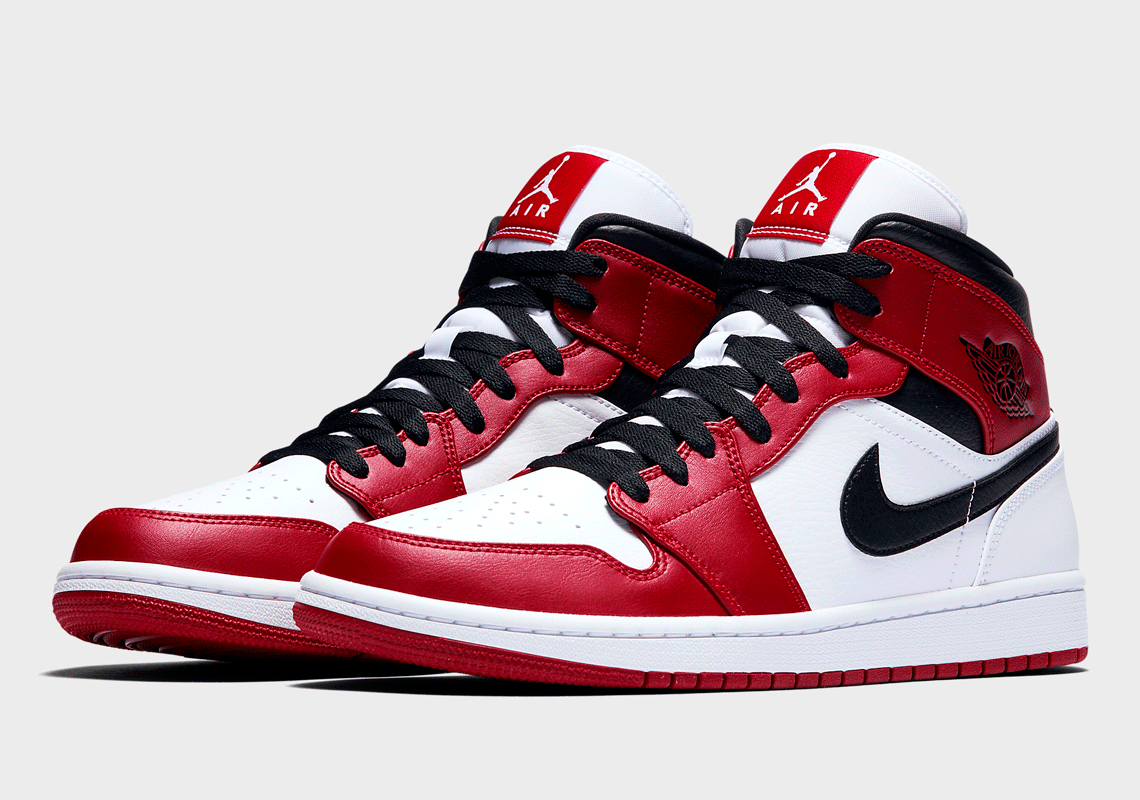
The Air Jordan 1, conceptualized in 1984 and released to the public in 1985, remains the most significant milestone in sneaker history. It represents the birth of the "sneakerhead" culture, bridging the gap between professional basketball performance and global street fashion while establishing Michael Jordan as a transcendent marketing icon.
The Genesis of the Air Jordan Dynasty in 1984
The story of the Air Jordan begins not with a shoe, but with a crisis of identity for both a player and a brand. In 1984, Nike was primarily known as a running shoe company, struggling to find its footing in the competitive basketball market dominated by Converse and Adidas. Michael Jordan, a standout rookie from the University of North Carolina, had a personal preference for Adidas and was initially reluctant to even meet with Nike representatives in Beaverton, Oregon.
The architecture of the deal was handled by Jordan’s agent, David Falk, and Nike executives Rob Strasser and Sonny Vaccaro. To lure Jordan away from his preferred brands, Nike offered an unprecedented five-year, $2.5 million contract—a staggering sum for a rookie at the time. Crucially, the deal included his own signature line, a rarity for a first-year player. By late 1984, the groundwork for the "Air Jordan" title was set, merging Nike’s "Air" cushioning technology with the high-flying persona of its new star.
The development phase in 1984 was frantic. Peter Moore, Nike’s creative director, was tasked with designing a shoe that looked "different" from everything else on the court. The result was a high-top silhouette with bold color blocking that defied the "majority white" aesthetic of contemporary NBA footwear.
Distinguishing the 1984 Air Ship from the Air Jordan 1
A common point of confusion in sneaker history is the distinction between the shoes Michael Jordan wore during his rookie season in 1984 and the actual Air Jordan 1. While the Air Jordan 1 is the legendary title-holder of the "OG" status, it was not ready for the start of the 1984-1985 NBA season.
During the first few months of his professional career, Jordan primarily wore the Nike Air Ship. This was a high-top basketball shoe that featured a very similar profile to what would become the Jordan 1. In fact, the infamous "Banned" black-and-red colorway that the NBA penalized was technically an Air Ship, not the AJ1. Nike, however, capitalized on this timeline overlap in their marketing, successfully conflating the Air Ship’s "forbidden" status with the upcoming Air Jordan 1 release.
By late 1984, prototypes of the Air Jordan 1 began appearing on Jordan's feet during practice and exhibition games. This period is vital for collectors because it represents the transition from a standard team shoe to a personalized athletic weapon. The "1984" designation is often used to refer to this incubation period where the brand identity was forged before the mass-market explosion of 1985.
Technical Specifications and the Iconic Wings Logo
The Air Jordan 1 was revolutionary not just for its colors, but for its construction. Peter Moore wanted a shoe that sat lower to the ground than previous basketball models, allowing Jordan to "feel" the court while providing enough cushioning for his explosive leaps.
The original 1985 release (developed throughout 1984) featured several key technical elements:
- Encapsulated Air-Sole: A compressed air unit in the heel provided impact protection without adding excessive weight.
- Premium Leather Upper: Most basketball shoes of the era used thinner materials; the AJ1 used high-grade leather that offered durability and a "break-in" period that molded to the player's foot.
- The Wings Logo: Sketched by Peter Moore on a flight, the logo—a basketball with wings sprouting from the sides—was placed on the lateral ankle. This became the first official branding for the Jordan line, predating the Jumpman logo which didn't appear until the Air Jordan 3.
- The Outsole: A concentric circle traction pattern was designed specifically for the pivoting and multi-directional movement required in elite basketball.
The "Banned" Marketing Masterstroke
In 1984, the NBA maintained a strict "51% rule," stating that a player's shoes must be majority white and match the rest of the team's uniforms. When Jordan took the court in the black-and-red (Bred) colorway, the league reportedly sent a letter to Nike and the Bulls, threatening a $5,000 fine for every game the shoes were worn.
Nike’s reaction was a stroke of marketing genius that changed the industry forever. Rather than withdrawing the shoe, they paid the fines and produced a television commercial that featured a slow pan down Jordan's body to his feet. A narrator stated, "On September 15th, Nike created a revolutionary new basketball shoe. On October 18th, the NBA threw them out of the game. Fortunately, the NBA can't stop you from wearing them."
This "outlaw" status transformed the Air Jordan 1 from an athletic product into a symbol of rebellion and individuality. By the time the shoes hit retail shelves in early 1985 for $65, they were already a cultural phenomenon.
Comparing the Original 1985 Specs to Modern Interpretations
As of 2026, the Air Jordan 1 has been "retroed" hundreds of times. However, the original 1984-1985 specifications remain the gold standard for collectors. Understanding the differences helps in verifying authenticity and understanding the evolution of the sneaker.
| Feature | 1985 Original (OG) | 2026 "High OG" Retros |
|---|---|---|
| Collar Height | Higher, sharper angle toward the heel | Slightly lower, more padded |
| Toebox Shape | Slimmer, more aerodynamic profile | Occasionally "boxier" depending on the year |
| Swoosh Size | Larger, often touching the lace stay | Slightly smaller, more refined edges |
| Leather Quality | Thick, stiff natural leather | Varies (often softer, "tumbled" for comfort) |
| Branding | Wings logo pressed deep into leather | Wings logo printed or lightly embossed |
| Internal Tech | Minimalist Air-Sole unit | Enhanced modern foam with Air-Sole |
The Cultural Legacy: From the Court to the Streets
The Air Jordan 1 is perhaps the only shoe that is equally at home on a professional basketball court, a skateboard, and a high-fashion runway. Its transition from performance gear to a lifestyle staple began almost immediately. In the mid-1980s, the "Bred" and "Royal" colorways were adopted by hip-hop pioneers, while the shoe’s durability and flat sole made it a favorite among the burgeoning skateboarding community (notably seen in the film The Search for Animal Chin).
In the decades since, the AJ1 has served as the canvas for the most important collaborations in fashion history, including partnerships with Off-White, Travis Scott, and Dior. These collaborations have pushed the resale value of certain iterations into the tens of thousands of dollars, yet the "OG" 1984/85 colorways—Chicago, Bred, Shadow, and Royal—remain the most coveted pieces of history.
As we look back from 2026, the Air Jordan 1 isn't just a sneaker; it's a historical artifact that marks the moment when sports, music, and fashion collided to create a new global language.
Frequently Asked Questions
Did Michael Jordan actually wear the Air Jordan 1 in 1984?
Michael Jordan wore the Nike Air Ship for much of 1984 while the Air Jordan 1 was in development. He began wearing prototypes and early versions of the Air Jordan 1 in late 1984 and early 1985. The "1984" date is significant because it represents the year he signed with Nike and the year the design process began, though the retail release occurred in 1985.
Why is the "Bred" colorway so important to the 1984 history?
The "Bred" (Black and Red) colorway is important because it was the catalyst for the NBA's ban. The controversy created an "anti-establishment" aura around the brand. While the NBA's actual letter referred to a black-and-red Nike Air Ship, Nike successfully used the story to market the Air Jordan 1, making it the most famous colorway in sneaker history.
What is the current market value of an original 1985 pair in 2026?
The value of an original 1985 pair depends heavily on condition and colorway. In 2026, "deadstock" (unworn) pairs of the Chicago or Bred colorways can fetch between $25,000 and $60,000 at auction. Even heavily worn "beater" pairs often sell for $2,000 to $5,000 because of their status as historical collectibles.
How can I tell a "1985" original from a modern retro?
Key indicators include the "85" shape, which features a flatter, more vertical heel compared to the curved heel of modern retros. The original pairs also have a size and production code printed on the interior of the ankle collar (e.g., 850204 TY), indicating the year and month of production. Furthermore, the leather on 1985 pairs ages differently, often showing "blooming" or a white powdery substance that is a natural byproduct of the tanning process used at the time.
Is the Nike Air Ship the same as the Air Jordan 1?
No, the Nike Air Ship is a distinct model that served as the predecessor to the Air Jordan 1. While they share a similar silhouette and high-top design, the Air Ship has different paneling and lacks the "Wings" logo. Nike has recently begun re-releasing the Air Ship to honor its role in the 1984 "pre-Jordan" era.
Recommendations for Collectors and Historians
If you are looking to invest in or study the history of the 1984/85 Air Jordan 1, focus on the "Chicago" colorway, as it is the most historically documented version worn by Jordan on-court. For those who cannot afford the steep prices of original 1985 pairs, the "Jordan 1 High 85" series released by Nike in recent years offers the most accurate recreation of the original shape and materials. Always verify vintage purchases through reputable auction houses or third-party authentication services, as the market for "aged" replicas has become increasingly sophisticated.