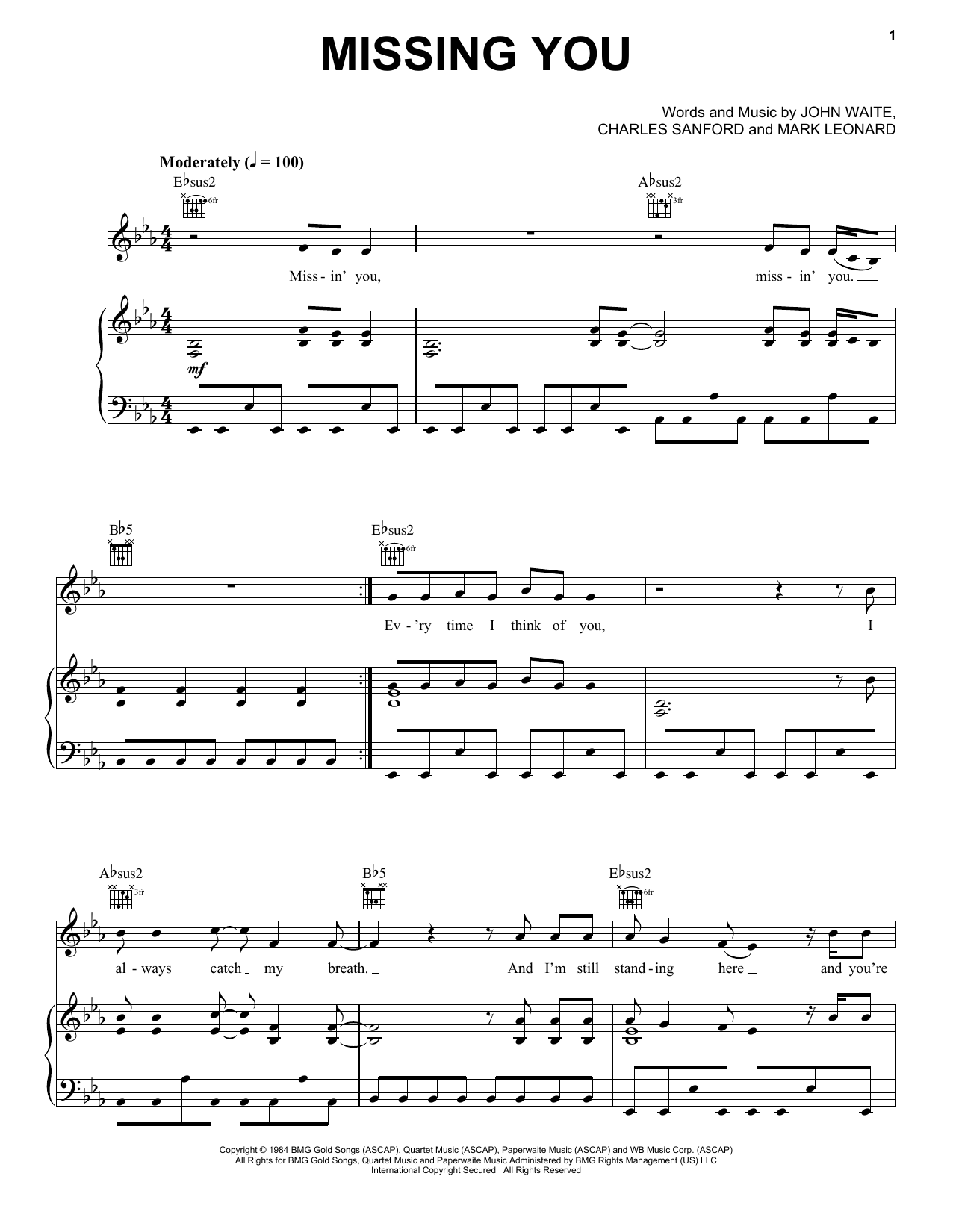
John Waite’s 1984 power ballad "Missing You" remains a defining track of the synth-pop-inflected rock era. Its lyrical exploration of denial, forced independence, and the lingering ache of a fractured relationship resonates with a timeless, albeit melancholic, clarity. As the centerpiece of the album No Brakes, the song serves as a masterful study of emotional masking and the complexities of post-breakup psychology.
Deciphering the Lyrical Narrative of "Missing You"
The core narrative of "Missing You" is built upon the irony of its own title. The narrator spends the entirety of the song attempting to convince himself—and by extension, the listener—that he has moved on from a past relationship. However, the lyrics explicitly catalog the ways in which his daily life is still inextricably haunted by the presence of his former partner.
The opening lines, "I ain't missing you at all," act as a mantra of self-delusion. Waite employs a conversational tone that suggests a man speaking to a friend or perhaps engaging in an internal monologue. As the song progresses, the facade cracks. The mention of "playing all my records" and the "shadows on the wall" illustrate how mundane activities are transformed into vessels for grief. The tension between the dismissive "I ain't missing you" and the visceral reality of "I'm not missing you at all / Since you've been gone / Away" creates a palpable sense of emotional dissonance.
The bridge of the song is particularly significant because it marks the point where the denial fails. When Waite sings, "I'm not missing you / I'm not missing you / What would you do?" he shifts from a defensive stance to one of desperate vulnerability. The rhetorical question suggests that he is not only struggling with his own loneliness but is also obsessing over how his former partner is coping, or perhaps if she is thinking of him at all. This highlights a common facet of human heartbreak: the need to believe one’s absence is felt as deeply as one’s presence.
The Album Context: No Brakes (1984)
To understand the weight of "Missing You," one must view it within the broader landscape of the 1984 album No Brakes. Produced by David Thoener and John Waite, the record signaled a departure from the heavier rock leanings of his previous band, The Babys. No Brakes was a calculated effort to blend arena-ready rock sensibilities with the polished, layered production that dominated the mid-eighties airwaves.
The album functions as a thematic collection of tales about restlessness, romantic volatility, and the speed of life in the big city. Tracks like "Tears" and "Dark Side of the Sun" reinforce the moody, introspective atmosphere established by the hit single. By the time the listener arrives at the final tracks, it becomes clear that No Brakes is not merely a collection of hits, but a cohesive project documenting the friction between personal desire and professional pressures. The success of No Brakes solidified Waite’s transition into a viable solo artist, proving that his vocal range and songwriting capacity could carry an entire project beyond the success of a single power ballad.
Track-by-Track Overview of No Brakes
While "Missing You" is the defining entity of the album, No Brakes contains several other notable tracks that flesh out the artist’s mid-80s creative vision. The following table provides a breakdown of the album's structural composition and stylistic focus.
| Track Number | Title | Tone/Theme | Primary Instrument Focus |
|---|---|---|---|
| 1 | Saturday Night | Up-tempo, energetic | Electric Guitar |
| 2 | Missing You | Melancholic, mid-tempo | Synths/Guitar mix |
| 3 | Dark Side of the Sun | Gritty, driving | Bass/Drums |
| 4 | Restless Heart | Anthemic rock | Lead Guitar |
| 5 | Tears | Emotional, ballad-style | Piano/Vocals |
| 6 | Euroshima | Experimental, cynical | Synth-heavy |
| 7 | Dream, New York | Atmospheric | Ambient Synths |
| 8 | Love Collision | High-energy pop | Synthesizer |
| 9 | For Your Love | Classic rock influence | Electric Guitar |
Production and Technical Evolution
The sound of No Brakes is intrinsically tied to the mid-1980s studio landscape. During this period, the integration of analog synthesizers with traditional rock instrumentation became the standard for mainstream radio success. In "Missing You," the iconic synth hook that introduces the song is not merely a melodic choice; it acts as a sonic representation of the "void" the narrator is trying to fill.
Engineers during this era utilized heavy compression and gated reverb on the drums to achieve a "big" sound that could pierce through the increasingly dense radio mixes. For Waite, this was a deliberate evolution. Having spent years in the more organic, riff-driven environment of The Babys, he utilized No Brakes to experiment with shorter, more impactful melodic structures. The technical requirement for this album was to create a sound that felt both intimate—given the lyrical focus on heartbreak—and expansive enough for the growing arena rock market.
Common Interpretations and Misconceptions
One frequent point of confusion regarding the lyrics of "Missing You" is the assumption that it is a love song. While it is certainly about love, it is more accurately categorized as a song about the "aftermath" of love. It lacks the hopeful tone of a romantic ballad, leaning instead into the psychological state of "stuckness."
Another point of analysis often discussed by fans is the role of the narrator’s ego. By repeating the phrase "I ain't missing you," the narrator is essentially trying to perform a confidence that he does not possess. This makes the lyrics a double-edged sword: the listener hears the denial, but they also hear the truth buried in the cadence of his voice. Waite’s vocal delivery—which ranges from a near-whisper to a raspy, powerful belt—serves as the primary evidence of his internal struggle. He is not singing for the benefit of the girl he is talking about; he is singing to convince himself that he is not drowning.
Legacy and Impact of the No Brakes Era
By 2026, the legacy of No Brakes is viewed through the lens of late-20th-century pop-rock history. It represents a pivot point where rock vocalists successfully embraced the polished production values of the MTV era without losing their individual identity. For many, the record remains a definitive artifact of the "power ballad" genre, a term that describes the bridge between sentimental balladry and the high-octane delivery of hard rock.
The album also serves as a case study for longevity. John Waite’s ability to remain a relevant touring artist in 2026 is partially owed to the foundation built by this album. The song "Missing You" continues to appear in film, television, and radio rotations, ensuring that the thematic content—the struggle to let go—remains accessible to new generations of listeners who grapple with the same universal human experiences.
Frequently Asked Questions
What was the primary inspiration behind John Waite’s "Missing You"?
John Waite has frequently stated in interviews that the song was born from the genuine feeling of being away from home while touring and the personal isolation that comes with a life on the road. It reflects the struggle of maintaining long-distance connections when one's life is defined by transient locations.
Is No Brakes considered a concept album?
While not a formal concept album in the traditional sense, No Brakes is thematically unified. It explores the themes of movement, emotional detachment, and the search for grounding in a fast-paced environment, which gives the album a distinct and cohesive narrative flow from start to finish.
How did the mid-80s production style influence "Missing You"?
The song utilizes the "Wall of Sound" style techniques common to the mid-80s, prioritizing a prominent, hook-heavy synth lead and compressed vocal tracks. This production style allowed the emotional resonance of the lyrics to be amplified, making the song suitable for both radio play and large-venue performances.
Why does the narrator deny missing his partner throughout the song?
The denial serves as a psychological defense mechanism. By vocalizing his insistence that he has moved on, the narrator is attempting to regain control over his own narrative. The lyrics highlight that while he can control what he says, he cannot control the physiological and emotional reality of his grief.
Are there significant differences between the album version and the radio edit of "Missing You"?
Yes, the radio edit was tightened to remove certain instrumental bridges and fade-outs to fit the three-to-four-minute format demanded by 1980s radio stations. The album version retains longer instrumental intros and extended vocal ad-libs that provide more atmospheric depth.
Moving Forward: Appreciating the Art of the Album
To fully appreciate the work of John Waite during this period, one should listen to No Brakes in its entirety rather than isolating the hit single. By experiencing the flow from the opening tracks into the mid-album introspection and the eventual closer, listeners gain a better understanding of how a singer-songwriter transitions through different emotional registers. If you are looking to explore the album further, prioritize listening to the studio recording on high-fidelity equipment to catch the subtle synth layering that defined the era’s technical standard. This approach transforms a singular pop moment into a comprehensive exploration of 1980s rock craftsmanship.