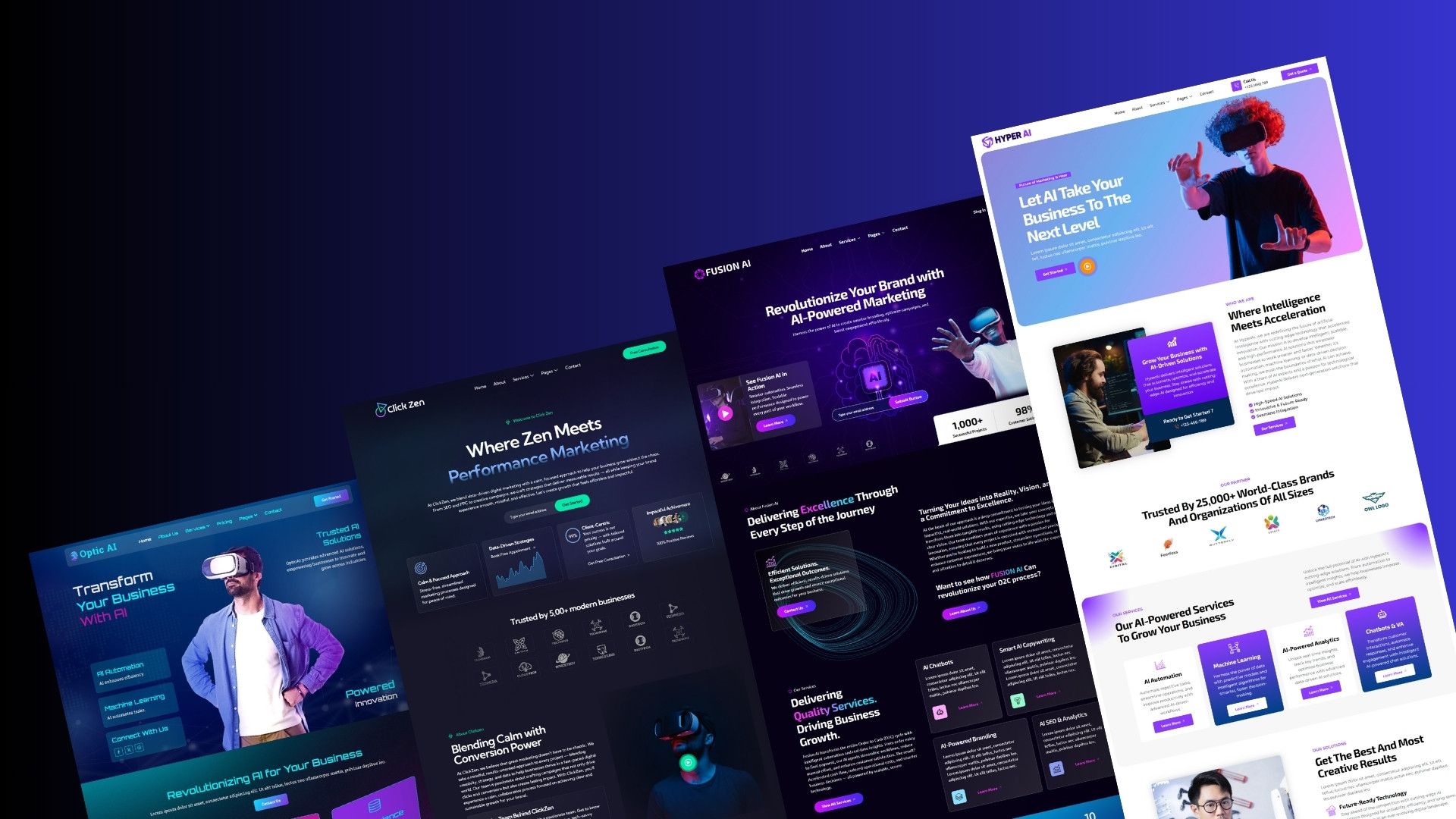
AI themes represent specialized frameworks, templates, and architectural patterns designed to integrate artificial intelligence capabilities directly into digital platforms, websites, and software applications. By blending pre-trained machine learning models with responsive user interfaces, these solutions streamline development workflows and enable dynamic, data-driven user experiences without requiring teams to build foundational algorithms from scratch.
Modern digital development increasingly relies on structured templates and frameworks to incorporate machine learning functionalities seamlessly. Whether applied to content management systems, enterprise resource planning tools, or consumer-facing web applications, these specialized design patterns dictate how data flows between user interfaces, backend APIs, and underlying language or vision models. Understanding their operational architecture, performance trade-offs, and integration prerequisites is essential for developers, technical architects, and product managers aiming to deploy reliable artificial intelligence features at scale.
Core Architecture and Operational Principles of AI Themes
At their foundation, AI themes function as an intermediary layer connecting front-end presentation logic with back-end machine learning inference engines. Unlike traditional static templates that merely display hardcoded data or execute basic server-side scripts, an artificially intelligent framework must manage asynchronous data streams, token limits, latency management, and context windows. This requires a decoupling of the user interface from the heavy processing demands typical of large language models or computer vision pipelines.
The operational architecture typically relies on a modular separation of concerns. The presentation layer handles user interactions, prompt inputs, and real-time rendering of generated text or media. Middleware components manage API rate limiting, authentication, and tokenization, ensuring that queries sent to external model providers remain secure and cost-effective. Meanwhile, caching layers store frequent responses to minimize redundant API calls, significantly improving load times and reducing operational overhead.
Furthermore, these frameworks incorporate adaptive styling and dynamic layout adjustments. When a generative model returns variable-length content—such as a summary, an image, or a dynamically generated data table—the layout engine must adapt gracefully without breaking the Document Object Model (DOM) structure. This flexibility is achieved through advanced cascading style sheets (CSS) grid systems and container queries that respond to content volume rather than fixed viewport dimensions alone.
Prerequisites and Technical Requirements for Deployment
Deploying intelligent templates into a production environment requires strict adherence to technical prerequisites, ranging from infrastructure capacity to security compliance. Before integrating these frameworks, engineering teams must evaluate their server environment, API connectivity, and data governance policies to prevent performance bottlenecks and security vulnerabilities.
| Requirement Category | Technical Specification | Operational Impact |
|---|---|---|
| API Connectivity | Low-latency REST or WebSocket endpoints | Ensures real-time streaming of generative responses |
| Compute Resources | Edge computing or scalable cloud instances | Handles client-side rendering and local caching efficiently |
| Security Protocols | OAuth 2.0, end-to-end encryption, HTTPS | Protects user prompts and sensitive organizational data |
| Compliance Frameworks | GDPR, CCPA, or regional data residency rules | Governs how user data is transmitted to third-party models |
Beyond infrastructure, development teams must establish robust API key management strategies. Because these frameworks frequently query external large language models or image synthesis APIs, exposed credentials can lead to severe financial exposure and security breaches. Utilizing environment variables, server-side proxy routes, and secrets management services is a non-negotiable step in the deployment checklist.
Implementation Workflow and Integration Steps
Integrating an intelligent framework into an existing digital asset requires a structured, sequential workflow. Skipping validation or security checkpoints during implementation often leads to erratic model behavior, broken layouts, or compromised user data.
- Environment Preparation: Set up secure server environments, configure environment variables for API authentication, and establish staging domains isolated from production traffic.
- Framework Installation: Import the template files, stylesheets, and core JavaScript libraries into your repository or content management system.
- API Routing Configuration: Build secure backend proxy routes to handle communication with model providers, masking private keys from client-side inspection.
- Prompt Engineering and Template Binding: Map dynamic data fields, user input forms, and system prompts to the corresponding placeholders within the theme architecture.
- Performance and Security Auditing: Execute load tests, verify token usage monitoring, and conduct vulnerability scans to ensure data privacy standards are met before public launch.
Comparative Evaluation of Design Approaches
When selecting an integration approach, organizations generally choose between turnkey pre-built templates and custom API-driven integrations. Each method presents distinct advantages and limitations regarding cost, customization depth, and maintenance overhead.
Pre-built templates offer rapid deployment schedules and lower initial development costs. These solutions often include ready-made UI components for chat interfaces, sentiment analysis dashboards, and automated tagging systems. However, they frequently suffer from vendor lock-ion, rigid styling limitations, and difficulties in scaling beyond the original developer's intended use case.
Conversely, custom API integrations built on top of standard frameworks provide absolute control over user experience, data handling, and model selection. Organizations can swap underlying language models or fine-tune specific weights without altering the front-end presentation layer. This flexibility demands higher engineering hours, continuous maintenance, and specialized talent capable of managing complex state management and error-handling routines.
Managing Operational Limitations and Common Pitfalls
Deploying intelligent design systems introduces unique failure modes that traditional web development teams rarely encounter. Hallucinations, unbounded token costs, and high latency can severely degrade user trust if not actively mitigated through defensive engineering practices.
One prevalent pitfall is failing to implement strict input sanitization and output validation. Users may attempt prompt injection attacks or submit excessively long inputs designed to exhaust API rate limits or generate inappropriate content. Implementing strict client-side character limits alongside server-side regex validation helps neutralize these vectors.
Another critical concern is latency management. Because generative models take several seconds to stream comprehensive responses, interfaces must incorporate skeleton loaders, progress indicators, or streaming text rendering to maintain perceived performance. Leaving users staring at a frozen screen during inference cycles directly increases abandonment rates.
Frequently Asked Questions
What are AI themes in web development?
AI themes are specialized website templates or software frameworks pre-configured with user interfaces and backend connections designed to display, manage, and interact with artificial intelligence models directly from a digital platform.
Do I need coding experience to use these frameworks?
While some pre-built templates offer no-code customization panels, advanced implementations require proficiency in JavaScript, API management, and backend routing to ensure secure and scalable operations.
How do these frameworks manage API costs?
They typically incorporate caching mechanisms for repeated queries, token tracking utilities, and server-side rate limiting to prevent unauthorized or excessive usage of underlying model APIs.
Are these templates secure for enterprise data?
Security depends entirely on how the infrastructure is configured. Enterprise deployments must use secure proxy servers, encrypted data transmission, and strict access controls to ensure proprietary data is not inadvertently exposed to third-party model trainers.
Can I switch between different machine learning models within the same theme?
Yes, provided the theme architecture utilizes a decoupled API middleware layer that standardizes request and response payloads regardless of the underlying model provider.
Strategic Next Actions and Operational Recommendations
To maximize the value of your deployment, begin by auditing your current digital infrastructure and defining clear functional requirements for your intelligent interface. Rather than adopting an overly complex template immediately, deploy a minimal viable prototype on a staging server to evaluate latency, token consumption, and user engagement metrics. Ensure that legal and compliance teams review all data-sharing agreements with model vendors, particularly if handling personally identifiable information. By prioritizing security, architectural modularity, and performance optimization, organizations can harness these modern frameworks safely and effectively.