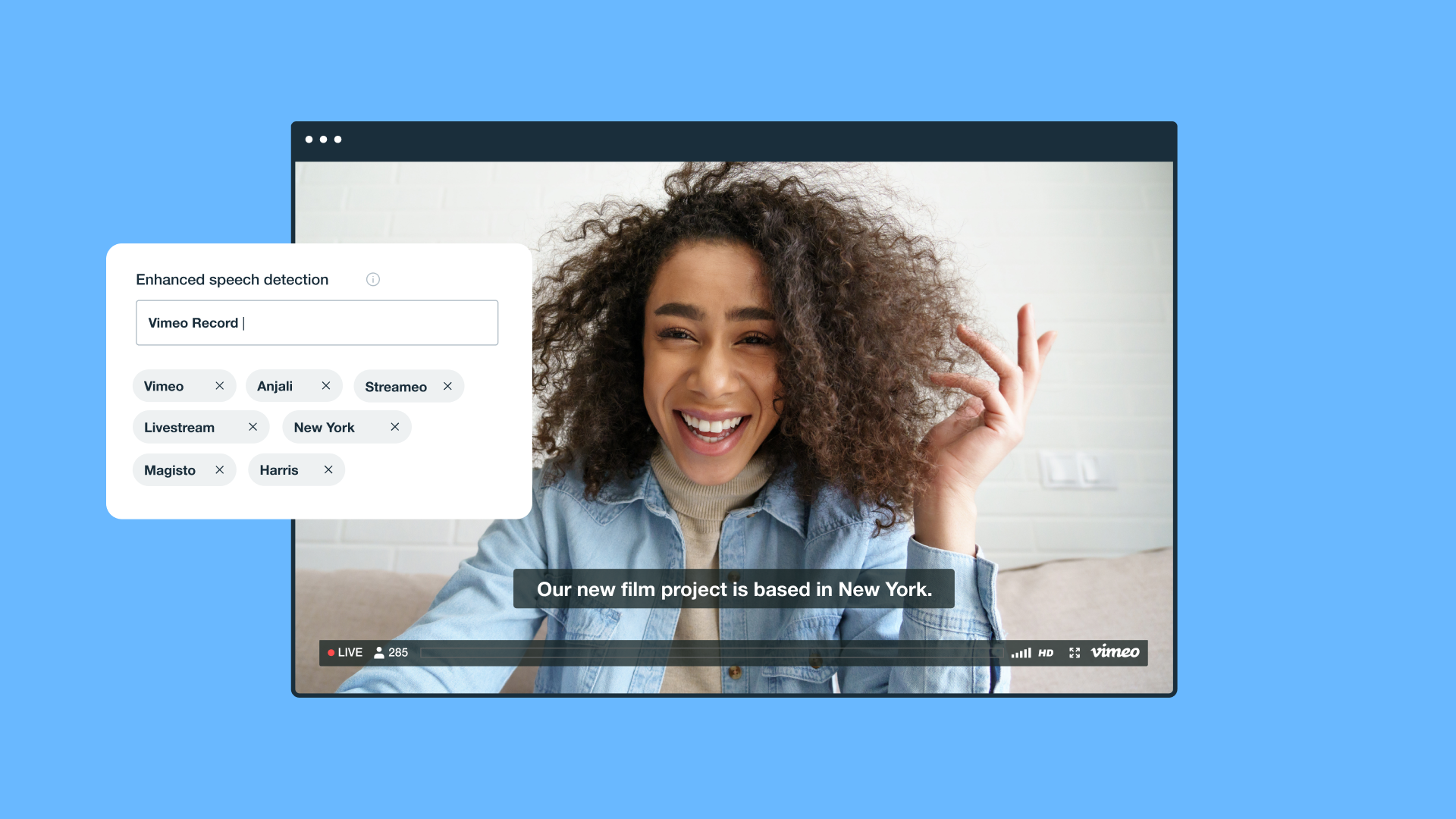
AI captioning leverages machine learning and automatic speech recognition to automatically generate subtitles, closed captions, and descriptive text for audio and video media. By transforming spoken dialogue and environmental sounds into structured text files, this technology enables scalable accessibility, improves search engine optimization, and accelerates media localization workflows across enterprise video platforms, social networks, and educational archives.
Understanding AI Captioning Technology
At its core, AI captioning relies on advanced neural networks—specifically recurrent neural networks, transformers, and large acoustic models—to process audio waveforms. The pipeline begins with audio preprocessing, which removes background noise, normalizes volume levels, and separates distinct speaker tracks. Next, an Automatic Speech Recognition (ASR) engine converts the acoustic signals into phonemes and words, utilizing large language models to predict contextual spelling and grammar in real time.
Once the raw transcript is generated, downstream Large Language Models (LLMs) perform punctuation restoration, capitalization, and formatting. For closed captions, timing algorithms align text segments with exact timecodes, ensuring that text appears on screen precisely when words are spoken. Furthermore, advanced AI systems can generate descriptive video captions for visually impaired audiences by analyzing visual frames via computer vision models and merging them with the audio timeline.
Core Benefits and Operational Advantages
The integration of artificial intelligence into transcription workflows provides significant advantages over traditional manual methods, primarily regarding speed, cost-efficiency, and global reach.
- Raw Audio/Video File
- Noise Reduction & Audio Normalization
- Automatic Speech Recognition (ASR)
- Punctuation & Contextual LLM Processing
- Timecode Alignment & Format Export (SRT/VTT)
Organizations that adopt automated pipelines experience several distinct operational improvements:
- Massive Time Savings: Automated systems can transcribe hours of video footage in minutes, reducing turnaround times from days to near-instantaneous generation.
- Cost Reduction: Automated captioning dramatically lowers per-minute processing fees compared to professional human transcription agencies, making high-volume content localization financially viable.
- Enhanced Discoverability: Text embedded within video files or published alongside transcripts allows search engine crawlers to index multimedia content, driving organic traffic through SEO improvements.
- Global Scalability: Integrated machine translation models enable creators to translate generated captions into dozens of languages simultaneously, facilitating rapid international market expansion.
Evaluation Criteria for AI Captioning Solutions
Selecting the appropriate AI captioning platform requires a structured comparison of technical capabilities, workflow integrations, and output formats. Media organizations must assess software based on accuracy benchmarks, formatting flexibility, and security compliance.
| Feature / Metric | Entry-Level Consumer Tools | Professional Enterprise Platforms | Custom API Pipelines (Open-Source) |
|---|---|---|---|
| Average Word Error Rate (WER) | 8% – 15% in quiet conditions | 3% – 6% across varied audio | Variable (depends on fine-tuning) |
| Supported Export Formats | TXT, SRT (limited) | SRT, VTT, SBV, JSON, XML | Fully customizable output schemas |
| Speaker Diarization | Basic or absent | Advanced multi-speaker mapping | Script-dependent custom builds |
| API & Workflow Integration | Rare or manual upload only | Native NLE plugins and webhooks | Full programmatic pipeline control |
| Data Privacy & Compliance | Standard consumer terms | Enterprise-grade, SOC 2, GDPR | Self-hosted, complete data control |
When evaluating these solutions, practitioners should pay close attention to Word Error Rate (WER) metrics, particularly when dealing with industry-specific jargon, accented speech, or overlapping dialogue. Enterprise applications typically require robust speaker diarization—the ability to accurately distinguish and label different speakers in a conversation.
Step-by-Step Implementation Workflow
Implementing an AI captioning workflow into a production environment requires a systematic approach to asset preparation, processing, and quality assurance.
- Asset Preparation: Export clean, uncompressed audio tracks or high-resolution video files. Ensure audio channels are separated if multi-speaker isolation is required to minimize diarization errors.
- Platform Selection and Upload: Ingest media into the chosen AI captioning software or route files via API endpoints to cloud-based processing infrastructure.
- Configuration and Language Selection: Specify the primary spoken language, domain-specific vocabulary dictionaries, and the desired output format (such as SubRip Subtitle
.srtor WebVTT.vtt). - Automated Processing: Execute the generation pipeline. Modern cloud architectures typically process standard media lengths within minutes, returning time-stamped text files.
- Human-in-the-Loop Review: Open the generated captions in an integrated editor to correct domain-specific terminology, proper nouns, and stylistic line breaks.
- Final Export and Embedding: Burn captions directly into the video stream (open captions) or export sidecar files (closed captions) for deployment on web video players.
Addressing Limitations and Managing Quality Control
Despite rapid advancements in machine learning, AI captioning systems are not infallible. Recognizing common technical hurdles helps organizations implement effective quality control measures before publishing content.
Accents, Dialects, and Acoustic Interference
Background music, sound effects, and heavy environmental noise frequently degrade ASR accuracy. Furthermore, regional dialects, non-native accents, and rapid conversational overlaps can cause phonetic misinterpretations. Organizations operating in noisy or dynamic environments should prioritize tools that allow custom vocabulary uploads or fine-tuned acoustic models.
Hallucinations and Contextual Errors
Large language models occasionally insert words that were never spoken—a phenomenon known as hallucination—when attempting to resolve ambiguous audio segments. Professional workflows must incorporate a mandatory human-in-the-loop review stage, especially for legal, medical, and corporate compliance media where factual accuracy is paramount.
Formatting and Compliance Standards
Different broadcasting networks and digital platforms enforce strict formatting guidelines regarding maximum line lengths, character limits per second, and screen positioning. Automated systems may generate structurally correct timecodes that still violate accessibility guidelines, requiring editors to adjust formatting rules manually.
How to Choose Between Cloud APIs and Desktop Applications?
Choosing between cloud-managed AI captioning services and local desktop software depends entirely on privacy constraints, infrastructure budgets, and technical resources. Cloud platforms offer effortless scalability, continuous model updates, and integrated web interfaces, making them ideal for marketing teams and standard content creators. However, they require uploading sensitive or proprietary media to third-party servers. Conversely, open-source models executed on local hardware provide absolute data privacy and zero per-minute processing fees, but they demand dedicated GPU infrastructure and advanced technical administration to maintain and update.
What Are the Best Practices for Preparing Audio for AI Captioning?
Optimizing source audio before processing dramatically reduces transcription errors and minimizes editing time. Creators should record using high-directional microphones, eliminate ambient room echo through basic acoustic treatment, and maintain consistent voice levels. Additionally, mixing dialogue to a dedicated audio track while keeping background music and sound effects on separate tracks allows automated separation algorithms to isolate human speech more effectively before ASR execution.
Can AI Captioning Accurately Handle Multilingual Translation?
Modern AI captioning systems handle multilingual tasks through two primary methods: direct speech-to-text translation or sequential pipelines where audio is transcribed in its native language and subsequently translated via neural machine translation models. While sequential pipelines generally yield higher grammatical accuracy, direct speech-to-foreign-text models are improving rapidly. However, idiomatic expressions, cultural references, and technical idioms still require human post-editing to ensure natural fluency in the target language.
How Do Timecodes Impact Subtitle Readability?
Precise timecode synchronization is critical for maintaining viewer comprehension and preventing cognitive fatigue. Poor timecode alignment causes captions to appear before speech begins or linger long after a speaker has finished, disrupting the viewing experience. High-quality AI tools utilize precise boundary detection algorithms, but human editors should verify that subtitle duration adheres to standard reading speeds—typically calculated at roughly 15 to 20 characters per second.
Optimizing Workflows for Long-Term Accessibility Compliance
Establishing an efficient AI captioning operation requires treating accessibility not as an afterthought, but as a foundational element of media production. Organizations should integrate automated transcription triggers directly into their content management systems (CMS) or video asset management (VAM) pipelines. By standardizing review protocols, maintaining custom glossaries of brand-specific terminology, and training editorial staff on caption editing software, media teams can achieve high accessibility standards without inflating operational overhead.