AI adoption involves the systematic integration of artificial intelligence technologies—such as machine learning, natural language processing, and generative AI systems—into organizational workflows, software platforms, and strategic decision-making processes. Successful implementation requires aligning these technical capabilities with rigorous data governance, change management protocols, and clear performance benchmarks to drive measurable business value.
Understanding the Landscape of AI Integration
The integration of artificial intelligence into commercial and public sector environments has transitioned from an experimental initiative to a core operational mandate. Organizations no longer view machine learning models and large language models merely as novel productivity tools; instead, they treat them as foundational infrastructure that impacts data pipelines, security protocols, and human resources. This shift requires a structured approach to identifying where automation and predictive analytics can genuinely optimize performance rather than simply adding operational complexity.
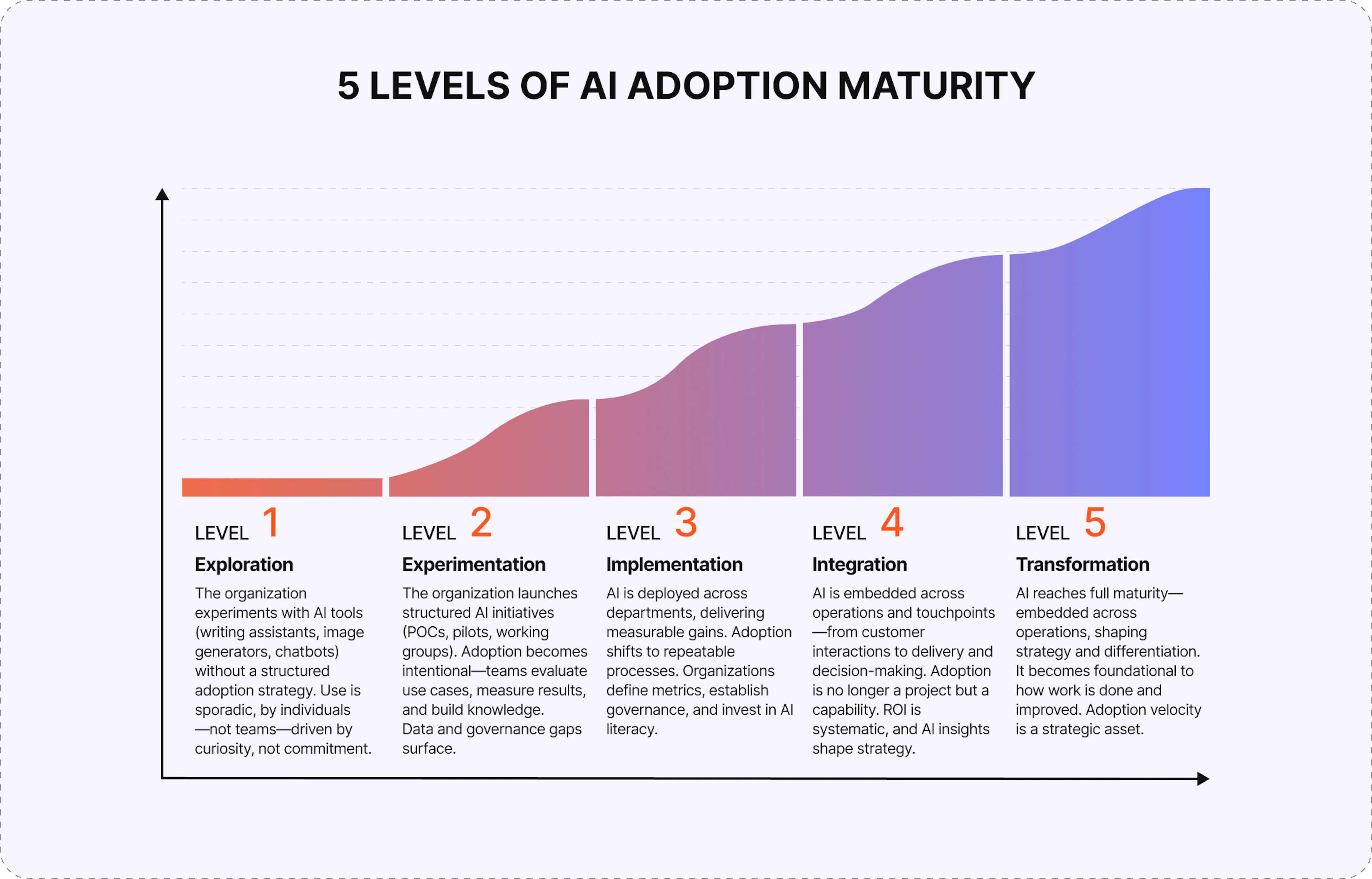
At the heart of this transition is the realization that artificial intelligence deployment is fundamentally a change management exercise disguised as an IT upgrade. Leaders must evaluate their existing technological maturity, data accessibility, and workforce readiness before purchasing software licenses or commissioning custom model training. Without a realistic baseline assessment, projects frequently stall during the proof-of-concept phase, failing to scale beyond isolated departments. Consequently, contemporary operational strategies emphasize incremental integration, where pilot programs validate return on investment before enterprise-wide rollouts consume significant capital.
Furthermore, the proliferation of specialized vertical solutions means that organizations must choose between building proprietary systems or configuring off-the-shelf enterprise platforms. While proprietary models offer tailored functionality and data sovereignty, they demand substantial engineering talent and computational resources. Conversely, cloud-hosted application programming interfaces provide rapid deployment capabilities but introduce vendor dependencies and data privacy considerations. Navigating these architectural decisions requires cross-functional collaboration between chief information officers, legal counsel, and business unit leaders.
Assessing Organizational Readiness and Prerequisites
Before deploying any artificial intelligence initiative, an enterprise must conduct a comprehensive audit of its data architecture and digital infrastructure. Models are entirely dependent on the quality, cleanliness, and accessibility of the data fed into them. Fragmented silos, legacy databases lacking standardized schemas, and inadequate metadata tagging will severely compromise the output of even the most sophisticated machine learning algorithms. Establishing a unified data governance framework is therefore an absolute prerequisite, ensuring that information is properly cataloged, secured, and compliant with relevant privacy regulations such as the General Data Protection Regulation or the California Consumer Privacy Act.
Beyond technical infrastructure, workforce capability represents a critical evaluation axis. Organizations must gauge the baseline digital literacy of their employees and identify specific skill gaps that could hinder adoption. Upskilling programs should not be restricted to data scientists and software engineers; operational staff, customer service representatives, and middle management require targeted training to understand how to interact effectively with automated systems, interpret algorithmic outputs, and recognize potential anomalies or hallucinations.
| Readiness Dimension | Core Evaluation Criteria | Minimum Standard for Pilot Phase | Common Risk Factors |
|---|---|---|---|
| Data Infrastructure | Storage accessibility, schema consistency, and real-time query performance | Centralized data warehouse with documented pipelines | Data silos, historical data corruption, unformatted text |
| Data Governance | Privacy compliance, access control, and consent tracking | Defined classification policies and role-based access | Regulatory non-compliance, unauthorized data exposure |
| Workforce Literacy | Baseline technical proficiency and familiarity with automated tools | Departmental champions trained in basic prompt engineering or tool navigation | Resistance to change, fear of displacement, low utilization rates |
| Computational Resources | Infrastructure scalability, API rate limits, and hardware allocation | Secure cloud credits or managed GPU instances secured | Unexpected cost overruns, latency bottlenecks, bandwidth limits |
Step-by-Step Implementation Methodology
Moving from conceptual planning to active deployment demands a disciplined, stage-gated methodology. Skipping foundational phases or rushing into large-scale implementation dramatically increases the likelihood of project failure. The following structured approach outlines the progression required to move an artificial intelligence initiative from ideation to production.
- Use Case Identification and Prioritization: Collaborate with business unit leaders to identify operational bottlenecks, repetitive administrative tasks, or data-heavy decision points where automation or predictive modeling can deliver high impact with manageable technical complexity.
- Feasibility and Risk Assessment: Evaluate the selected use cases against data availability, regulatory constraints, and ethical considerations. Conduct an initial risk analysis covering potential algorithmic bias, security vulnerabilities, and intellectual property exposure.
- Architecture and Vendor Selection: Determine whether to build custom models, fine-tune open-weight alternatives, or deploy managed enterprise software-as-a-service solutions. Evaluate vendors based on security certifications, data residency guarantees, and total cost of ownership.
- Data Preparation and Pipeline Engineering: Clean, normalize, and structure historical data sets to ensure they are suitable for training or retrieval-augmented generation pipelines. Establish continuous integration and continuous deployment pipelines specifically for data updates.
- Pilot Testing and Validation: Launch a controlled, sandboxed pilot program within a single department. Monitor performance metrics, track user feedback, and measure operational efficiency gains against pre-established key performance indicators.
- Enterprise Scaling and Governance: Expand the deployment across broader organizational units once the pilot meets success criteria. Implement continuous monitoring tools to track model drift, latency, and cost consumption in real time.
Navigating Legal, Ethical, and Compliance Challenges
The integration of advanced automated systems introduces complex legal and ethical responsibilities that extend far beyond traditional software deployment. Organizations must contend with evolving regulatory landscapes that increasingly hold enterprises accountable for algorithmic transparency, fairness, and accountability. When models are utilized in sensitive domains such as credit scoring, recruitment, or healthcare triage, unintentional bias embedded in training data can lead to discriminatory outcomes, exposing the firm to severe legal liabilities and reputational damage.
Intellectual property rights represent another critical compliance vector. Enterprises must verify the provenance of training data and the licensing terms of foundation models to avoid copyright infringement claims or the inadvertent leakage of proprietary source code and trade secrets into public model training sets. Utilizing enterprise-grade agreements with explicit indemnification clauses and zero-data-retention guarantees is standard practice for mitigating these exposures.
Furthermore, explainability—often referred to as the black-box problem—remains a significant operational hurdle. Stakeholders, auditors, and regulators frequently demand clear justifications for automated decisions. When deep learning architectures produce outputs through non-linear mathematical transformations that defy straightforward human interpretation, organizations must implement complementary explainability frameworks, such as feature attribution methods or surrogate models, to maintain auditability and trust.
Managing Costs and Economic Considerations
Evaluating the true financial commitment of enterprise artificial intelligence adoption requires looking past initial software licensing fees or cloud subscription costs. The economic model is characterized by continuous operational expenditures that scale dynamically with usage volume, token consumption, and data transfer rates. Organizations that fail to forecast these variable expenses accurately often encounter significant budget overruns shortly after moving models into production.
Computational resource allocation constitutes a major cost driver, particularly when maintaining dedicated inference servers or fine-tuning proprietary large models. While managed application programming interfaces reduce infrastructure overhead, high-frequency enterprise queries can quickly accumulate substantial monthly invoices. Consequently, financial controllers must establish rigorous cost-allocation models that track consumption by department, ensuring accountability and preventing resource hoarding.
In addition to direct computational expenses, indirect costs associated with talent acquisition, data engineering, compliance audits, and ongoing model maintenance must be factored into the total cost of ownership. Upskilling existing personnel is frequently more cost-effective than attempting to hire scarce, highly compensated specialized machine learning engineers from the open market. Balancing build-versus-buy decisions against these financial parameters is essential for achieving a sustainable, positive return on investment.
Overcoming Resistance and Driving Long-Term Engagement
Even the most technologically advanced integration will fail if end-users reject the tools or bypass established workflows. Resistance to implementation typically stems from uncertainty, fear of job displacement, or frustration with poorly designed user experiences that disrupt established daily routines. Overcoming these cultural barriers requires transparent communication from executive leadership, emphasizing that automated systems are designed to augment human capability rather than replace the workforce.
To foster genuine engagement, organizations should involve frontline workers early in the design and testing phases. Users who participate in shaping how a tool operates are significantly more likely to champion its adoption within their teams. Additionally, establishing internal communities of practice or ambassador networks allows enthusiastic employees to share practical tips, successful prompt templates, and workflow optimizations with their peers, creating a self-sustaining culture of continuous learning and adaptation.
Frequently Asked Questions
What is the primary difference between a pilot project and full enterprise scaling in AI adoption?
A pilot project is a time-bound, sandboxed experiment restricted to a single department or specific use case designed to test feasibility and measure initial return on investment. Full enterprise scaling involves embedding systems into core production workflows, connecting them to enterprise-wide data pipelines, and rolling them out across multiple business units with continuous monitoring and governance.
How can organizations prevent algorithmic bias in their machine learning models?
Preventing algorithmic bias requires rigorous data auditing to ensure training sets are diverse, representative, and free of historical prejudices. Organizations must also implement continuous fairness testing, evaluate model outputs against protected demographic variables, and maintain human-in-the-loop oversight for high-stakes decisions.
What are the key security risks associated with third-party AI APIs?
The primary security risks include data leakage through prompt inputs, unauthorized third-party retention of proprietary enterprise data, susceptibility to prompt injection attacks, and vulnerabilities within the underlying vendor infrastructure that could compromise downstream applications.
How long does a typical AI adoption lifecycle take from planning to production?
The timeline varies widely based on organizational maturity, ranging from three to six months for straightforward software-as-a-service integrations to eighteen months or more for custom model development, extensive data cleaning, and enterprise-wide deployment.
Is it better to build custom models or use off-the-shelf enterprise AI solutions?
Most organizations benefit from starting with off-the-shelf enterprise solutions or fine-tuning existing foundation models via application programming interfaces to accelerate time-to-value. Custom model building is generally reserved for organizations with unique proprietary data assets, strict data sovereignty requirements, and specialized engineering resources.
Strategic Next Steps for Enterprise Leaders
To initiate or accelerate a successful integration journey, technology leaders should immediately conduct a comprehensive data and workflow inventory across all primary business units. Map existing operational bottlenecks against available technological capabilities, select a single high-impact, low-complexity pilot project, and establish a cross-functional governance committee comprising representatives from IT, legal, and operational departments to oversee execution, compliance, and budget allocation.