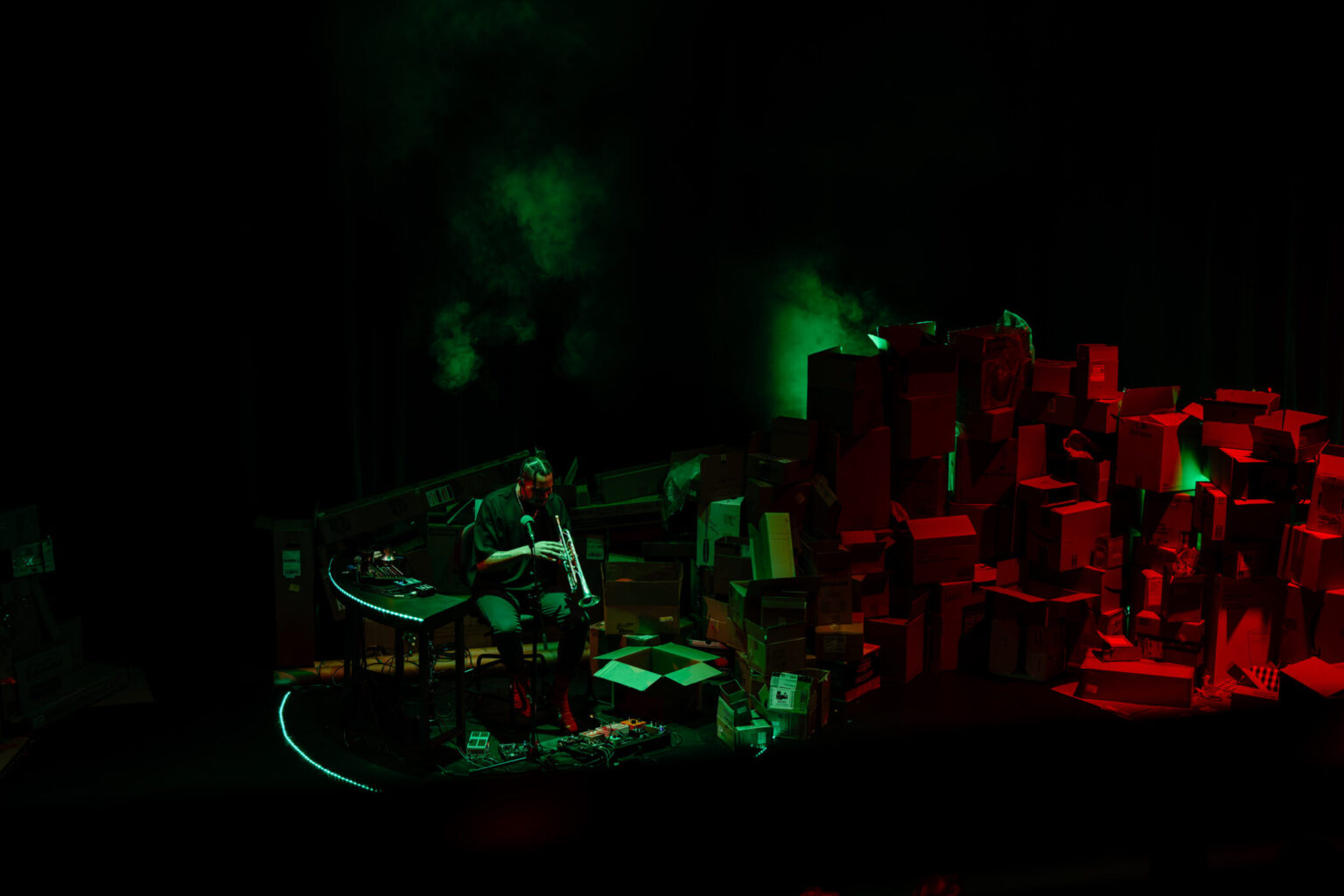
Ahamefule J. Oluo is a Seattle-based composer, trumpeter, writer, and performer whose multi-disciplinary work explores the intersections of identity, family history, systemic race dynamics, and personal trauma. By blending orchestral jazz arrangements with candid autobiographical storytelling, Oluo transforms deep personal hardships—such as debilitating illness and familial abandonment—into profound, vulnerable theatrical experiences.
The Artistic Vision of Ahamefule J. Oluo
Ahamefule J. Oluo has carved out a unique position in contemporary American performance art by bridging the gap between jazz composition, stand-up comedy, and narrative theater. Rather than treating music and storytelling as separate elements, Oluo weaves them together so that orchestral arrangements act as emotional counterweights to spoken narratives. His work frequently addresses topics that are often shrouded in silence: complex family dynamics, the realities of mixed-race identity in America, chronic illness, and the lingering impacts of emotional trauma.
Oluo’s entrance into the broader cultural consciousness began in Seattle’s vibrant music and theater scenes. As a founding member of the experimental jazz quartet Industrial Revelation, he demonstrated a trumpet style characterized by tonal clarity and emotional intensity. However, his ambition extended beyond traditional musical formats. By combining his musical abilities with sharp, self-deprecating writing, he developed a hybrid form of performance art designed to unearth difficult truths about human vulnerability and resilience.
In developing his major works, Oluo relies on rigorous honesty. His narratives do not shy away from uncomfortable details about interpersonal conflict, economic distress, or systemic racism. Instead, he treats these experiences as raw material, shaping them into structured artistic statements that invite audiences to examine their own unspoken histories and internal conflicts.
Key Works: Deconstructing Personal Narrative Through Performance
To understand how Oluo unveils hidden truths, one must examine his landmark theatrical compositions and cinematic projects. Each major project operates as an autobiographical excavation, taking real-world events and recontextualizing them through large-scale musical and dramatic arrangements.
Now I'm Fine (2014)
Now I'm Fine served as Oluo's breakthrough work as a solo creator and theatrical composer. Premiering at Seattle’s On the Boards before touring to prominent venues like The Public Theater’s Under the Radar Festival in New York, the show chronicles a catastrophic period in Oluo’s life marked by a severe autoimmune disease, a agonizing divorce, and profound professional uncertainty.
- Structure and Instrumentation: The production features an 11-piece orchestra, combining classical strings, brass, and a rhythm section to accompany Oluo’s spoken monologue.
- Narrative Focus: The work details the physical agony of his illness alongside the emotional collapse of his personal life, avoiding melodramatic cliches in favor of sharp humor and brutal clarity.
- Thematic Core: Now I'm Fine demonstrates how creative expression can function as a survival mechanism, allowing the artist to process catastrophic life events in real time.
Susan (2019)
Following the success of Now I'm Fine, Oluo turned his investigative lens toward his family history in Susan. Named after his mother, a white woman from Kansas who raised two children as a single parent in Seattle, the performance examines the long-shadowed legacy of Oluo’s estranged Nigerian father.
- Unearthing Family Secrets: The show addresses the complex reality of a father who abandoned his American family to return to Nigeria, leaving behind unanswered questions, financial insecurity, and emotional scars.
- Artistic Scale: Featuring a 14-piece musical ensemble alongside guest vocalists, Susan expands the musical palette to match the broader geographical and emotional scope of the story.
- Critical Resolution: Rather than offering a simple resolution, Susan acknowledges the messy, unresolved nature of generational trauma and the courage required to look clearly at one's origins.
Thin Skin (2020)
Thin Skin represents the cinematic adaptation of Oluo’s autobiographical storytelling. Directed by Charles Mudede and co-written by Oluo, Mudede, and writer Lindy West, the feature film builds upon the narrative foundation laid in Oluo’s earlier theatrical works and his popular episode on This American Life.
- Cinematic Realism: Set against the backdrop of Seattle, the film stars Oluo as a fictionalized version of himself balancing a soul-crushing corporate job, a budding music career, and the sudden re-emergence of his estranged father.
- Musical Score: The film relies heavily on Oluo’s original compositions, demonstrating how musical narrative can enhance visual storytelling to convey internal anxiety and emotional breakthrough.
Themes of Truth-Telling: Race, Identity, and Familial Trauma
At the heart of Oluo’s catalog is a commitment to confronting truths that individuals and societies often obscure. His works routinely explore three central thematic pillars: the complexities of mixed-race heritage, the psychological toll of parental absence, and the physical reality of illness.
| Core Thematic Pillars | Details |
|---|---|
| 1. Intersectional Identity | - Navigating Blackness and mixed heritage in predominantly white cultural spaces. |
| 2. Generational & Family Secrets | - Unpacking parental absence- Reconstructing fragmented lineage and heritage. |
| 3. Physical Vulnerability | - Chronic autoimmune illness and bodily limitations. |
| 4. Humor as Critical Lens | - Using comedy to create space for hard, painful truths. |
Navigating Intersectional Identity
Growing up in the Pacific Northwest as the child of a white mother and a Black Nigerian father, Oluo’s work reflects a constant negotiation of identity. He candidly details the experience of moving through predominantly white spaces while carrying the racialized expectations of American society. Through his writing, he dismantles idealized narratives around multicultural upbringing, highlighting the isolation, confusion, and systemic friction that often accompany the mixed-race experience.
The Dynamics of Parental Absence
A recurring thread throughout Oluo’s storytelling is the shadow cast by his absent father. Rather than reducing his father to a simple antagonist, Oluo interrogates the systemic, historical, and personal forces that led to his father's departure. This nuanced approach allows the audience to understand how family secrets and unspoken histories persist across generations, shaping an individual's sense of self long after the events occurred.
Humor as a Analytical Tool
Crucially, Oluo’s unveiling of painful truths relies heavily on comedy. Rather than using humor to evade serious topics, he uses comic timing and self-deprecating wit to soften audience defenses, making heavy subjects like systemic racism, organ failure, and grief accessible and digestible. The juxtaposition of comedic monologue with rich, mournful jazz instrumentation creates a dynamic contrast that heightens the emotional impact of the performance.
Comparative Overview of Ahamefule Oluo’s Core Projects
The following table outlines the distinct parameters, mediums, and thematic focuses across Ahamefule Oluo’s major creative projects.
| Project Title | Medium / Format | Core Narrative Theme | Musical & Performance Style | Primary Collaborators |
|---|---|---|---|---|
| Industrial Revelation | Studio & Live Music Albums | Collaborative jazz exploration, urban commentary | Instrumental experimental jazz, trumpet-led fusion | D'Vonne Lewis, Evan Flory-Barnes, Josh Rawlings |
| Now I'm Fine | Live Theatrical Performance | Chronic illness, divorce, emotional recovery | Orchestral jazz, stand-up comedy, 11-piece ensemble | On the Boards, various Seattle vocalists and string players |
| Susan | Live Theatrical Performance | Generational trauma, single motherhood, estranged father | Large-scale ensemble composition (14-piece), spoken word | Lindy West, Oklahoma Rain (vocal ensemble), BAM Next Wave |
| Thin Skin | Feature Film | Corporate alienation, artistic ambition, family reunion | Cinematic score, dramatic film acting, autobiographical fiction | Charles Mudede, Lindy West, Michael Theo White |
Collaborations and Impact on the Contemporary Arts Scene
Ahamefule Oluo’s contributions extend beyond his solo catalog through extensive collaborations with prominent writers, filmmakers, and musicians. His work has helped reshape the Seattle arts ecosystem, demonstrating how local arts organizations can nurture interdisciplinary work that achieves national recognition.
Work with Lindy West and Charles Mudede
Oluo’s professional partnership with author Lindy West and filmmaker/critic Charles Mudede has yielded some of his most influential work. Together, they have developed a distinct regional storytelling voice that combines cultural critique, sharp political awareness, and personal history.
- Television and Score Work: Oluo contributed music to the Hulu television series Shrill (adapted from Lindy West’s memoir), illustrating his ability to adapt his compositional style to screen media.
- Collaborative Screenwriting: His work with Mudede on Thin Skin highlights a shared interest in examining the economic and social realities of contemporary urban life, particularly for Black artists working outside major media capitals like Los Angeles or New York.
Industrial Revelation and Musical Innovations
Before gaining national prominent as a theater maker, Oluo built a foundation as a trumpeter and composer within Industrial Revelation. The ensemble achieved critical recognition, winning the Stranger Genius Award in 2014. The group’s willingness to blend jazz with elements of hip-hop, punk, and classical music paved the way for Oluo’s later, more expansive orchestral arrangements.
How to Engage with Ahamefule Oluo’s Work
For listeners, viewers, and scholars looking to explore Oluo’s catalog, approaching his work requires an understanding of how his musical compositions and narrative prose interact.
- Listen to Instrumental Collaborations First: Begin with Industrial Revelation's album Oak Park 96 to understand Oluo’s foundational trumpet performance and jazz composition style.
- Stream Theatrical Cast Recordings: Listen to the live cast recordings and albums associated with Now I'm Fine to experience how his spoken narratives integrate with large-ensemble jazz arrangements.
- Watch Thin Skin: View the feature film adaptation to see how his stage narrative translates into visual cinema, offering a visual context to his family history and Seattle roots.
- Explore Audio Storytelling: Listen to Oluo’s appearances on narrative audio programs like This American Life (specifically Episode 557, "B-Sides and Outtakes"), which features early iterations of the stories that later informed Susan and Thin Skin.
Frequently Asked Questions
What is the central message behind Ahamefule Oluo's performance art?
Oluo’s work emphasizes that confronting uncomfortable personal truths—such as family estrangement, physical illness, and racial identity—is essential for personal healing and authentic artistic expression. He uses a combination of humor and music to make these heavy topics approachable.
How does music function within Oluo's storytelling productions?
Rather than serving merely as background music, Oluo’s musical scores function as a dialogue partner with his spoken monologues. The music amplifies, challenges, or offers emotional relief from the intense personal stories he shares on stage.
Is Thin Skin directly based on Ahamefule Oluo's life?
Yes, Thin Skin is an autobiographical feature film based on Oluo’s real-life experiences, including his former job in corporate tech support, his health struggles, his pursuit of music, and his complex relationship with his estranged Nigerian father.
What instruments does Ahamefule Oluo play?
Ahamefule Oluo is primarily a trumpeter, but he is also a conductor, composer, vocalist, and multi-instrumentalist who arranges complex scores for multi-piece orchestras and jazz ensembles.
Where did Ahamefule Oluo's theatrical shows premiere?
His major theatrical works, including Now I'm Fine and Susan, originally premiered at On the Boards, a contemporary performing arts theater in Seattle, Washington, before touring to national venues such as the Brooklyn Academy of Music (BAM) and The Public Theater in New York.
Recommendations for Experiencing Autobiographical Performance Art
To gain the deepest appreciation for artists like Ahamefule Oluo who unveil complex personal truths through art, audiences should consider the following practical approaches:
- Examine the Interplay of Text and Score: When listening to Oluo’s work, pay close attention to how changes in musical tempo and instrumentation mirror the narrative tension in his spoken stories.
- Explore Contextual Backgrounds: Reading background reporting and listening to interviews regarding the history of Seattle's jazz scene and the West African diaspora provides helpful context for understanding the cultural references in Susan and Thin Skin.
- Support Regional Contemporary Theater: Masterpieces like Now I'm Fine rely on non-profit institutions like On the Boards and BAM that support non-traditional, hybrid performance formats. Engaging with local performing arts spaces helps sustain the development of future interdisciplinary art.