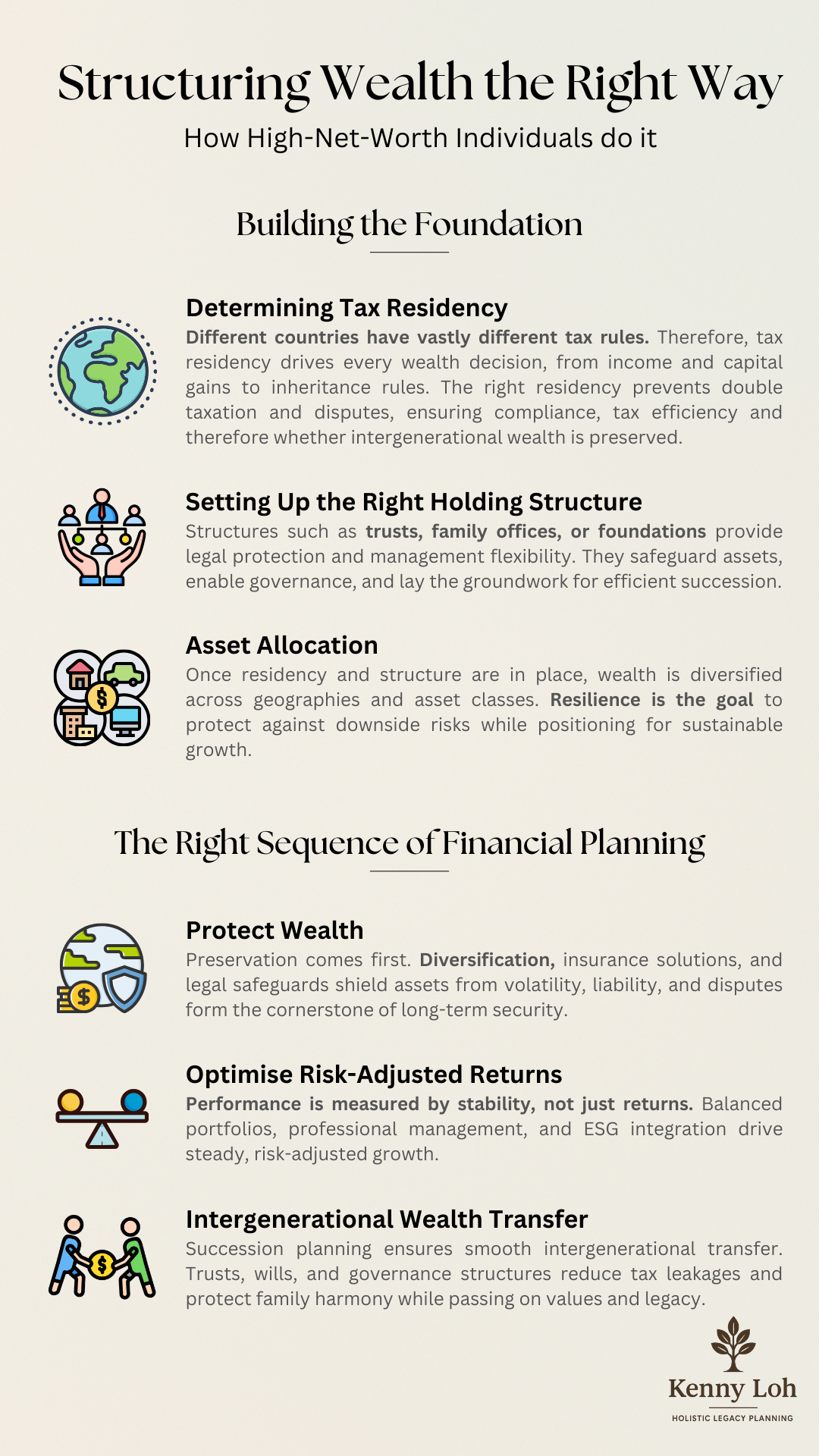
Building significant net worth as a professional agent—whether in real estate, insurance, or talent representation—requires shifting from a transaction-based mindset to an equity-building strategy. Serious wealth is rarely accumulated through commissions alone; instead, it is generated by leveraging high-income years to acquire appreciating assets, creating passive revenue streams, and minimizing the tax drag on annual earnings.
The Foundation of Agency Wealth: The Equity Mindset
The primary obstacle for most agents is the "feast or famine" cycle inherent in commission-based work. To build lasting wealth, an agent must treat their professional income as venture capital. Instead of inflating personal expenses to match high-commission months, successful agents allocate a fixed percentage of every check toward tax-advantaged investment vehicles.
True net worth is defined as the total value of your assets—including cash, real estate, brokerage accounts, and equity in your own business—minus your total liabilities. When you treat your agency practice as a business rather than a job, you stop seeking just a salary and start seeking enterprise value. This involves reinvesting in lead-generation systems that function independently of your physical presence, effectively creating a machine that scales without a proportional increase in your labor.
Leveraging Tax Efficiency and Business Structure
High-earning agents often lose a substantial portion of their wealth to self-employment taxes and high income tax brackets. Structuring your practice as an S-Corporation or a Limited Liability Company (LLC) taxed as an S-Corp can significantly alter your financial trajectory. By paying yourself a "reasonable salary" and taking the remainder of your earnings as distributions, you may reduce self-employment tax exposure.
Furthermore, professional agents should maximize retirement vehicles that allow for high contribution limits. A Solo 401(k) or a Defined Benefit Plan, depending on your firm size and structure, allows for tax-deferred growth on significantly higher amounts than a standard IRA. In 2026, consulting with a tax professional regarding these specific vehicles is a prerequisite for any agent looking to protect their gross earnings from excessive federal and state levies.
Asset Classes for Sustainable Growth
Once tax efficiency is established, the focus must shift to capital allocation. Agents who maintain high net worth typically diversify outside their primary industry. The goal is to move from active income, which requires your constant effort, to passive income, which compounds over time.
| Asset Class | Primary Advantage | Typical Risk Profile |
|---|---|---|
| Real Estate (Rental) | Tax Depreciation | Moderate/High (Leverage) |
| Index Funds (ETFs) | Liquidity/Diversification | Moderate (Market Risk) |
| Private Equity/Syndicates | Potential for Alpha | High (Illiquidity) |
| High-Yield Bonds | Income Stability | Low/Moderate |
Real estate is a common favorite among agents because the skillset overlaps significantly with their professional expertise. However, reliance on a single asset class—even one you understand well—can be dangerous. A balanced portfolio includes liquid assets that can be accessed without a lengthy sale process, ensuring you are not forced to liquidate property during a market downturn.
Scaling Through Systems and Delegation
Wealth is limited if it is tethered strictly to your time. To build serious, long-term wealth, an agent must eventually transition from an "operator" to an "owner." This requires hiring administrative support and specialized contractors to handle low-value, repetitive tasks.
If you are currently spending your time on lead entry, basic bookkeeping, or appointment scheduling, your net worth growth is throttled by your hourly rate. By offloading these tasks to virtual assistants or specialized firms, you reclaim the time necessary to focus on high-leverage activities: client acquisition, strategic partnerships, and investment management. The cost of hiring support is not an expense; it is a capital investment in your capacity to generate future wealth.
Managing Debt and Liquidity Requirements
While leverage is a tool for building wealth, debt must be managed with discipline. Many agents fall into the trap of using credit to fund a lifestyle that mimics their highest-earning months. This "lifestyle creep" is the primary destroyer of net worth.
Maintaining a liquidity buffer is essential. In an industry where income can vanish for months due to market shifts or personal health issues, keeping 6 to 12 months of operating and personal expenses in a high-yield savings account or a money market fund provides the security necessary to make long-term investment decisions. You cannot invest confidently if you are one bad month away from financial insolvency.
Frequently Asked Questions
Is it better to reinvest in my agency or the stock market?
If your agency has high profit margins and scalable systems, the return on investment (ROI) from improving your marketing or hiring talent often exceeds stock market averages. However, once your agency reaches a point of diminishing returns, shifting capital to external assets like index funds or real estate is essential for risk mitigation and long-term compounding.
How does the 2026 tax climate affect agent wealth?
As of 2026, tax brackets and deduction rules remain sensitive to legislative adjustments. Agents should focus on utilizing the Section 199A deduction if they qualify as a pass-through entity. Always review your specific state and federal tax exposure annually, as shifting rules regarding capital gains can significantly alter the attractiveness of certain asset classes.
What is the biggest mistake agents make when trying to get rich?
The most common error is failing to separate personal finances from business finances. Mixing funds leads to poor accounting, missed tax deductions, and an inability to accurately measure the profitability of your practice. Every dollar spent personally should be a deliberate withdrawal from your business, not an incidental expense.
How much of my income should I save for investment?
While personal circumstances vary, a standard target for those pursuing "serious wealth" is to live on 50% of your net income and invest the remaining 50%. If this is not possible due to your current income level, focus on scaling your revenue through better lead acquisition and higher-value services rather than simply cutting costs.
How do I know when to hire my first assistant?
Hire an assistant the moment the value of the tasks you are performing falls below the value of the revenue you would generate if you spent that same time on high-level client acquisition. If you are doing tasks that an entry-level worker could do for a fraction of your hourly worth, you are actively losing money.
Next Steps for Wealth Accumulation
To begin your journey toward greater net worth, start with a comprehensive audit of your 2025 financial performance. Identify every unnecessary expense and calculate your true "burn rate." Next, open a business-dedicated brokerage account if you have not already. Set an automated transfer schedule so that a percentage of every commission check is moved into investment accounts before it touches your personal operating budget. Finally, consult with a fee-only financial planner to align your asset allocation with your specific risk tolerance and retirement timeline.