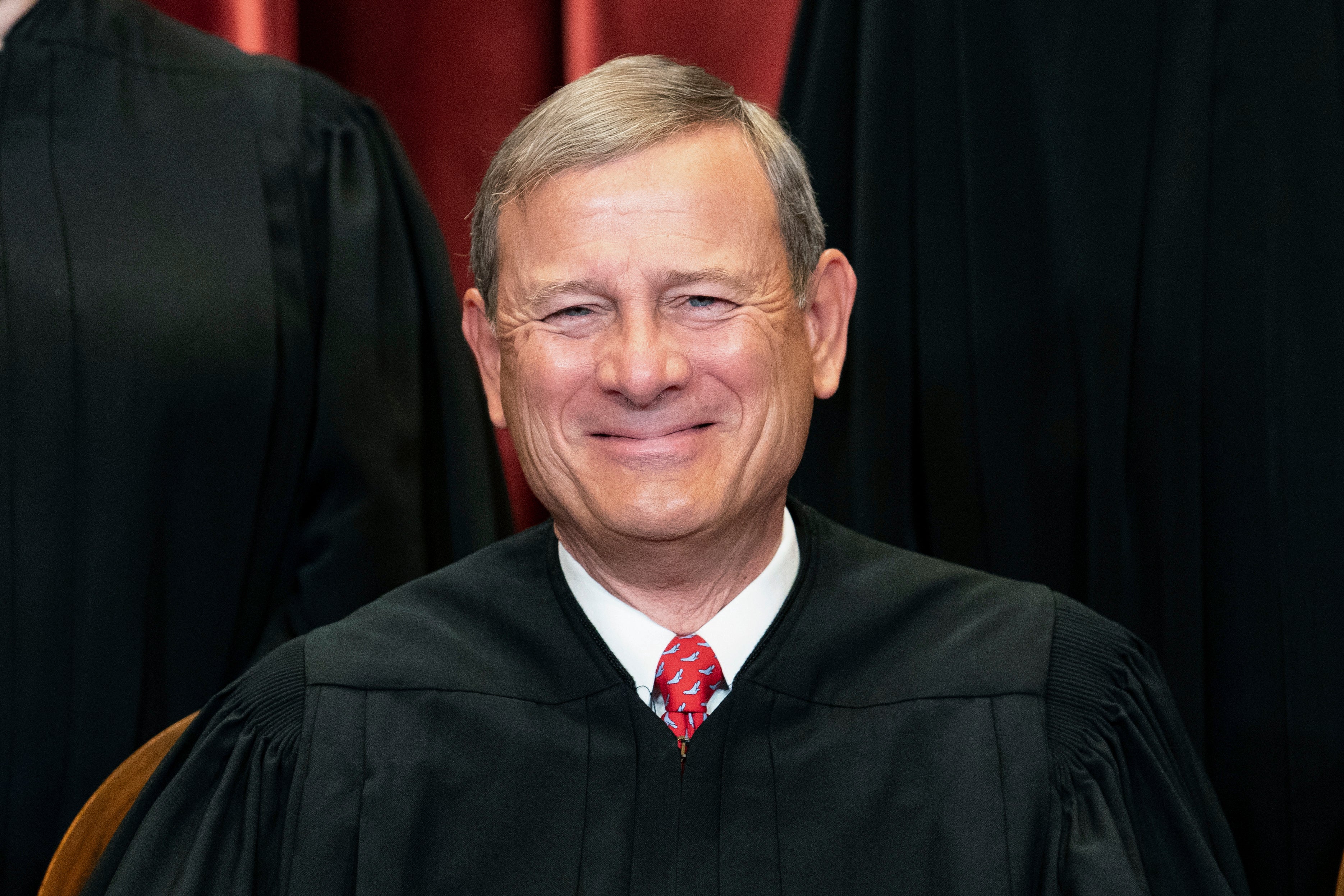
As of 2026, John G. Roberts Jr., the 17th Chief Justice of the United States, is 71 years old. Born on January 27, 1955, in Buffalo, New York, he has led the nation’s highest court for over two decades since his confirmation and swearing-in in September 2005.
Understanding the age of John Roberts is more than a matter of biographical curiosity; it provides essential context for the current composition of the Supreme Court, the historical length of judicial tenures, and the trajectory of American jurisprudence. At 71, Roberts occupies a senior position on the bench, both in terms of title and biological age, balancing the roles of institutionalist and conservative jurist in an era of significant legal shifts.
Early Life and the Foundations of a Legal Career
John Glover Roberts Jr. was born into a family that valued hard work and academic excellence. His father, John G. "Jack" Roberts Sr., was an executive for Bethlehem Steel, which led the family to move from Buffalo to Long Beach, Indiana, during John’s childhood. This Midwestern upbringing is often cited by biographers as a source of his disciplined, methodical approach to the law.
Roberts attended La Lumiere School, a small but rigorous Catholic boarding school in La Porte, Indiana, where he excelled in both academics and athletics. His early interest in history and literature paved the way for his enrollment at Harvard University. He graduated summa cum laude in just three years with a Bachelor of Arts in 1976. He then continued his education at Harvard Law School, where he served as the managing editor of the Harvard Law Review, a prestigious role that marked him as one of the brightest legal minds of his generation. He received his Juris Doctor magna cum laude in 1979.
The late 1970s and early 1980s were formative years for Roberts. Following law school, he secured a clerkship with Judge Henry Friendly of the U.S. Court of Appeals for the Second Circuit—a man widely regarded as one of the greatest appellate judges in American history. This was followed by a clerkship with then-Associate Justice William H. Rehnquist on the Supreme Court. These experiences instilled in Roberts a deep respect for judicial tradition and the intricacies of appellate procedure.
The Path to the Supreme Court
Before his appointment to the Supreme Court, Roberts spent years honing his skills in both public service and private practice. His career is often divided into distinct phases:
- Executive Branch Service: During the Reagan administration, Roberts served as a Special Assistant to Attorney General William French Smith and later as Associate Counsel to the President under Fred Fielding. In these roles, he worked on a wide range of legal issues, from school prayer to voting rights, establishing himself as a reliable conservative voice.
- The Solicitor General’s Office: Under President George H.W. Bush, Roberts served as Principal Deputy Solicitor General. In this capacity, he argued numerous cases before the Supreme Court, earning a reputation for his exceptional oral advocacy and poise under pressure.
- Private Practice: As a partner at the law firm Hogan & Hartson (now Hogan Lovells), Roberts became one of the most sought-after appellate attorneys in Washington, D.C. He argued a total of 39 cases before the Supreme Court, winning 25 of them.
- The D.C. Circuit: In 2003, President George W. Bush appointed Roberts to the U.S. Court of Appeals for the District of Columbia Circuit. His brief tenure there (2003–2005) was marked by a steady, predictable judicial philosophy that made him an ideal candidate for the high court.
In July 2005, following the retirement of Justice Sandra Day O'Connor, President Bush nominated Roberts to serve as an Associate Justice. However, the death of Chief Justice William Rehnquist in September 2005 changed the calculation. Bush withdrew the initial nomination and instead nominated Roberts to succeed Rehnquist as Chief Justice. He was confirmed by the Senate with a 78–22 vote.
Judicial Longevity and the "Roberts Court" in 2026
By 2026, John Roberts has presided over the "Roberts Court" for 21 years. In the history of the Supreme Court, the average tenure for a justice is approximately 16 to 18 years, though modern advancements in healthcare and the tendency toward younger appointments have seen this average increase significantly. Roberts’ 21-year tenure places him among the more experienced Chief Justices in American history, though he still trails the record-breaking 34-year tenure of John Marshall.
The concept of "age" in the Supreme Court is intrinsically linked to the "swing vote" and the court's ideological balance. For much of his tenure, Roberts was seen as the "center" of the court, particularly after the retirement of Anthony Kennedy. However, the appointment of several more conservative justices in recent years (Gorsuch, Kavanaugh, and Barrett) moved the court's median to the right, often placing Roberts in a position where he is no longer the deciding vote but rather a moderating influence on the conservative majority.
Historical Context of Chief Justice Ages
To understand where Roberts stands at 71, it is useful to compare him to his predecessors and current colleagues.
| Justice Name | Current Age (2026) | Age at Appointment | Years of Service (as of 2026) |
|---|---|---|---|
| John Roberts (CJ) | 71 | 50 | 21 |
| Clarence Thomas | 78 | 43 | 35 |
| Samuel Alito | 76 | 55 | 20 |
| Sonia Sotomayor | 72 | 55 | 17 |
| Elena Kagan | 66 | 50 | 16 |
| Neil Gorsuch | 58 | 49 | 9 |
| Brett Kavanaugh | 61 | 53 | 8 |
| Amy Coney Barrett | 54 | 48 | 6 |
| Ketanji Brown Jackson | 55 | 51 | 4 |
As the table illustrates, Roberts is currently in the middle tier of the court regarding age, but he remains one of the longest-serving members. His appointment at age 50 was relatively young for a Chief Justice, which has allowed him to shape the court's direction for over two decades.
Health, Vitality, and Judicial Responsibilities
The health of a Supreme Court justice is a matter of national importance due to the lifetime nature of the appointment. Throughout his career, John Roberts has generally maintained a healthy and active lifestyle. He is known to be a fan of hockey and remains physically active.
However, like any public figure of his age, his health has been scrutinized. He famously experienced two publicized seizures, one in 1993 and another in 2007. Medical professionals at the time described these as isolated incidents with no underlying neurological disease. In 2020, he was hospitalized briefly after a fall while walking near his home, which the Court attributed to lightheadedness.
In 2026, Roberts appears to remain in good health, continuing to manage the heavy administrative workload that comes with being Chief Justice. Beyond writing opinions and presiding over oral arguments, the Chief Justice serves as the head of the federal judiciary, presiding over the Judicial Conference of the United States and the Board of the Federal Judicial Center.
The Institutionalist Philosophy at 71
As John Roberts has aged, his judicial philosophy has often been characterized as "institutionalist." This means he places a high priority on the reputation, legitimacy, and independence of the Supreme Court as an institution. He is famously quoted from his confirmation hearing as saying his job is to "call balls and strikes," implying a neutral, limited role for the judiciary.
At 71, Roberts often finds himself at the heart of debates regarding the court’s shadow docket, ethics reforms, and the boundaries of executive power. His age and experience have made him a defender of stare decisis (the principle of following legal precedent) in some cases, while he has been willing to overturn long-standing precedents in others when he believes the original legal reasoning was fundamentally flawed.
His legacy is likely to be defined by his attempts to steer the court through a deeply polarized political climate. Whether it is his deciding vote to uphold the Affordable Care Act in NFIB v. Sebelius or his nuanced concurrence in Dobbs v. Jackson, Roberts’ age has brought a seasoned, if sometimes controversial, perspective to the nation's most pressing legal disputes.
Frequently Asked Questions
How old was John Roberts when he became Chief Justice?
John Roberts was 50 years old when he was sworn in as the 17th Chief Justice of the United States on September 29, 2005. This made him the youngest Chief Justice since John Marshall, who was 45 when he took the oath in 1801. His relatively young age at appointment was a strategic choice by the Bush administration to ensure a long-lasting conservative influence on the court.
Is John Roberts the oldest justice on the Supreme Court?
No, John Roberts is not the oldest justice. In 2026, Justice Clarence Thomas (78) and Justice Samuel Alito (76) are both older than Chief Justice Roberts. He is currently the fourth-oldest member of the court, with Justice Sonia Sotomayor also being slightly older at 72.
What is the retirement age for a Supreme Court Justice?
There is no mandatory retirement age for Supreme Court Justices. Under Article III of the Constitution, they hold their offices during "good Behaviour," which effectively means for life unless they choose to retire or are removed through impeachment. Most justices serve well into their 80s; for example, Justice Ruth Bader Ginsburg served until her death at age 87, and Justice John Paul Stevens retired at age 90.
When is John Roberts' birthday?
John Roberts was born on January 27, 1955. He celebrates his birthday annually in the middle of the Supreme Court's winter term, a period usually marked by intense deliberation and the release of major opinions.
How many years has John Roberts served as Chief Justice?
As of late 2026, John Roberts has served as Chief Justice for 21 years. His tenure began in late 2005, spanning the administrations of four different U.S. Presidents: George W. Bush, Barack Obama, Donald Trump, and Joe Biden.
Future Outlook for the Roberts Court
As John Roberts enters his eighth decade, the question of his eventual succession will naturally become a topic of discussion in legal and political circles. However, given his current age of 71 and the precedent set by his predecessors, it is entirely possible that he will remain on the bench for another decade or more.
For those tracking the future of the federal judiciary, the most important action is to monitor the court's upcoming dockets and the Chief Justice’s year-end reports on the state of the judiciary. These documents often provide the best insight into his priorities and his vision for the court's role in American life. For now, Roberts remains a pivotal figure at the height of his influence, shaping the law of the land with the perspective gained from 21 years at the helm of the American judicial system.