The Affordable Care Act (ACA) is a landmark federal statute that regulates health insurance in the United States by providing financial assistance to lower-income individuals, expanding Medicaid, and establishing consumer protections. In 2026, it remains the primary mechanism for millions of Americans to access subsidized private health plans through the Health Insurance Marketplace.
The Core Pillars of the Affordable Care Act
The Affordable Care Act, also known as Obamacare, rests on several foundational pillars designed to expand access to health insurance while improving the quality of care. Since its implementation, the law has shifted the insurance landscape from a system where companies could deny coverage based on health history to one where guaranteed issue is the standard.
Essential Health Benefits (EHB)
Every plan sold on the ACA Marketplace must cover a comprehensive set of ten "Essential Health Benefits." These requirements ensure that no insurance policy is a "mini-med" plan that leaves patients with massive bills for standard care. In 2026, these categories include:
- Ambulatory patient services: Outpatient care received without being admitted to a hospital.
- Emergency services: Visits to the emergency room for life-threatening conditions.
- Hospitalization: Surgeries and overnight stays.
- Maternity and newborn care: Care provided before and after your baby is born.
- Mental health and substance use disorder services: This includes behavioral health treatment, counseling, and psychotherapy.
- Prescription drugs: Coverage for medications needed to treat various conditions.
- Rehabilitative and habilitative services: Devices and services to help people with injuries or disabilities gain or recover mental and physical skills.
- Laboratory services: Blood tests, imaging, and diagnostic screenings.
- Preventive and wellness services: Chronic disease management and screenings (often provided at no cost to the patient).
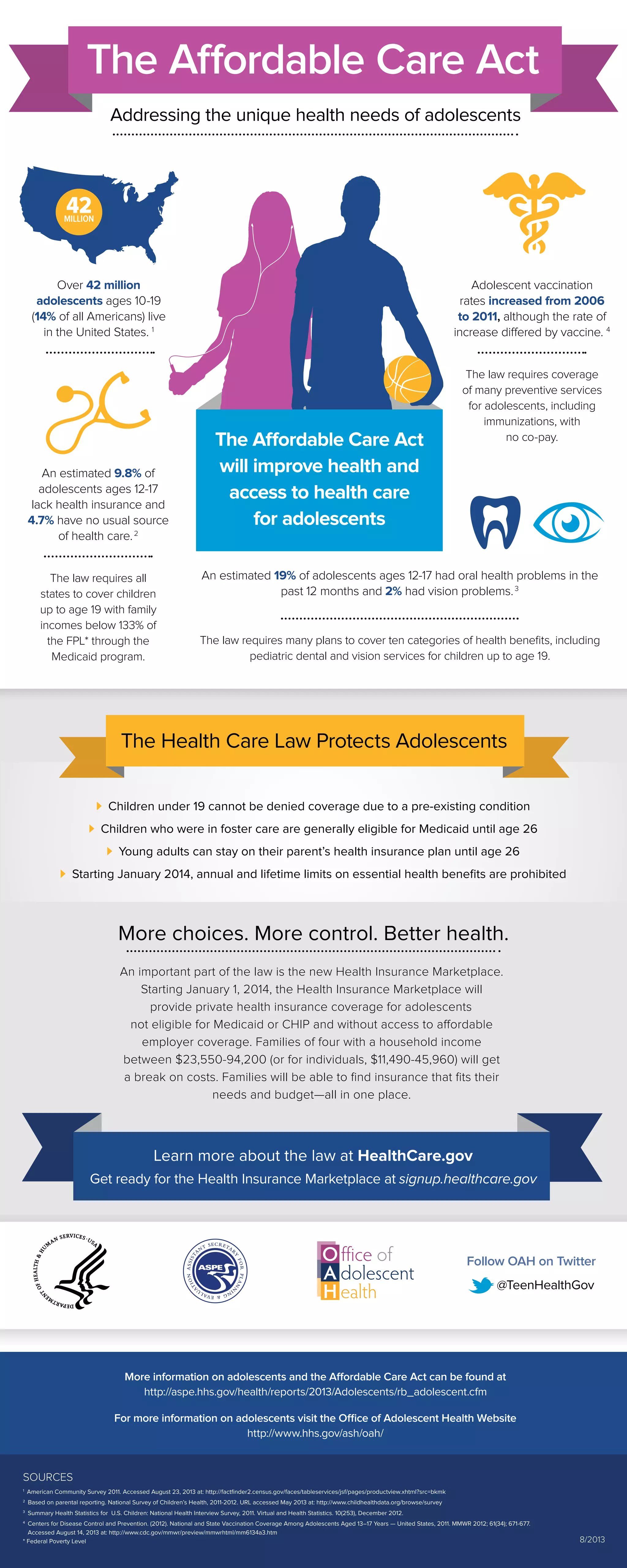
- Pediatric services: This must include oral and vision care for children.
Protection for Pre-existing Conditions
One of the most consequential aspects of the ACA is the prohibition against insurance companies denying coverage or charging higher premiums based on a person’s medical history. Whether an individual has a chronic condition like diabetes or has survived cancer, they are entitled to the same premium rates as a healthy individual of the same age and geographic location.
Understanding Financial Assistance: Subsidies and Tax Credits
Affordability is the central goal of the ACA. The law provides two primary forms of financial assistance to help lower the cost of coverage for individuals and families who do not have access to affordable employer-sponsored insurance.
Premium Tax Credits (PTC)
The Premium Tax Credit is a refundable tax credit that helps eligible individuals and families cover the premiums for their health insurance purchased through the Marketplace. In 2026, the amount of the credit is based on the individual's estimated household income for the year and the cost of the "benchmark" plan in their area—specifically, the second-lowest-cost Silver plan (SLCSP).
Subsidies are designed so that an individual only pays a certain percentage of their income toward their health insurance premium. If the cost of the benchmark plan exceeds that percentage, the government pays the difference directly to the insurance provider.
Cost-Sharing Reductions (CSR)
While PTCs lower monthly premiums, Cost-Sharing Reductions lower "out-of-pocket" costs. These are only available to individuals who enroll in a plan in the Silver category and have a household income within a specific range (typically between 100% and 250% of the Federal Poverty Level). CSRs reduce the deductible, copayments, and coinsurance that the policyholder must pay when receiving medical services.
Comparing ACA Plan Metal Levels
Plans on the Marketplace are categorized into four "metal levels." These levels do not describe the quality of care, but rather how the costs are shared between the insurance company and the policyholder. In 2026, the actuarial value (the percentage of total average costs for covered benefits that a plan will cover) remains the standard for these categories.
| Metal Level | Actuarial Value | Monthly Premium | Out-of-Pocket Costs | Best For |
|---|---|---|---|---|
| Bronze | ~60% | Lowest | Highest | Individuals who rarely see a doctor and want protection against "worst-case" scenarios. |
| Silver | ~70% | Moderate | Moderate | Those eligible for Cost-Sharing Reductions or who want a balance between premiums and care costs. |
| Gold | ~80% | High | Low | Individuals with chronic conditions or those who expect to utilize healthcare services frequently. |
| Platinum | ~90% | Highest | Lowest | People who require extensive medical care and prefer the predictability of very low out-of-pocket costs. |
Eligibility and Enrollment Periods for 2026-2027
Accessing ACA coverage requires navigating specific timeframes and meeting eligibility criteria. For the 2027 coverage year, the enrollment process begins in late 2026.
Open Enrollment Period (OEP)
The Open Enrollment Period typically runs from November 1 to January 15. During this window, any eligible individual can sign up for a new plan, renew their existing plan, or switch to a different provider. Plans selected by December 15 usually begin coverage on January 1 of the following year.
Special Enrollment Periods (SEP)
Outside of the Open Enrollment window, individuals can only enroll if they experience a "Qualifying Life Event." This triggers a 60-day Special Enrollment Period. Common qualifying events include:
- Loss of health coverage: Losing job-based insurance, or a student plan.
- Changes in household: Getting married or divorced, having a baby, or a death in the family that affects eligibility.
- Changes in residence: Moving to a different ZIP code or county that offers different plans.
- Other events: Becoming a U.S. citizen or being released from incarceration.
Basic Eligibility Requirements
To be eligible for Marketplace coverage, you must live in the United States, be a U.S. citizen or national (or be lawfully present), and not be incarcerated. Individuals who are eligible for Medicare are generally not eligible to purchase a Marketplace plan.
Medicaid Expansion and State Variations
The ACA provided states with the option to expand Medicaid eligibility to nearly all adults with incomes up to 138% of the Federal Poverty Level (FPL). As of 2026, the majority of states have adopted this expansion, significantly reducing the number of uninsured residents.
In expansion states, Medicaid acts as the primary safety net for low-income individuals. In non-expansion states, a "coverage gap" often exists where individuals earn too much for traditional Medicaid but not enough to qualify for Marketplace subsidies (which usually start at 100% FPL). It is vital to check the specific regulations in your state of residence via Medicaid.gov to determine which program applies to your income level.
Employer Requirements and the Individual Mandate
The ACA also includes provisions that affect how businesses provide insurance and how individuals are expected to maintain coverage.
The Employer Shared Responsibility Payment
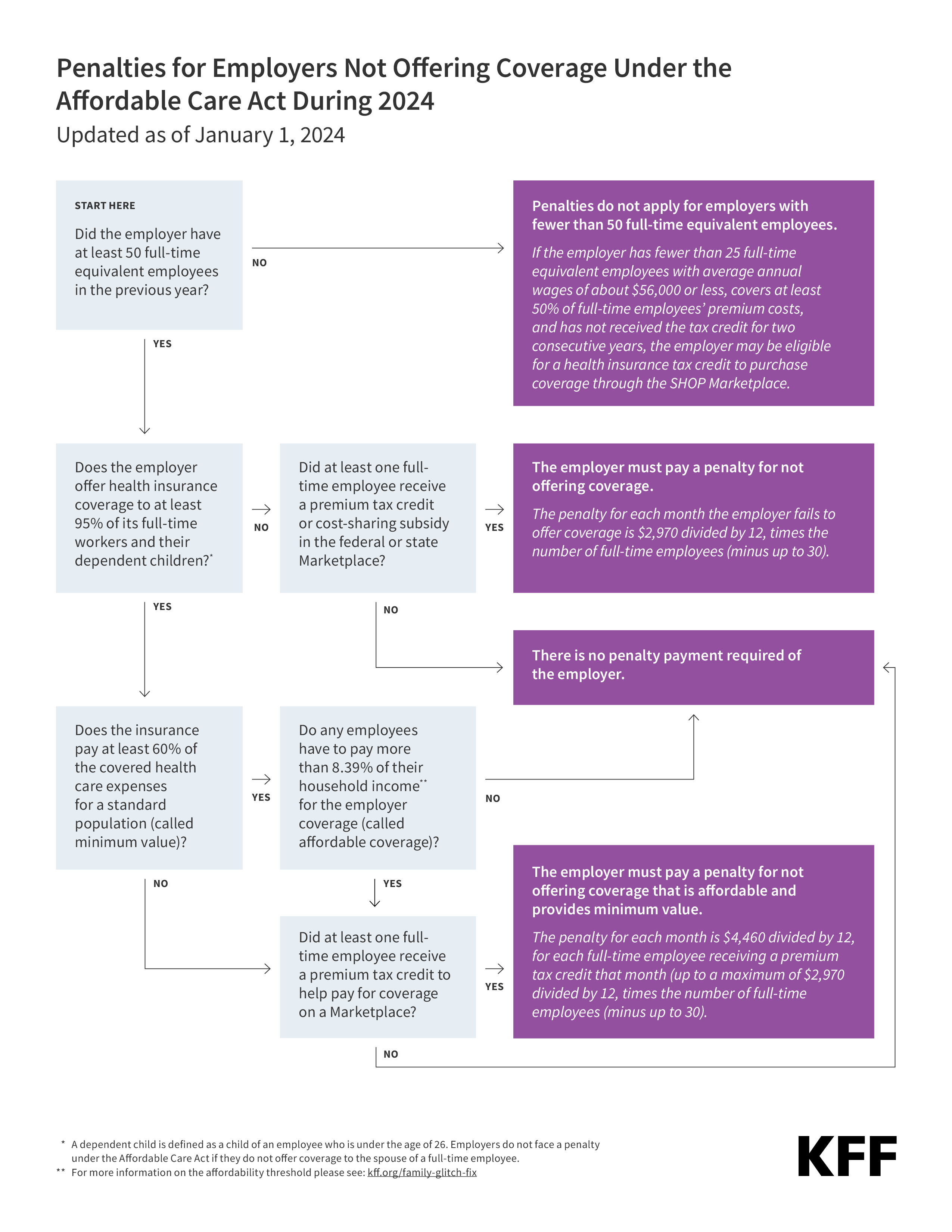
Often called the "Employer Mandate," this requires "Applicable Large Employers" (ALEs)—those with 50 or more full-time equivalent employees—to offer health insurance that is affordable and provides minimum value to their full-time staff. If an ALE fails to provide this coverage and at least one employee receives a premium tax credit, the employer may be subject to an IRS penalty.
The Individual Mandate Status
While the original ACA included a federal tax penalty for individuals without health insurance, the federal penalty was reduced to $0 in 2019. However, several states (including California, Massachusetts, New Jersey, Rhode Island, and the District of Columbia) have implemented their own state-level mandates. Residents in these areas may still face a tax penalty if they remain uninsured in 2026.
Common Pitfalls and Troubleshooting
Navigating the Health Insurance Marketplace can be complex. Understanding common errors can prevent coverage gaps or unexpected tax liabilities.
- Underestimating Income: When applying for subsidies, you must estimate your income for the coming year. If you earn significantly more than you estimated, you may have to pay back some or all of the Premium Tax Credit when you file your taxes the following year.
- Missing the Deadline: Unless you have a qualifying life event, you cannot buy a Marketplace plan outside of Open Enrollment. Missing the January 15 deadline could mean going without insurance for an entire year.
- Ignoring the "Family Glitch" Fix: Historically, if an employer offered "affordable" coverage for the employee but not for the family, the family was barred from subsidies. Regulations have since clarified that if the family coverage offered by an employer is unaffordable, family members may be eligible for Marketplace subsidies.
- Network Restrictions: Not all doctors accept all Marketplace plans. Before enrolling, it is critical to use the Marketplace search tools to verify that your preferred providers and medications are covered under the specific plan's network.
How to Apply for Coverage
Individuals can apply for coverage through HealthCare.gov. This portal serves as the federal hub, though some states operate their own independent exchanges. The application will require Social Security numbers, income documentation (such as W-2s or pay stubs), and information about any current job-based insurance available to the household.
Frequently Asked Questions
Can I be denied coverage if I have a chronic illness?
No, the ACA prohibits insurance companies from denying coverage or charging more based on your health status. In 2026, all Marketplace plans are "guaranteed issue," meaning they must accept you regardless of pre-existing conditions like asthma, cancer, or heart disease. The only factors that can influence your premium are your age, your location, whether you use tobacco, and whether you are enrolling as an individual or as a family.
What is the maximum income to qualify for subsidies in 2026?
Eligibility for subsidies is generally tied to the Federal Poverty Level (FPL). Traditionally, the cutoff was 400% of the FPL. However, legislative updates have frequently extended eligibility to those earning above 400% FPL if their benchmark plan premiums exceed 8.5% of their household income. You should use the official Marketplace calculator to see if your specific income and local plan costs qualify you for a tax credit.
Does the ACA cover dental and vision care?
For adults, dental and vision care are not considered Essential Health Benefits and are not required to be included in standard Marketplace plans. However, many insurers offer "stand-alone" dental plans for purchase. For children (under age 19), dental and vision coverage are considered essential benefits and must be included in the health plan or available as part of a bundled policy.
What happens if I lose my job mid-year?
Losing job-based health coverage is a Qualifying Life Event that triggers a 60-day Special Enrollment Period (SEP). You can apply for a Marketplace plan as soon as you know you will lose coverage, or up to 60 days after the loss occurs. This allows you to maintain continuous coverage and often qualify for subsidies based on your new, lower income level.
Next Steps for Coverage in 2026
If you are currently uninsured or looking to change your coverage for 2027, your first action should be to visit the official Marketplace website during the Open Enrollment Period starting November 1, 2026. Use the "Plan Preview" tool to compare premiums and out-of-pocket costs for your specific ZIP code. If you require personalized assistance, look for a "Navigator" or certified application counselor in your area, as these individuals are trained to provide free, unbiased help with the enrollment process.