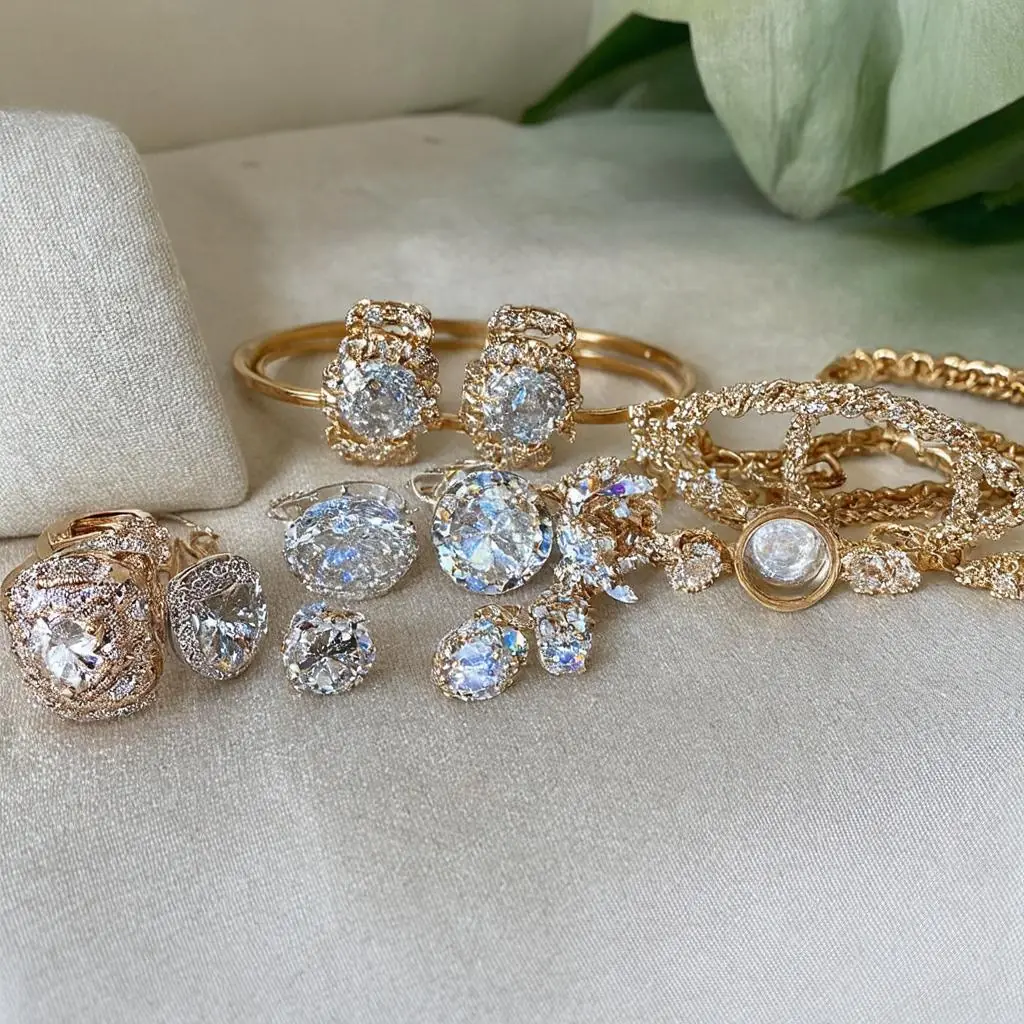
Finding affordable American jewelry that delivers high style without a significant net worth impact requires a strategic focus on "bridge jewelry"—pieces made from quality materials like gold vermeil, gold-filled metals, and lab-grown stones. By prioritizing US-based brands that emphasize ethical production and timeless design, consumers can achieve a luxury aesthetic while maintaining financial health and long-term asset growth.
The Evolution of Affordable Luxury in the 2026 Jewelry Market
As we navigate 2026, the landscape of the American jewelry industry has shifted significantly toward "accessible elegance." The traditional binary choice between cheap, disposable "costume" jewelry and prohibitively expensive "fine" jewelry has been disrupted by the rise of the bridge category. This sector focuses on high-design aesthetics that mimic the look of couture houses but utilize innovative manufacturing and material sourcing to keep price points between $50 and $500.
For the modern consumer, the "net worth impact" of a purchase is a primary consideration. Spending thousands on a single piece of jewelry can represent a significant opportunity cost in terms of lost investment potential. Conversely, purchasing low-quality items that tarnish within months is a form of "lifestyle creep" that offers zero long-term value. The goal in 2026 is to find the "Goldilocks zone": jewelry that looks indistinguishable from high-end luxury at a social event but leaves the bulk of one's capital available for compounding interest and diverse investments.
This shift is driven by a more educated consumer base that understands the technical specifications of metals and gemstones. American brands have responded by being more transparent about their "cost-per-wear" ratios, helping buyers see jewelry not just as a decorative expense, but as a durable component of a curated wardrobe.
High-Style Materials: Maximizing Visual Impact on a Budget
To achieve high style with a low financial footprint, one must understand the technical hierarchy of jewelry materials. In 2026, the industry has perfected several methods that provide the luster and weight of solid gold without the associated five-figure price tags.
Gold Vermeil vs. Gold-Filled
Gold vermeil remains a staple for affordable American high style. To be classified as true vermeil in the United States, the piece must have a base of sterling silver (92.5% purity) and be coated with a layer of gold that is at least 10k in purity and 2.5 microns thick. This thickness is crucial; it ensures the "high style" longevity that cheaper "flash-plated" jewelry lacks.
Gold-filled jewelry, while less common in high-fashion circles, offers even greater durability for the net-worth-conscious shopper. It involves mechanically bonding a thick layer of gold to a base metal (usually brass). Because the gold layer is significantly thicker than plating, these pieces can last decades with proper care, providing a high-end look for a fraction of the cost of solid 14k gold.
Lab-Grown Diamonds and Alternative Gemstones
The 2026 market has fully embraced lab-grown diamonds as the ultimate tool for maintaining high style without draining a brokerage account. Chemically and physically identical to mined diamonds, lab-grown versions currently retail for 70% to 90% less. For a consumer focused on net worth, choosing a 2-carat lab-grown diamond over a mined one can save $10,000 or more—capital that can be redirected into an S&P 500 index fund.
Furthermore, American designers are increasingly using "white sapphires" and "moissanite" in bridge jewelry. Moissanite, in particular, offers a higher refractive index than diamonds, meaning it actually sparkles more under evening lights, providing that "high style" impact at an even lower price point than lab-grown diamonds.
Leading American Brands Prioritizing Style and Value
Several US-based companies have mastered the art of creating jewelry that looks expensive but is priced for the financially savvy. These brands leverage direct-to-consumer models to strip away traditional retail markups.
Catbird (Brooklyn, NY)
Catbird has become a titan of the "dainty jewelry" movement. Their pieces are often made from recycled 14k gold and ethically sourced stones. Because their designs are minimalist and thin, they use less raw material, which keeps the price low. A "stacking" approach allows consumers to build a high-style look over time, adding $100 pieces annually rather than dropping $5,000 at once.
Vrai (California)
Vrai is a leader in the lab-grown diamond space, utilizing diamonds grown in their own foundry powered by zero-emission energy. By owning the entire supply chain from "seed" to finished ring, they offer high-style engagement rings and fine jewelry that have a much lower impact on a buyer's net worth than traditional luxury boutiques like Tiffany & Co. or Cartier.
Gorjana (Laguna Beach, CA)
Gorjana specializes in the "California Cool" aesthetic, focusing heavily on gold-plated and vermeil pieces designed for layering. Their success lies in their ability to mirror the trends seen on runways in Paris and New York while keeping most items under the $200 mark. For a professional looking to elevate their daily office attire, Gorjana provides a high-style solution that doesn't require a lifestyle-altering investment.
Comparing Jewelry Tiers: Aesthetics vs. Financial Impact
The following table compares different jewelry tiers to help you determine which offers the best balance for your personal financial goals in 2026.
| Category | Primary Materials | Average Price | Longevity | Visual Impact | Net Worth Impact |
|---|---|---|---|---|---|
| Fast Fashion | Brass/Zinc, Flash Plating | $10 - $40 | Low (months) | Moderate | Negligible but wasteful |
| Bridge Jewelry | Sterling Silver, Gold Vermeil | $50 - $250 | High (years) | High | Minimal |
| Affordable Fine | 10k/14k Gold, Lab-Grown Stones | $300 - $1,200 | Very High (decades) | Excellent | Moderate |
| High Luxury | 18k Gold, Mined Diamonds | $5,000+ | Permanent | Excellent | Significant |
Evaluating "Net Worth Impact" and Resale Potential
When we talk about "less net worth impact," we must consider the total cost of ownership. Jewelry is generally a depreciating asset, with a few exceptions in the ultra-high-end vintage market. However, high-quality bridge jewelry from reputable American brands maintains its value better than generic costume pieces.
- Cost-per-Wear: A $200 pair of gold vermeil hoops worn 300 times a year costs approximately $0.66 per wear. A $20 pair of "fast fashion" earrings that break after three wears costs $6.66 per wear. The $200 pair is the superior choice for net worth preservation.
- Resale Market Value: In 2026, platforms like The RealReal and Poshmark have robust markets for brands like Catbird, Mejuri, and Vrai. If a consumer decides to refresh their style, they can often recoup 30% to 50% of their initial investment, an option not available for lower-end jewelry.
- Opportunity Cost: The primary way jewelry impacts net worth is the "uninvested capital." By choosing a $1,000 high-style lab-grown diamond necklace over a $10,000 mined diamond alternative, the $9,000 difference, if invested at a 7% annual return, would grow to nearly $18,000 in ten years. This is the true meaning of "high style, less net worth impact."
Strategic Tips for Building an Affordable High-Style Collection
Building a jewelry collection that looks like a million dollars doesn't require spending it. Following a structured acquisition plan can help you stay stylish while keeping your financial house in order.
- Invest in the "Visible Trinity": Focus your budget on the three pieces people notice first: a high-quality watch or bracelet, a pair of signature earrings, and a central necklace. If these three "anchor" pieces are high-quality vermeil or 14k gold, your smaller, cheaper accent pieces will be perceived as higher quality by association.
- Prioritize Metal over Stones: Clear stones (like glass or low-grade CZ) are the easiest way to spot "cheap" jewelry. Solid metal pieces—chunky gold-filled chains or polished silver cuffs—carry more visual weight and look "expensive" regardless of their actual price.
- Maintain Your Assets: The difference between high style and a "cheap" look is often just cleanliness. In 2026, affordable ultrasonic cleaners are widely available. Keeping your vermeil and lab-grown stones free of oils and dust ensures they maintain their "high net worth" luster.
Frequently Asked Questions
Does "affordable" jewelry always tarnish?
Not necessarily. Jewelry made from gold-filled metals or high-quality gold vermeil is designed to resist tarnishing for years if handled correctly. The "tarnishing" people associate with affordable jewelry usually occurs with "flash-plated" base metals like copper or nickel, which are not recommended for those seeking a high-style, long-term look.
Are lab-grown diamonds considered "real" jewelry in 2026?
Absolutely. In 2026, the distinction between lab-grown and mined diamonds is viewed primarily as an environmental and financial choice rather than a quality choice. They are real diamonds by every scientific metric and are a staple in the high-style, low-net-worth-impact strategy.
Which American jewelry brands have the best resale value?
Brands with strong "cult" followings or high ethical standards, such as Catbird, Vrai, and Tiffany (their entry-level silver lines), tend to perform best on the secondary market. Buyers look for recognizable hallmarks and brand names that guarantee a certain level of metal purity.
Can gold vermeil be worn every day?
Yes, but with caveats. High-quality American vermeil (2.5 microns thick) can withstand daily wear for 2-3 years before showing signs of the silver base. To maximize the "net worth" of the piece, it should be removed during exercise and showering to preserve the gold layer as long as possible.
How do I identify high-quality American jewelry manufacturers?
Look for transparent "About" pages that list their manufacturing locations (often NYC's Diamond District, Rhode Island, or Los Angeles) and specific material certifications. Brands that are B-Corp certified or use SCS-certified recycled metals are generally more reliable for high-style bridge jewelry.
Curating Your 2026 Jewelry Portfolio
The final step in mastering high-style jewelry with minimal net worth impact is to view your jewelry collection as a "portfolio" rather than a series of impulsive purchases. Start by identifying your "signature style"—whether it is minimalist, bohemian, or architectural—and buy only pieces that fit that mold. This prevents the financial waste of "one-off" items that don't match anything else you own.
By focusing on reputable American brands that specialize in gold vermeil and lab-grown stones, you can project an image of luxury and success. This approach ensures that your outward appearance reflects high style, while your bank balance continues to grow, unaffected by the exorbitant markups of traditional heritage houses.