In the debate of Aerosmith vs Guns N' Roses, the winner depends on whether you value decades of sustained blues-rock evolution or a singular, explosive cultural revolution. Aerosmith offers a fifty-year masterclass in resilience and reinvention, while Guns N' Roses represents the peak of raw, dangerous rock-and-roll volatility and stadium-sized ambition.
The comparison between Aerosmith and Guns N' Roses is more than just a tally of record sales; it is an examination of two distinct eras and philosophies within the hard rock genre. Aerosmith, often called "The Bad Boys from Boston," bridged the gap between the 1960s British Invasion influence and the 1970s American arena rock scene. Conversely, Guns N' Roses arrived in the mid-1980s as a visceral reaction against the polished "hair metal" of the Sunset Strip, reintroducing a sense of genuine danger and grit to the mainstream. As we look at these titans in 2026, their legacies remain foundational to the architecture of modern music.
Historical Context and the Search for Identity
Aerosmith formed in Boston in 1970, drawing heavy inspiration from the blues-based rock of The Rolling Stones and Led Zeppelin. Their early years were defined by a struggle for identity, as critics initially dismissed them as Stones clones. However, by the mid-70s, with the release of Toys in the Attic (1975) and Rocks (1976), they established a signature sound characterized by Joe Perry’s jagged, syncopated riffs and Steven Tyler’s acrobatic vocals and double-entendre-laden lyrics. This era cemented their status as the premier American hard rock band, blending funk sensibilities with high-volume distortion.
Guns N' Roses emerged fifteen years later in a vastly different climate. By 1985, Los Angeles was the epicenter of a commercialized glam rock scene. GNR—led by the volatile chemistry of Axl Rose, Slash, Izzy Stradlin, Duff McKagan, and Steven Adler—rejected the spandex aesthetic for a more authentic, street-level grime. Their 1987 debut, Appetite for Destruction, did not just sell millions of copies; it shifted the musical landscape, effectively ending the dominance of "pretty" metal and ushering in a more cynical, aggressive era of rock.
Musical Style and Sonic Evolution
The sonic signatures of both bands are rooted in the blues, yet they diverge significantly in execution and temperament. Aerosmith’s music often leans into a "swing" or "groove" that reflects Tyler’s background in drumming and Perry’s love for the Yardbirds. Their arrangements frequently feature brass sections and complex rhythmic interplay, particularly during their late-80s "comeback" era when they collaborated with songwriters like Desmond Child to create polished, radio-ready anthems like "Dude (Looks Like a Lady)" and "Rag Doll."
Guns N' Roses, meanwhile, leaned into a fusion of punk-rock urgency and classic-rock grandiosity. Slash’s guitar playing, while deeply melodic, carries a weight and "brown sound" that feels heavier than Joe Perry’s more agile, staccato approach. The band’s evolution between Appetite for Destruction and the Use Your Illusion albums (1991) showed a move toward progressive epicism. Tracks like "November Rain" and "Estranged" incorporated pianos, orchestrations, and extended soloing that rivaled the complexity of 1970s art rock, all while maintaining Axl Rose’s signature banshee-scream intensity.
The Frontman Factor: Tyler vs. Rose
The comparison often centers on the leaders of these two factions. Steven Tyler is the consummate entertainer—a "Demon of Screamin'" whose stage presence is built on charisma, scarves, and an uncanny ability to connect with a multi-generational audience. His longevity is a testament to his vocal maintenance and his transition into a pop-culture icon, even serving as a judge on American Idol in the early 2010s.
Axl Rose, by contrast, is the enigmatic, often polarizing visionary. His lyrics are frequently more personal and confrontational than Tyler’s, dealing with themes of urban decay, psychological turmoil, and isolation. While Tyler’s persona is designed to invite the audience into the party, Rose’s persona often suggests a man at war with his own fame, making GNR’s performances feel like high-stakes emotional events rather than scripted shows.
Discography and Commercial Benchmarks
When evaluating these bands in 2026, the volume of work versus the impact of specific releases becomes a primary metric. Aerosmith has a significantly larger discography, spanning 15 studio albums. Their ability to survive the drug-fueled collapse of the early 80s and return with the triple-platinum success of Permanent Vacation (1987) and Pump (1989) is an anomaly in rock history. They are one of the few bands to have massive hits in four different decades.
Guns N' Roses has a leaner catalog, but its peak was arguably more intense. Appetite for Destruction remains the best-selling debut album of all time in the United States. The simultaneous release of Use Your Illusion I and II was a logistical and commercial feat that no other band has attempted with similar success. While the fifteen-year wait for Chinese Democracy (2008) fractured the fan base, the 2016 "Not in This Lifetime..." reunion tour proved that the demand for the classic GNR lineup was virtually unparalleled in the touring industry.
| Feature | Aerosmith | Guns N' Roses |
|---|---|---|
| Formed | 1970 (Boston, MA) | 1985 (Los Angeles, CA) |
| Studio Albums | 15 | 6 |
| US Record Sales | 70+ Million | 45+ Million |
| Signature Album | Toys in the Attic | Appetite for Destruction |
| Key Members | Tyler, Perry, Whitford, Hamilton, Kramer | Rose, Slash, McKagan, Reed, Fortus |
| Grammy Awards | 4 | 0 (4 Nominations) |
| Rock Hall Induction | 2001 | 2012 |
Cultural Influence and Legacy
The influence of Aerosmith can be seen in the very DNA of 90s rock and beyond. Groups like Guns N' Roses itself, Mötley Crüe, and even early Pearl Jam cited Aerosmith as a foundational influence. They pioneered the "rock ballad" crossover with "Dream On" and were early adopters of cross-genre experimentation, most notably with the Run-D.M.C. collaboration on "Walk This Way," which is credited with breaking hip-hop into the mainstream.
Guns N' Roses’ legacy is one of "authenticity" in an era of artifice. They influenced a wave of sleaze rock and provided a blueprint for how a hard rock band could retain its edge while playing to 80,000 people in a stadium. Slash’s image—the top hat, the curls, the Les Paul—became the universal shorthand for "cool guitar player" for an entire generation of musicians. Their impact is less about a specific sound and more about a defiant attitude that prioritized artistic vision over industry expectations.
Resilience and the 2026 Landscape
As of 2026, both bands have navigated the complexities of aging in the public eye. Aerosmith, following their extended "Peace Out" farewell tour, has largely transitioned into a celebratory legacy phase. Their focus has shifted toward archival releases and high-end residencies, cementing their status as the "Elder Statesmen" of American rock. The technical precision of their live performances in their later years remains a benchmark for vintage acts.
Guns N' Roses continues to operate as a high-functioning touring machine. Since the 2016 reunion, the band has maintained a level of professionalism that many thought impossible in the 90s. While new studio material remains a rarity, their ability to headline global festivals and fill stadiums in 2026 speaks to the enduring power of their 1987–1993 output. They have managed to preserve the "myth" of the band while delivering a consistent, high-energy product for modern audiences.
Frequently Asked Questions
Which band sold more albums globally?
Aerosmith has sold more albums total, with estimates exceeding 150 million records worldwide over their 50-year career. This is largely due to their prolific output and multiple "comeback" eras. Guns N' Roses, however, has higher per-album sales averages, driven by the massive success of Appetite for Destruction, which has sold over 30 million copies alone.
Did Guns N' Roses ever tour with Aerosmith?
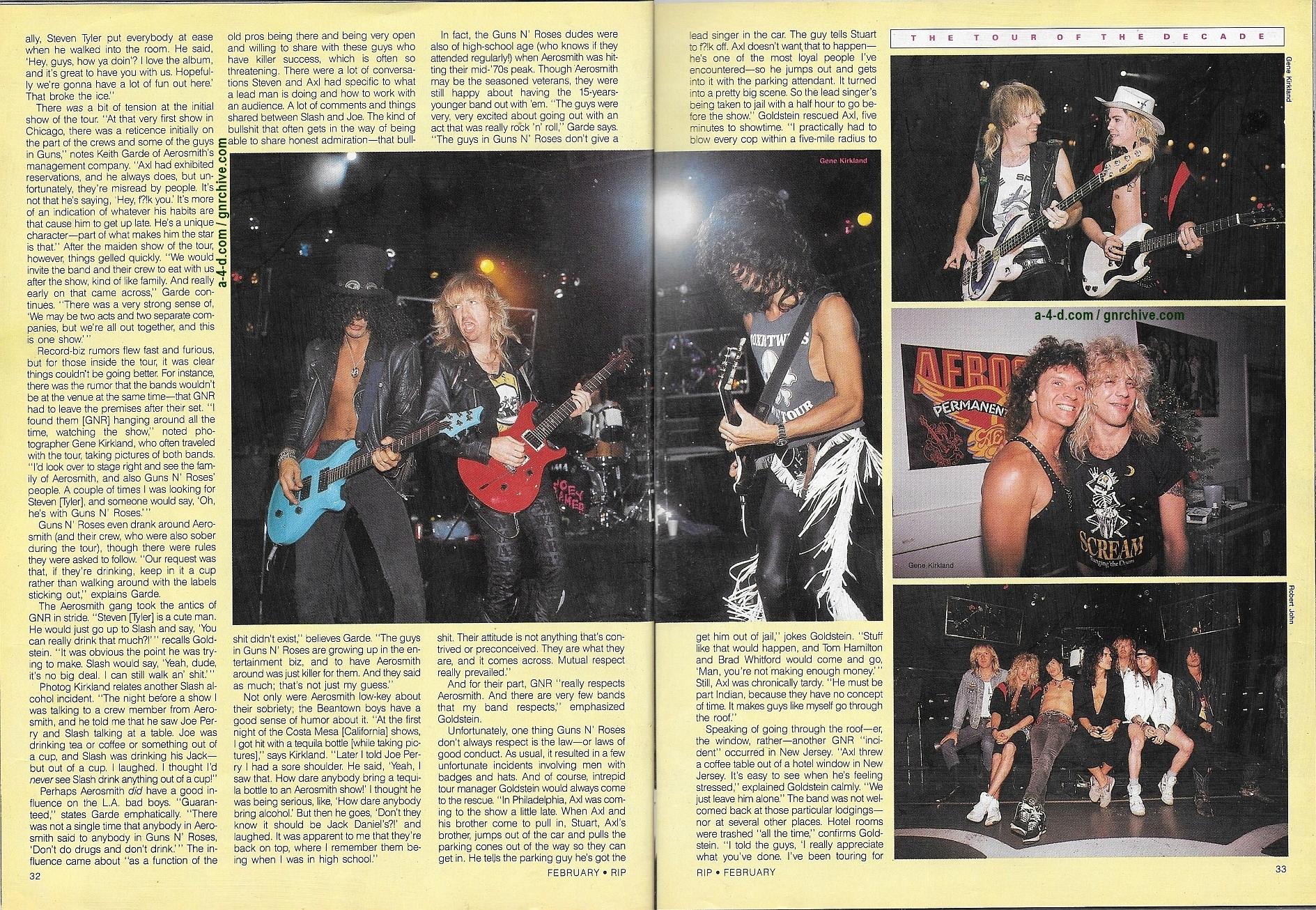
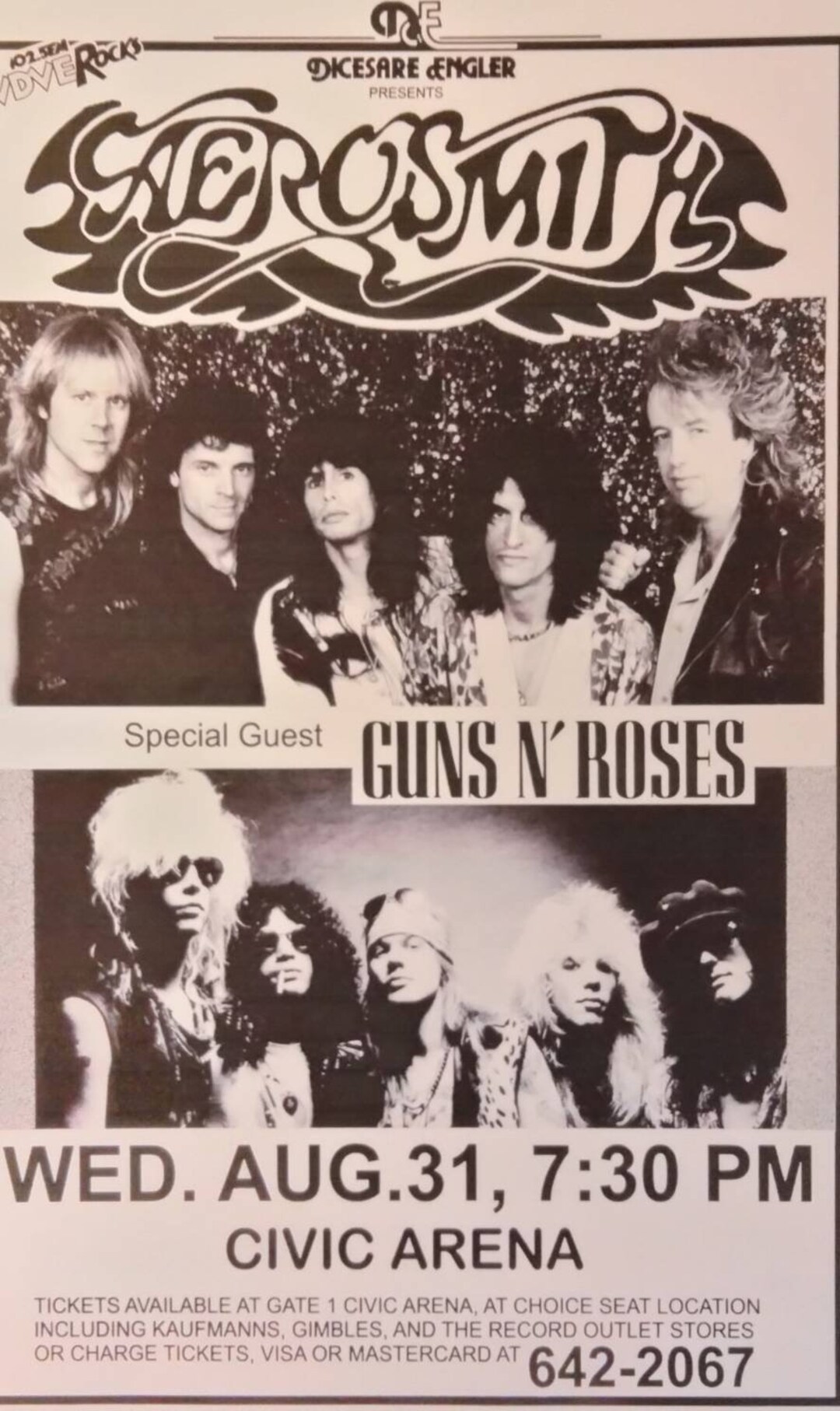
Yes, Guns N' Roses served as the opening act for Aerosmith on the Permanent Vacation tour in 1988. At the time, GNR was rapidly rising in popularity, and the tour is often cited as a "passing of the torch" moment, though it was also fraught with tension as the younger band's wild reputation occasionally clashed with Aerosmith's then-newfound commitment to sobriety.
Who is considered the better guitar duo: Perry/Whitford or Slash/Stradlin?
This is a matter of stylistic preference. Joe Perry and Brad Whitford are celebrated for their rhythmic interlocking and bluesy "sleaze," which defined the 70s rock sound. Slash and Izzy Stradlin are often praised for their "Keith Richards/Mick Taylor" dynamic, where Stradlin provided the punk-inflected rhythmic foundation that allowed Slash’s melodic, soaring leads to take center stage.
Is Steven Tyler or Axl Rose the more versatile singer?
Technically, Axl Rose has been documented as having one of the widest vocal ranges in popular music, capable of hitting deep baritone notes and soaring high tenors. Steven Tyler, however, is often lauded for his consistency, grit, and the "soulful" quality of his voice, which has remained remarkably intact even into his late 70s.
Why is Guns N' Roses often called "The World's Most Dangerous Band"?
The moniker was earned during their early years in the late 80s due to their unpredictable live shows, frequent onstage meltdowns, and a lifestyle that genuinely reflected the gritty lyrics of songs like "Welcome to the Jungle" and "Mr. Brownstone." Unlike many of their peers, their "rebel" image was not a marketing ploy but a reflection of their actual circumstances.
Recommendation for the Ultimate Rock Listener
If you are beginning your journey into the annals of hard rock history, the best approach is to listen chronologically to understand the evolution. Start with Aerosmith’s Rocks (1976) to hear the peak of American 70s grit. Then, move to Guns N' Roses’ Appetite for Destruction (1987) to witness how that foundation was dismantled and rebuilt with 80s aggression. To see how these legends adapted to the modern era, listen to Aerosmith’s Pump (1989) and GNR’s Use Your Illusion I & II. Together, these two bands represent the full spectrum of rock’s capability: from the shimmy and groove of the dance floor to the dark, cinematic power of the stadium stage.