Steven Tyler’s legacy is defined by a rare four-to-five-octave vocal range and a flamboyant, high-octane stage persona. As the frontman of Aerosmith, his ability to blend gritty blues-rock with operatic power, coupled with his signature scarf-adorned microphone stand, has made him the definitive archetype of the American rock star for over five decades.
The Vocal Anatomy of the "Demon of Screamin'"
To understand Steven Tyler’s impact on music, one must first analyze the technical mechanics of his voice. Often referred to as the "Demon of Screamin'," Tyler possesses a vocal instrument that defies traditional categorization. While many rock singers rely on a limited range of "gravelly" tones, Tyler’s voice is a complex hybrid of classical control and raw, uninhibited power. His ability to transition from a low, resonant baritone to a piercing whistle register is most famously demonstrated in the 1973 classic "Dream On."
The secret to Tyler’s longevity—spanning from the band’s formation in 1970 through to their final assessments in 2026—lies in his mastery of "vocal fry" and "mixed voice." Vocal fry involves a low-frequency, breathy vibration of the vocal folds, which Tyler uses to add texture and "grit" to his mid-range. When he ascends into his higher register, he utilizes a "belting" technique that is supported by immense diaphragmatic pressure. This allows him to sustain high-energy notes without immediate vocal cord collapse, though the sheer physicality of this style eventually necessitated several medical interventions over his career.
Furthermore, Tyler’s use of scat-singing and rhythmic phrasing sets him apart from his contemporaries. Heavily influenced by James Brown and Janis Joplin, Tyler treats his voice as a percussive instrument. In tracks like "Walk This Way," his rapid-fire delivery predated the mainstream rise of hip-hop, proving that his vocal presence was as much about rhythmic complexity as it was about melodic range.
The Art of the Performance: Stage Presence and Visual Identity
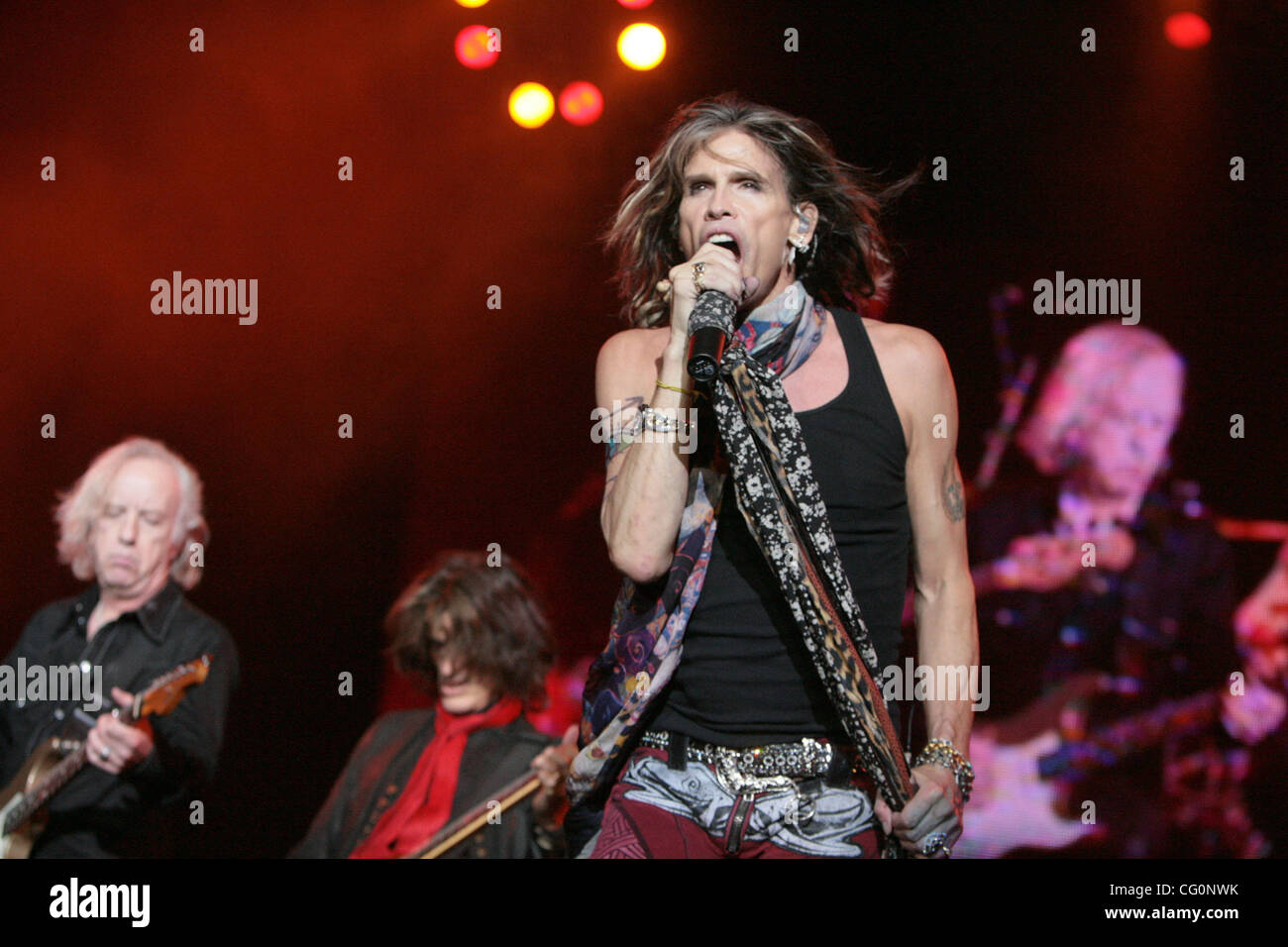
If the voice is the engine of Aerosmith, Steven Tyler’s stage presence is the chassis—bold, colorful, and impossible to ignore. Tyler’s performance style is built on a foundation of "controlled chaos." He does not merely stand and sing; he occupies every square inch of the stage with an athletic fluidity that has remained consistent from the arenas of the 1970s to the residency stages of Las Vegas.
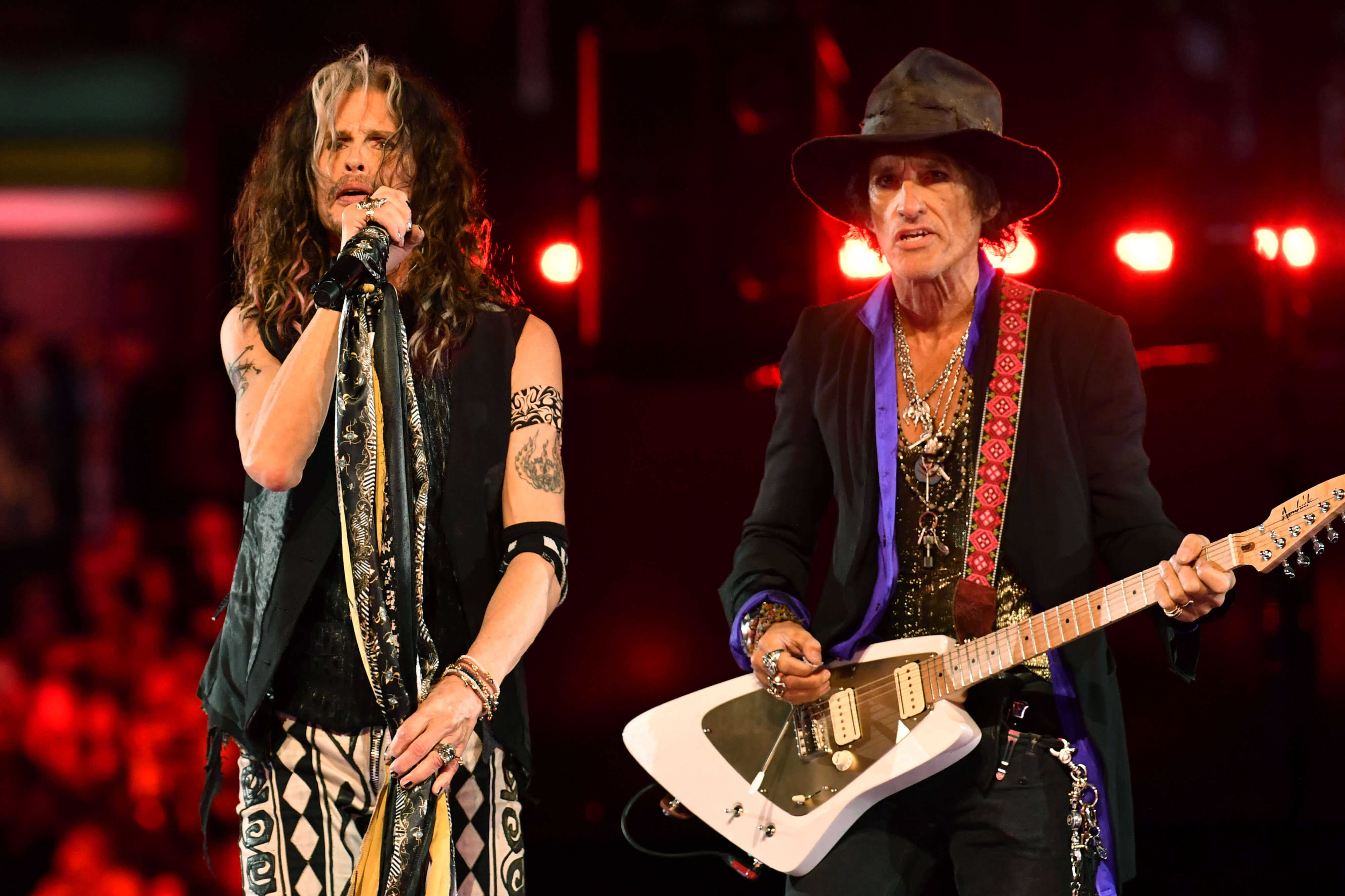
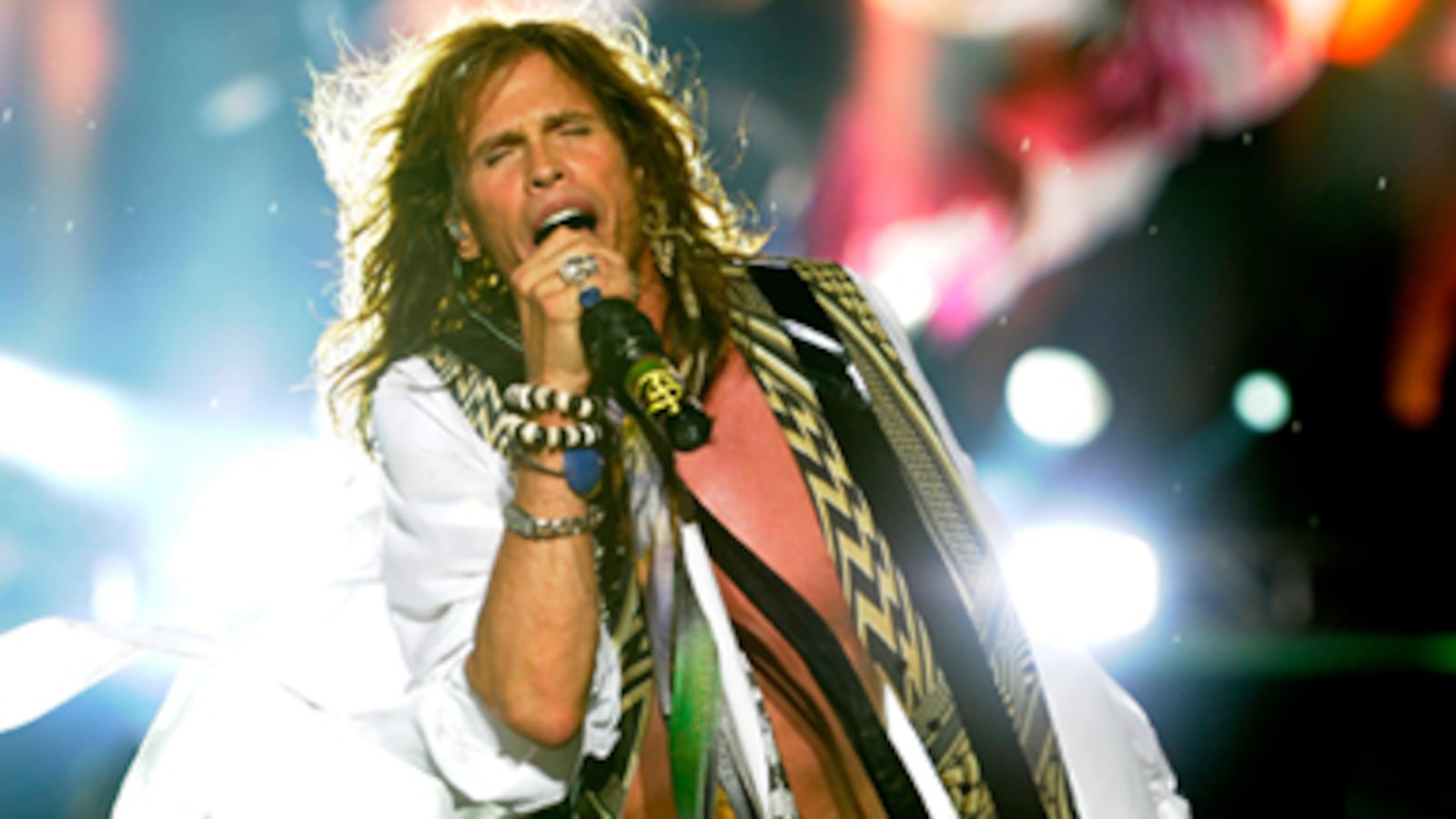
Central to his visual identity is the microphone stand. Adorned with a cascade of silk scarves, the stand functions as both a prop and a partner. This stylistic choice, which Tyler began early in his career to hide his lyric sheets and provide a visual "flow" to his movements, became a global icon of rock and roll fashion. It allows him to extend his physical presence, using the scarves to catch the stage lights and accentuate his serpentine dance moves.
His fashion sense—often described as "gypsy-chic"—incorporates animal prints, high-waisted leathers, and layers of jewelry. This androgynous yet masculine aesthetic was revolutionary in the early 1970s, challenging the rigid norms of American masculinity. By 2026, Tyler’s look is recognized not just as a costume, but as a blueprint for the "glam rock" and "hair metal" movements that followed. His stage presence is characterized by an intense intimacy with the audience; he frequently breaks the "fourth wall," leaning into the crowd and using his expressive facial features to convey the emotional weight of the music.
The Evolution of the "Toxic Twins" Synergy
No discussion of Tyler’s stage presence is complete without mentioning his chemistry with lead guitarist Joe Perry. Known collectively as the "Toxic Twins," the duo’s onstage interaction is the heartbeat of Aerosmith. Their relationship is a study in contrasts: Tyler is the mercurial, explosive frontman, while Perry is the cool, stoic "guitar hero."
This dynamic is visually and sonically essential. During live performances, the two often share a single microphone, a move that symbolizes the deep creative bond (and occasional friction) that has sustained the band for over 50 years. This synergy allows for a push-and-pull during solos and bridges, where Tyler’s vocal ad-libs respond directly to Perry’s bluesy riffs. This "call and response" technique is a hallmark of the Aerosmith sound, ensuring that no two live performances of hits like "Mama Kin" or "Sweet Emotion" are ever exactly the same.
Technical Comparison of Legendary Rock Frontmen
To place Steven Tyler’s abilities in context, it is helpful to compare him with other vocalists who defined the rock genre. The following table highlights the specific attributes that distinguish Tyler from his peers.
| Feature | Steven Tyler | Mick Jagger | Robert Plant | Freddie Mercury |
|---|---|---|---|---|
| Vocal Range | 4 - 5 Octaves | 3 Octaves | 3 - 4 Octaves | 4 Octaves |
| Primary Technique | Gritty Belting / Screams | Rhythmic Phrasing | Folk-Blues High Tenor | Operatic Precision |
| Signature Prop | Scarf-Draped Mic Stand | None (Pure Movement) | Open Chest Vests | Bottomless Mic Pole |
| Dance Style | Serpentine / Athletic | Rhythmic Strut | Statuesque / Ethereal | Theatrical / Posing |
| Genre Influence | Hard Rock / Blues-Rap | Rhythm and Blues | Heavy Metal / Folk | Art Rock / Opera |
Vocal Preservation and the 2024 Transition
By the time Aerosmith reached the mid-2020s, the physical toll of Tyler’s high-impact singing style became a central focus of the band’s narrative. In late 2023 and 2024, the music world was struck by the news that Tyler had suffered a severe vocal cord injury and a fractured larynx. This injury ultimately led to the band’s official retirement from touring in August 2024.
The recovery process for a fractured larynx is notoriously difficult, especially for a singer who relies on the extreme tension required for rock screams. In the years leading up to 2026, the focus shifted from live spectacles to the preservation of Tyler's recorded legacy. The "Demon of Screamin'" had to adapt, showcasing a more vulnerable, lower-register vocal style in his occasional public appearances and studio projects. This transition highlighted a different side of his artistry—one rooted in the deep blues and soul influences that first inspired him as a teenager in Yonkers.
Managing the Legacy: Tyler’s Cultural Impact in 2026
As of 2026, Steven Tyler stands as a living monument to the "Golden Age" of rock. His influence is visible in modern artists across multiple genres, from the rock-infused country of Chris Stapleton to the flamboyant pop-rock of Harry Styles. Tyler’s career provides a blueprint for how a frontman can navigate fame, addiction, recovery, and aging while maintaining a standard of excellence.
His impact extends beyond music into the realm of brand identity. Tyler was one of the first rock stars to successfully pivot to television (as a judge on American Idol), which introduced his charismatic personality to a younger generation. This move, while controversial among purists at the time, solidified his status as a household name and ensured that the Aerosmith catalog remained relevant in the streaming era.
Frequently Asked Questions
What is Steven Tyler's actual vocal range?
Steven Tyler is widely credited with a vocal range spanning approximately four to five octaves. His lowest notes often sit in the F2 to G2 range, while his highest "whistle" notes and screams can reach E6 or F6. This range allows him to cover the requirements of deep blues songs and high-energy rock anthems with equal proficiency.
Why does Steven Tyler wear scarves on his microphone?
The scarves began as a practical and aesthetic choice in the early 1970s. Practically, Tyler used them to hide lyric sheets and occasionally a small bottle of water or other supplies. Aesthetically, they provide a visual "extension" of his movements, creating a sense of flow and drama that complements his serpentine stage presence. They have since become his most recognizable trademark.
How did the 2024 vocal injury affect his career?
The 2024 injury—a fractured larynx and damaged vocal cords—was a career-altering event. It necessitated Aerosmith's retirement from touring, as the physical strain of a full two-hour rock show was no longer medically advisable. Since then, Tyler has focused on archival releases, guest appearances that require less vocal strain, and philanthropic efforts through Janie's Fund.
Is Steven Tyler's stage presence natural or choreographed?
While Tyler’s performances feel spontaneous, they are the result of years of refinement. His "controlled chaos" is built on a foundation of physical fitness and a deep understanding of stage geometry. He knows how to use lighting, camera angles, and bandmate positioning to maximize the impact of every jump, spin, and mic-stand flourish.
What are the best examples of his "legendary" voice?
For technical range, "Dream On" remains the gold standard, specifically the climactic screams at the end of the song. For rhythmic innovation, "Walk This Way" is essential. To hear his ability to convey emotion and grit, "Janie's Got a Gun" and "I Don't Want to Miss a Thing" demonstrate his versatility in both hard rock and power ballad formats.
Experiencing the Legacy Today
For those looking to engage with Steven Tyler’s artistry in 2026, the best approach is a combination of high-fidelity listening and visual exploration. While the era of massive Aerosmith world tours has concluded, the depth of their archive offers a masterclass in rock performance.
- Archival Concert Films: Seek out the "Aerosmith: Rocks Donington 2014" or the 1990s MTV Unplugged sessions. These recordings capture Tyler at different peaks of his vocal and physical powers, showing the evolution of his stagecraft.
- Critical Listening: Pay close attention to the 1970s albums—Toys in the Attic and Rocks. These records feature Tyler’s voice at its most raw and inventive, before the polished production of the late 80s took over.
- Visual Artistry: Follow the evolution of his "scarf" aesthetic through photography books like Aerosmith: The Official Illustrated History. Understanding the visual language of his performance is key to understanding why he remains a singular figure in music history.