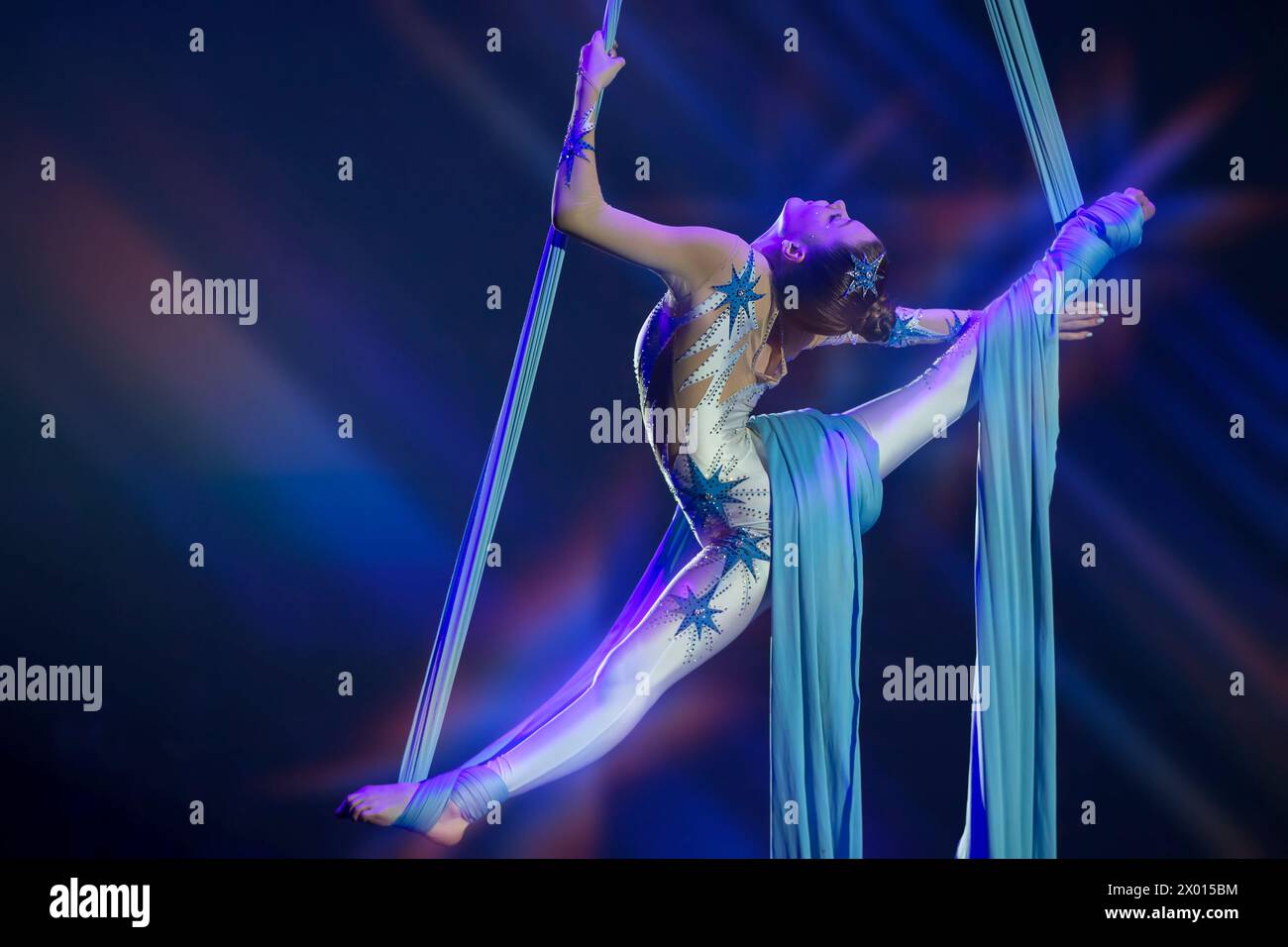
The life of a circus trapeze artist is a demanding professional discipline that combines rigorous athletic training, psychological fortitude, and the high-stakes performance of gravity-defying stunts. Beyond the spectacle, it involves constant physical conditioning, meticulous equipment maintenance, and the pursuit of technical perfection to ensure safety during complex aerial maneuvers.
The Physical and Technical Demands of Trapeze Performance
Becoming an aerial acrobat requires a foundational level of physical preparation that is rarely matched in other performance arts. The primary apparatus, the flying trapeze, demands significant upper-body strength, core stability, and exceptional spatial awareness. Trapeze artists must master "the catch"—the precise moment an acrobat releases the bar to be seized by the hands of an aerialist known as the catcher.
Professional training typically begins with years of conditioning on stationary bars and aerial silks to build the necessary grip strength and muscular endurance. Because the trapeze bar moves in a predictable pendulum arc, the acrobat must learn to manipulate their body’s momentum. This involves "beating"—the rhythmic process of extending and contracting the body to increase height and velocity. The technical mastery of this timing is the difference between a successful release and a failed maneuver.
Essential Equipment and Rigging Standards
In 2026, the industry standard for circus safety remains focused on redundant systems and standardized rigging inspections. Every trapeze setup consists of the bar, steel aircraft cables (often referred to as "cables"), and the mounting hardware that anchors the entire structure to the venue or circus tent's crown.
Safety nets are the most critical component of the artist’s environment. These are not merely cushions; they are specialized mesh structures tensioned to absorb the force of an impact while preventing the performer from hitting the floor. Riggers—the technicians responsible for the setup—must follow strict protocols, often derived from industrial lifting standards, to ensure the rigging can withstand dynamic forces that far exceed the static weight of the performer.
Comparison of Aerial Apparatus Requirements
| Apparatus | Primary Skill Focus | Physical Demand Level | Rigging Complexity |
|---|---|---|---|
| Flying Trapeze | Momentum & Timing | High | Very High |
| Static Trapeze | Balance & Strength | Moderate | Moderate |
| Aerial Silks | Flexibility & Wrapping | High | Low |
| Aerial Hoop | Symmetry & Transitions | Moderate | Moderate |
The Daily Routine of a Professional Acrobat
The life of a circus trapeze artist is characterized by a grueling routine that prioritizes rehearsal over performance. On any given day, an artist may spend four to six hours in the training ring before the evening’s shows even begin. This training is not just about learning new tricks; it is about maintaining the "callus and muscle memory" required to execute known maneuvers without hesitation.
Mental preparation is equally vital. Fear is a constant, yet controlled, element of the work. Aerialists use visualization techniques to rehearse the sequence of a trick in their minds, often breaking complex maneuvers down into micro-movements. This focus on process ensures that even when a trick goes wrong, the performer’s instinct is to execute a "safety bail"—a controlled release or movement that guides them back into the net rather than attempting to recover an impossible transition.
Navigating the Career Lifecycle and Longevity
Circus arts are physically taxing, leading to a typical performance career that spans from the early twenties to the mid-thirties, though many professionals extend this through teaching or specialization in less high-impact apparatuses. As of 2026, the rise of modern "contemporary circus" has shifted some of the focus from pure stunt-work to artistic narrative, allowing performers to transition into roles that emphasize theatrical expression over purely high-velocity acrobatics.
Education for aspiring artists has become more formalized. While many still follow the traditional path of training within established circus families or troupes, increasing numbers of performers now graduate from specialized circus schools. These institutions provide a structured environment to learn not just the acrobatics, but also the business side of the circus industry, including insurance requirements, contract negotiation, and career planning.
Risk Management and Safety Protocols
Working at heights creates inherent risks that are managed through rigorous, non-negotiable safety cultures. Professional companies operate under strict Occupational Safety and Health Administration (OSHA) guidelines in the United States and similar international standards elsewhere.
- Daily Rigging Inspections: Every shackle, cable, and clip is checked for signs of wear, fatigue, or oxidation before the rigging is raised.
- Medical Conditioning: Physical therapists are often embedded with touring companies to manage repetitive strain injuries, particularly in the shoulders and wrists.
- Emergency Action Plans: Every troupe maintains specific protocols for medical emergencies, including rapid-response training for riggers who may need to evacuate a performer from the air.
Artists must also adhere to strict weight and health standards. While this has historically been a point of tension in the industry, modern professional circus environments now prioritize holistic athlete health, ensuring that performers have access to nutritionists and sports psychologists to maintain peak performance without compromising their well-being.
Frequently Asked Questions
What kind of physical training is required for a trapeze artist?
Trapeze artists focus on "pull" strength, which involves intense conditioning of the lats, biceps, and core. Because the apparatus relies on momentum, the training is less about raw bulk and more about functional, explosive strength that allows the performer to control their body during flight.
How do circus artists overcome the fear of heights?
Most artists do not "overcome" fear so much as they replace it with technical confidence. By repeating maneuvers thousands of times in a controlled, netted environment, the act of jumping from a pedestal becomes a rhythmic reflex rather than an act of courage.
Are there specific professional certifications for trapeze rigging?
Yes. Professional riggers often obtain certifications through organizations such as the Entertainment Technician Certification Program (ETCP) or equivalent international standards. These certifications ensure that the individual understands the physics of forces, load distribution, and material science required for aerial safety.
What is the difference between flying and static trapeze?
Flying trapeze is performed on a moving bar, focusing on the physics of swinging and mid-air transfers. Static trapeze, conversely, is performed on a bar that remains stationary, focusing on gymnastics-based poses, strength transitions, and acrobatic balance.
Is a professional career in the circus sustainable?
Sustainability is achievable for those who treat their body as an elite athletic asset. With proper recovery, medical oversight, and a commitment to lifelong learning, artists can transition from touring performers to choreographers, riggers, or instructors, extending their professional involvement in the industry well beyond their active performing years.
Launching a Career in Aerial Arts
For those interested in pursuing the life of a circus trapeze artist, the first step is locating a local circus school or recreational training center. These facilities provide the safest environment to test aptitude without the high-pressure environment of a professional show. Focus initially on general fitness and core conditioning, as these are the primary barriers to entry. Once you are comfortable with the basics, seek out coaches who focus on progression-based learning—where each movement is mastered before moving to the next level of difficulty. Treat your early training as a disciplined athletic pursuit rather than a hobby, and you will build the foundation necessary for a demanding yet rewarding career in the air.