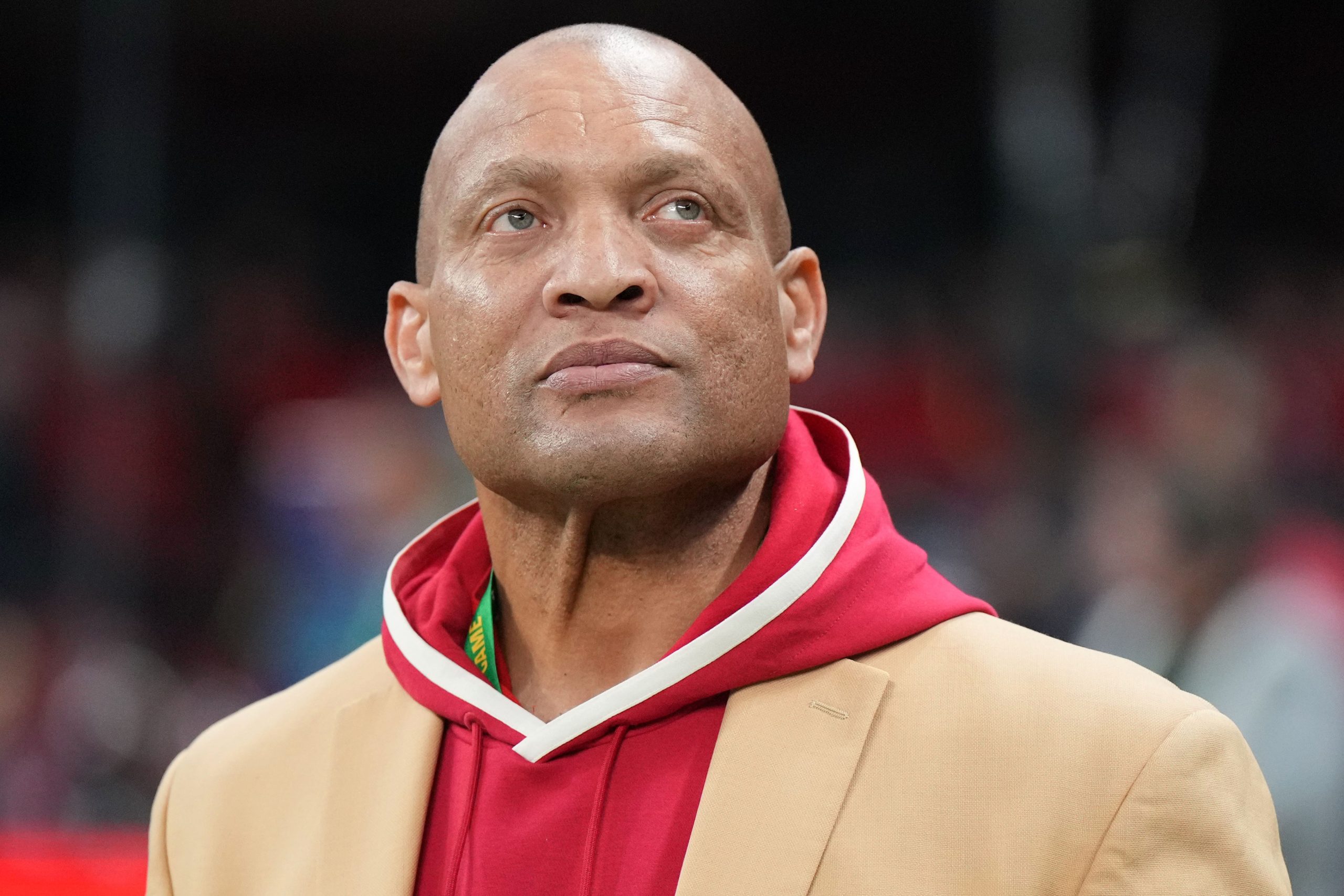
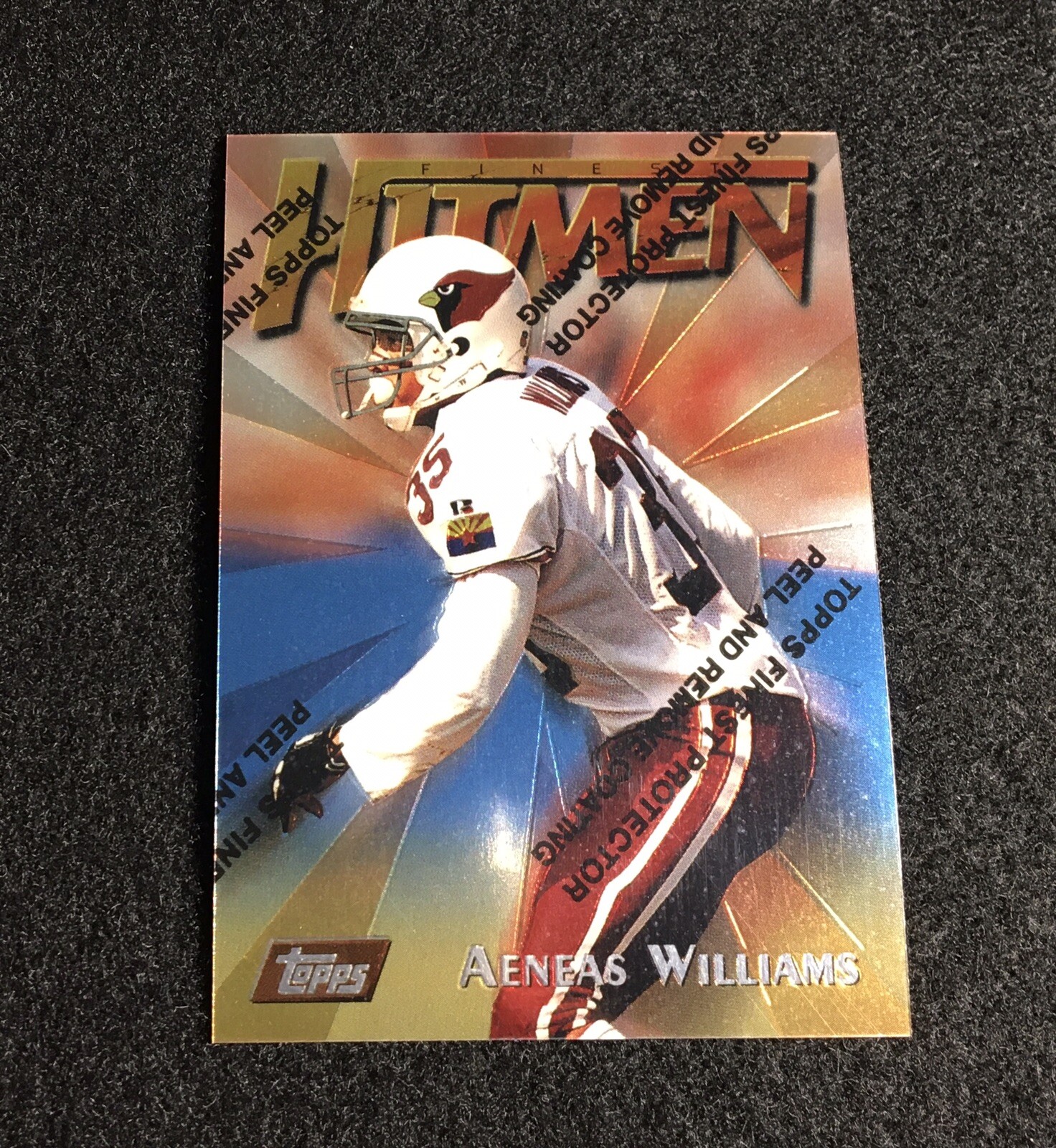
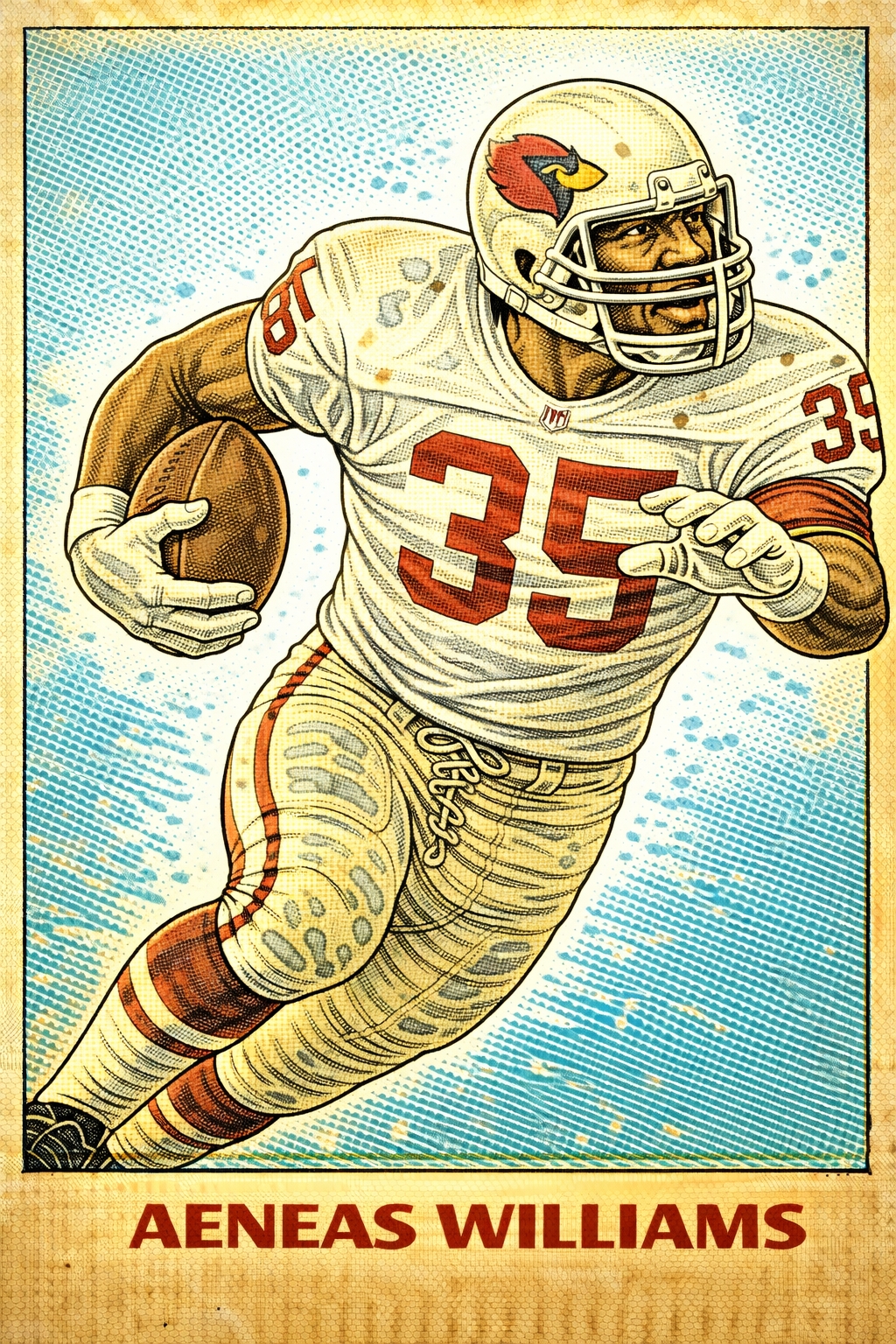
Aeneas Williams stands as one of the most versatile and durable defensive backs in National Football League history. Selected by the Phoenix Cardinals in the third round of the 1991 NFL Draft, his tenure with the franchise redefined the cornerback position. Williams’ path to the Pro Football Hall of Fame is defined by his transition from a lockdown defensive back to a prolific safety, anchoring the Cardinals’ defense through a transformative era for the organization.
The Foundation of a Prolific Career
When Aeneas Williams arrived in the NFL, he was considered a developmental prospect from Southern University. The transition from the Southwestern Athletic Conference (SWAC) to the professional level is historically steep, yet Williams demonstrated immediate aptitude. In his 1991 rookie season, he recorded six interceptions, signaling the start of a reputation for high-level ball hawking.
His early years with the Cardinals were characterized by a rare combination of physical speed and clinical technique. Williams possessed the "closing speed" required to neutralize elite wide receivers, a trait that earned him early recognition among his peers and coaches. Beyond his physical gifts, Williams was noted for his film study and preparation. His ability to anticipate route trees before they fully developed allowed him to remain effective as a starting cornerback well into the latter portion of his prime, a rarity for the position.
Positional Versatility and Tactical Evolution
A significant aspect of the Aeneas Williams legacy is his successful transition from cornerback to safety in the later stages of his career. Most defensive backs struggle to adjust their play style when age begins to tax their top-end speed, but Williams utilized his high football IQ to maintain an elite level of play.
When he transitioned to the safety position—initially during his time with the St. Louis Rams after leaving Arizona—he demonstrated that his value resided in his diagnostic capabilities as much as his athleticism. However, it was his foundation as a Cardinals cornerback that provided the technical base for this versatility. He operated with the understanding that a defensive back must be as proficient in reading the quarterback’s eyes as they are in mirroring a receiver’s feet.
Comparative Performance Metrics
The following table outlines the key statistical indicators that solidified his path to the Pro Football Hall of Fame. These numbers represent his durability and his ability to impact the game regardless of the specific defensive scheme employed by the Cardinals or Rams.
| Metric Category | Total Career Statistics | Hall of Fame Context |
|---|---|---|
| Interceptions | 55 | Top-tier career total for a defensive back |
| Pro Bowl Selections | 8 | Recognizes sustained excellence over a decade |
| Defensive Touchdowns | 9 | Highlights ability to score after change of possession |
| Starts | 215 | Demonstrates elite durability across 14 seasons |
| NFL All-Pro Teams | 4 | Indicates consensus recognition of peak performance |
Defining Moments in Cardinals History
While his entire career is scrutinized for Hall of Fame consideration, several specific moments and seasons defined his impact on the franchise. Williams was the defensive leader during a period when the organization faced significant structural changes and shifts in divisional alignment.
The 1998 Playoff Run
Perhaps the most notable "moment" in his Cardinals tenure occurred during the 1998 season. The Cardinals reached the postseason for the first time since 1982. Williams was the emotional and tactical heartbeat of a defense that enabled the team to secure a Wild Card victory against the Dallas Cowboys. His leadership in the secondary kept a high-powered Dallas offense under control, proving that his impact extended beyond individual statistics to team-wide success.
The Turnover Specialist
Throughout the 1990s, Williams was one of the most feared defensive playmakers in the league. His ability to force turnovers, whether through interceptions or forced fumbles, often changed the trajectory of games for a Cardinals team that frequently relied on its defense to remain competitive. Opposing quarterbacks often directed their offensive schemes away from his side of the field, a form of "respect" that serves as an unofficial metric of his dominance.
Hall of Fame Induction and Lasting Impact
Aeneas Williams was enshrined in the Pro Football Hall of Fame in 2014. His selection was not merely a recognition of his raw numbers but an acknowledgment of his integrity and his role as a team leader. The Hall of Fame selection committee evaluates candidates based on their impact on the game, their consistency, and their ability to elevate their teammates. Williams met these criteria by maintaining an elite standard of play across 14 seasons.
His influence on the Cardinals organization persisted long after his departure in 2000. He became a reference point for defensive excellence for subsequent generations of Arizona players. By serving as a mentor and a professional standard, Williams ensured that the defensive culture he helped foster remained a point of focus for the franchise as it transitioned into the 21st century.
Frequently Asked Questions
How many interceptions did Aeneas Williams record during his time with the Cardinals?
Aeneas Williams recorded 46 of his 55 career interceptions while playing for the Phoenix/Arizona Cardinals. These interceptions were achieved across his ten-year tenure with the team from 1991 to 2000, solidifying his status as the franchise’s leader in that category for much of his career.
What position did Aeneas Williams play in the Pro Football Hall of Fame?
While he was primarily inducted for his body of work as a cornerback, his designation in the Hall of Fame reflects his complete career, including his effective transition to safety. He is recognized as a defensive back, covering his utility and high performance at multiple spots in the secondary.
Why is Aeneas Williams considered a standout leader?
Williams was renowned for his quiet intensity and his deep commitment to preparation. Teammates frequently cited his work ethic and film study as the gold standard, noting that his leadership style was based on accountability and setting a professional example rather than vocal posturing.
What was the significance of the 1998 season for his career?
The 1998 season represented the validation of his career with the Cardinals. After years of individual accolades, he helped lead the team to the postseason and a victory in the Wild Card round. It was the defining team accomplishment of his time in Arizona, cementing his legacy as a winner.
How did his playing style change after moving from cornerback to safety?
As a cornerback, Williams focused on man-to-man coverage, speed, and reaction time. As a safety, he shifted his focus to zone coverage, reading the quarterback, and providing run support. He successfully leveraged his experience as a corner to anticipate where a play would develop, allowing him to remain a high-impact player despite the change in physical requirements.
Practical Next Actions for Historical Research
For those interested in studying the tactical impact of Aeneas Williams or analyzing defensive secondary evolution, the following actions are recommended for obtaining verified, primary-source information:
- Access the Pro Football Hall of Fame Archive: Visit the official Hall of Fame digital database to review Williams’ full professional biography, which includes detailed game logs and career honors.
- Review Official NFL Statistical Records: Utilize the NFL’s official statistical portal to cross-reference his interception numbers and fumble recovery totals against league historical records to understand his relative ranking in the 1990s.
- Analyze Game Footage: View original broadcast archives from the 1998 season through NFL-sanctioned media platforms to observe his positioning and specific technique in high-stakes defensive situations.
- Consult Team Historical Records: Examine the Arizona Cardinals' official team history archives to review his specific impact on franchise defensive rankings during his ten-year tenure.