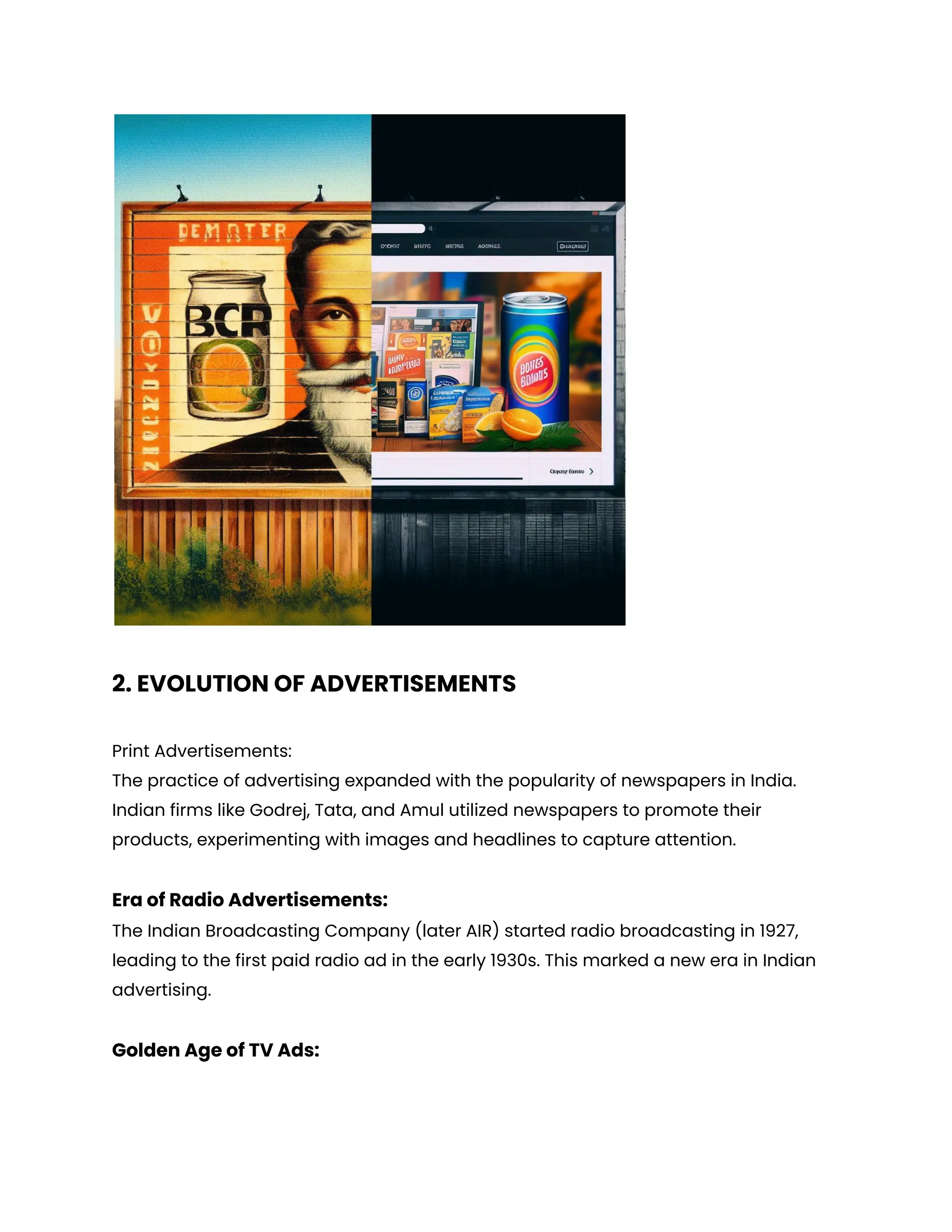
Advertising history tracks the progression of persuasive communication, evolving from simple announcements carved into stone to the sophisticated, data-driven programmatic campaigns of 2026. This discipline encompasses the transformation of human commerce, the development of mass media, and the psychological application of branding to influence consumer behavior across different cultural and technological eras.
Foundations of Commercial Communication
The roots of advertising predate modern capitalism, emerging wherever trade occurred. In ancient civilizations, including Egypt, Greece, and Rome, merchants utilized rudimentary forms of public messaging to attract customers. Archaeological evidence indicates that "stela"—stone slabs—were used in Thebes around 3000 BCE to announce reward offers for the return of runaway slaves. By the Roman era, shopkeepers employed painted signs on walls and used town criers to disseminate information about upcoming gladiator matches or available goods at the forum.
These early methods functioned on the principle of local reach. Because literacy rates were low and transportation was limited, advertising served as a navigational aid rather than a psychological tool. It was utilitarian, focusing on informing the public about the availability of specific products or services within a physical distance that allowed for immediate transaction.
The Printing Press and the Birth of Mass Media
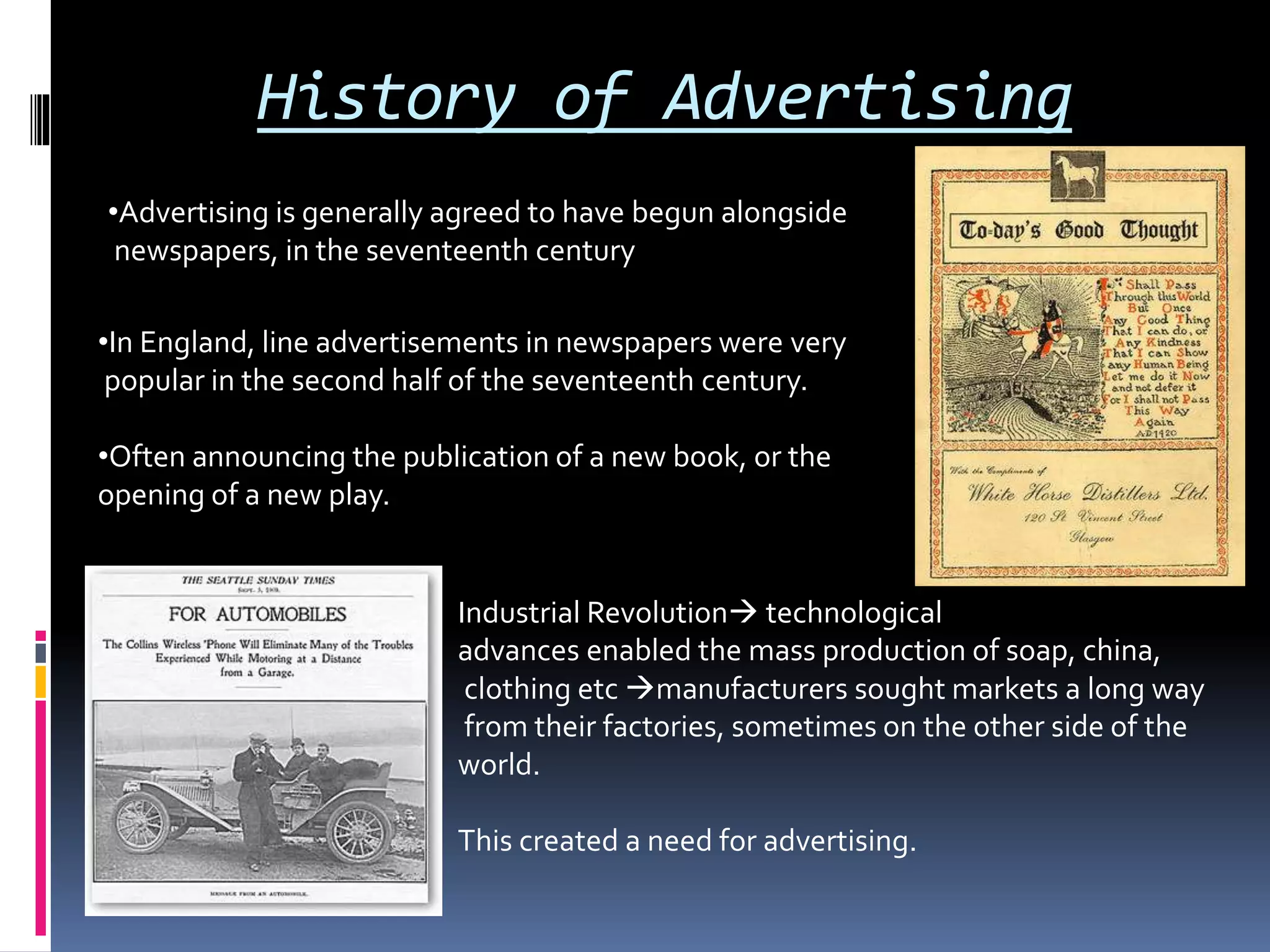
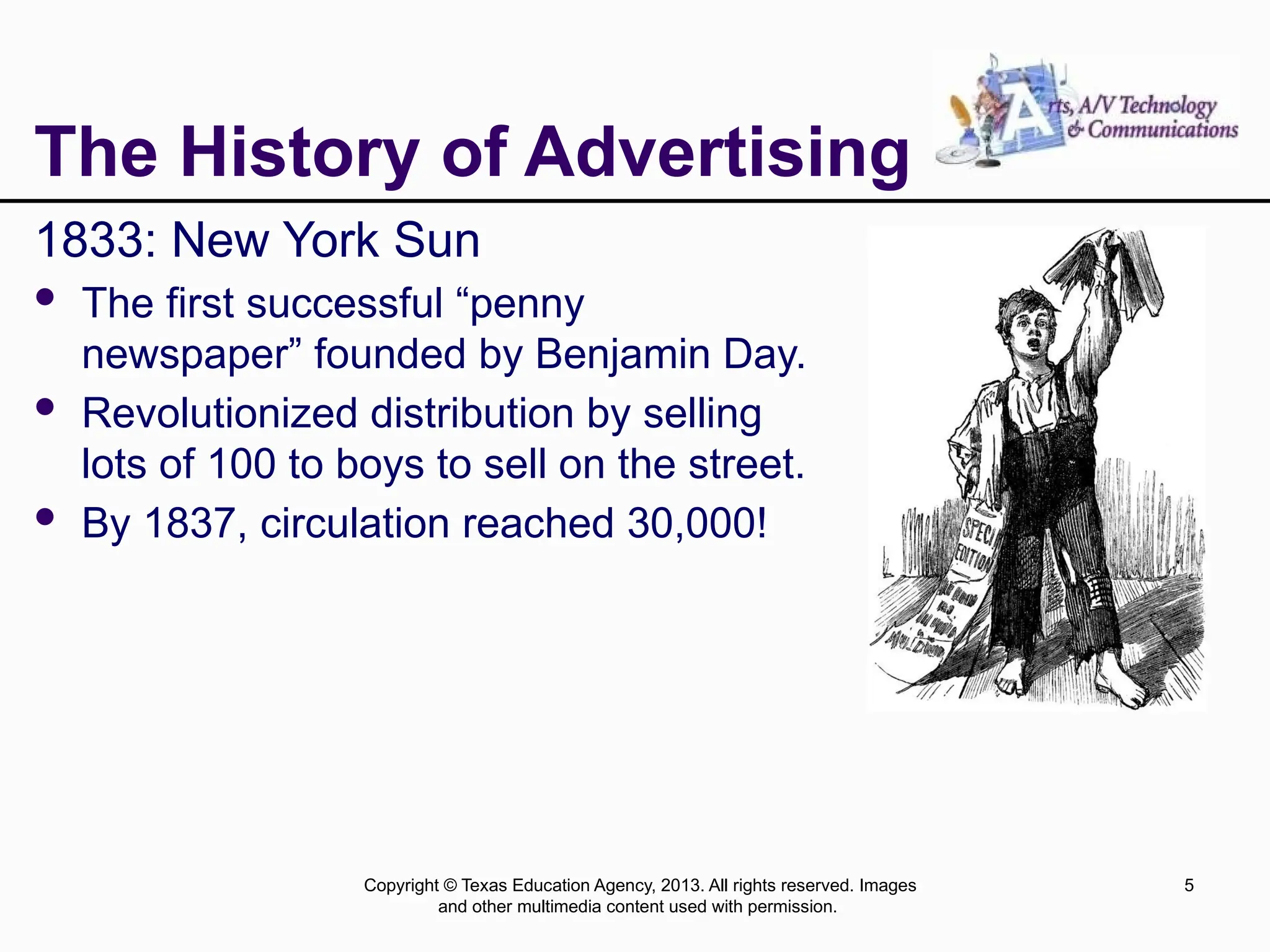
The invention of the Gutenberg printing press in the mid-15th century acted as the primary catalyst for modern advertising. For the first time, information could be reproduced accurately and in high volume. The introduction of the handbill and the subsequent emergence of the newspaper in the early 17th century created the first dedicated vehicles for paid advertising space.
In the 1650s, London newspapers began carrying regular advertisements for items such as coffee, books, and medical tonics. These early print ads were text-heavy, devoid of the visual branding techniques that define contemporary campaigns. They relied on clarity and directness. As literacy rates climbed during the Industrial Revolution, the reliance on dense text shifted, making way for illustrative advertisements that could capture the attention of a burgeoning middle-class consumer base.
Industrialization and the Agency Model
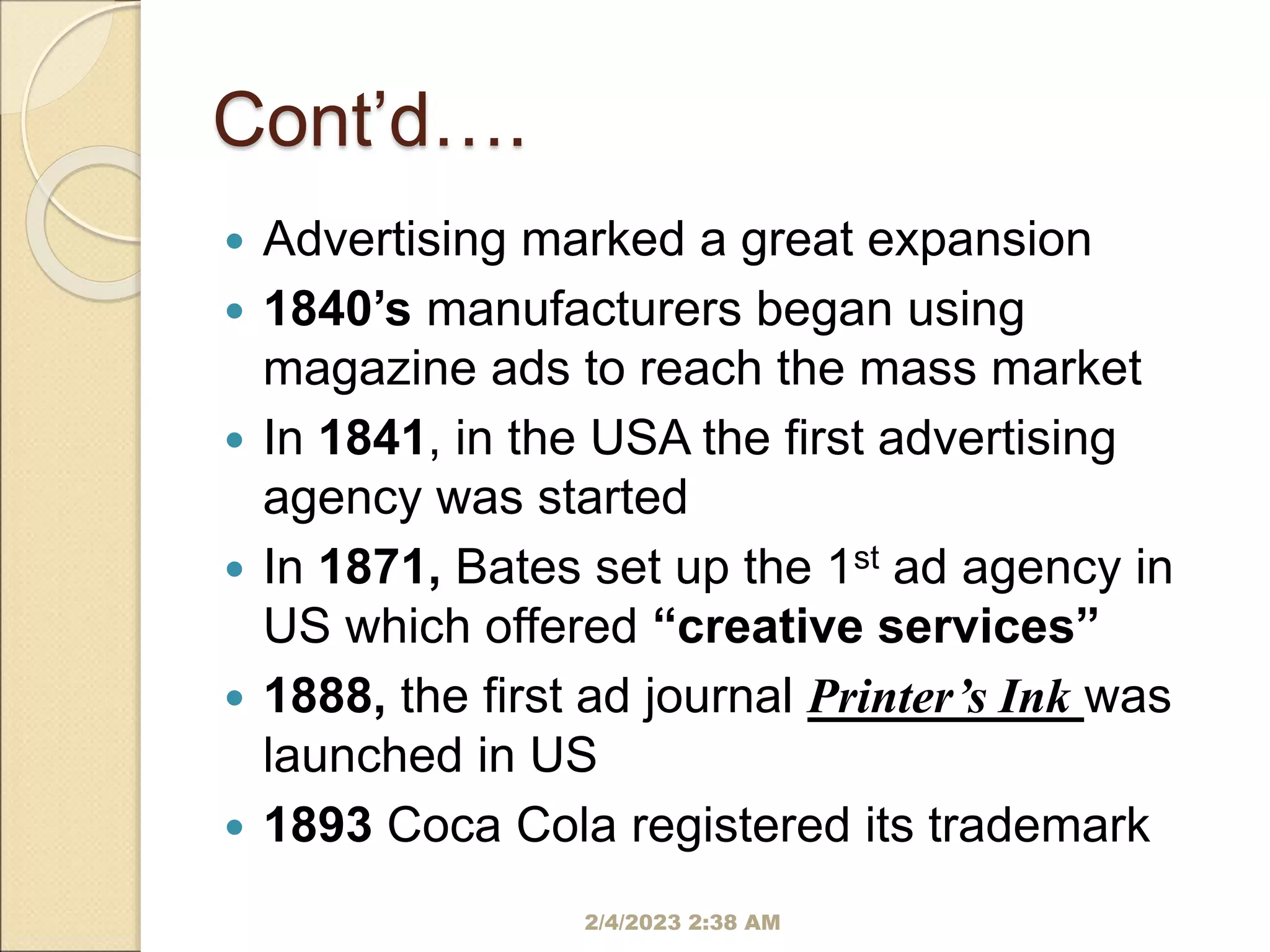
The 19th century transformed advertising from a secondary feature of newsprint into a standalone industry. As manufacturing capacity exploded, companies needed to move vast inventories, leading to the rise of national branding. This era necessitated the creation of the advertising agency. Volney Palmer is widely credited with establishing the first advertising agency in Philadelphia in 1841, originally functioning as a space broker for newspapers.
Agencies quickly evolved from intermediaries to strategic partners. By the late 1800s, figures like J. Walter Thompson pioneered the full-service agency model, offering copywriting, design, and strategic media placement. This period also saw the standardization of ethics in advertising, as the industry began to address the prevalence of fraudulent patent medicine claims, leading to the early forms of consumer protection and industry self-regulation.
The Golden Age of Radio and Television
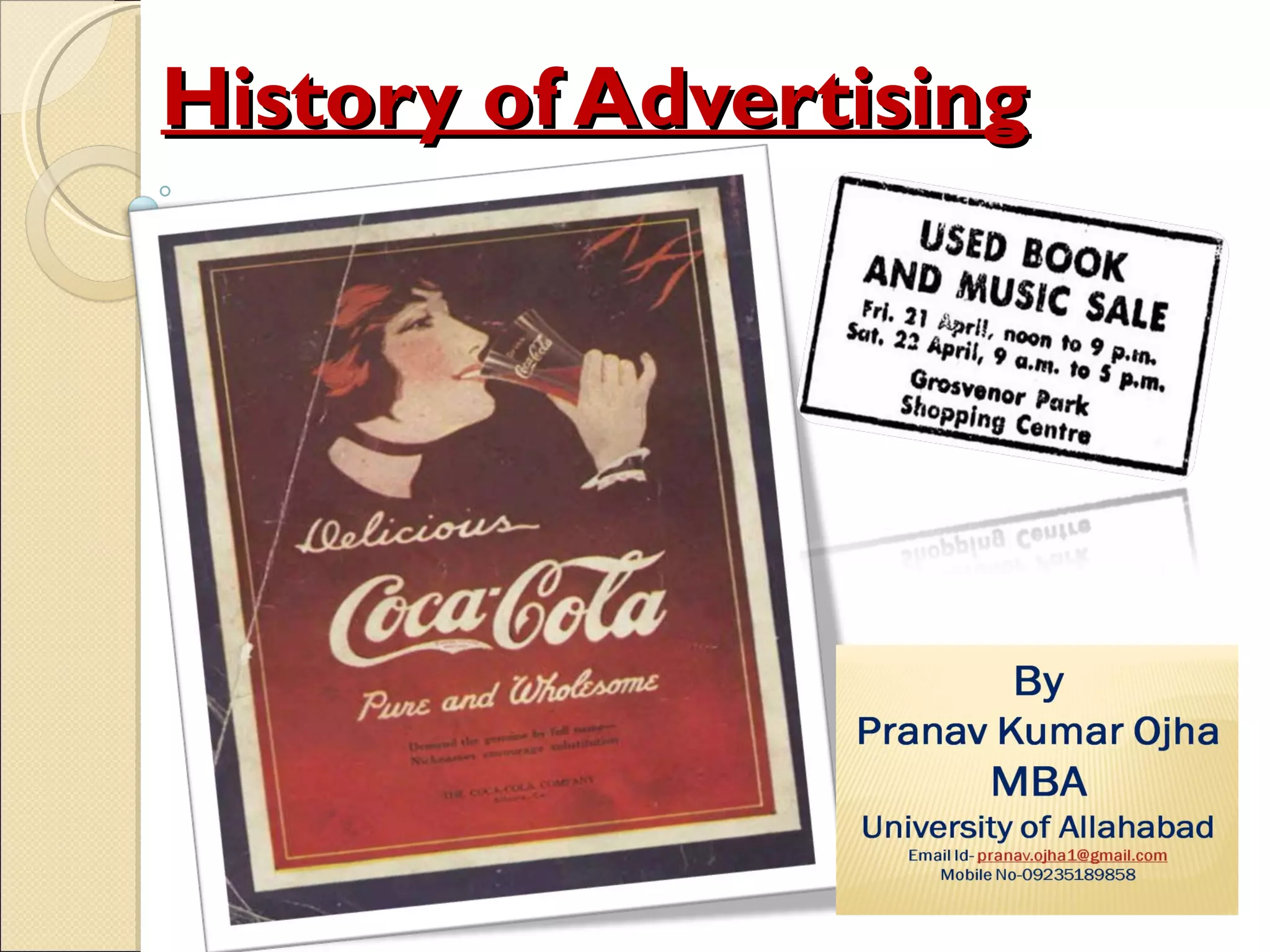
The 20th century introduced audio and visual broadcasting, which fundamentally altered the psychological impact of advertising. Radio, becoming a household staple in the 1920s, allowed brands to enter the consumer’s home with a personal, auditory narrative. The "jingle" became a powerful mnemonic device, forging deep brand associations through rhythm and melody.
Television, surging in popularity in the 1950s, combined the reach of radio with the visual potency of print. This period, often called the "Golden Age," saw the professionalization of the creative department. Advertising began to focus heavily on the "Unique Selling Proposition" (USP), a concept championed by Rosser Reeves. Agencies shifted their focus from mere product description to the creation of brand personas. Brands were no longer just items for sale; they were lifestyle markers, emotional companions, and indicators of social status.
Comparison of Advertising Media Eras
| Era | Primary Medium | Target Reach | Core Strategy |
|---|---|---|---|
| Ancient | Stela / Crier | Local / Immediate | Announcement |
| 17th-18th Century | Newspapers | Regional / Literate | Informational Text |
| 19th Century | Magazines / Billboards | National / Mass | Brand Awareness |
| 20th Century | Radio / TV | Mass / Household | Emotional Connection |
| 21st Century | Digital / Social | Global / Individual | Behavioral Targeting |
The Digital Transformation and Programmatic Shift
The turn of the 21st century marked the most significant shift in advertising history: the transition from broadcast media to digital interaction. The rise of search engine marketing and social media advertising in the 2000s and 2010s inverted the model of the previous century. Rather than casting a wide net to reach a mass audience, advertisers could now leverage user data to target individuals based on their browsing history, purchasing behavior, and demographic profile.
By 2026, the industry is dominated by programmatic advertising—the automated buying and selling of ad space in real-time. This technology utilizes complex algorithms to bid on impressions, ensuring that a specific advertisement is shown to the most relevant user at the optimal moment. This shift has placed immense value on data analytics and performance metrics, moving the industry further away from creative intuition and toward mathematical efficiency.
Regulatory Environments and Consumer Privacy
As advertising technologies have matured, so too have the legal frameworks governing them. The history of advertising is inseparable from the history of its regulation. From the Federal Trade Commission's (FTC) oversight in the United States to the implementation of the General Data Protection Regulation (GDPR) in Europe, the industry has faced constant friction between innovation and consumer protection.
In 2026, the primary challenge remains the balance between personalized experience and privacy. Regulations now heavily restrict how third-party data is collected and utilized. Advertisers are forced to return to "first-party" strategies, where direct consent and transparent communication with the audience serve as the foundational elements of trust. This represents a cyclical return to the importance of brand reputation, as consumers now possess the technical capability to block or filter intrusive messaging entirely.
Frequently Asked Questions
What was the first printed advertisement?
The first printed advertisement in English was a handbill created by William Caxton in 1477 to promote a book on church rules. This established the tradition of using print for broad outreach.
Why did the advertising agency model evolve?
Agencies evolved to solve the problem of media complexity. As the number of publications increased, companies struggled to manage placements individually; agencies consolidated this process, providing efficient bulk buying and creative development.
How did television change consumer behavior?
Television introduced the "lifestyle sell." By showing products in use within aspirational home environments, advertisers moved beyond functional benefits to emotional or social outcomes, significantly shortening the path to consumption.
What defines programmatic advertising?
Programmatic advertising is the automated buying of digital ad space through high-speed auctions. It uses machine learning to identify users and serve ads based on their real-time intent and historical data profiles.
Are there historical parallels to modern data tracking?
Yes, in the late 19th century, mail-order companies built "customer lists" based on purchase frequency and location. While less granular than modern digital tracking, the intent—to categorize and predict consumer spending—remains consistent.
Planning for Future Shifts
To navigate the future of advertising, professionals must prioritize the ownership of their data ecosystem. As third-party cookies and intrusive tracking methods face increasing obsolescence, the most successful brands will be those that cultivate direct, permission-based relationships with their audiences.
- Invest in First-Party Data: Prioritize CRM systems that capture consumer preference directly through high-value content or community interaction.
- Prioritize Contextual Relevance: Rather than tracking user behavior, focus on serving ads within environments that contextually match the product’s core value proposition.
- Adopt Transparency: Modern consumers value brand authenticity. Clear disclosure regarding data usage and ad sponsorship is now a competitive advantage, not merely a regulatory burden.
By understanding the historical trajectory of advertising—from the necessity of local announcements to the precision of global, data-driven campaigns—marketers can anticipate the next wave of change, focusing on human-centric communication within an increasingly automated technological landscape.