Adrian Peterson played for seven different NFL teams across a distinguished 15-season career, establishing himself as one of the most prolific running backs in professional football history. While he is universally recognized for his historic decade-long tenure with the Minnesota Vikings, Peterson also suited up for the New Orleans Saints, Arizona Cardinals, Washington Redskins, Detroit Lions, Tennessee Titans, and Seattle Seahawks during his later years in the league.
Understanding the complete trajectory of Peterson's career requires examining how a generational talent drafted seventh overall in 2007 evolved into a veteran journeyman chasing historical rushing milestones. This comprehensive overview details his chronological progression through the National Football League, highlighting his statistical contributions, contract milestones, and defining moments with each franchise.
The Minnesota Vikings: The Foundation of a Hall of Fame Career (2007–2016)
Adrian Peterson was selected by the Minnesota Vikings in the first round of the 2007 NFL Draft out of the University of Oklahoma. His impact on the franchise was immediate and transformative. During his rookie campaign, Peterson set an NFL single-game rushing record by rumbling for 296 yards against the San Diego Chargers on October 4, 2007. He finished his debut season with 1,341 yards and 12 touchdowns, earning NFL Offensive Rookie of the Year honors and a Pro Bowl selection.
The pinnacle of Peterson's career occurred during the 2012 NFL season. Coming off a devastating torn ACL and meniscus sustained late in December 2011, Peterson orchestrated one of the greatest comebacks in sports history. He rushed for 2,097 yards—just eight yards shy of Eric Dickerson's single-season record—averaging 6.0 yards per carry and scoring 12 touchdowns. This monumental performance secured him the NFL Most Valuable Player (MVP) award and the NFL Offensive Player of the Year award.
Over ten seasons in Minnesota, Peterson amassed 11,747 rushing yards and 97 rushing touchdowns, earning seven Pro Bowl nods and four First-Team All-Pro selections. He led the NFL in rushing yards three times (2008, 2012, 2015) and established himself as the undisputed face of the franchise before his contract option was declined in March 2017, concluding his historic run in the Twin Cities.
New Orleans Saints and Arizona Cardinals: The 2017 Transition
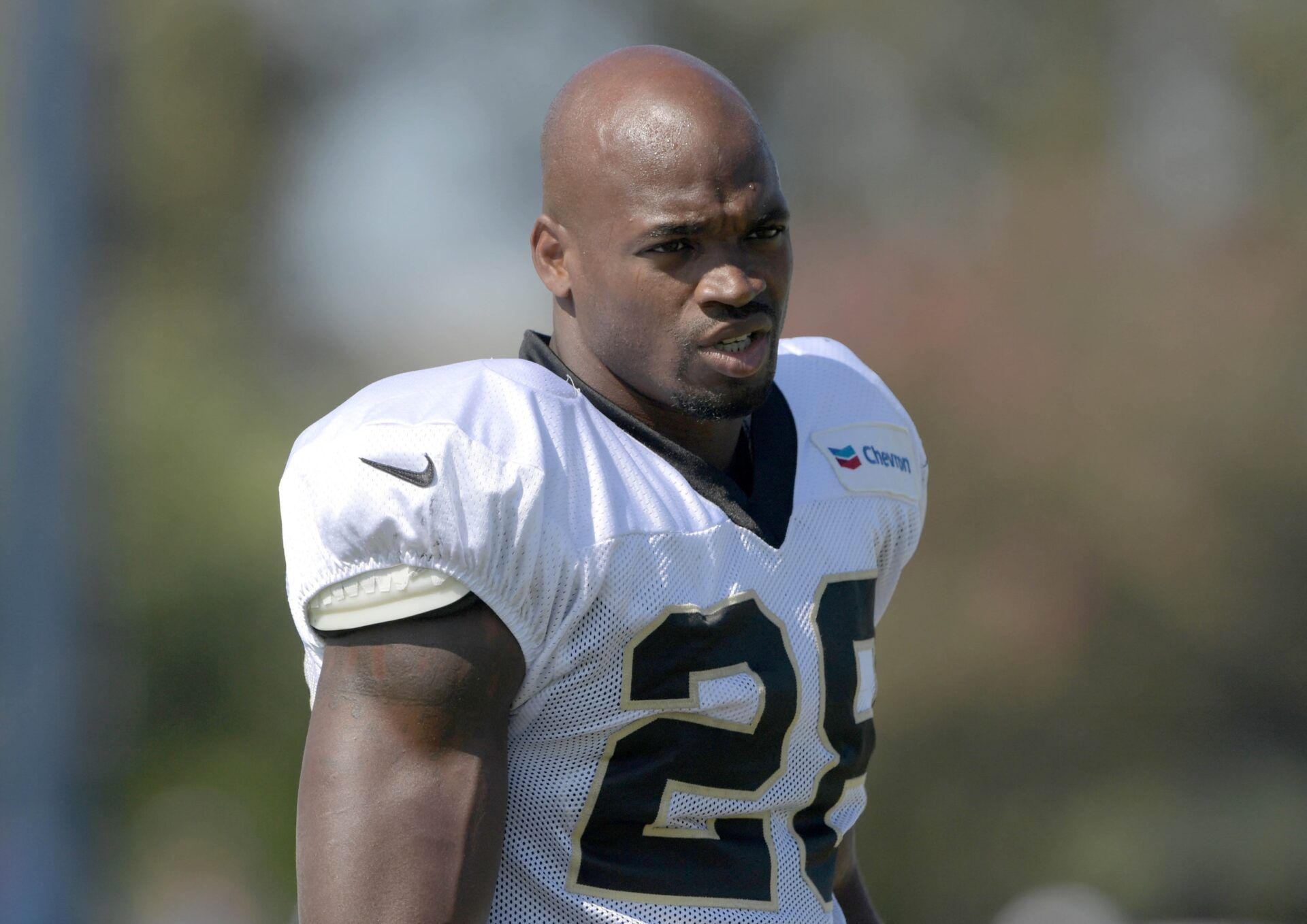
Following his departure from Minnesota, Peterson signed a two-year contract with the New Orleans Saints in April 2017. However, his tenure in New Orleans was brief and turbulent. Head coach Sean Payton utilized Peterson primarily as a backup behind emerging starter Mark Ingram and rookie Alvin Kamara.
Peterson appeared in just four games for the Saints, carrying the ball 27 times for 81 yards without scoring a touchdown. Frustrated by his limited role and low snap counts, the Saints traded Peterson to the Arizona Cardinals in October 2017 in exchange for a conditional draft pick.
In Arizona, Peterson found a temporary resurgence as the featured early-down running back under head coach Bruce Arians. In his Cardinals debut against the Tampa Bay Buccaneers, he rushed for 134 yards and two touchdowns. Despite playing behind a depleted offensive line and missing the final four games of the season due to a neck injury, Peterson led the Cardinals in rushing with 529 yards and two touchdowns across six starts before being released in March 2018.
Washington Redskins: Finding Stability and Reaching Milestones (2018–2019)
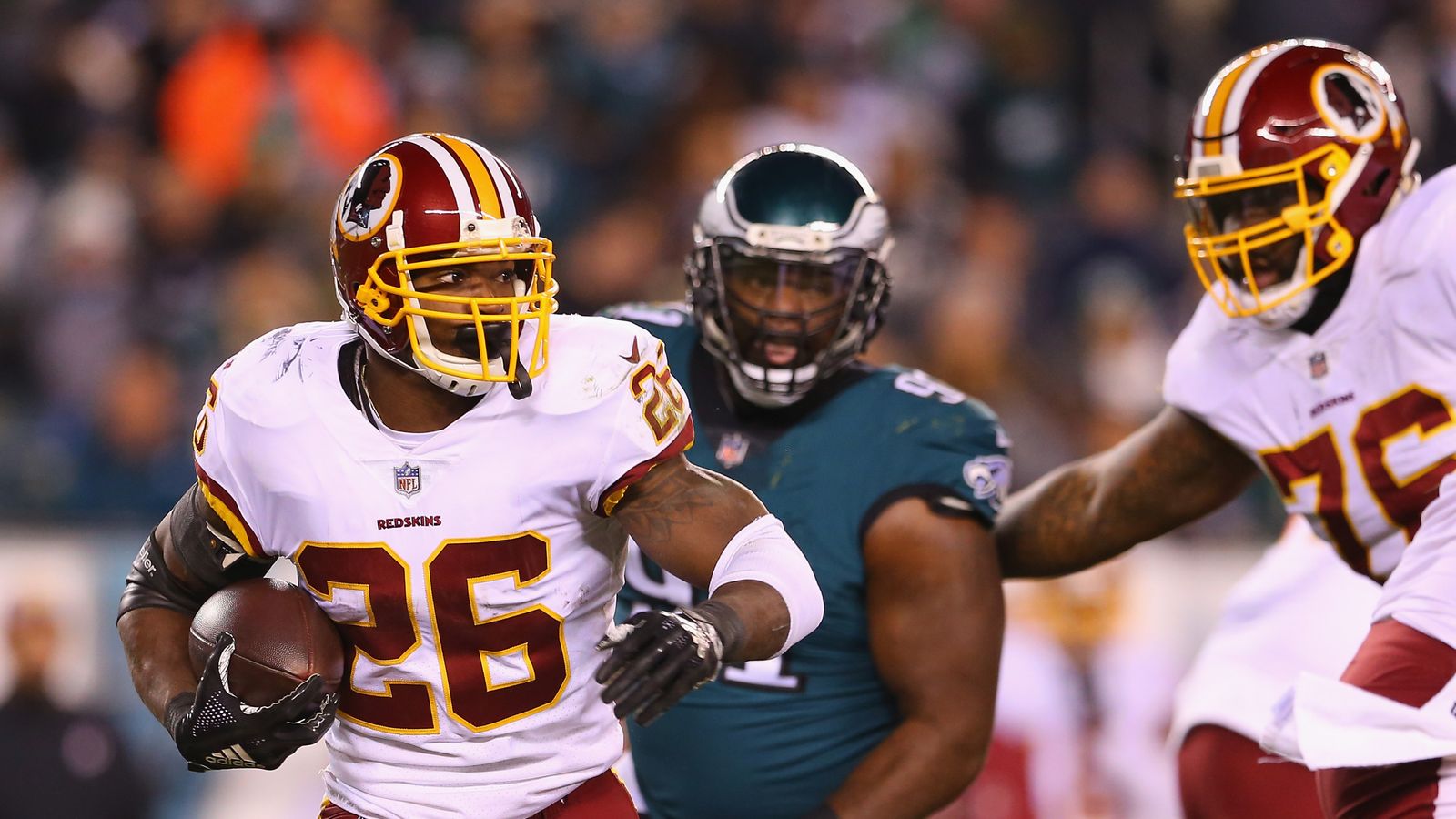
In August 2018, Peterson signed a one-year deal with the Washington Redskins following a season-ending injury to projected starter Derrius Guice. The signing proved to be a mutually beneficial reclamation project. Peterson played in all 16 games for the first time since 2015, serving as the team's primary offensive engine.
During the 2018 season, Peterson surpassed several legendary milestones. He climbed past Jerome Bettis, LaDainian Tomlinson, and Curtis Martin on the NFL's all-time career rushing list, solidifying his status among the top five rushers in league history. He finished the 2018 campaign with 1,042 rushing yards and seven touchdowns, becoming the oldest running back to rush for 1,000 yards since John Riggins in 1984.
Washington re-signed Peterson for the 2019 season. Despite a coaching change that saw Jay Gruden fired mid-season, Peterson led Washington in rushing for the second consecutive year, gaining 898 yards and five touchdowns. Although Washington unexpectedly released him before the start of the 2020 regular season, his two-year stint in the nation's capital proved he could still contribute effectively at the highest level.
Detroit Lions, Tennessee Titans, and Seattle Seahawks: The Final Chapter (2020–2021)
As his career extended into his late thirties, Peterson transitioned into a situational short-yardage specialist and veteran presence for contending teams.
In September 2020, Peterson signed a one-year contract with the Detroit Lions. Splitting time in the backfield with rookie D'Andre Swift and Kerryon Johnson, Peterson appeared in 16 games and made three starts. He rushed for 604 yards and seven touchdowns, providing reliable depth for the Lions' offense.
After remaining a free agent through the majority of the 2021 offseason, Peterson was signed to the Tennessee Titans practice squad in October 2021 following a severe ankle injury to star running back Derrick Henry. Elevated to the active roster, Peterson played three games for the Titans, rushing for 51 yards and one touchdown before being released in late November.
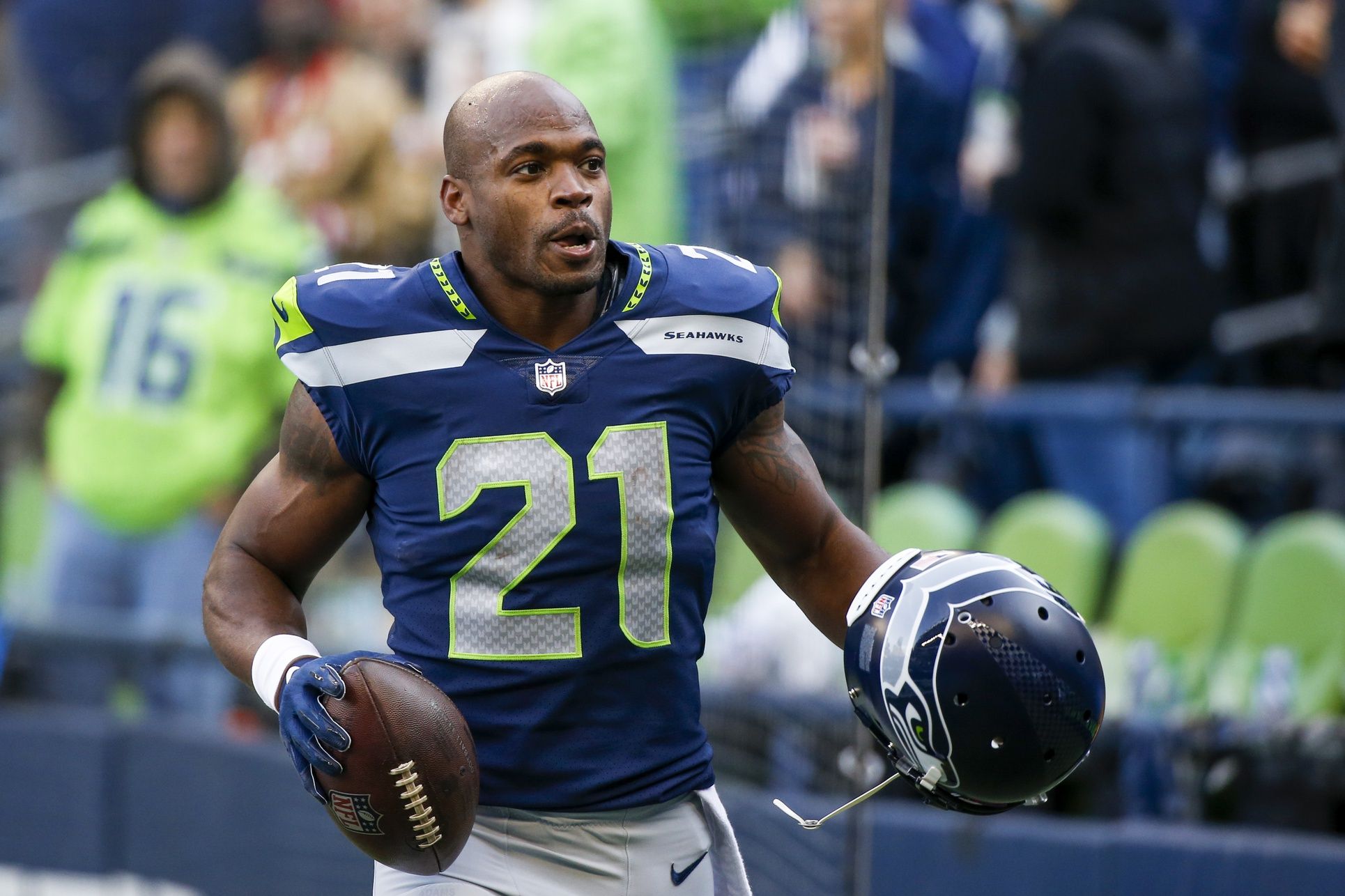
Later that same week, the Seattle Seahawks signed Peterson to their practice squad. He made his lone appearance for Seattle in Week 13 against the San Francisco 49ers, rushing for 16 yards and a touchdown. This final touchdown marked the 126th rushing score of his career, moving him into a tie with Jim Brown for fifth-most rushing touchdowns in NFL history.
Chronological Overview of Adrian Peterson's NFL Teams
| Team | Tenure | Rushing Yards | Rushing Touchdowns | Major Accolades / Notes |
|---|---|---|---|---|
| Minnesota Vikings | 2007–2016 | 11,747 | 97 | NFL MVP (2012), 7x Pro Bowl, 4x All-Pro |
| New Orleans Saints | 2017 | 81 | 0 | Traded after 4 games |
| Arizona Cardinals | 2017 | 529 | 2 | Led team in rushing in 6 starts |
| Washington Redskins | 2018–2019 | 1,940 | 12 | Back-to-back team rushing leader |
| Detroit Lions | 2020 | 604 | 7 | Played all 16 games |
| Tennessee Titans | 2021 | 51 | 1 | Signed to replace injured Derrick Henry |
| Seattle Seahawks | 2021 | 16 | 1 | Final NFL touchdown scored in Week 13 |
Frequently Asked Questions
How many teams did Adrian Peterson play for in the NFL?
Adrian Peterson played for seven different NFL teams during his 15-season career. He spent the vast majority of his career with the Minnesota Vikings before playing his final years with the New Orleans Saints, Arizona Cardinals, Washington Redskins, Detroit Lions, Tennessee Titans, and Seattle Seahawks.
What team was Adrian Peterson drafted by?
Adrian Peterson was drafted by the Minnesota Vikings in the first round (7th overall) of the 2007 NFL Draft. He spent his first ten professional seasons with the franchise, earning league MVP honors and setting multiple franchise rushing records.
When did Adrian Peterson win the NFL MVP award?
Adrian Peterson won the NFL Most Valuable Player award in 2012. He achieved this honor after rushing for 2,097 yards—averaging 6.0 yards per carry and scoring 12 touchdowns—just nine months after suffering a major knee injury (torn ACL and meniscus).
Where does Adrian Peterson rank on the all-time NFL rushing list?
Adrian Peterson finished his career ranked fifth on the NFL's all-time career rushing yards list, accumulating 14,918 yards. He also ranks fourth in career rushing attempts (3,230) and tied for fourth in career rushing touchdowns (126).
Did Adrian Peterson ever win a Super Bowl?
No, Adrian Peterson never won a Super Bowl during his 15-year NFL career. While he reached the NFC Championship Game with the Minnesota Vikings during the 2009 season, the team ultimately lost to the New Orleans Saints in overtime.
Strategic Career Evaluation and Next Actions
For sports historians, analysts, and fans examining Adrian Peterson's legacy, evaluating his journeyman years provides vital context for how elite running backs manage the twilight of their careers. While his historic peak remains defined by his decade in Minnesota, his ability to reinvent himself as a productive rotational back in Washington and Detroit highlights remarkable athletic longevity. Observers studying his career progression should review official NFL archives, reference historical game logs on pro-football-reference.com, and examine career milestone leaderboards to fully appreciate his standing among the greatest offensive players in football history.