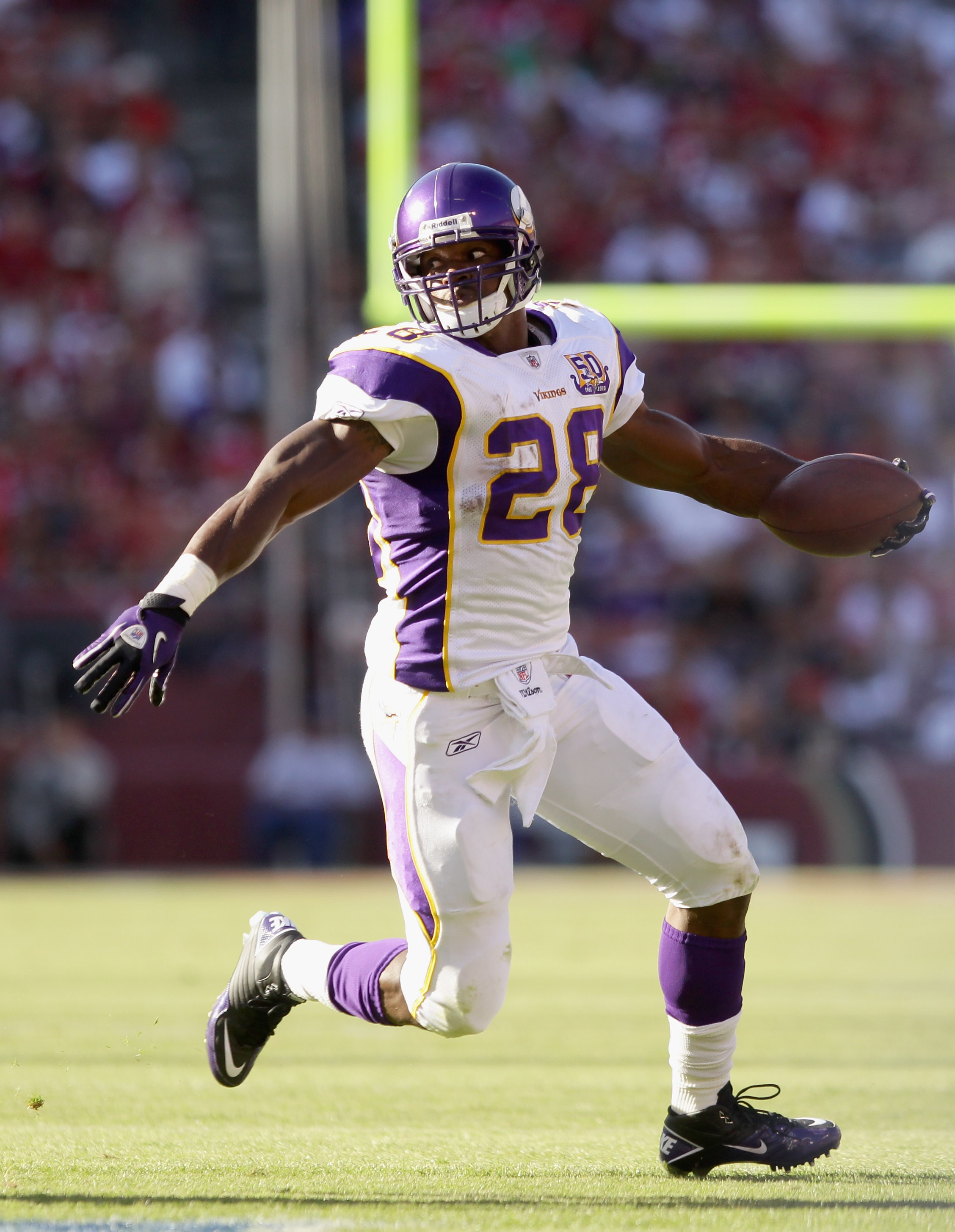
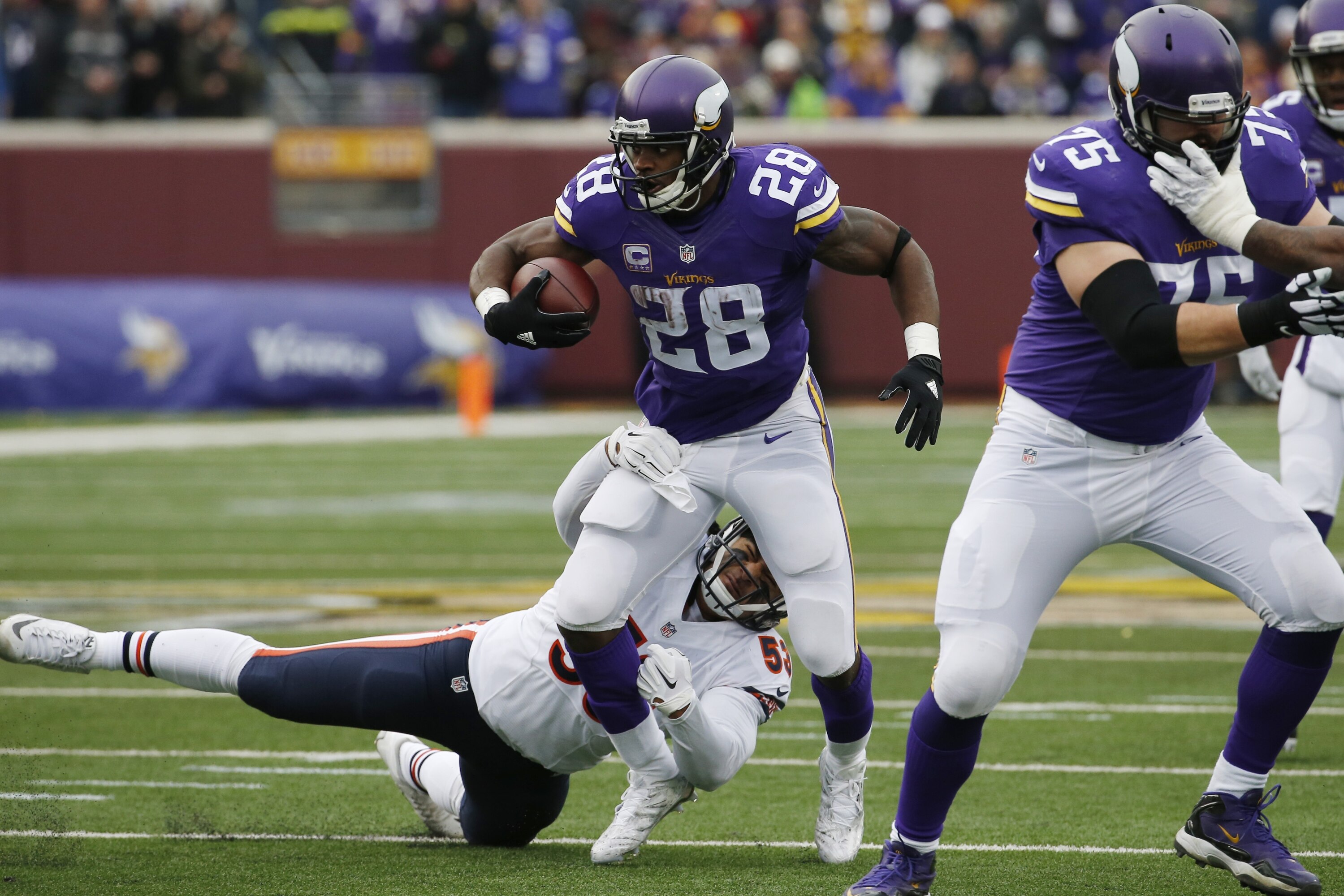
Adrian Peterson is a former NFL running back widely considered one of the greatest at his position in football history. Best known for his tenure with the Minnesota Vikings, Peterson earned the 2012 NFL MVP award after rushing for 2,097 yards—the second-highest single-season total ever recorded. As of 2026, his legacy is defined by his unprecedented physical recovery from injury, his fifth-place standing on the all-time rushing list, and his 2026 eligibility for the Pro Football Hall of Fame.
The Genesis of "All Day": From Palestine to Oklahoma
Adrian Peterson’s ascent to football stardom began in Palestine, Texas, where he earned the nickname "All Day" (or "AD") from his father because of his relentless stamina. His high school career at Palestine High School was legendary, culminating in a senior season where he rushed for 2,960 yards and 32 touchdowns. This performance made him the top-ranked recruit in the nation, leading him to the University of Oklahoma.
At Oklahoma, Peterson made an immediate impact that reshaped expectations for freshman athletes. In 2004, he set the NCAA freshman rushing record with 1,925 yards and finished second in the Heisman Trophy voting—the highest finish for a freshman at that time. His collegiate career was characterized by a violent, upright running style that combined world-class track speed with the power to run over Big 12 defenders. Despite missing several games due to a collarbone injury in his junior year, his body of work was sufficient to make him the 7th overall pick by the Minnesota Vikings in the 2007 NFL Draft.
The Minnesota Vikings Era and Statistical Dominance
Upon entering the NFL, Peterson immediately justified the hype. In his rookie season, he set the NFL record for most rushing yards in a single game, gaining 296 yards against the San Diego Chargers on November 4, 2007. This record still stands in 2026 as a testament to his ability to dominate a game single-handedly. He finished his first year as the NFL Offensive Rookie of the Year and established himself as the league's premier "bell-cow" back.
Between 2007 and 2016, Peterson was the focal point of the Vikings' offense. He was a four-time First-team All-Pro and a seven-time Pro Bowler during this stretch. His ability to produce despite facing "eight-man boxes" (where defenses commit extra players to the line of scrimmage specifically to stop the run) became his trademark. Unlike many of his contemporaries who relied on receiving skills out of the backfield, Peterson was a traditional power runner, a throwback to an era where the ground game dictated the tempo of the NFL.
The 2,097-Yard Miracle: The 2012 MVP Season
The defining chapter of Peterson’s career occurred in 2012, a season that remains a cornerstone of sports medicine discussions. In December 2011, Peterson suffered a catastrophic knee injury, tearing both his ACL and MCL. For most players of that era, such an injury required an 18-month recovery period and often resulted in a permanent loss of explosiveness.
Peterson, however, returned to the field just nine months later for the 2012 season opener. What followed was arguably the greatest individual season by a running back in the modern era:
- Total Rushing Yards: 2,097 (falling just 9 yards short of Eric Dickerson’s 1984 record).
- Average Per Carry: 6.0 yards, an elite figure for a high-volume runner.
- Decentralized Success: He rushed for over 100 yards in 10 games and over 200 yards in two games that season.
- Awards: He was named the NFL Most Valuable Player, becoming the last non-quarterback to win the award as of 2026.
This season solidified his reputation as a "freak of nature" and changed how NFL teams approached ACL rehabilitation. His performance was not merely a statistical anomaly; it carried a mediocre Vikings team to the playoffs, proving that a dominant running game could still compete in an increasingly pass-heavy league.
Comparing the Greats: All-Time Rushing Leaders
To understand Peterson's place in history, one must examine where he sits among the legends of the game. Peterson finished his career with 14,918 rushing yards and 120 rushing touchdowns.
| Player | Total Rushing Yards | Career Touchdowns | Yards Per Carry | Active Years |
|---|---|---|---|---|
| Emmitt Smith | 18,355 | 164 | 4.2 | 1990–2004 |
| Walter Payton | 16,726 | 110 | 4.4 | 1975–1987 |
| Frank Gore | 16,000 | 81 | 4.3 | 2005–2020 |
| Barry Sanders | 15,269 | 99 | 5.0 | 1989–1998 |
| Adrian Peterson | 14,918 | 120 | 4.6 | 2007–2021 |
As shown in the table, while Peterson ranks fifth in total yardage, his touchdown count (120) is among the highest, trailing only Emmitt Smith, LaDainian Tomlinson, and Marcus Allen in rushing scores. His career average of 4.6 yards per carry is significantly higher than that of Emmitt Smith or Frank Gore, highlighting his efficiency even as a high-volume runner.
Longevity and the Journeyman Years
After leaving Minnesota in 2017, Peterson entered a new phase of his career, characterized by short stints with multiple teams. He played for the New Orleans Saints, Arizona Cardinals, Washington Redskins (now Commanders), Detroit Lions, Tennessee Titans, and Seattle Seahawks.
While many critics expected him to retire in his early 30s, Peterson defied the "age cliff" that typically claims running backs. In 2018, at age 33, he signed with Washington and rushed for 1,042 yards, becoming one of the oldest players in NFL history to record a 1,000-yard season. This "journeyman" era, while lacking the individual accolades of his prime, demonstrated his professional discipline and his singular drive to climb the all-time rushing ladder. He continued to be a viable goal-line threat and a veteran locker-room presence until his final snaps in 2021.
Off-Field Challenges and Financial Context
A comprehensive view of Adrian Peterson’s career must include his off-field struggles, which impacted both his public image and his financial standing. In 2014, Peterson was involved in a high-profile legal case regarding the disciplinary methods used on his son. This led to a de facto season-long suspension and sparked a national conversation about the boundaries between discipline and child abuse.
Furthermore, despite earning nearly $100 million in career salary according to Spotrac, Peterson faced significant financial difficulties post-retirement. In 2019, reports surfaced regarding defaulted loans and mounting debts, which Peterson’s legal team attributed to trusting the wrong financial advisors. These challenges serve as a cautionary tale within the NFL regarding the complexities of wealth management for professional athletes.
The 2026 Hall of Fame Outlook
As of 2026, Adrian Peterson has reached the five-year retirement threshold required for eligibility for the Pro Football Hall of Fame in Canton, Ohio. His induction is considered a matter of "when," not "if." Most analysts view him as a first-ballot lock due to his MVP trophy, his 2,000-yard season, and his status as the premier back of his generation.
His candidacy is bolstered by the fact that the "pure" running back position has devalued since his prime. In the current 2026 NFL landscape, teams rarely utilize a single back for 300+ carries a season, making Peterson’s statistical achievements appear even more unreachable for modern players. He represents the end of an era of workhorse backs who could carry an entire franchise on their shoulders.
Frequently Asked Questions
Did Adrian Peterson ever win a Super Bowl?
No, Adrian Peterson never won a Super Bowl. The closest he came was during the 2009-2010 season, when the Minnesota Vikings reached the NFC Championship game but lost to the New Orleans Saints in overtime. Despite his individual brilliance, team-wide success in the postseason remained elusive throughout his career.
What is Adrian Peterson's highest rushing total in a single game?
Peterson holds the NFL record for the most rushing yards in a single game, with 296 yards. He achieved this feat on November 4, 2007, against the San Diego Chargers during his rookie season. He broke the previous record of 295 yards held by Jamal Lewis.
Why is Adrian Peterson's 2012 season considered so important?
The 2012 season is significant because Peterson rushed for 2,097 yards—just shy of the all-time record—less than a year after a major ACL/MCL reconstruction. It is widely considered the greatest comeback from a major knee injury in professional sports history and earned him the NFL MVP award.
What was Adrian Peterson's nickname and what did it mean?
His primary nickname was "All Day" (often abbreviated as "AD," not "AP"). His father gave him the name because he had the energy to play sports "all day" without getting tired. The nickname stuck through his college and professional careers as a reflection of his legendary stamina and work ethic.
Where does Adrian Peterson rank on the all-time rushing list?
As of 2026, Adrian Peterson ranks 5th all-time in career rushing yards with 14,918. He trails only Emmitt Smith, Walter Payton, Frank Gore, and Barry Sanders. He also ranks 4th all-time in career rushing touchdowns with 120.
Assessing the Evolution of the Running Back Position
To truly appreciate Adrian Peterson in 2026, one must look at how the NFL has changed since he entered the league. The transition to "Running Back by Committee" (RBBC) and the emphasis on the "passing game" have made the 2,000-yard rusher a nearly extinct species. Peterson was the last of the "high-volume" specialists who could demand 25 carries a game regardless of the score or the defensive scheme.
For modern fans and scouts, Peterson serves as the gold standard for physical tools. His combination of 4.4-second 40-yard dash speed and the strength to break tackles with a stiff-arm is rarely seen in a single athlete. Aspiring players looking to understand the mechanics of power running—specifically how to maintain balance through contact and how to use a "one-cut" system to find the open field—continue to study Peterson's Minnesota tape as the primary reference material. His career remains a testament to the impact a generational talent can have on a franchise, even in a sport that was rapidly evolving away from his specific skill set.