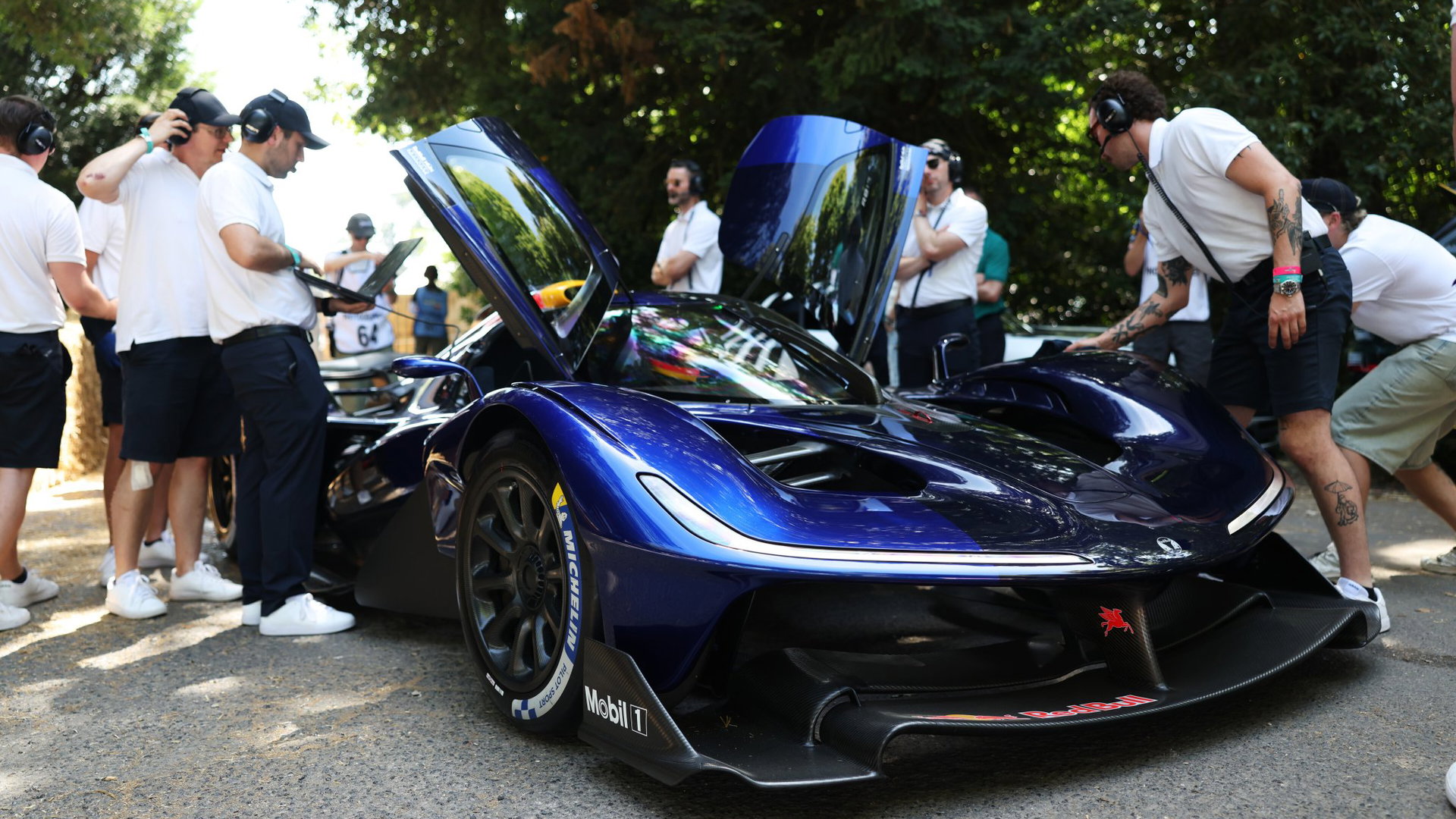
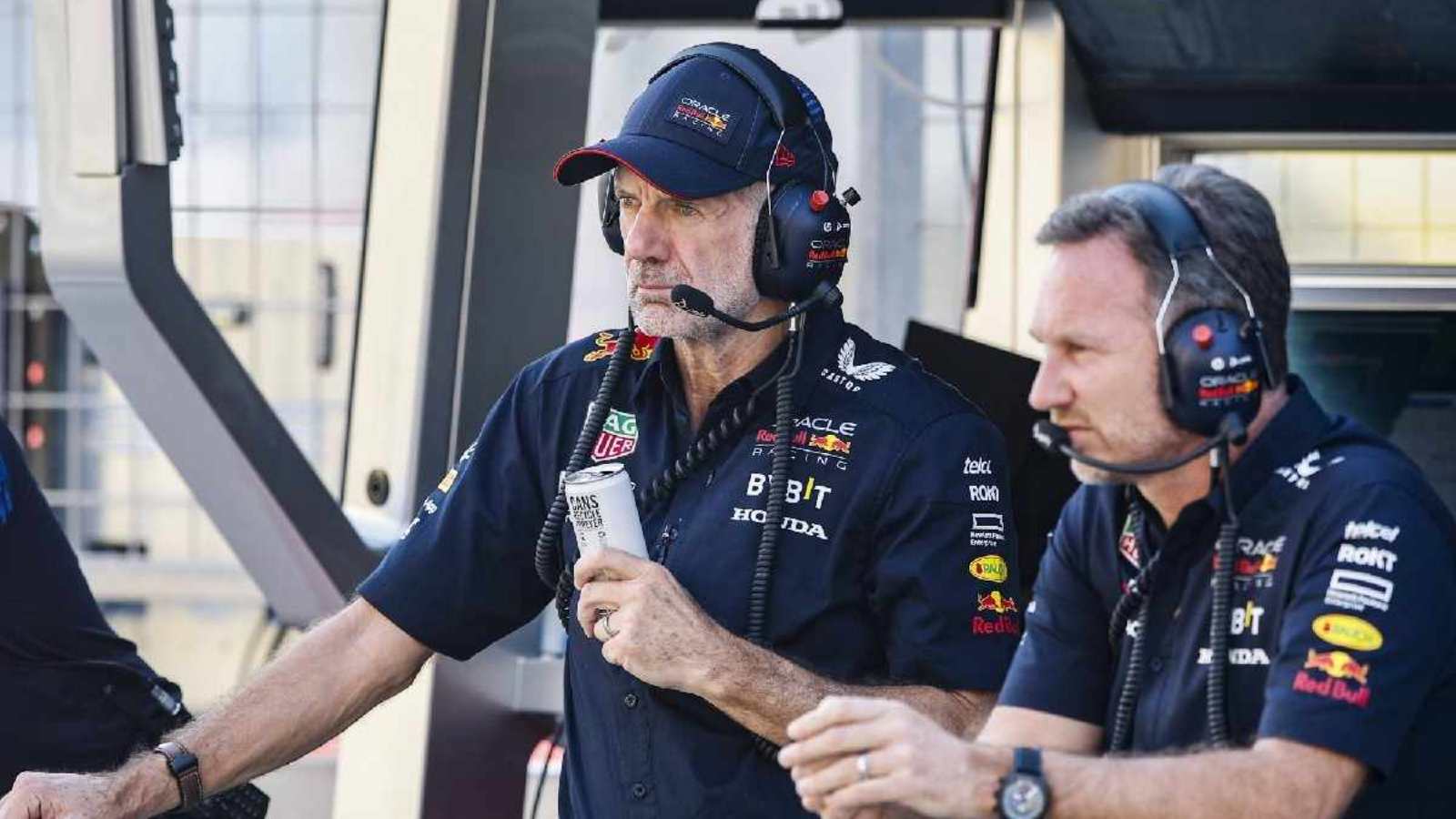
As of 2026, Adrian Newey is 67 years old. Born on December 26, 1958, in Stratford-upon-Avon, England, the legendary designer has spent more than four decades redefining the limits of automotive engineering. He remains the most successful technical director in Formula 1 history, having secured over 25 world titles across three different teams.
Adrian Newey is widely regarded as the "greatest of all time" (GOAT) when it comes to Formula 1 car design. While drivers like Michael Schumacher, Lewis Hamilton, and Max Verstappen have dominated the tracks, Newey has been the architect behind many of their most successful machines. His age, rather than being a hindrance, has become a testament to his unparalleled experience and his ability to adapt to radically different eras of technical regulations. In 2026, as Formula 1 enters a new era of power unit and aerodynamic rules, Newey continues to be the most sought-after mind in the paddock.
The Biography of a Design Genius: Early Years and Education
Adrian Newey’s journey into the world of motorsport began in the heart of the British automotive industry. Growing up in Stratford-upon-Avon, he was the son of a veterinarian but found his passion in the mechanical world. From a young age, Newey was fascinated by model kits and the mechanics of racing cars, a hobby that eventually led him to study aeronautics and astronautics at the University of Southampton.
Graduating in 1980, Newey’s first-class honors degree provided him with a profound understanding of aerodynamics—a discipline that was still in its relative infancy in Formula 1. His career began at March Engineering, where he worked on IndyCar projects. It was here that the racing world first glimpsed his potential; his designs for the March 85C won the CART championship and the Indianapolis 500. This early success proved that Newey possessed a unique ability to visualize airflow in a way that others could only hope to achieve through complex computer simulations.
By the late 1980s, Newey transitioned into Formula 1 with the Leyton House team. Although the team had a modest budget, Newey’s aerodynamic innovations often allowed them to punch far above their weight. His designs were so extreme and aggressive that they often challenged the physical limits of the drivers, a characteristic that would become a hallmark of a "Newey car."
Career Milestones: Building Championship-Winning Machines
To understand why Adrian Newey’s age is a topic of such reverence in 2026, one must look at the timeline of his dominance. His career can be categorized into three distinct eras, each marked by a complete transformation of the team he joined.
The Williams Era (1991–1996)
When Newey joined Williams in the early 1990s, he formed a formidable partnership with Patrick Head. His designs, particularly the FW14B and FW15C, integrated active suspension, traction control, and revolutionary aerodynamics. These cars were so technically superior that they allowed drivers like Nigel Mansell and Alain Prost to dominate the field with ease. During his tenure at Williams, the team secured four Drivers' Championships and five Constructors' Championships.
The McLaren Era (1997–2005)
Moving to McLaren in 1997, Newey immediately made an impact. The MP4/13, designed for the 1998 season, took advantage of new narrow-track regulations. Mika Häkkinen used Newey’s creations to win back-to-back titles in 1998 and 1999. Newey’s ability to package mechanical components tightly while maximizing aerodynamic efficiency became his signature move during this period.
The Red Bull Dynasty (2006–2024)
Newey’s move to Red Bull Racing in 2006 was initially viewed as a gamble. At the time, Red Bull was seen more as a "party team" than a serious contender. However, Newey’s leadership transformed them into a powerhouse. Starting with the RB5 in 2009 and culminating in the dominant RB6 through RB9, Newey helped Sebastian Vettel secure four consecutive world titles.
After a brief period of Mercedes dominance, Newey returned his full focus to F1 for the 2022 ground-effect regulation change. The resulting RB18 and RB19 became some of the most dominant cars in the history of the sport, propelling Max Verstappen to record-breaking seasons.
The New Chapter: Adrian Newey at Aston Martin
As we navigate through 2026, the biggest story in the paddock remains Newey’s high-profile move to the Aston Martin Aramco Formula One Team. Having officially started his tenure in early 2025, Newey’s presence at the Silverstone-based squad marks a significant shift in the competitive landscape.
At 67 years old, many wondered if Newey would choose retirement. Instead, he signed a long-term deal with Lawrence Stroll’s ambitious project. His age brings a level of wisdom that is vital for the 2026 regulation overhaul, which emphasizes sustainable fuels and a 50/50 split between internal combustion and electrical power. Newey’s role at Aston Martin is not just that of a designer, but a visionary who oversees the entire technical structure, ensuring that the team’s new wind tunnel and state-of-the-art campus are utilized to their maximum potential.
The allure of working with Fernando Alonso—another veteran of the sport—and the prospect of building a championship-winning car for a fourth different manufacturer were key drivers in his decision to keep working well into his late sixties.
Why Adrian Newey’s Age Matters in Modern Formula 1
In an era dominated by Computational Fluid Dynamics (CFD) and Artificial Intelligence, Adrian Newey remains one of the few designers who still uses a pencil and a drawing board. This "analog" approach in a digital age is not a sign of being outdated; rather, it is his superpower.
The Intuition Factor
Newey’s age and decades of experience have granted him an "aero-intuition" that computers sometimes struggle to replicate. He can often spot a flow detachment or a pressure instability on a drawing that might take a CFD cluster hours to process. This ability to see the "big picture" of car design allows him to direct his team of engineers toward more fruitful avenues of development, saving precious time under the FIA’s restrictive cost cap and aero-testing limits.
Mentorship and Leadership
At 67, Newey has transitioned into a mentor role for the next generation of engineers. His presence at a team elevates the performance of everyone around him. Engineers at Aston Martin now have the opportunity to learn from the man who designed the cars that won championships in the 90s, 00s, 10s, and 20s. This continuity of knowledge is invaluable in a sport where technical staff often rotate between teams.
Adrian Newey’s Career Statistics and Achievements
The following table highlights the sheer scale of Newey’s success throughout his career. It illustrates his ability to deliver results across different teams and wildly varying technical eras.
| Team | Tenure | Drivers' Championships | Constructors' Championships | Key Drivers |
|---|---|---|---|---|
| Williams | 1991–1996 | 4 (1992, 1993, 1996, 1997*) | 5 (1992, 1993, 1994, 1996, 1997) | Mansell, Prost, Hill, Villeneuve |
| McLaren | 1997–2005 | 2 (1998, 1999) | 1 (1998) | Häkkinen, Coulthard, Raikkonen |
| Red Bull | 2006–2024 | 7 (2010–2013, 2021–2023) | 6 (2010–2013, 2022, 2023) | Vettel, Verstappen |
| Aston Martin | 2025–Present | TBD | TBD | Alonso, Stroll |
*The 1997 Williams car was largely a Newey design, though he had departed for McLaren before the season ended.
The Technical Evolution of Newey’s Designs
Adrian Newey’s impact on the sport is best measured by the technical innovations he pioneered. He has always been a master of finding "grey areas" in the FIA Technical Regulations.
- Active Suspension (1992): Newey perfected the system that allowed the Williams FW14B to maintain a constant ride height, providing a stable aerodynamic platform that left rivals in the dust.
- Narrow Track Aerodynamics (1998): When F1 reduced car width, Newey found ways to recover the lost downforce through intricate front wing designs and floor sculpting.
- Blown Diffusers (2010–2013): Newey was instrumental in utilizing engine exhaust gases to energize the diffuser, creating massive amounts of rear-end grip even when the driver was off the throttle.
- Ground Effect Mastery (2022–2025): While many teams struggled with "porpoising" (bouncing) under the new ground-effect rules, Newey’s RB18 was stable from day one. His previous experience with ground-effect cars in the early 80s was cited as a major advantage.
Frequently Asked Questions about Adrian Newey
When did Adrian Newey join Aston Martin?
Adrian Newey officially joined the Aston Martin Aramco Formula One Team in early 2025, after announcing his departure from Red Bull Racing in May 2024. His move was one of the most significant "technical transfers" in the history of the sport.
How many championships has Newey won?
As of the start of the 2026 season, Adrian Newey has been involved in the design of cars that have won 13 Constructors' World Championships and 12 Drivers' World Championships, totaling 25 titles. This makes him the most successful individual in the history of Formula 1 technical design.
Is Adrian Newey still using a drawing board?
Yes, Newey famously continues to use a traditional drafting board and pencil for his initial design concepts. While his teams use modern CAD (Computer-Aided Design) and CFD tools to refine and manufacture the parts, the core aerodynamic philosophy often begins with Newey’s hand-drawn sketches.
What is Adrian Newey's net worth in 2026?
While exact figures are private, Newey is widely considered the highest-paid non-driver in Formula 1. Reports suggest his multi-year contract with Aston Martin is worth upwards of £30 million ($38 million) per year, including bonuses and potential shareholdings, placing his estimated net worth well over £150 million.
Where can I read more about his design philosophy?
Adrian Newey published an autobiography titled How to Build a Car in 2017. It provides an in-depth look at his career, his thought process, and the technical challenges he faced while designing some of the most iconic cars in racing history. You can find more information about his legacy on the Official F1 Website.
Following the Legend’s Next Move
For fans and aspiring engineers, Adrian Newey’s career serves as a masterclass in persistence and innovation. Despite his age, his hunger for competition remains undiminished. As the 2026 season progresses, the focus will be on whether his "silver bullet" design philosophy can propel Aston Martin to its first-ever World Championship.
To stay updated on Adrian Newey's latest technical developments and race results, fans should follow official team updates from Aston Martin F1 and technical analyses provided by reputable motorsport outlets. Watching the evolution of his designs in real-time provides a unique insight into the mind of a man who has quite literally shaped the history of Formula 1.