As of 2026, adolescent drinking rates continue a multi-decade decline, with approximately 15% of high school students reporting alcohol consumption within the past 30 days. Despite these historic lows, binge drinking remains a critical public health concern, affecting roughly 1 in 10 older adolescents and contributing to significant neurodevelopmental risks and accidental injuries.
The landscape of underage substance use has shifted dramatically over the last twenty years. While the "party culture" of previous generations has dissipated for many, the underlying biological vulnerabilities of the adolescent brain remain constant. Understanding the current statistical trends requires looking beyond simple "yes or no" usage rates to examine the intensity of consumption, the age of onset, and the evolving social pressures that drive adolescent behavior.
The Long-Term Decline in Underage Alcohol Consumption
The most striking feature of adolescent drinking statistics in 2026 is the sustained downward trajectory of alcohol use since the mid-1990s. Data from the Monitoring the Future (MTF) study and the National Survey on Drug Use and Health (NSDUH) indicate that alcohol remains the most commonly used substance among youth, but its prevalence is a fraction of what it once was.
In the 1990s, it was not uncommon for over 70% of 12th graders to report having consumed alcohol in the previous year. Today, that number has fallen by nearly half. This decline is attributed to several factors:
- Increased Awareness: Public health campaigns have successfully re-framed underage drinking as a high-risk activity rather than a "rite of passage."
- Strict Enforcement: Minimum legal drinking age (MLDA) laws and "zero tolerance" policies for underage impaired driving have created significant legal deterrents.
- Digital Socialization: Many experts believe the shift from physical to digital social spaces has reduced the number of unsupervised face-to-face gatherings where underage drinking typically occurs.
- Health Consciousness: Gen Z and Gen Alpha cohorts often show a higher interest in "wellness" trends, which frequently exclude heavy alcohol consumption.
Current Prevalence by Grade Level
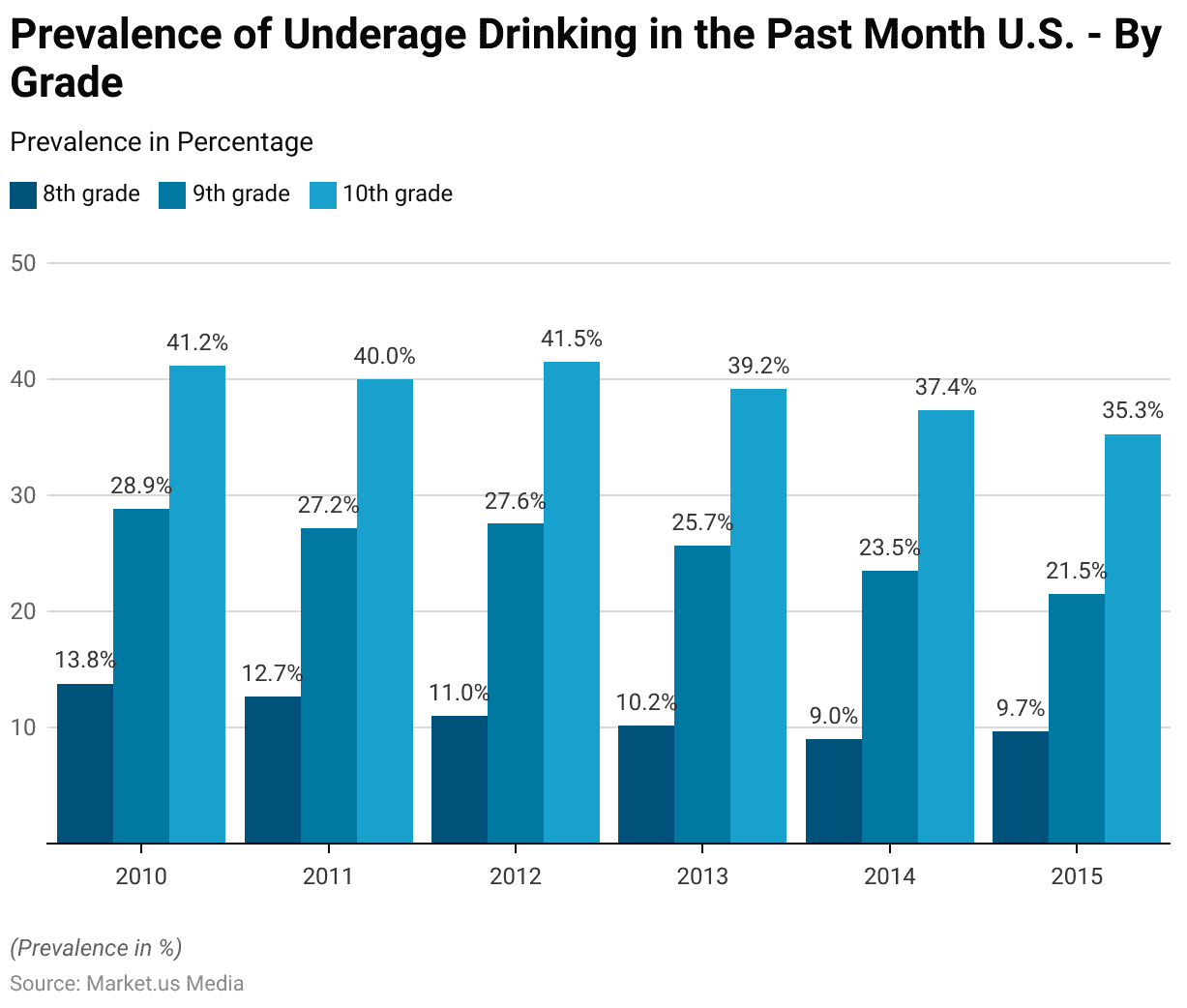
Drinking behavior varies significantly by age. While 8th graders rarely report regular use, the transition to high school—and particularly the move to 12th grade—marks a sharp increase in exposure and consumption.
| Grade Level | Lifetime Use (%) | Past Month Use (%) | Binge Drinking (%) |
|---|---|---|---|
| 8th Grade | 12.5% | 5.2% | 2.1% |
| 10th Grade | 31.8% | 13.6% | 6.8% |
| 12th Grade | 48.4% | 27.1% | 12.5% |
| College (Ages 19-22) | 72.1% | 49.3% | 25.8% |
Data based on 2024-2025 longitudinal reports projected into 2026 context.
The jump between 10th and 12th grade is particularly notable. This period coincides with increased independence, the acquisition of driver's licenses, and social preparation for college environments where alcohol is often more accessible. Even with the overall decline, nearly 30% of graduating seniors are consuming alcohol monthly, representing a significant population at risk for acute alcohol-related harm.
The Persistence of Binge Drinking Patterns
While fewer adolescents are drinking, those who do often engage in high-intensity consumption known as binge drinking. For adolescents, this is generally defined as consuming 4 or more drinks (for females) or 5 or more drinks (for males) within a two-hour period.
Binge drinking is particularly dangerous because the adolescent brain has a higher tolerance for the sedative effects of alcohol but a lower tolerance for its cognitive-disrupting effects. This means a teenager may not feel "sleepy" or "done" as quickly as an adult, leading them to consume toxic amounts of alcohol before their body triggers a shutdown response.
According to the National Institute on Alcohol Abuse and Alcoholism (NIAAA), binge drinking in youth is linked to:
- Alcohol Poisoning: The inability of the liver to process rapid infusions of ethanol, leading to respiratory depression.
- Blackouts: Gaps in memory caused by the hippocampus temporarily shutting down due to high Blood Alcohol Concentration (BAC).
- Risk-Taking: Increased likelihood of engaging in unprotected sexual activity or operating a motor vehicle.
Demographic Disparities and Gender Trends
Historically, adolescent boys were significantly more likely to drink and engage in binge drinking than girls. However, statistics from the last decade show a "gender convergence." In 2026, the gap has almost entirely closed, and in some metrics—such as past-month use among 10th graders—girls occasionally report higher usage rates than boys.
Psychologists suggest this may be tied to different motivations for use. While boys often drink for social status or sensation-seeking, girls are more likely to report using alcohol as a coping mechanism for anxiety or academic stress.
Racial and ethnic variations also persist:
- White and Hispanic youth generally report higher rates of current alcohol use compared to Black or Asian American youth.
- Rural adolescents often report higher rates of binge drinking and earlier onset of use compared to their urban counterparts, often due to limited recreational alternatives and less strict law enforcement presence in remote areas.
The Neurobiological Impact of Underage Drinking
One of the most critical reasons for tracking these statistics is the unique vulnerability of the developing brain. The human brain does not finish developing until the mid-20s. The prefrontal cortex, which handles executive function, impulse control, and decision-making, is the last to mature.
Introducing a neurotoxin like alcohol during this developmental window can cause permanent structural changes. Research indicates that heavy adolescent drinking can lead to a smaller hippocampus (responsible for learning and memory) and reduced white matter integrity. These changes often manifest as:
- Decreased attention span and delayed processing speeds.
- Lowered academic performance and higher dropout rates.
- Increased susceptibility to Alcohol Use Disorder (AUD) later in life. Statistics show that individuals who begin drinking before age 15 are five times more likely to develop an addiction than those who wait until age 21.
Social and Environmental Risk Factors
Why do some adolescents drink while others refrain? The data points to several key "risk and protective factors."
Parental Influence: Despite the importance of peer groups, parents remain the primary influence on adolescent drinking. Households where parents provide alcohol to children (under the mistaken belief that "teaching them to drink at home" is safer) actually see higher rates of problematic binge drinking in those children later.
Availability and Marketing: While traditional television ads for alcohol are regulated, digital marketing on social media platforms remains a gray area. Influencer culture often glamorizes "aesthetic" drinking, which can subconsciously normalize alcohol use for younger audiences.
Co-occurring Disorders: There is a high statistical correlation between adolescent drinking and mental health struggles. Adolescents with untreated ADHD, depression, or social anxiety are significantly more likely to use alcohol to self-medicate, creating a cycle of dependency.
Evidence-Based Prevention Strategies
The reduction in drinking rates over the last thirty years is not accidental; it is the result of specific, data-driven interventions. Effective prevention requires a multi-tiered approach:
- Policy-Level Interventions: Maintaining the legal drinking age at 21 is estimated to have saved tens of thousands of lives by reducing fatal traffic accidents. Increasing alcohol taxes also consistently correlates with lower youth consumption rates.
- School-Based Programs: Programs that focus on "social resistance training"—teaching students how to say no without losing social standing—are more effective than older "scare tactic" models.
- Parental Monitoring: Statistics show that parents who maintain clear rules about alcohol and stay involved in their children's social lives significantly reduce the likelihood of substance use.
FAQs About Adolescent Drinking
At what age do most adolescents first try alcohol?
While the average age of first use has risen, many adolescents still have their first full drink between ages 14 and 15. Early initiation is a primary predictor for future substance abuse issues, making the middle school years a critical window for prevention education.
How has the COVID-19 pandemic affected long-term drinking trends?
Initially, the pandemic saw a decrease in "social" drinking due to lockdowns, but an increase in "isolated" drinking among at-risk youth. As of 2026, the long-term data suggests a slight "rebound" effect in social drinking, though it has not returned to pre-2010 levels, as many youth have replaced alcohol with other substances like nicotine vaping.
What are the most common warning signs of underage alcohol abuse?
Key indicators include a sudden drop in academic performance, loss of interest in previously enjoyed hobbies, changes in peer groups, and physical signs like bloodshot eyes or unexplained irritability. Smelling alcohol on breath or finding paraphernalia are obvious signs, but behavioral shifts usually precede physical evidence.
Does the "European model" of early introduction prevent abuse?
Statistical evidence suggests the "European model" is largely a myth. Many European countries with lower legal ages actually have higher rates of binge drinking and alcohol-related health issues among youth compared to the United States. Early exposure tends to normalize heavy use rather than "teaching moderation."
Resources for Parents and Educators
If you are concerned about an adolescent's drinking or want to implement prevention strategies, official resources provide the most reliable guidance.
The Substance Abuse and Mental Health Services Administration (SAMHSA) offers the "Talk. They Hear You." campaign, which provides parents with concrete tools for starting conversations about alcohol. Additionally, the CDC's Fact Sheets on Underage Drinking provide updated data that can be used in educational settings to dispel myths about "safe" underage use.
Immediate action should focus on open communication and setting clear, non-negotiable boundaries. For those already struggling with frequent use, professional intervention from a licensed counselor specializing in adolescent substance use is recommended to address the underlying psychological drivers of the behavior.