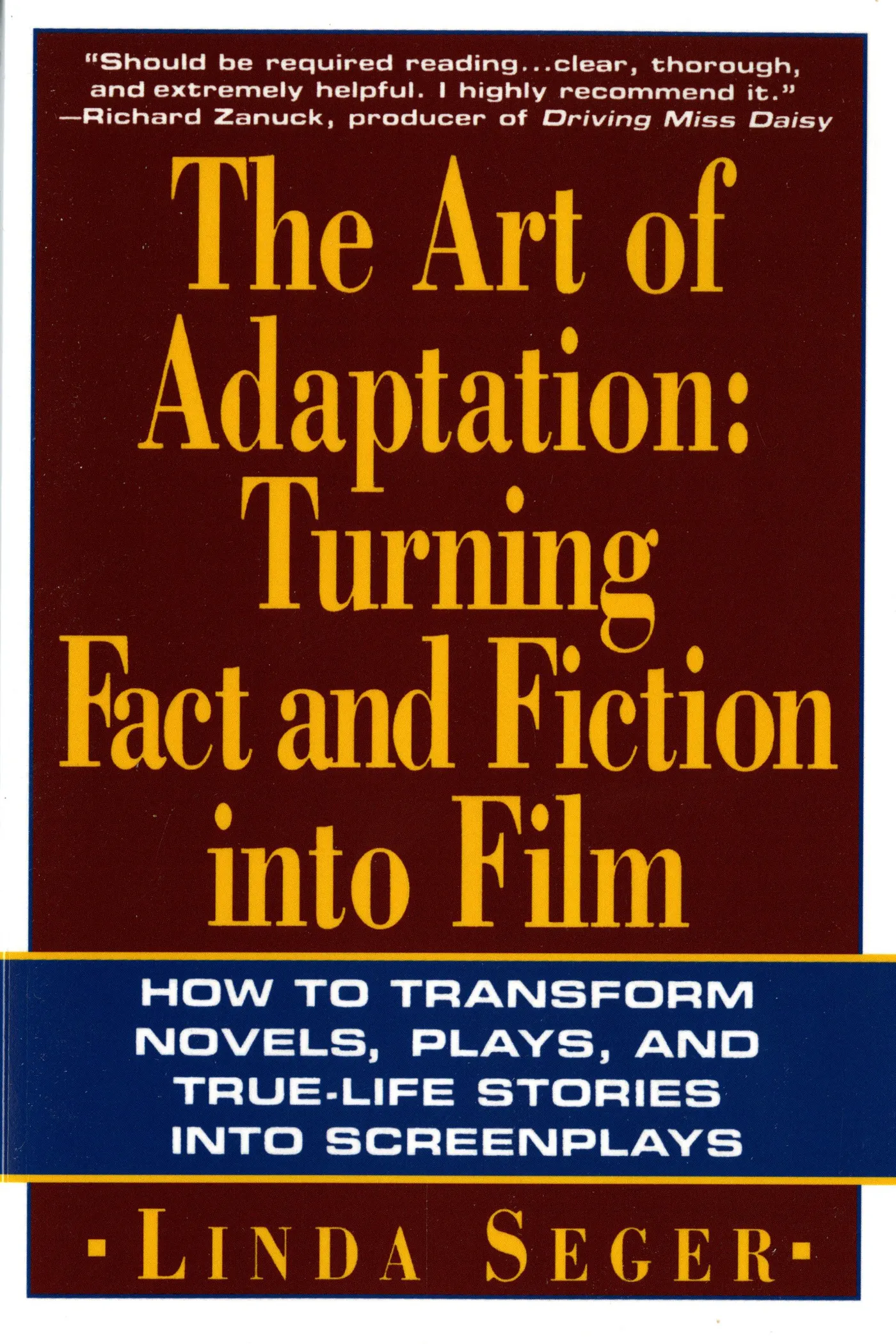
Adaptation history is the chronological study of how narratives are transposed across different media platforms, tracing the evolution of storytelling from ancient oral traditions to modern digital transmedia. It examines the shifting cultural, technical, and theoretical frameworks that govern how a work is recontextualized for new audiences while maintaining or transforming its core identity.
The history of adaptation is not merely a record of "books turned into movies." It is a complex map of human communication that reveals how technology changes our relationship with narrative. To understand adaptation history is to understand the move from communal storytelling to the printed word, the rise of the moving image, and the current 2026 landscape of interactive and AI-assisted narrative reconstruction.
The Pre-Cinematic Foundations of Adaptation
Before the advent of the printing press or the motion picture camera, adaptation was the primary mode of cultural transmission. In the ancient world, mythology was inherently adaptive. The transition from oral performance to written Greek tragedy, for example, involved significant structural shifts. Sophocles and Euripides did not "invent" the stories of Oedipus or Medea; they adapted existing oral myths into a structured theatrical format that suited the civic and religious needs of the Athenian polis.
During the Renaissance, adaptation became a hallmark of literary prestige. William Shakespeare is perhaps the most famous "adaptor" in history. The majority of his plays were derived from existing sources, such as Holinshed’s Chronicles for his history plays or Arthur Brooke's The Tragical History of Romeus and Juliet for his famous tragedy. During this era, there was no "fidelity" requirement; the goal of adaptation was translatio studii—the transfer of knowledge and its improvement through rhetorical embellishment and local contextualization.
In the 18th and 19th centuries, the rise of the novel created a new source for adaptation. Popular novels were frequently adapted for the stage in the form of "melodramas" or operas. This era established the first commercial links between different media industries, setting the stage for the industrial-scale adaptation practices that would define the 20th century.
The Birth of Cinema and the Quest for Legitimacy (1895–1940)
The invention of the cinematograph in the late 19th century marked the most significant turning point in adaptation history. Early filmmakers like Georges Méliès quickly realized that audiences were more likely to engage with the new, flickering technology if it presented stories they already knew. His 1902 film A Trip to the Moon was a loose adaptation of works by Jules Verne and H.G. Wells.
During the silent film era, adaptation served a specific strategic purpose: cultural legitimization. Film was initially seen as a low-brow, fairground attraction. By adapting "prestige" literature—works by Shakespeare, Dickens, or Hugo—film producers sought to attract the middle and upper classes. This led to the "Film d'Art" movement in France and the rise of the "Prestige Picture" in Hollywood.
By the 1930s, the transition to "talkies" allowed for a more literal adaptation of dialogue, leading to a boom in theatrical adaptations. Studios began buying the rights to Broadway hits before they even finished their runs. This period solidified the "Hollywood Model" of adaptation, where a literary property was viewed as a "pre-sold" commodity that reduced the financial risk of film production.
The Theoretical Shift: From Fidelity to Intertextuality
For much of the 20th century, the study of adaptation was dominated by "fidelity criticism." This approach judged a film based on how "faithful" it was to its source novel. Critics often used moralistic language, describing adaptations as "betrayals" or "infidelities." However, as the field of Adaptation Studies matured, scholars began to reject this narrow view.
In 1957, George Bluestone’s Novels into Film argued that the two media are fundamentally different—one is linguistic and the other is visual. He posited that an adaptation is a new work of art entirely, not a subset of the original. This paved the way for more sophisticated theories in the 1970s and 80s, influenced by semiotics and post-structuralism.
The modern academic consensus, championed by scholars like Linda Hutcheon in her seminal 2006 work A Theory of Adaptation, views adaptation as a form of intertextuality. In this view:
- An adaptation is a "derivation that is not derivative."
- It is an extended intertextual engagement with the source material.
- The audience’s pleasure comes from the "oscillation" between the source and the new work.
Adaptation Categories and Methodologies
To analyze adaptation history effectively, researchers categorize works based on their relationship to the source material. These categories have evolved as technology has allowed for more complex layering of narratives.
| Adaptation Type | Primary Goal | Narrative Relationship | Common Example Era |
|---|---|---|---|
| Literal (Fidelity-Based) | To reproduce the source as closely as possible. | Direct translation of plot and dialogue. | 1940s–1950s Hollywood |
| Transposition | To move the story to a new setting or time. | Core themes remain; aesthetics change. | 1990s Teen Film (e.g., Clueless) |
| Commentary/Critique | To challenge or subvert the source material. | Intentional deviation to highlight flaws. | Post-Modern Cinema (2000s) |
| Expansion (Transmedia) | To build a larger world beyond the source. | Canonical additions across games/TV. | 2010s–2026 Franchise Era |
| Transformative | To use the source as a "point of departure." | Radical stylistic or structural overhaul. | Avant-Garde/Experimental |
The Impact of the Streaming and Gaming Revolutions
By the 2010s and early 2020s, the nature of adaptation history shifted again due to the rise of prestige television and high-fidelity video games. The "limited series" format allowed for "maximalist" adaptations. Instead of cutting a 600-page novel into a two-hour movie, creators could adapt it into ten hours of television, allowing for the inclusion of subplots and internal monologues previously thought "unfilmable."
Simultaneously, the "video game to screen" pipeline matured. Early adaptations like 1993's Super Mario Bros. were critical failures because they failed to understand the interactive essence of the source. However, by the mid-2020s, works like The Last of Us demonstrated that the "emotional beat" of a game could be successfully translated into a linear narrative by focusing on character interiority rather than just replicating gameplay mechanics.
In 2026, we see the rise of Transmedia Storytelling as the dominant mode of adaptation. A story is no longer "adapted" in a linear fashion; it is launched simultaneously across multiple platforms. A single intellectual property (IP) might include a core novel, a VR experience that adapts the setting, and an AI-driven social media campaign that adapts the characters' voices for real-time interaction.
Technical and Ethical Considerations in 2026
As we navigate the landscape of 2026, new technical hurdles have emerged in adaptation history. The use of generative AI has introduced the concept of "automated adaptation." While AI can quickly generate a screenplay from a prose summary, it often lacks the nuanced cultural understanding required for a successful "translation" of themes.
Furthermore, ethical questions regarding "post-human adaptation" have become prominent. The adaptation of a deceased actor’s likeness or voice into a new medium—once a rarity—has become a standard part of franchise management. This requires a rigorous legal and ethical framework to ensure that the "spirit" of the original performance is respected, a modern evolution of the old fidelity debate.
Common Technical Barriers in Modern Adaptation:
- Medium Specificity: Some elements, like the "internal monologue" in literature or "player agency" in games, do not have direct equivalents in film.
- Cultural Context: Adapting a story across borders requires "localization," which is a form of cultural adaptation that risks losing the original's specificity.
- Copyright and IP Fragmentation: In 2026, many classic works have fragmented rights, making "faithful" adaptations of entire universes legally complex.
Frequently Asked Questions
What is the "Fidelity Trap" in adaptation history?
The Fidelity Trap is a critical bias where an adaptation is judged solely on how closely it mimics its source material. This is considered a "trap" because it ignores the unique artistic possibilities of the new medium. Modern critics prefer to evaluate how an adaptation "functions" as a standalone work while in dialogue with its predecessor.
Why did early cinema rely so heavily on literary adaptations?
Early cinema lacked social prestige. By adapting works from "high culture" (like Shakespeare or Dickens), filmmakers were able to argue that cinema was a legitimate art form rather than a mere scientific curiosity. This helped attract wealthier audiences and investment to the fledgling industry.
How does "Transmedia" differ from traditional adaptation?
Traditional adaptation moves a story from Point A to Point B (e.g., Book to Movie). Transmedia storytelling spreads a narrative across multiple platforms, where each medium contributes a unique and non-redundant piece to the story world. It is less about "copying" and more about "extending."
Can a video game be a "faithful" adaptation of a book?
Yes, but "faithfulness" in gaming is often measured by atmospheric and thematic consistency rather than plot points. Because games require player agency, the adaptation must translate the book’s world into a set of rules (mechanics) that allow the player to experience the themes of the source material firsthand.
What role does AI play in adaptation in 2026?
In 2026, AI is primarily used as a collaborative tool for "style transfer" and rapid prototyping. It can help writers visualize how a scene might look in different cinematic styles or help in localizing dialogue for different regional dialects, though human oversight remains essential for thematic depth.
Moving Toward a Comparative Analysis Framework
To engage with adaptation history effectively, whether as a student, creator, or critic, one should move beyond simple "likes and dislikes." The most productive way to analyze an adaptation in 2026 is through a comparative analysis framework.
Start by identifying the "essential narrative kernel"—the elements of the story that must remain for it to be recognizable. Then, examine what has been added, subtracted, or modified, and ask why those changes were made. Were they necessitated by the new medium's budget, the target audience's cultural expectations, or the director's specific creative vision? By treating every adaptation as a deliberate series of choices rather than a series of compromises, we gain a deeper appreciation for the enduring power of the stories that shape our world.