Adaptability in design is the intentional capacity of a system, structure, or product to evolve, alter its function, or respond to shifting environmental and user requirements without requiring a total replacement. By prioritizing modularity, foresight, and scalability, designers create resilient solutions that ensure long-term sustainability, cost-efficiency, and relevance in a rapidly changing global landscape.
The Core Pillars of Adaptive Design Philosophy
In the design landscape of 2026, the concept of a "finished product" has largely become obsolete. Whether in architecture, software, or industrial manufacturing, the focus has shifted toward creating living systems. Adaptability is no longer a luxury feature; it is a fundamental requirement driven by rapid technological advancement, climate volatility, and the global push toward a circular economy. To understand adaptability, one must first distinguish it from flexibility. While flexibility refers to the ability of a design to be used in different ways (a room that can be a gym or a bedroom), adaptability refers to the ability of the design itself to change its physical or logical state to meet new needs.
The first pillar of this philosophy is modularity. Modularity involves breaking a design down into discrete, independent components that can be replaced, upgraded, or rearranged without affecting the integrity of the whole system. In 2026, this is seen in everything from modular smartphones to "plug-and-play" building facades. The second pillar is scalability, which ensures that a design can grow or shrink in capacity based on demand. This is particularly vital in digital infrastructure and urban planning, where population shifts can render static designs useless within a decade.
The third pillar is resiliency. A truly adaptable design does not just change for the sake of change; it changes to survive and thrive under stress. This includes passive survivability in architecture—where buildings maintain habitable conditions during power outages—and "graceful degradation" in software, where systems maintain core functionality even when peripheral components fail. By integrating these pillars, designers move away from the "cradle-to-grave" model and toward a "cradle-to-cradle" approach that values longevity and metamorphosis.
Architectural Adaptability and Urban Resilience
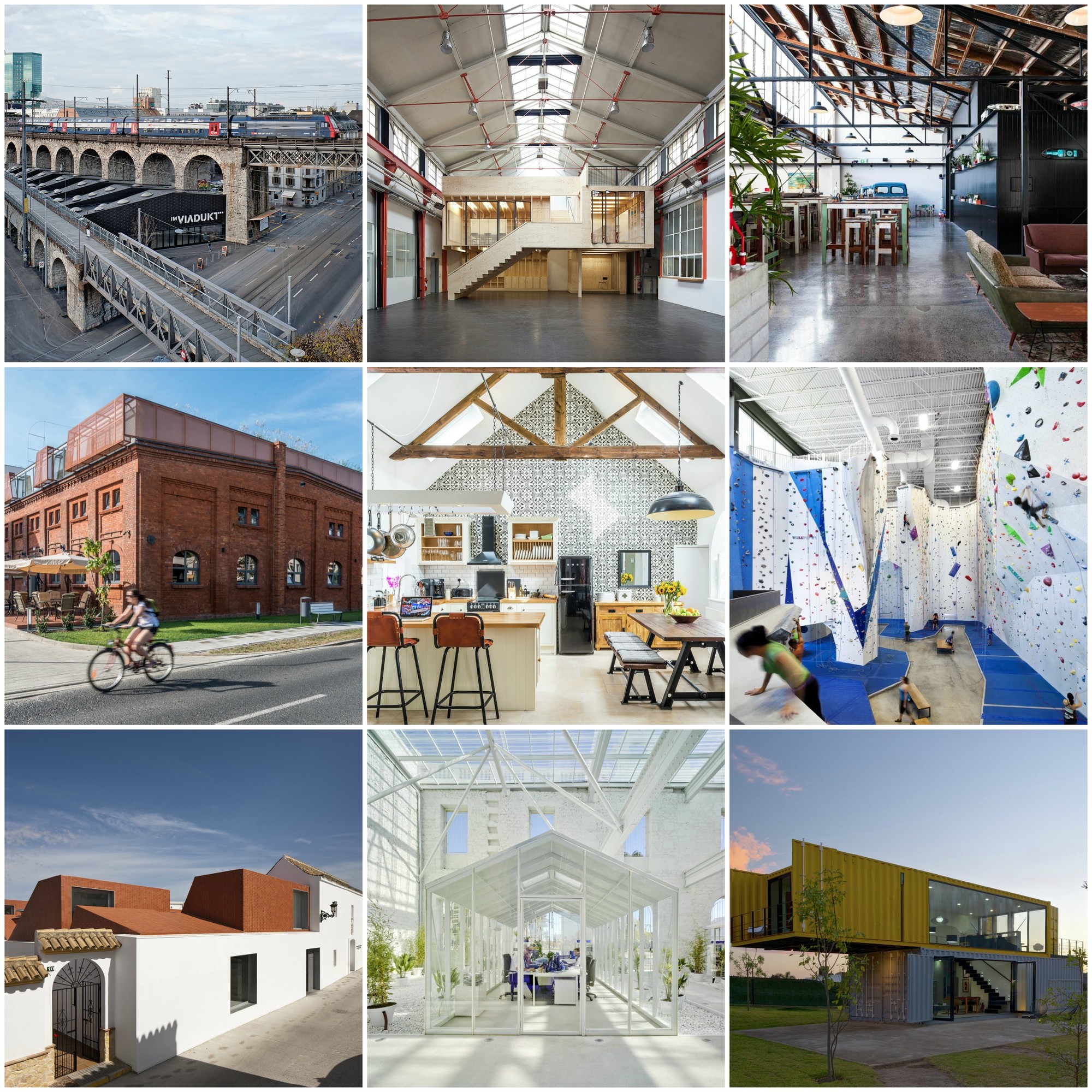
The built environment is perhaps the most visible arena for adaptive design. In 2026, the construction industry faces immense pressure to reduce carbon footprints, leading to the rise of Adaptive Reuse. This practice involves repurposing existing structures for functions other than those for which they were originally intended. A decommissioned industrial warehouse becoming a high-tech vertical farm or a luxury apartment complex is a prime example of architectural adaptability. This approach preserves the "embodied carbon" of the original structure while breathing new life into urban centers.
Beyond reuse, new constructions are increasingly utilizing Open Building systems. Rooted in the theories of N. John Habraken, Open Building separates the "support" (the permanent structure and utilities) from the "infill" (the interior partitions and finishes). This allows tenants or owners to reconfigure their living or working spaces as their families grow or their business models change. In 2026, we see the integration of robotic fabrication and smart materials that allow walls to be moved with minimal effort, effectively turning static floor plans into dynamic environments.
Urban planning has also embraced adaptability through the implementation of "tactical urbanism" and "sponge city" concepts. As sea levels rise and weather patterns become more extreme, adaptive urban design utilizes permeable surfaces and modular flood barriers that can be deployed or retracted based on real-time data. This responsiveness ensures that cities remain functional despite environmental fluctuations, proving that the most successful designs are those that work with nature rather than attempting to dominate it.
Digital Ecosystems and the Evolution of UX
In the digital realm, adaptability is the engine of the modern user experience (UX). We have moved far beyond "responsive design," which merely adjusts layouts for different screen sizes. In 2026, Adaptive User Interfaces (AUI) use machine learning to reorganize themselves based on the individual user’s habits, cognitive load, and environmental context. For instance, a navigation app might simplify its interface and increase contrast when it detects the user is driving at night or in heavy rain, or a professional software suite might highlight different tools based on the specific project phase the user is currently working on.
Design systems have become the backbone of this digital adaptability. Instead of designing individual pages, UI/UX designers now build comprehensive libraries of adaptive components. These components are governed by "design tokens"—centralized variables for color, spacing, and typography—that allow a brand to update its entire digital presence across multiple platforms (web, mobile, AR/VR) simultaneously. This systemic approach prevents technical debt and ensures that digital products can integrate new technologies, such as generative AI modules, without needing a full redesign.
Furthermore, accessibility has evolved into a subset of adaptability. Modern digital design assumes that "average" users do not exist. Instead, systems are designed to adapt to a wide range of physical and neurological needs. High-contrast modes, voice-first navigation, and variable interaction speeds are not just add-ons; they are integrated into the core architecture of adaptive systems. This ensures that as a user's needs change—due to age, injury, or situational limitations—the design remains functional and inclusive.
Industrial Design and the Circular Economy
The manufacturing sector in 2026 is defined by the transition from "planned obsolescence" to "planned adaptability." Industrial design now prioritizes Design for Disassembly (DfD). This methodology ensures that every part of a product, from a kitchen appliance to an electric vehicle, can be easily taken apart for repair, upgrade, or recycling. The "Right to Repair" movement has moved from a consumer advocacy goal to a regulatory standard in many jurisdictions, forcing designers to abandon proprietary screws and glued-in batteries in favor of standardized, modular components.
Sustainable material selection is a critical component of this shift. Adaptable products often utilize bio-based composites or smart alloys that can be reshaped or repurposed at the end of a product's initial lifecycle. Consider the evolution of the modular office chair: in 2026, an adaptable chair might allow for the replacement of the fabric, the adjustment of ergonomic supports, and even the swapping of the base for a standing-desk stool configuration. This versatility extends the product's useful life and significantly reduces waste.
The economic model supporting these designs has also changed. Many companies now offer "Product-as-a-Service" (PaaS) models. Instead of buying a static piece of equipment, consumers and businesses subscribe to a service. The provider is then incentivized to design the most adaptable and durable hardware possible, as they are responsible for its maintenance and eventual upgrade. This alignment of economic and environmental goals is perhaps the most significant achievement of adaptive design in the current decade.
Comparison of Design Strategies: Flexibility vs. Adaptability vs. Resiliency
To implement these concepts effectively, it is essential to understand how they differ in application and outcome. The following table outlines the key characteristics of these often-confused terms.
| Feature | Flexible Design | Adaptable Design | Resilient Design |
|---|---|---|---|
| Primary Goal | Multi-purpose utility | Evolution and modification | Survival and recovery |
| Mechanism | Versatile features (e.g., folding furniture) | Modular components (e.g., swappable parts) | Redundant systems (e.g., backup power) |
| User Interaction | Immediate, manual adjustment | Periodic, structural change | Automatic, reactive response |
| Time Horizon | Short-term (daily use) | Medium to long-term (years) | Emergency/Stress event (variable) |
| Typical Example | A room with a Murphy bed | A house with an expandable wing | A building with flood-proof basement |
Implementation Framework: How to Design for Adaptability
Designing for adaptability requires a shift in the traditional design process. It moves away from solving a specific problem for a specific moment and toward creating a framework that can solve future problems. This involves several strategic steps that should be integrated into the earliest phases of any project.
- Anticipatory Research: Designers must conduct "futurescaping" to identify potential shifts in technology, climate, and user behavior over a 10-to-20-year horizon. This is not about predicting the future with certainty, but about identifying a range of possible scenarios that the design might need to accommodate.
- Layering of Longevity: Implement the "S-Layers" concept (Site, Structure, Skin, Services, Space Plan, and Stuff), as proposed by Stewart Brand. Designs should ensure that short-lived layers (like interior décor or software plugins) can be changed easily without disturbing long-lived layers (like the building foundation or core database architecture).
- Standardization and Interoperability: Use industry-standard interfaces and sizes. For a product to be adaptable, its components must be able to interface with parts from other manufacturers or future versions of itself. In the digital world, this means using open APIs and standard data formats.
- Documentation and Transparency: For a design to be adapted 10 years from now, the future maintainer must understand how it was built. This requires "embedded documentation"—such as QR codes on physical parts that link to 3D repair manuals or well-commented code in software repositories.
- Feedback Loops: Integrate sensors or user-reporting mechanisms to track how a design is actually being used. If an "adaptable" office space is never actually reconfigured, designers need to know why—was it too difficult, too expensive, or simply unnecessary?
Common Mistakes and Over-Engineering Risks
While the benefits of adaptability are clear, there is a significant risk of over-engineering. Over-engineering occurs when a designer adds so many features and modular options that the product becomes too expensive, too heavy, or too complex for the average user to manage. A classic example is a "multi-tool" that tries to do everything but performs every individual task poorly. True adaptability should simplify the user's life, not add a layer of management complexity.
Another common pitfall is the "Adaptability Tax." Creating a modular system often requires more material and more complex engineering upfront, leading to higher initial costs. If the cost of adapting a product is higher than the cost of buying a new one, the design has failed its primary objective. Therefore, designers must perform a rigorous cost-benefit analysis to ensure that the long-term savings in maintenance and replacement justify the initial investment.
Lastly, there is the issue of under-documentation. An adaptable design is only as good as the information available to those who will adapt it. Without clear instructions and accessible replacement parts, a modular building or a modular computer becomes "frozen" in its initial state, eventually leading to the very obsolescence the design was intended to prevent.
Frequently Asked Questions
What is the difference between adaptability and flexibility?
Flexibility is the ability of a single design to serve multiple purposes without changing its physical form (e.g., a table used for dining and working). Adaptability is the ability of the design itself to be physically or logically modified to meet new requirements (e.g., adding a leaf to a table to seat more people or swapping its legs to change its height).
Is adaptable design more expensive to implement?
Initially, yes. Adaptable designs often require more robust materials, modular connectors, and more intensive planning, which can increase upfront costs by 10% to 30%. However, the long-term Return on Investment (ROI) is significantly higher due to extended product lifespans, reduced demolition/disposal costs, and lower expenses for future upgrades.
How does adaptability contribute to sustainability?
Adaptability is a cornerstone of the circular economy. By allowing products and buildings to be repaired, upgraded, or repurposed, it drastically reduces the demand for raw materials and lowers the volume of waste sent to landfills. It also preserves the "embodied energy" used in the original manufacturing or construction process.
Can old, rigid designs be made adaptable?
Yes, through a process called "retrofitting" or "adaptive reuse." While it is more challenging than designing for adaptability from scratch, existing structures can be updated with modular systems, smart sensors, and flexible partitions to extend their functional life and improve their performance in modern contexts.
Does adaptability limit aesthetic creativity?
On the contrary, it often inspires new aesthetic languages. The "industrial" look of exposed modular joints or the "living" look of dynamic digital interfaces provides a unique design vocabulary. Adaptability challenges designers to find beauty in function and evolution rather than in a static, perfect image.
Strategic Recommendations for Future-Proofing
To successfully navigate the complexities of design in 2026, professionals must adopt a "long-now" perspective. The first step is to perform a lifecycle assessment on every project, identifying the components most likely to become obsolete. Once these "high-churn" elements are identified, they should be designed as independent, easily accessible modules.
Secondly, prioritize interoperability. Whether you are an architect choosing HVAC components or a software engineer choosing a database, select systems that can communicate with the widest possible range of other tools. Avoid "vendor lock-in" at all costs, as it is the greatest enemy of adaptability.
Finally, embrace a culture of continuous iteration. The most adaptable designs are those that are never truly "finished." By building in feedback loops and planning for regular updates, you ensure that your work remains a relevant, functioning part of the world for decades to come, rather than a relic of the year it was created.