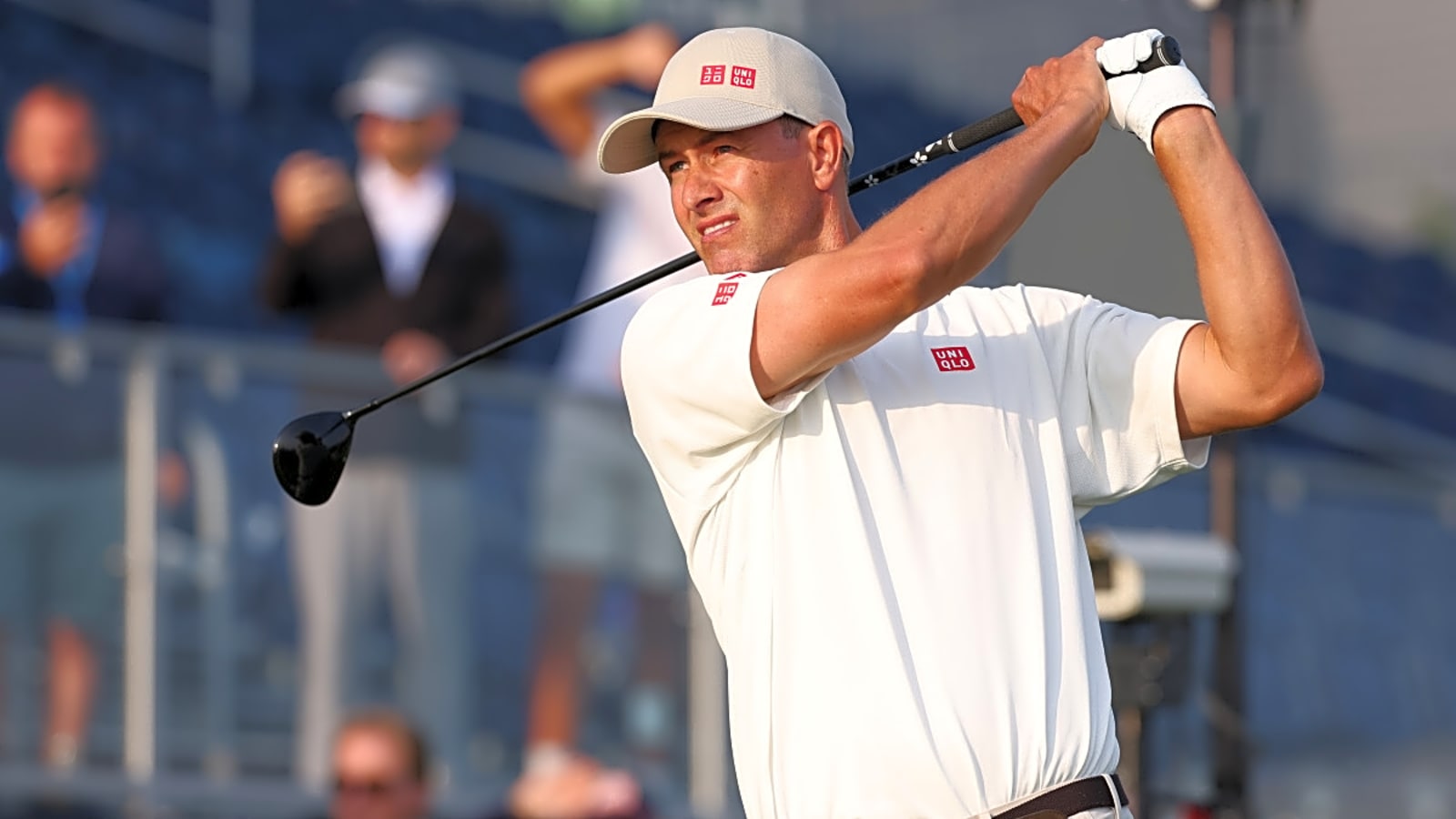
Adam Scott stands at a height of 6 feet 0 inches (183 cm). This stature is often cited by swing coaches and analysts as the "ideal" height for a professional golfer, providing a perfect balance between a wide swing arc for power and a stable center of gravity for consistent ball-striking.
In the world of professional golf, physical dimensions are more than just biographical trivia; they are the foundation upon which a player’s entire mechanical system is built. Adam Scott, the 2013 Masters Champion and former World No. 1, has long been heralded as having one of the most aesthetically pleasing and technically sound swings in the history of the sport. As of 2026, Scott remains a prominent figure on the PGA Tour, and his 6-foot frame continues to serve as the blueprint for athletic longevity and mechanical efficiency.
The Physical Profile of Adam Scott
To understand why Adam Scott’s height is significant, one must look at his complete physical profile. Weighing approximately 180 pounds (82 kg), Scott possesses an athletic, lean build that he has maintained meticulously throughout his career. This combination of height and weight allows him to generate significant clubhead speed without sacrificing the balance required for precision iron play.
Unlike some of the "power era" golfers who rely on sheer mass and explosive vertical force, Scott’s game is built on rhythm and leverage. His 6-foot stature allows for a naturally wide shoulder turn. In golf physics, height correlates directly with the radius of the swing. A longer radius—the distance from the center of the chest to the clubhead—theoretically allows for higher potential velocity at the bottom of the swing arc. At 183 cm, Scott is tall enough to enjoy these leverage advantages but not so tall that he struggles with the "timing" issues that often plague golfers over 6'4", whose longer limbs can lead to excessive moving parts.
How Height Influences Adam Scott’s Golf Swing
The "Adam Scott Swing" is a subject of study for amateurs and professionals alike. His height plays a pivotal role in the geometry of his motion. Because he stands at 6'0", his swing plane tends to be more neutral—neither excessively upright nor overly flat.
The Lever System and Arc Width
In the golf swing, the body acts as a system of levers. Scott’s arms, combined with the length of the club, create a primary lever. At 6 feet tall, his arm length is proportionate to his height, allowing him to create a massive arc. This arc width is essential for his "effortless" power. While shorter players must often use more aggressive rotational speeds or "ground reaction forces" to keep up with the field in driving distance, Scott can rely on the natural length of his swing path.
Stability and Center of Gravity
Height can sometimes be a disadvantage in golf if it raises the center of gravity too much, leading to instability during the high-speed transition from backswing to downswing. However, Scott’s height is positioned in what many biomechanists call the "Goldilocks Zone." He is tall enough to generate leverage but short enough to maintain a very stable "tripod" with his legs. This stability is why Scott has remained one of the best total drivers of the ball for over two decades.
Equipment Customization for a 6-Foot Professional
For the average amateur golfer, 6'0" is the benchmark for "standard" club specifications. Most off-the-rack sets from major manufacturers are designed for a male golfer between 5'9" and 6'0". However, for a professional like Adam Scott, "standard" is never enough.
Shaft Length and Lie Angle
Even though he is 6 feet tall, Scott’s club specifications are tuned to his specific arm length (wrist-to-floor measurement) and his posture at address.
- Shaft Length: Scott generally uses standard-length shafts in his irons, though he may experiment with slightly longer shafts in his driver to maximize the swing radius.
- Lie Angle: The lie angle—the angle between the center of the shaft and the sole of the club—is crucial. If a club is too upright for a player's height, the ball will tend to go left; too flat, and it goes right. Scott’s upright, classic posture often requires a lie angle that is precisely calibrated to ensure the clubhead sits flush at impact.
The "Broomstick" Putter and Height
Adam Scott is perhaps most famous in the modern era for his use of the long putter, or "broomstick" style. His height is a critical factor in the configuration of this club. Unlike a traditional putter, which is roughly 33-35 inches, Scott’s long putter must be sized so that the top of the grip reaches his sternum or chin while he maintains a comfortable, upright stance. For a 6-foot golfer, this typically results in a putter length of 45 to 50 inches. This equipment choice has allowed him to circumvent "the yips" and remain competitive on the greens well into his 40s.
Comparing Adam Scott’s Stature to Other PGA Tour Pros
To provide context to Scott’s 6'0" frame, it is helpful to compare him to the average dimensions of the modern professional golfer. The average height on the PGA Tour has trended upward over the last 30 years, moving from roughly 5'10" in the 1980s to nearly 6'0" in 2026.
| Player | Height (ft/in) | Height (cm) | Major Wins | Notable Physical Trait |
|---|---|---|---|---|
| Adam Scott | 6' 0" | 183 cm | 1 | Classic Athletic Build |
| Tiger Woods | 6' 1" | 185 cm | 15 | High Muscle Density |
| Rory McIlroy | 5' 10" | 178 cm | 4 | Explosive Rotational Speed |
| Bryson DeChambeau | 6' 1" | 185 cm | 2 | Mass-Based Power |
| Jon Rahm | 6' 2" | 188 cm | 2 | Wide Frame / Stability |
| Brian Harman | 5' 7" | 170 cm | 1 | Low Center of Gravity |
As the table illustrates, Scott sits right in the middle of the elite cohort. While players like Rory McIlroy prove that you don’t need to be 6 feet tall to be the longest hitter, Scott’s height allows him to achieve similar results with seemingly less physical strain, which has contributed to his remarkable injury-free career.
The Longevity and Fitness of Adam Scott in 2026
As of 2026, Adam Scott has enjoyed a professional career spanning over 25 years. A significant portion of this longevity is attributed to how he manages his 6-foot frame. Taller golfers often suffer from back issues (e.g., Tiger Woods, Fred Couples) because the longer "lever" of the torso puts more torque on the lumbar spine.
Scott has avoided these pitfalls through a fitness regimen focused on flexibility and "functional" strength rather than bulk. By maintaining a lean 180-pound weight, he minimizes the stress on his joints. He utilizes a combination of Pilates and core-stability exercises that ensure his 6-foot stature remains an asset rather than a liability. His ability to maintain a high "smash factor" (the efficiency of energy transfer from club to ball) at age 45 is a testament to the fact that his height-to-weight ratio is optimized for the repetitive motion of the golf swing.
Why Height is a Strategic Variable in Modern Golf
In the modern game, height is often equated with "potential." This is because the game has shifted toward a "bomb and gouge" strategy, where driving distance is the most significant statistical indicator of success.
- Vertical Force: Taller players have a longer distance over which they can apply force during the downswing.
- Visual Perspective: Some players argue that being 6 feet tall provides a better "bird’s eye" view of the greens and fairways compared to shorter players, though this is subjective.
- Wind Resistance: Interestingly, very tall players (6'4" and above) sometimes struggle in high-wind conditions, like those found at The Open Championship, because their taller profiles and longer swings can be harder to "flight" low. Scott’s 6'0" height is often seen as the perfect compromise—tall enough for the power of the US PGA Tour, but compact enough to handle the links-style golf of his native Australia or the UK.
Frequently Asked Questions
Does Adam Scott’s height help him hit the ball further?
Yes, indirectly. While height alone doesn't guarantee distance, Adam Scott’s 6'0" frame allows for a wider swing arc. A larger arc creates more time for the clubhead to accelerate, which leads to higher clubhead speeds. However, his distance is also a result of his exceptional timing and technique.
Is Adam Scott the tallest golfer on the PGA Tour?
No. While 6'0" is above the global average for men, it is quite common on the PGA Tour. There are several "giants" in professional golf, such as Christiaan Bezuidenhout (6'2") or past players like Ernie Els (6'3") and Phil Blackmar (6'7"). Scott is considered to be of "average to ideal" height for a pro.
What is the average height of a professional golfer?
The average height of a PGA Tour professional is approximately 5 feet 11 inches to 6 feet 0 inches. This has increased over the decades as golf has become more athletic and recruitment has favored players with larger physical "ceilings."
How does Adam Scott’s height affect his putting?
His height influenced his transition to the "broomstick" putter. Standing 6 feet tall, Scott found that an upright putting posture relieved pressure on his lower back and allowed his arms to hang more naturally. This required a custom-length putter (typically around 48 inches) to bridge the gap between his hands and the ground.
Has Adam Scott’s height changed over his career?
No, Adam Scott has been 6'0" since he entered the professional ranks. However, his physical composition has evolved. Earlier in his career, he was even leaner; as he aged toward 2026, he added more functional muscle to protect his joints and maintain his speed.
Optimize Your Game Based on the Adam Scott Model
If you are a golfer who shares Adam Scott’s 6'0" stature, there are several "best practices" you can adopt from his game. First, prioritize a wide take-away to take advantage of your natural leverage. Many golfers of this height collapse their lead arm, which narrows the arc and wastes the potential energy their height provides.
Secondly, ensure your equipment is professionally fitted. Do not assume that "standard" clubs are correct just because you are 6 feet tall. Factors such as arm length and swing tempo may require adjustments to lie angles or shaft stiffness. Finally, follow Scott’s lead in fitness: prioritize flexibility. A 6-foot frame is a powerful tool, but only if it remains supple enough to rotate fully and consistently.