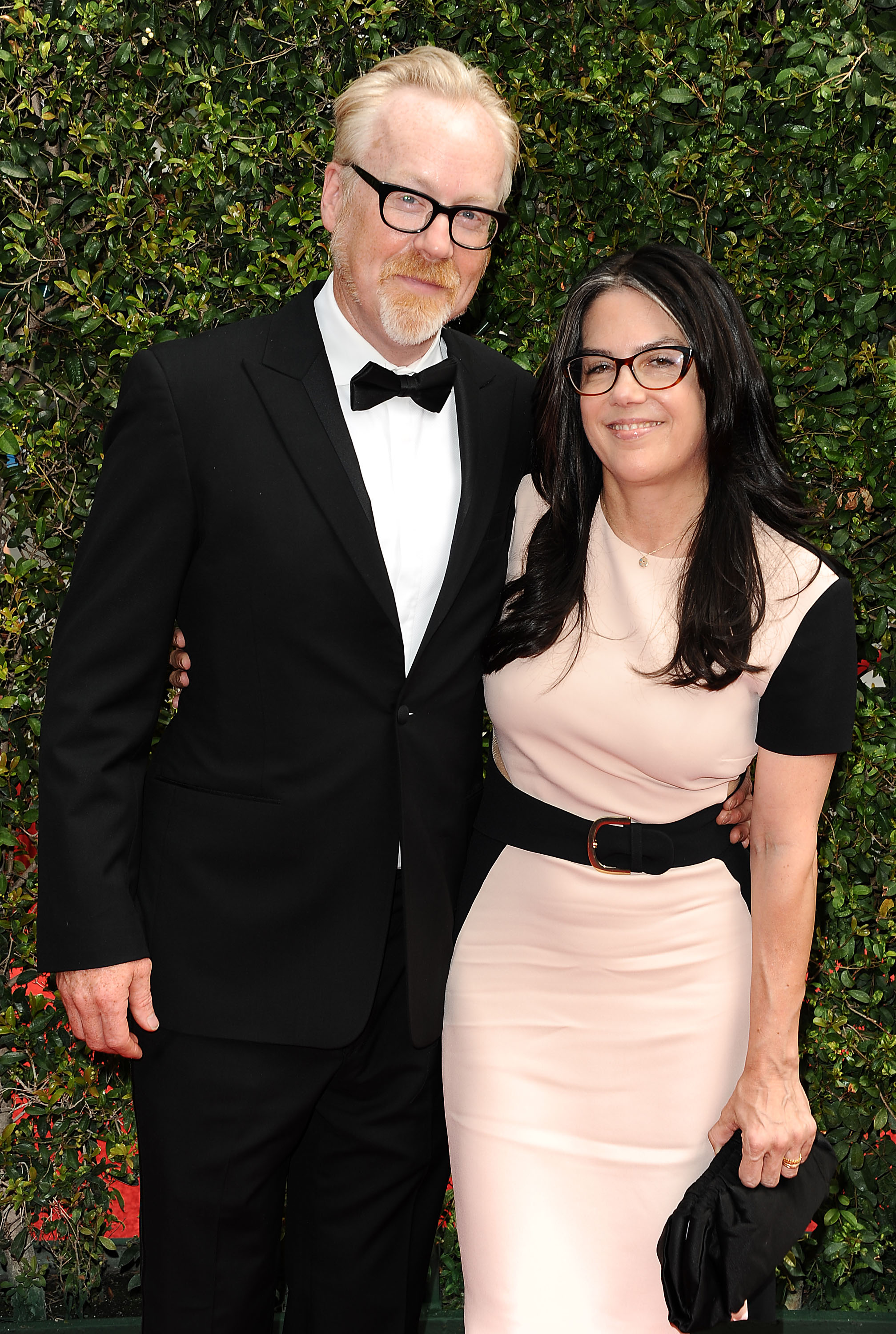
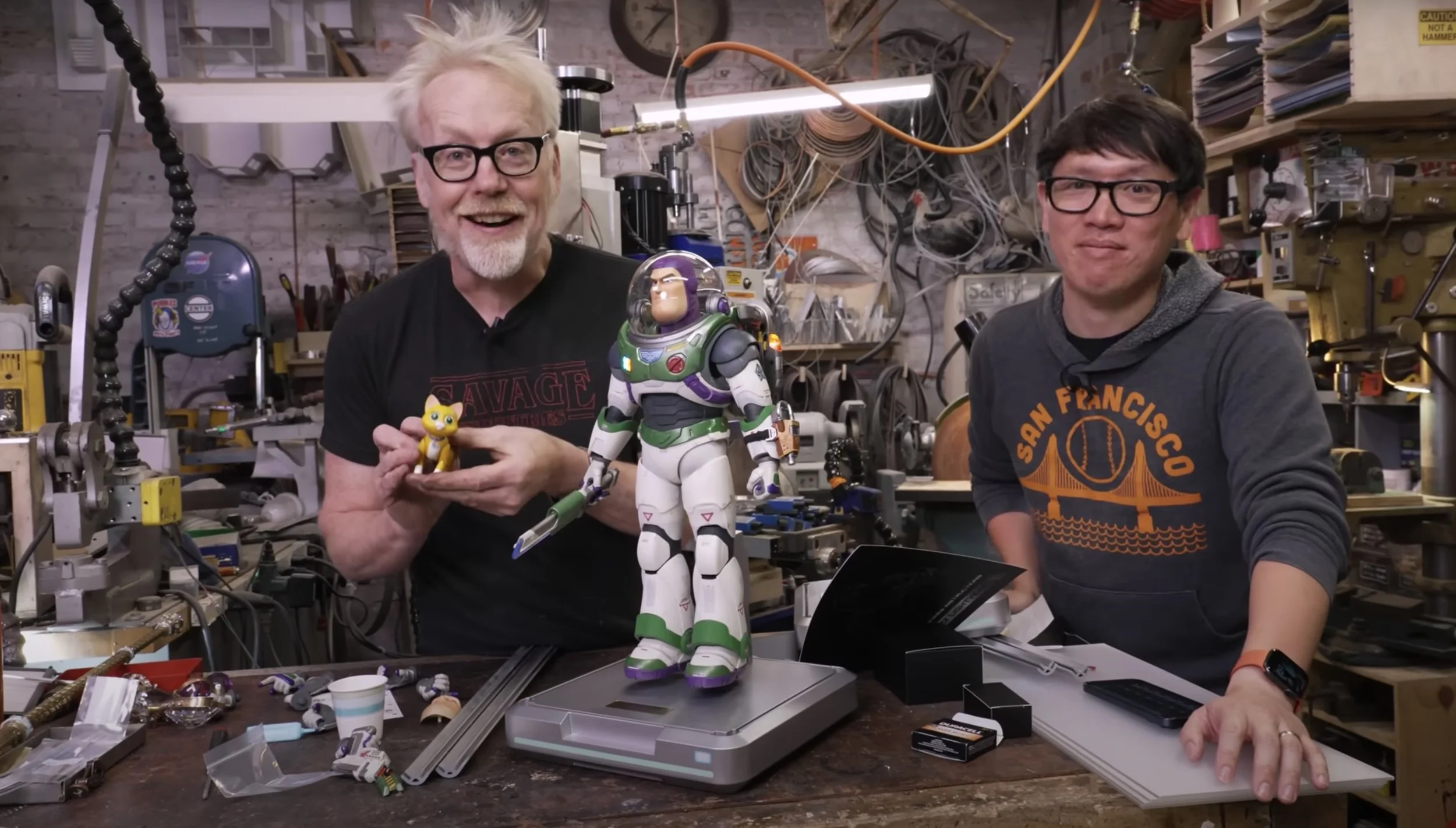
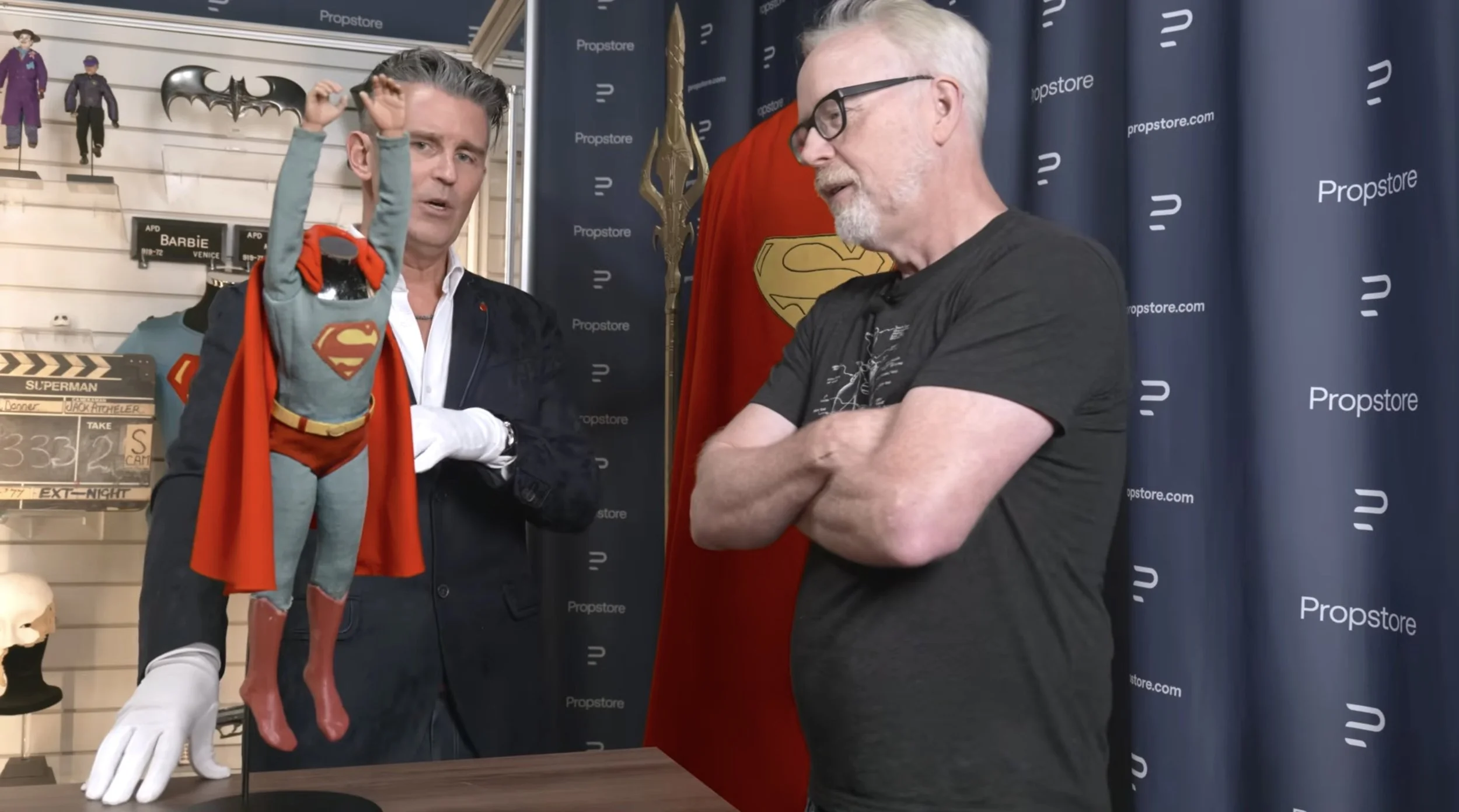
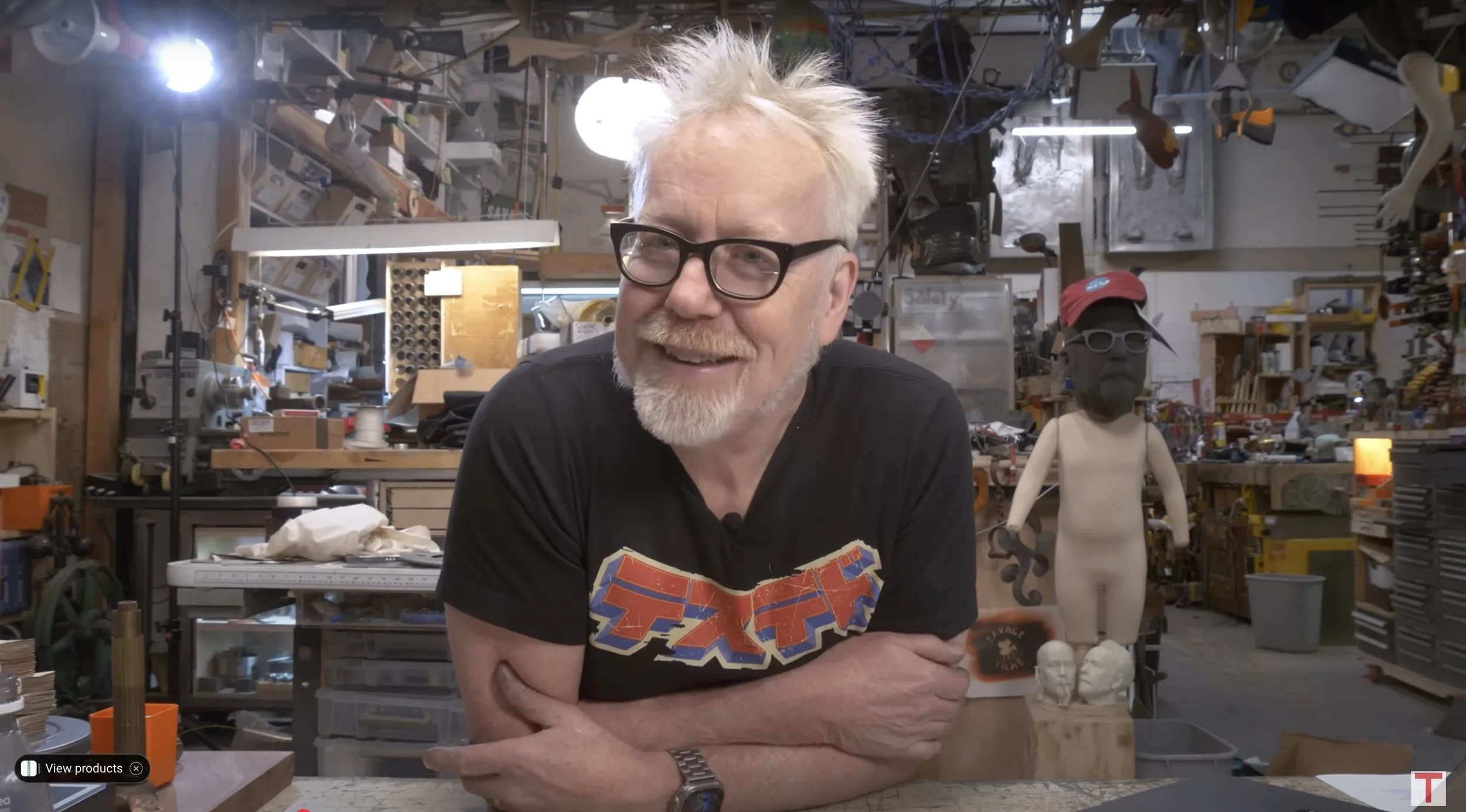
Adam Savage is an American special effects designer, television host, and educator best known for co-hosting the long-running Discovery Channel series MythBusters. Beyond television, he is a central figure in the global "maker" movement, a prolific YouTuber through Adam Savage’s Tested, and an influential advocate for STEM education and creative curiosity.
Early Foundations: From New York Roots to Industrial Light & Magic
Adam Savage’s career is rooted in a childhood defined by artistic immersion and technical experimentation. Born in New York City and raised in Westchester County, Savage was the son of Whitney Lee Savage, a painter and filmmaker known for his work on Sesame Street. This environment fostered an early appreciation for the intersection of art and mechanics. Before finding fame on television, Savage spent years honing his craft in the grueling and highly detailed world of professional model making and special effects.
By the early 1990s, Savage had moved to San Francisco, where he became a fixture in the local theater scene as a prop master and set designer. However, his career reached a significant technical milestone when he joined Industrial Light & Magic (ILM), the legendary visual effects company founded by George Lucas. At ILM, Savage contributed to some of the most iconic films of the era, including Star Wars: Episode I – The Phantom Menace, Star Wars: Episode II – Attack of the Clones, and The Matrix Reloaded.
His work at ILM involved high-stakes practical effects, where he built intricate models and miniatures that needed to withstand the rigors of filming while appearing flawlessly realistic on screen. This period was crucial for Savage, as it forced him to master a wide array of materials—from resin and fiberglass to precision-machined metals—and to solve complex engineering problems under tight production deadlines. This foundation in practical problem-solving would eventually become his trademark style on MythBusters.
The MythBusters Era: Redefining Science Communication
In 2003, Savage teamed up with Jamie Hyneman, a fellow special effects expert and owner of M5 Industries, to host MythBusters. The show’s premise was simple yet revolutionary: use the scientific method to test the validity of urban legends, movie tropes, and historical myths. Over its 14-season run, the show became a cultural phenomenon, significantly impacting how science was presented to the public.
The Partnership with Jamie Hyneman
While Savage and Hyneman often displayed a "checked-and-balanced" dynamic on screen, their relationship was rooted in professional respect rather than personal friendship. Savage’s high-energy, inquisitive nature provided a perfect foil to Hyneman’s stoic, pragmatic approach. This tension was not just for entertainment; it represented two different ways of approaching engineering. Savage often favored rapid prototyping and aesthetic finish, while Hyneman focused on structural integrity and raw efficiency.
Impact on STEM and Education
MythBusters is credited with inspiring a generation of students to pursue careers in Science, Technology, Engineering, and Mathematics (STEM). Savage’s willingness to fail on camera was perhaps his most significant contribution to science communication. He famously noted that "failure is always an option," framing it not as a setback, but as a crucial data point in the experimental process. By 2026, the show's legacy remains a cornerstone of educational television, proving that complex physics and chemistry can be accessible when paired with large-scale builds and spectacular (if sometimes explosive) results.
Technical Expertise and Prop-Making Philosophy
Adam Savage is more than a television personality; he is a master craftsman with a deep specialization in several distinct technical fields. His work often blurs the line between functional engineering and fine art.
- Vacuum Forming and Casting: Savage is a proponent of utilizing vacuum forming for rapid shell creation in prop making. He has documented extensive builds involving high-impact polystyrene (HIPS) and specialized resins to replicate armor and equipment.
- Machining and Fabrication: His workshop, known as "The Cave," is equipped with industrial-grade lathes and milling machines. Savage advocates for manual machining skills, emphasizing the tactile feedback and precision that comes from "feeling" the material.
- Cosplay as Engineering: Savage has elevated cosplay to an engineering discipline. His reconstructions of the Mercury space suit and the "No-Face" costume from Spirited Away are studies in material science, requiring him to source period-accurate hardware or fabricate custom solutions for weight distribution and ventilation.
- Weathering and Finishing: A hallmark of Savage’s work is "weathering"—the process of making a new object look authentically aged. This involves complex layering of paints, pigments, and physical abrasions to tell a visual story of an object’s history.
Adam Savage’s Tested: The Digital Evolution
Following the conclusion of the original MythBusters run, Savage shifted his primary focus to Adam Savage’s Tested. Originally a tech-centric site founded by Will Smith and Norman Chan, Savage joined the team and eventually took an ownership stake, transforming it into a premier destination for makers and enthusiasts.
In 2026, Tested continues to serve as a deep-dive repository for craft and curiosity. The channel’s "One Day Builds" have become a staple for DIY enthusiasts, offering a transparent look at the creative process—warts and all. Unlike traditional television, these videos are often unedited for length, allowing viewers to see the moments where a measurement goes wrong or a material fails. This transparency has built an exceptionally loyal community.
Savage also uses Tested to interview other experts in the field, from NASA engineers to Hollywood costume designers. This collaborative spirit has made Tested an essential hub for cross-disciplinary learning, where the techniques of a leatherworker might be applied to a high-tech electronics project.
| Career Milestone | Year | Primary Role/Impact |
|---|---|---|
| Joined Industrial Light & Magic | Late 1990s | Model making for Star Wars and The Matrix. |
| Premiere of MythBusters | 2003 | Co-host; popularized the scientific method via television. |
| Launch of Every Tool's a Hammer | 2019 | Published author; shared a memoir/guide on creativity. |
| Acquisition of Tested.com | 2012–Present | Lead personality; shifted maker culture to digital platforms. |
| Savage Industries Launch | 2017–Present | Commercial venture producing high-end maker gear and bags. |
| Senior Maker Statesman | 2026 | Ongoing mentorship, public speaking, and workshop education. |
Savage Industries and Product Design
Savage’s obsession with the "perfect tool" led to the creation of Savage Industries, his commercial brand. Rather than mass-marketing generic goods, Savage focuses on highly specific, over-engineered products designed for longevity and utility.
One of his most successful ventures has been the "EDC" (Everyday Carry) bags, created in collaboration with Mafia Bags. These bags are made from recycled sailcloth and are designed based on Savage’s own requirements for carrying tools and gear in the field. The design philosophy emphasizes visibility (using bright colors for interiors so items don't get lost) and accessibility.
His approach to product design is deeply personal. He often iterates on a design for years in his own shop before making it available to the public. In 2026, Savage Industries has expanded its catalog to include specialized workshop organization systems and precision measurement tools, all reflecting his mantra that "the right tool for the job is the one you actually use."
Authorship and Creative Philosophy
In 2019, Savage published Every Tool’s a Hammer: Life Is What You Make It. The book serves as part memoir, part instructional guide, and part philosophical manifesto. In it, he explores the concept of "obsession" as a positive force for creativity.
Savage argues that making is a fundamental human need. He breaks down his process into actionable advice, such as the importance of making lists, the utility of "first-order retrievability" (storing tools so you don't have to move one to get to another), and the necessity of sharing one's work. By 2026, this book has become a "bible" for the maker community, often cited by educators as a primary resource for fostering creative confidence in students.
He also frequently speaks on the importance of "open-source" making. Savage rarely keeps his techniques a secret; instead, he provides detailed breakdowns of his builds to encourage others to iterate on his designs. This radical transparency has helped de-mystify the "expert" status, making high-level fabrication feel attainable to anyone with a workbench and a set of calipers.
Frequently Asked Questions
What is Adam Savage's net worth in 2026?
While exact figures for private individuals vary, Adam Savage’s net worth is estimated to be in the range of $8 million to $12 million. This wealth is derived from his decade-plus tenure on MythBusters, his successful YouTube enterprise Tested, book royalties, and his commercial venture, Savage Industries. He continues to reinvest a significant portion of his earnings into his workshop and experimental projects.
Are Adam Savage and Jamie Hyneman still working together?
As of 2026, Adam Savage and Jamie Hyneman do not have any active professional collaborations. While they maintain a high level of mutual respect for what they achieved on MythBusters, they have both stated publicly that they have very different personalities and preferred working styles. Jamie Hyneman has largely stepped away from the public eye to focus on private engineering projects and research at M5 Industries.
What are the most common tools Adam Savage recommends for beginners?
Savage frequently suggests starting with a high-quality set of digital calipers, a reliable scalpel (such as a Swann-Morton), and a variety of adhesives (specifically cyanoacrylate with an accelerant). He emphasizes that the most important "tool" is a workspace where you are allowed to make a mess and fail, as the environment dictates the workflow more than any single piece of hardware.
How can I visit Adam Savage's workshop (The Cave)?
"The Cave" is Adam Savage's private workshop and is not open to the general public for tours. However, Savage provides an unprecedented level of access to the space through his "Cave Tours" and "One Day Build" videos on the Tested YouTube channel. These videos offer a 360-degree look at his organization systems, tool layout, and ongoing projects.
Does Adam Savage still do special effects for movies?
While Savage occasionally consults on film projects or builds specific props for friends in the industry, his primary focus has shifted away from commercial film production. He now focuses on education, his own artistic builds, and documented fabrications for Tested. He remains a vocal advocate for the preservation of practical effects in an era dominated by CGI.
Engaging with the Maker Community: Next Actions
For those inspired by Adam Savage’s career and philosophy, the best next step is to move from passive consumption to active creation. Savage himself often suggests that the barrier to entry for making is lower than most people realize.
- Start Small: Begin with a "One Day Build"—a project that can be completed in a single session to build momentum.
- Document Your Process: Following Savage’s lead, keep a shop journal or film your builds. Documenting the mistakes is as important as documenting the successes.
- Join a Local Makerspace: If you lack the tools mentioned in Savage’s profile, look for community makerspaces which provide access to 3D printers, laser cutters, and wood shops.
- Follow Official Channels: Stay updated with his latest techniques and philosophical insights through Adam Savage's Tested and the Savage Industries shop.
By embracing the "maker mindset" of iterative improvement and fearless experimentation, individuals can carry forward the legacy that Adam Savage has built over his forty-year career.