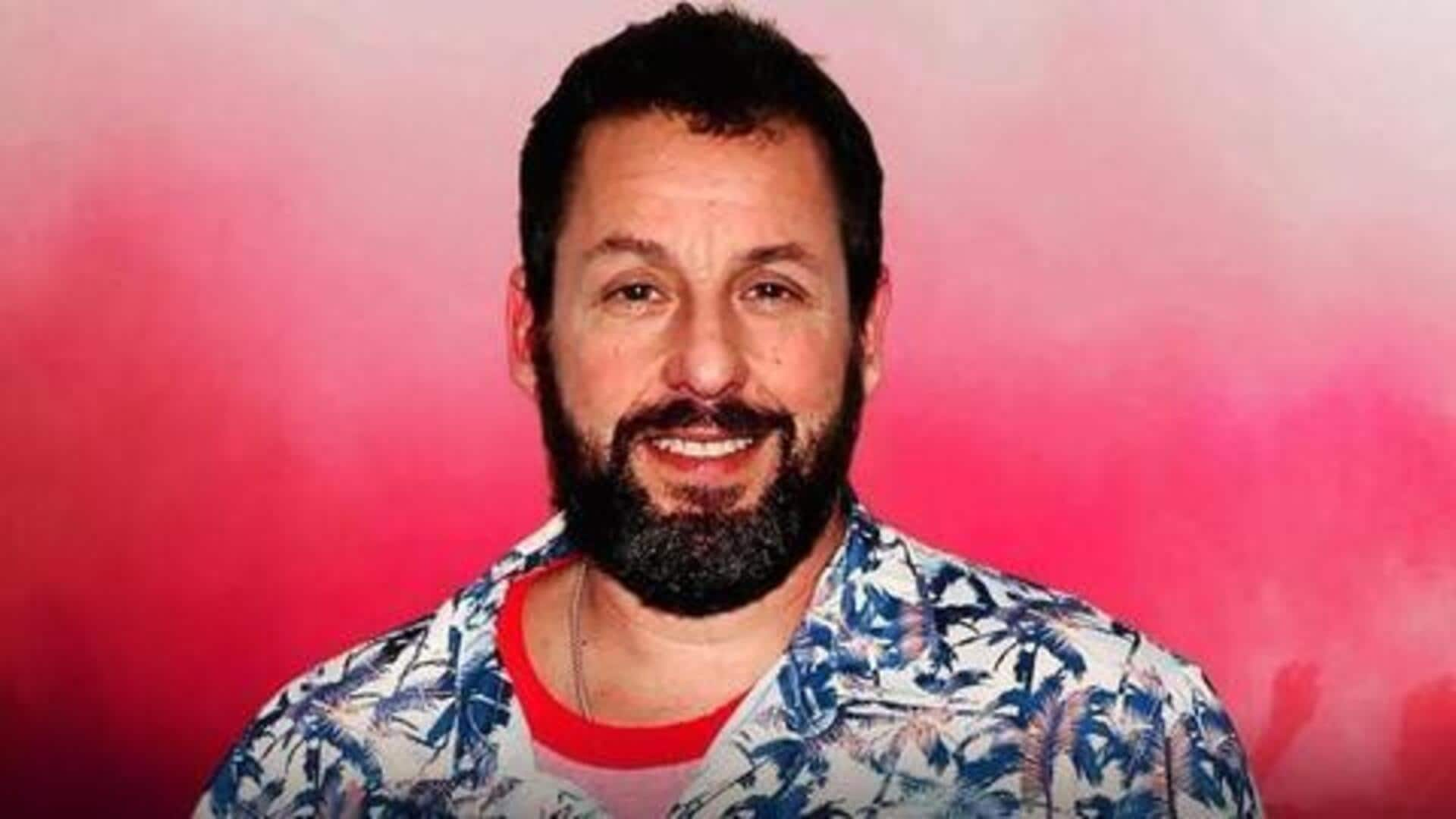
As of 2026, Adam Sandler remains one of the highest-paid entities in the global entertainment industry, with annual earnings consistently ranging between $40 million and $70 million. His financial empire is built on a massive, multi-year production partnership with Netflix, estimated to be worth over $250 million, supplemented by his role as the head of Happy Madison Productions and a diverse portfolio of luxury real estate.
The Evolution of the Sandler Economy
To understand how Adam Sandler commands such significant capital in 2026, one must look at the transition from the traditional theatrical model to the streaming era. Throughout the 1990s and early 2000s, Sandler was a member of the elite "$20 Million Club"—a group of actors who could demand a $20 million flat fee per film against a percentage of the box office gross. His films like The Waterboy, Big Daddy, and Grown Ups were consistent commercial juggernauts, grossing billions of dollars worldwide.
However, the "Sandler Economy" fundamentally changed in 2014. While traditional studios began to shy away from mid-budget comedies in favor of superhero franchises, Netflix recognized a data-driven reality: Adam Sandler's fans are incredibly loyal and consume his content repeatedly. This led to an unprecedented deal that shifted his primary income source from the box office to guaranteed streaming payouts. This move essentially "de-risked" his career, ensuring that regardless of critical reception, his earnings remained at the top tier of Hollywood performers.
The Netflix Partnership: A $250 Million Anchor
The cornerstone of Sandler's wealth in 2026 is his long-standing relationship with Netflix. What began as a four-movie deal in 2014 has evolved into a series of renewals that have fundamentally redefined celebrity compensation. In 2020, Netflix extended the deal for an additional four films, with industry analysts estimating the value of this specific extension at over $250 million.
This partnership is not merely an acting contract; it is a comprehensive production agreement. Netflix pays for the production costs of the films, provides a substantial producer fee to Sandler’s company, Happy Madison, and pays Sandler an upfront salary that accounts for the "backend" profits he would have otherwise earned in a theatrical release. By 2026, it is estimated that Netflix users have spent over 2 billion hours watching Sandler’s content, justifying these massive payouts through subscriber retention and engagement metrics.
Revenue Breakdown per Project
Under his current structure, Sandler's per-film compensation is often broken down into three distinct categories:
- Acting Fee: Typically $20 million to $25 million per film.
- Producer Fee: Through Happy Madison, he earns several million dollars for overseeing production.
- Writing Credits: Sandler often co-writes his projects, adding additional guild-scale and negotiated fees.
Happy Madison Productions: More Than Just a Name
While Sandler is the face of the brand, Happy Madison Productions is the engine of his financial longevity. Founded in 1999, the company does not only produce Sandler’s starring vehicles. It has also produced films for his frequent collaborators, such as David Spade, Rob Schneider, and Nick Swardson.
Happy Madison functions as a full-service production house. By owning the production entity, Sandler retains control over the budget and casting. This allows him to cast his friends and regular ensemble, creating a "Sandlerverse" that keeps production costs predictable while maintaining a consistent aesthetic that his audience expects. Financially, this means Sandler isn't just an employee on his films; he is the owner of the shop, allowing him to capture a larger percentage of the overall budget as profit.
Residuals and the Longevity of Comedy
A significant portion of Sandler's annual income in 2026 comes from "mailbox money"—residuals from his extensive library of hits. Unlike dramas or niche independent films, broad comedies like Happy Gilmore, The Wedding Singer, and Hotel Transylvania have immense "long-tail" value.
These films are frequently licensed to cable networks, international broadcasters, and other streaming platforms (where Netflix does not have exclusive rights). Every time 50 First Dates airs on a cable network or is streamed on a secondary platform, a residual check is generated. For an actor with over 50 major credits, these smaller payments aggregate into several million dollars of passive income annually.
Comparative Earnings and Market Standing
To put Sandler’s 2026 earnings into perspective, it is useful to compare him to other Hollywood heavyweights. While actors like Tom Cruise may earn more on a single "hit" due to massive backend percentages on theatrical blockbusters, Sandler’s income is characterized by its stability and frequency.
| Earner | Primary Income Source | Estimated Annual (2026) | Business Model |
|---|---|---|---|
| Adam Sandler | Netflix/Happy Madison | $40M - $70M | Volume-based Streaming |
| Tom Cruise | Theatrical Backend | $50M - $100M+ | High-risk/High-reward |
| Dwayne Johnson | Seven Bucks Prod/Brands | $60M - $90M | Multi-platform/Endorsements |
| Margot Robbie | LuckyChap/Acting | $30M - $50M | Producer-centric |
| Ryan Reynolds | Maximum Effort/Acting | $40M - $80M | Marketing/Ad-tech integration |
Real Estate and Diversified Assets
Sandler’s earnings have been meticulously reinvested into a high-value real estate portfolio. His primary residence is a $12 million mansion in the Pacific Palisades neighborhood of Los Angeles, formerly owned by Kurt Russell and Goldie Hawn. However, this is only a fraction of his holdings.
He owns a beachfront property in Malibu, valued at approximately $6 million, and a variety of other properties in areas such as Boca Raton, Florida, and Long Island, New York. These assets provide a hedge against inflation and represent a significant portion of his estimated $500 million net worth. By 2026, his real estate portfolio alone is estimated to be worth over $50 million, reflecting steady appreciation in the luxury market.
The "Sandler Strategy" for Financial Longevity
What distinguishes Sandler from many of his peers is his refusal to engage in high-risk financial ventures. Unlike many celebrities who lose portions of their wealth in failed restaurants or speculative tech startups, Sandler’s strategy is built on two pillars: consistency and control.
By staying within the comedy genre, he targets a demographic that is resistant to economic downturns—people always want to laugh. By maintaining a production company, he avoids being at the mercy of studio casting directors. This level of vertical integration is rare in Hollywood and ensures that as long as he wants to work, he has a platform and a paycheck waiting.
Common Misconceptions About His Wealth
Many believe that Sandler’s wealth is tied solely to the quality of his films’ reviews. In reality, there is a disconnect between critical reception and financial performance. Even his lowest-rated films on Rotten Tomatoes often trend in the "Top 10" on Netflix for weeks.
In the streaming economy of 2026, "completion rates"—how many people watch a movie from beginning to end—are more valuable than a four-star review. Sandler’s movies have some of the highest completion rates on Netflix, which gives him immense leverage during contract negotiations. He isn't being paid for artistic prestige; he is being paid for his ability to hold an audience's attention in a crowded digital landscape.
FAQ: Understanding Adam Sandler's Financials
Is Adam Sandler the richest actor in the world?
While he is exceptionally wealthy, he is generally not the richest. As of 2026, he sits behind titans like Jerry Seinfeld, Tyler Perry, and Dwayne Johnson. However, he is consistently among the top five highest-paid actors annually due to his guaranteed streaming income.
How much does he make per Netflix movie?
On average, Sandler earns approximately $25 million per film when factoring in his acting fee and producer credits. Some high-budget projects or animated features like Leo may involve different structures, but $25 million is the standard baseline for his live-action comedies.
Does he still get money from his old movies like Waterboy?
Yes. Through the Screen Actors Guild (SAG) residual structures, he receives payments whenever his older films are broadcast on television, sold on physical media, or licensed to streaming services. Because his films are "perennial favorites," these residuals are substantial.
How does Happy Madison Productions affect his income?
Happy Madison allows Sandler to act as an employer rather than an employee. He earns a production fee from the studio (Netflix or Sony) and has a say in how the budget is spent. If the production comes in under budget, the "savings" often translate into higher margins for the company.
Why did he leave movie theaters for Netflix?
The move was primarily a business decision based on changing consumer habits. Netflix offered Sandler total creative freedom and guaranteed upfront payment, whereas theatrical releases involve high marketing costs and the risk of a "flop" if the opening weekend underperforms.
Assessing Future Earning Potential
Looking forward from 2026, Adam Sandler’s earning potential shows no signs of waning. As long as streaming platforms prioritize subscriber retention over individual ticket sales, Sandler’s brand of accessible, "rewatchable" comedy will remain a blue-chip asset. Investors and industry analysts should look toward his potential expansion into more dramatic roles—similar to his work in Uncut Gems and Spaceman—which can open doors to prestigious awards and different types of backend deals, though his comedy "factory" will likely remain his primary source of wealth.
For those tracking the intersection of entertainment and high-level finance, Sandler serves as the ultimate case study in brand loyalty and the power of owning the means of production. His career trajectory suggests that the most profitable path in modern Hollywood is not necessarily to be the biggest star, but to be the most reliable one.