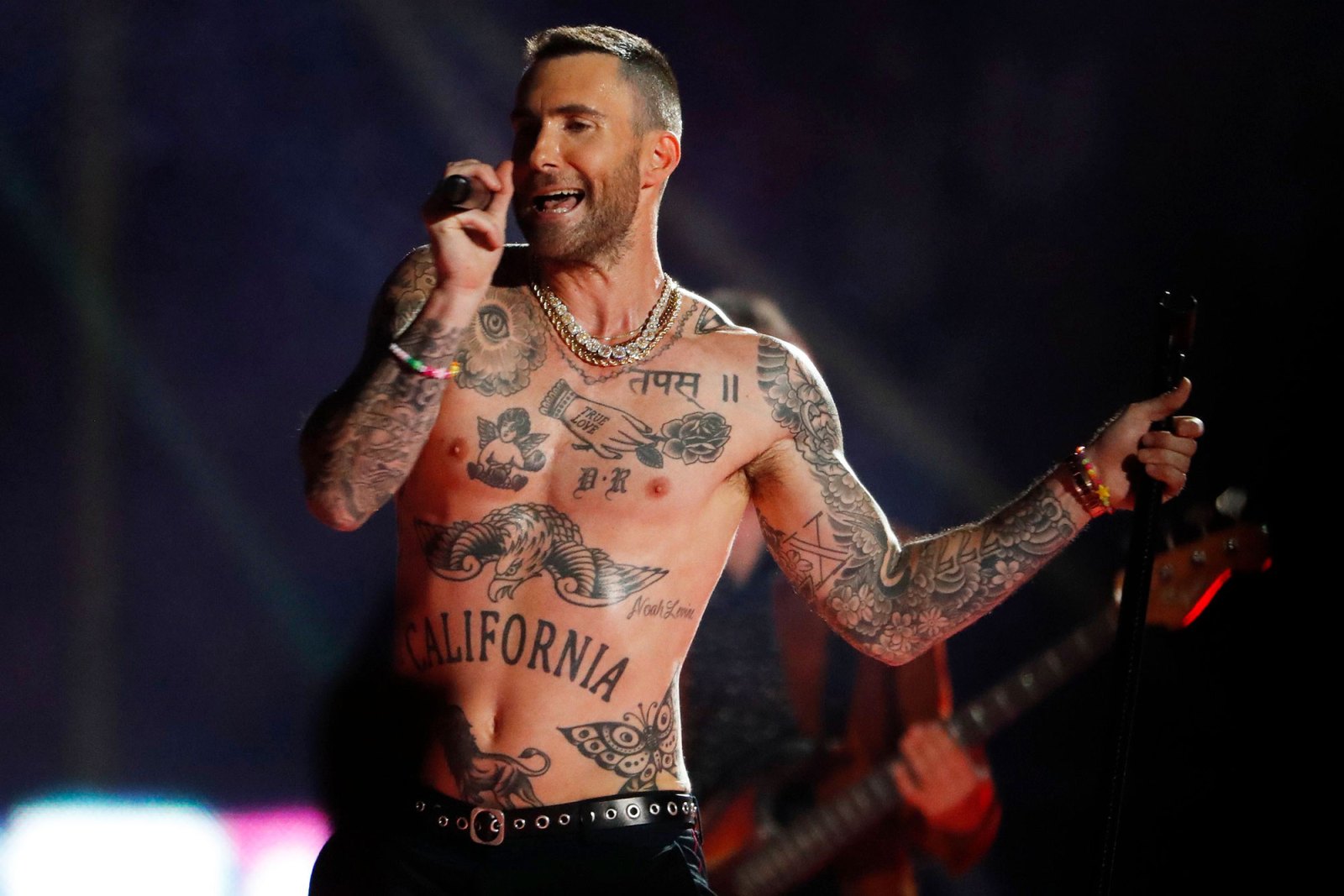
Adam Levine’s neck tattoo—specifically the intricate butterfly caught in a spider web—is one of the most recognizable pieces of body art in contemporary pop culture. Debuted in late 2021, the artwork occupies a prominent position on the left side of his neck. It represents a significant evolution in his collection of tattoos, moving away from traditional script and religious imagery toward larger, more symbolic, and stylized illustrative work. As of 2026, the tattoo remains a permanent fixture of the Maroon 5 frontman’s aesthetic, serving as a focal point in his public appearances and professional photography.
The Artistic Design and Symbolism
The design features a moth or butterfly trapped within a detailed spider web, rendered in classic black-and-grey illustrative style. Unlike the smaller, minimalist tattoos that defined Levine’s early career, this piece utilizes negative space and precise linework to create depth.
In traditional symbolic art, the juxtaposition of a butterfly and a spider web is often interpreted as a commentary on the fragility of life. The butterfly—a universal symbol of transformation, rebirth, and ephemeral beauty—is contrasted against the spider web, which typically represents destiny, the traps of fame, or the cyclical nature of time. For Levine, the tattoo is largely personal. While he has not explicitly defined every element of the piece, he has noted in various public forums that his tattoos act as a visual diary of his life’s progression. The placement on the neck is intentional, signifying that the wearer is comfortable with a permanent transformation of his own public identity.
Evolution of Adam Levine’s Body Art
Levine’s transition from smaller, scattered tattoos to larger, cohesive "sleeves" and neck pieces has been a decade-long process. His early tattoos, which included a dove, a cherry blossom, and a Sanskrit tattoo, were characteristic of the mid-2000s rock aesthetic. By the early 2020s, he began incorporating more complex, dark-themed imagery.
The neck piece was executed by celebrity tattoo artist Nathan Kostechko, who has collaborated with Levine on several large-scale projects. The shift toward neck and facial tattoos is often categorized as a "commitment to the craft" in the industry, as these areas are physically painful to tattoo and carry higher social visibility. For a performer, this represents a departure from the traditional "coverable" tattoo rules often seen in earlier eras of celebrity branding, signaling a shift toward personal expression over professional image preservation.
Comparison of Contemporary Celebrity Tattoo Trends
The popularity of high-visibility neck tattoos has shifted over the last five years, moving from purely counter-culture aesthetic to a mainstream fashion choice. The following table contrasts the traditional approach to celebrity ink with the modern style represented by Levine’s current neck aesthetic.
| Feature | Traditional Celebrity Ink (Pre-2015) | Modern Aesthetic (Post-2020) |
|---|---|---|
| Placement | Usually chest, arms, or back | Neck, hands, and face |
| Design Language | Text, dates, and names | Illustrative, surrealism, and fine-line |
| Visibility | Often concealed by clothing | Intentionally exposed |
| Style Philosophy | Sentimental/Commemorative | Stylistic/Artistic expression |
Current Status and Maintenance (2026)
As of 2026, the neck tattoo remains fully visible and integrated into Levine’s overall look. Tattoo maintenance for high-exposure areas like the neck requires specific attention, especially for someone in the spotlight. Because the neck is frequently exposed to UV rays, the longevity of intricate linework like that found in a spider web design depends heavily on consistent skin care.
From a technical perspective, the piece has held its clarity well. The contrast between the dark ink of the web and the softer shading of the butterfly wings prevents the tattoo from becoming a "blur," which is a common failure point for neck tattoos over time. There are no indications of removal or modification; the piece is treated as a permanent aspect of his visual brand.
Understanding the Technical Challenges of Neck Tattoos
Tattooing the neck presents unique challenges that differentiate it from other areas of the body. The skin on the neck is thinner and more mobile than the skin on the arms or legs, making it difficult for an artist to maintain consistent line weight.
- Pain Threshold: The neck is considered one of the most sensitive areas for tattooing due to the lack of significant fat padding and the proximity to the cervical spine and throat.
- Healing Dynamics: Because the neck moves constantly (turning, bending), the healing process can be slower. Excessive movement can lead to "ink spread" or scarring if the scabbing process is disrupted.
- Artist Expertise: Only experienced artists are typically recommended for neck pieces, as the risk of "blowouts"—where ink spreads under the skin—is significantly higher in this region.
Frequently Asked Questions
Did Adam Levine get the butterfly tattoo removed?
No. As of 2026, the butterfly and spider web tattoo remains on the left side of Adam Levine’s neck. There has been no official statement, photographic evidence, or public indication suggesting that he has undergone removal or cover-up procedures for this specific design.
What is the specific artistic style of the butterfly tattoo?
The tattoo is categorized as fine-line, black-and-grey illustrative work. It utilizes a high-contrast approach to differentiate between the delicate features of the butterfly and the geometric, sharp lines of the spider web, which provides a three-dimensional effect against the contours of his neck.
Does the tattoo have a religious or dark meaning?
While some critics or observers interpret the web and insect motif through a darker, gothic lens, the artist has historically framed his tattoo collection as a reflection of his personal history and aesthetic evolution. There is no evidence confirming that the piece is intended to convey religious, occult, or negative meanings.
How does the tattoo stay looking sharp after several years?
Tattoos in high-visibility areas like the neck require strict adherence to sun protection. Constant use of high-SPF sunscreen and proper hydration of the skin are the standard requirements to prevent the ink from fading or the linework from blurring over the years, as seen in the clear definition of Levine’s piece today.
Can anyone get a tattoo in this exact style?
Yes, the style is a standard genre in contemporary tattooing. However, prospective clients should consult with artists who specialize in illustrative, fine-line black-and-grey work. Due to the high sensitivity of the neck, it is standard practice for professional studios to require multiple consultations to ensure the client understands the permanence and the specific healing requirements of the placement.
Next Steps for Enthusiasts
If you are considering a tattoo similar to the style adopted by Adam Levine, the most important step is selecting an artist who has a portfolio demonstrating "clean" neck work. You should prioritize an artist who understands how to map a design to the specific topography of your neck, as the anatomy of the neck changes significantly when you speak or move your head. Always schedule a consultation to discuss skin sensitivity and the long-term commitment required for high-visibility body art.