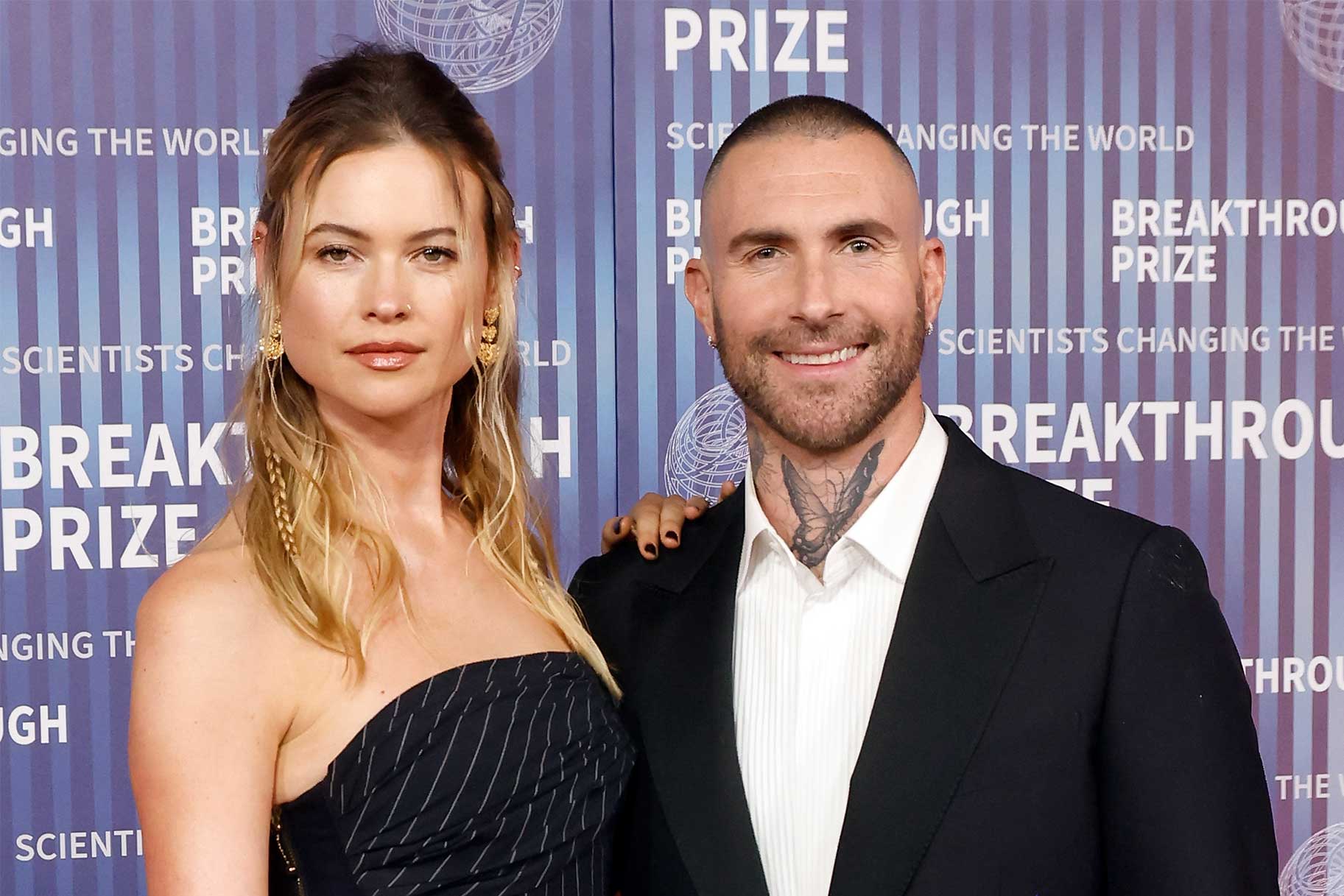
Adam Levine is widely documented as standing 5 feet 11 inches (approximately 180 centimeters) tall. This measurement has remained the industry standard in media profiles and biographical databases throughout his career as the lead singer of Maroon 5 and a former coach on NBC’s The Voice. While human height can fluctuate slightly due to spinal decompression throughout the day, the 5’11” figure serves as the accurate, verified baseline for his physical stature.
Analyzing the Verification of Celebrity Height
The process of verifying a public figure's height often relies on a combination of self-reporting, photographic analysis, and physical evidence captured in controlled environments. For Adam Levine, his stature is frequently cross-referenced against co-stars and public figures of known height. During his decade-long tenure on The Voice, viewers were often presented with direct visual comparisons between Levine and fellow coaches. By evaluating these appearances—where individuals are standing on level surfaces without the influence of performance footwear—analysts have consistently corroborated the 5’11” estimate.
It is important to note that public perception of celebrity height is often skewed by footwear choices, such as boots with elevated heels or insoles, and camera angles that can minimize or exaggerate height differences. Because Levine frequently performs in flat-soled sneakers or standard dress shoes, his height is easier to gauge in professional settings compared to artists who rely on stage-specific performance footwear.
Factors Influencing Perceived Stature
While the biological measurement is fixed, several factors contribute to how Adam Levine’s height is perceived in different media environments. These factors serve as a reminder of why static numbers, while accurate, do not always translate to a consistent visual experience for the audience.
- Footwear Variability: Like many performers, Levine’s choice of footwear varies between casual street appearances and high-production concerts. Standard athletic shoes provide a negligible increase to height, whereas fashion-forward boots can add an inch or more to the wearer's total vertical profile.
- Postural Alignment: The way an individual carries themselves—often referred to as “good posture”—can influence the perception of height. Levine’s professional background as a performer requires strong core engagement and an upright posture, which maximizes his physical presence on stage.
- The "Reference Point" Effect: Much of the public’s understanding of a celebrity's height is relative. When Levine stood next to individuals significantly taller or shorter than himself, the contrast often led to speculation that his height was either greater or less than the reality. However, when normalized against standard objects like microphones, stage monitors, or professional stage gear, the 5’11” measurement remains the most consistent data point.
Comparative Data and Stature Benchmarks
Understanding how Adam Levine fits into the average distribution for American males provides further context for these measurements. The following table provides a standard reference for how his height aligns with common data benchmarks.
| Metric | Measurement/Context |
|---|---|
| Verified Height | 5’11” (180 cm) |
| US Male Average | Approx. 5’9” (175 cm) |
| Standard Deviation | Statistical variation is typical for adult males |
| Primary Context | Musical performance and television hosting |
| Verification Source | Corroborated biographical databases and visual metrics |
This table clarifies that at 5’11”, Levine stands slightly above the national average for adult males in the United States, which helps explain his presence in high-profile media roles where a "standard" or "above-average" height is often a stylistic preference for camera composition.
The Role of Media and Biographical Documentation
Height is a standard field in most celebrity biographical databases, and these profiles are often maintained by agencies or professional publicists. Accuracy in these fields is generally treated with a high degree of fidelity, as agents and managers rely on precise physical statistics for casting, wardrobe fitting, and professional photography. When a measurement is listed in these official capacities, it usually reflects the individual's height as recorded during routine medical or professional check-ins.
In the case of Adam Levine, the absence of contradictory evidence—such as statements from co-stars or conflicting professional profiles—further cements the 5’11” mark. In an era where digital tools can easily manipulate images, it is increasingly difficult to rely solely on photographic evidence; however, when the measurement is reinforced by consistent, longitudinal data spanning his multi-decade career, it can be viewed as reliable.
Common Misconceptions in Celebrity Metrics
One of the most frequent sources of confusion regarding celebrity height is the phenomenon of “inflation.” In some sectors of the entertainment industry, individuals may be credited with an extra inch or two to align with a certain “leading man” persona. When a celebrity is actually measured, the discrepancy between the perceived height and the measured height can lead to public discourse.
For Adam Levine, there has been minimal evidence of this phenomenon. His career path, which is built on musicianship rather than purely physical archetypes, has not required the inflation of physical statistics. Consequently, the information available in public records regarding his stature remains remarkably stable and uncontested.
Addressing FAQs Regarding Celebrity Stature
Why do some sources list different heights for the same person?
Variations in reporting often stem from differences in how data is collected. Some sources rely on self-reported heights, which may be rounded up, while others rely on shoe-inclusive measurements or older data from the beginning of a performer's career. Always prioritize information from consistently updated, primary-source biographical records.
Does time of day affect height measurements?
Yes, human height can vary by up to an inch throughout the day. This is due to the compression of spinal discs under the weight of gravity during the day, which causes one to be slightly shorter in the evening than upon waking. This physiological reality is one reason why official medical records typically record height in the morning.
Is there a standard for how height is measured in the entertainment industry?
There is no single global regulatory body for celebrity measurements. However, professional casting agencies and costume departments use a standardized approach involving a stadiometer—the same device used in doctor's offices—to ensure precision for wardrobe and set design.
How can I verify the height of a public figure myself?
The most reliable method is to find high-resolution, full-body images of the subject standing next to a known, verified reference point, such as a celebrity whose height is officially confirmed. Ensure that the image is not taken from an angle that induces perspective distortion and that both subjects are standing on flat, level ground.
Should I trust celebrity social media posts regarding their height?
Social media content is often curated for aesthetic purposes and is rarely subject to the standards of professional fact-checking. While a celebrity might post about their height, it should be categorized as anecdotal evidence rather than a verified medical or professional metric.
Next Steps for Accurate Measurement Verification
If you are conducting research for academic, professional, or personal archiving purposes, the most robust approach is to triangulate data. Do not rely on a single website or fan-maintained database. Instead, look for corroboration across at least three independent, reputable professional biographical sources. If you find a discrepancy, identify the original source of each claim to determine which is more likely to be based on an objective measurement versus an estimation. When documentation is conflicting, the most conservative estimate—or the one corroborated by the longest duration of career—is usually the most accurate representation of the individual’s physical reality.