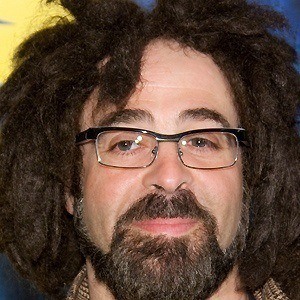
Adam Duritz is an American citizen, born in Baltimore, Maryland, and raised across several major U.S. cities. His ethnicity is Jewish, with his family heritage rooted in Eastern European Ashkenazi ancestry. As the longtime frontman of Counting Crows, his background—ranging from his nomadic childhood to his cultural identity—has significantly informed his introspective and narrative-driven songwriting style.
The National Identity of an American Rocker
To understand Adam Duritz as an "American rocker," one must first examine the geographic tapestry of his upbringing. Born on August 1, 1964, in Baltimore, Maryland, Duritz’s early life was defined by frequent relocation, a common experience for children of professionals in mid-century America. His father, Gilbert Duritz, was a prominent endocrinologist, and his mother, Linda, ensured that the family maintained a stable cultural foundation despite moving between drastically different regions of the United States.
Duritz’s journey took him from the East Coast (Baltimore and Boston) to the Southwest (El Paso, Texas) and eventually to the West Coast (Berkeley, California). This "all-American" exposure to various regional cultures allowed him to absorb a wide array of musical and social influences. In interviews, Duritz has often reflected on how being a "perpetual new kid" shaped his observational skills. This outsider perspective is a hallmark of his career, providing the emotional distance necessary to chronicle American life with both precision and pathos.
By the time he reached his late teens, Duritz had settled in the San Francisco Bay Area, an environment that would eventually become the birthplace of Counting Crows. His American identity is not just a matter of birthright but is deeply woven into the landscapes he describes in his lyrics—from the "perfect blue buildings" of his imagination to the literal streets of Berkeley and Los Angeles.
Exploring the Ethnic Background of Adam Duritz
While his nationality is American, Adam Duritz’s ethnic background is explicitly Jewish. His family identifies with the Ashkenazi Jewish tradition, which carries a rich history of intellectualism, storytelling, and a distinct cultural resilience. While Duritz is not known for being overtly religious in a traditional sense, the cultural markers of his Jewish heritage are frequently visible in his world view and his approach to creative expression.
The Jewish experience in America, particularly for the generation born in the 1960s, often involves a balance between assimilation and the preservation of heritage. For Duritz, this manifested in a household that valued education and the arts. His father’s career in medicine and his own pursuit of English literature at the University of California, Davis (and later UC Berkeley) reflect a classic emphasis on academic rigor often found in Jewish-American families.
In the context of his music, the Jewish tradition of "witnessing" or storytelling is palpable. His lyrics often function as a form of midrash—an interpretation or a deep dive into the meaning of personal events. This ethnic background provides a lens through which he views themes of displacement, memory, and the search for home. By 2026, scholars of rock history have increasingly pointed to Duritz as a vital figure in the lineage of Jewish-American songwriters, standing alongside icons like Bob Dylan, Paul Simon, and Leonard Cohen.
Geographic Influence on His Musical Development
The various locations Duritz inhabited during his formative years served as a real-world classroom for his musical education. Each city contributed a different layer to what would become the Counting Crows sound:
- Baltimore and Boston: These cities provided a foundation of traditional East Coast sensibilities and exposure to early rock and folk.
- El Paso, Texas: Living in a border city introduced Duritz to a different set of cultural rhythms and the vast, open-air feeling of the American West, which would later influence the "cinematic" quality of albums like August and Everything After.
- Berkeley, California: This was the most critical location for his professional development. The Bay Area’s eclectic music scene in the late 1980s and early 1990s allowed Duritz to experiment with folk-rock, punk, and soul before finding his voice with Counting Crows.
His time at UC Davis is also noteworthy. It was here that he began playing in bands like The Himalayans. The transition from a student of literature to a practitioner of rock music was seamless because his background had already taught him how to synthesize diverse American experiences into a singular narrative.
Biographical and Professional Overview
To clarify the specific details of Adam Duritz’s background and professional standing as of 2026, the following table provides a snapshot of his identity and career milestones.
| Category | Details |
|---|---|
| Full Name | Adam Fredric Duritz |
| Nationality | American |
| Ethnicity | Jewish (Ashkenazi) |
| Date of Birth | August 1, 1964 |
| Place of Birth | Baltimore, Maryland, USA |
| Primary Occupation | Singer, Songwriter, Producer, Podcaster |
| Key Musical Entities | Counting Crows, The Himalayans |
| Notable Works | August and Everything After, Recovering the Satellites |
| Education | UC Davis, UC Berkeley (English Literature focus) |
The "American Rocker" Archetype in the 1990s
Adam Duritz emerged at a pivotal moment in American music history. By the early 1990s, the "American Rocker" label was undergoing a transformation. The era of hair metal was ending, and the angst-ridden sounds of Seattle Grunge were dominating the airwaves. However, Duritz and Counting Crows offered a different path: a return to the soulful, melodic, and lyrically dense tradition of Van Morrison and R.E.M.
Duritz’s persona—often seen in his signature dreadlocks (until he famously shaved them in 2019) and oversized sweaters—represented a shift toward vulnerability. Unlike the detached irony of some of his contemporaries, Duritz was unapologetically earnest. This earnestness is often attributed to his background in literature and his cultural roots, which prioritize the exploration of the "inner self."
His status as an American rocker is also defined by his commercial success. The band’s debut album, August and Everything After, became the fastest-selling album since Nirvana’s Nevermind, signaling that American audiences were hungry for the kind of "heartland-adjacent" rock that Duritz pioneered. His ability to bridge the gap between alternative rock and mainstream pop-rock cemented his place in the American musical canon.
Mental Health and Personal Identity
A significant part of Adam Duritz’s background that often intertwines with discussions of his nationality and ethnicity is his long-term struggle with mental health. Duritz has been exceptionally vocal about living with Depersonalization Disorder, a condition that causes a person to feel persistently detached from their body or mental processes.
This condition adds a layer of complexity to his identity. When Duritz speaks about his "background," he often refers to it through the lens of someone who sometimes feels like an observer of his own life. This struggle has made his American identity feel, at times, precarious. His lyrics are frequently preoccupied with the concept of "disappearing" or not feeling "real," which contrasts sharply with the solid, grounded nature of his American and Jewish roots.
By being open about his diagnosis, Duritz has become an advocate for mental health awareness within the music industry. As of 2026, his legacy is defined as much by his bravery in discussing his mental state as it is by his multi-platinum records. This transparency has allowed a generation of fans to find their own experiences reflected in his work, transcending simple categories of ethnicity or nationality.
Frequently Asked Questions
What is Adam Duritz’s religious background?
Adam Duritz was raised in a Jewish household. While he has not positioned himself as a religious leader or a frequent practitioner of traditional Judaism in the public eye, he has acknowledged his Jewish identity as a fundamental part of his cultural and family heritage. His father’s side of the family has roots that are common among the Ashkenazi Jewish diaspora in the United States.
Where was Adam Duritz born and raised?
Duritz was born in Baltimore, Maryland. Because of his father's career as an endocrinologist, the family moved frequently during his childhood. He lived in Boston, Massachusetts, and El Paso, Texas, before the family eventually settled in Northern California. He considers the San Francisco Bay Area, specifically Berkeley, to be his primary home during his formative musical years.
Is Adam Duritz still active in music in 2026?
Yes, as of 2026, Adam Duritz remains the active lead singer and primary songwriter for Counting Crows. The band continues to tour globally and release new material. Duritz has also expanded his creative output into podcasting and film production, maintaining a significant presence in the American entertainment landscape.
Does Adam Duritz have siblings?
Yes, Adam Duritz has a sister named Nicole. His family relationships have occasionally surfaced in his songwriting, reflecting the deep personal connections that influence his lyrical themes of home and belonging.
What influenced Adam Duritz's unique vocal style?
His vocal style is a blend of his American rock influences and a deep appreciation for soul and jazz. He has cited artists like Van Morrison, Simon & Garfunkel, and Jackson Browne as major influences. His background in English literature also plays a role, as he approaches singing as a form of storytelling, often utilizing a "conversational" or "confessional" tone that is distinctively his own.
Discovering the Legacy of Counting Crows
For those looking to explore the background of Adam Duritz through his work, the best starting point is the band's foundational discography. Understanding his "American Rocker" status requires listening to the albums that defined the genre in the 1990s and early 2000s.
- Start with August and Everything After (1993): This album introduces the core themes of his life—identity, displacement, and the search for connection. Tracks like "Mr. Jones" and "Round Here" are essential for understanding his narrative style.
- Explore Recovering the Satellites (1996): This record deals with the aftermath of fame and the struggle to maintain a sense of self, providing deep insight into his personal challenges with identity.
- Listen to Butter Miracle, Suite One (2021) and subsequent releases: These later works showcase a matured perspective on his heritage and his place in the American musical hierarchy.
Beyond the music, following his long-running podcast, Underwater Sunshine, offers a direct window into his thoughts on music history, culture, and his own ongoing journey as an artist. Engagement with these works provides a holistic view of a man whose nationality and ethnicity are just the beginning of a much deeper, more complex story.