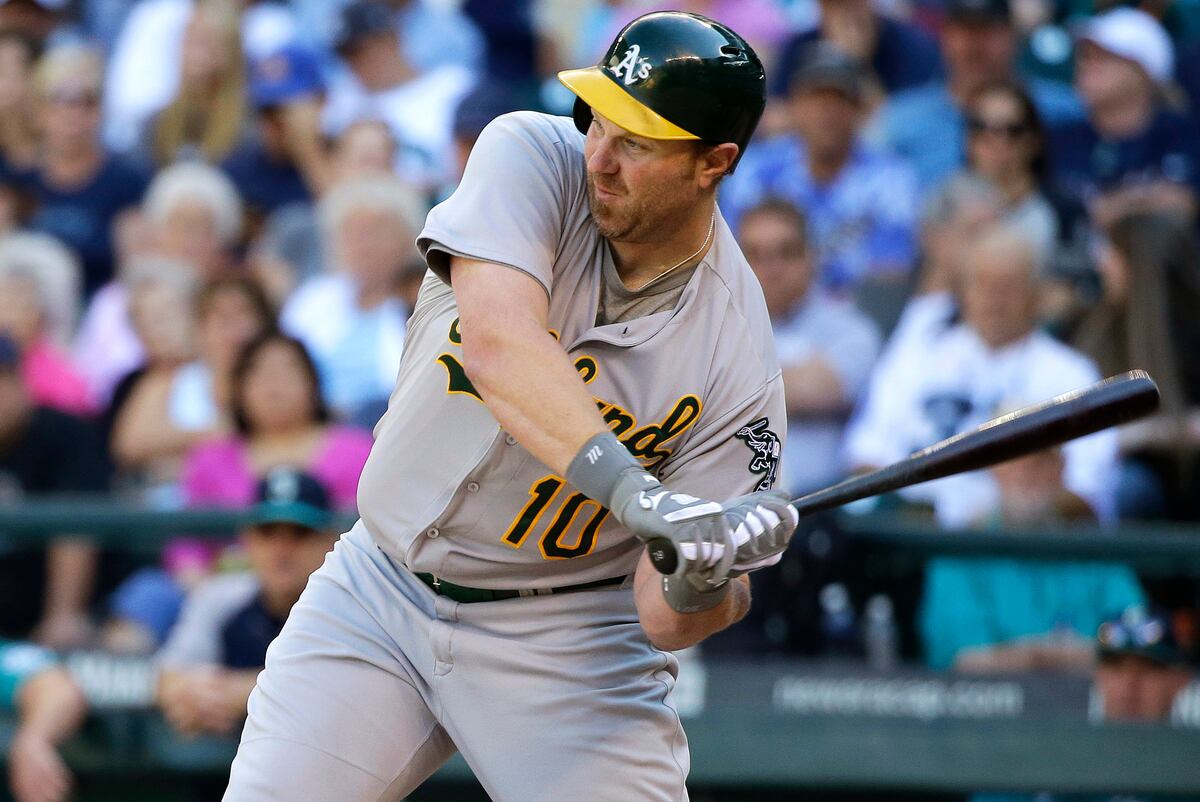
Adam Dunn remains one of the most polarizing and fascinating figures in Major League Baseball history, finishing his 14-season career with 462 home runs and a reputation as the ultimate "Three True Outcomes" hitter. His statistical profile is characterized by elite power, a disciplined eye that yielded 1,317 walks, and a high strikeout frequency that often overshadowed his offensive production during his active years.
The Architect of the Three True Outcomes
To analyze Adam Dunn's career, one must first understand the concept of the "Three True Outcomes" (TTO). This term refers to plate appearances that end in a home run, a walk, or a strikeout—events that do not involve the defense beyond the pitcher and catcher. Dunn did not just participate in this style of play; he essentially mastered it. During his peak, nearly half of his plate appearances resulted in one of these three outcomes.
From a performance analysis standpoint, Dunn was a pioneer. In the early 2000s, traditional baseball evaluators often criticized his high strikeout totals and low batting averages. However, the burgeoning sabermetric movement recognized his immense value. His ability to maintain an On-Base Percentage (OBP) significantly higher than his batting average made him an elite run producer. For example, in 2004, Dunn batted only .266 but posted a massive .388 OBP thanks to 108 walks, paired with 46 home runs. This discrepancy is the hallmark of his statistical legacy.
Dunn’s approach was a calculated trade-off. By looking for specific pitches to drive out of the park and refusing to chase marginal pitches, he accepted high strikeout volumes as a byproduct of his quest for high-value contact. In the context of 2026 baseball, where "launch angle" and "exit velocity" are standard currency, Dunn’s 2001–2014 tenure looks remarkably ahead of its time.
Comprehensive Career Statistical Overview
Adam Dunn’s career is best viewed through his incredible consistency during his years with the Cincinnati Reds, followed by a period of fluctuation with the Washington Nationals and Chicago White Sox. He achieved the rare feat of hitting exactly 40 home runs in four consecutive seasons (2004–2007) and added a fifth season of 40 in 2008.
Peak Performance Metrics (2004–2010)
During this seven-year stretch, Dunn was arguably the most consistent power threat in the National League. He averaged 40 home runs and 105 walks per season. His Adjusted OPS (OPS+), which accounts for park effects and league scoring environments, frequently hovered around 130 to 140, indicating he was 30% to 40% better than the average league hitter.
| Season | Team | Home Runs | Walks (BB) | Strikeouts (SO) | Batting Avg | OBP | OPS |
|---|---|---|---|---|---|---|---|
| 2004 | CIN | 46 | 108 | 195 | .266 | .388 | .957 |
| 2005 | CIN | 40 | 114 | 168 | .247 | .387 | .927 |
| 2006 | CIN | 40 | 112 | 194 | .234 | .365 | .855 |
| 2007 | CIN | 40 | 101 | 165 | .264 | .386 | .940 |
| 2008 | CIN/ARI | 40 | 122 | 164 | .236 | .386 | .898 |
| 2009 | WSH | 38 | 116 | 177 | .267 | .398 | .928 |
| 2010 | WSH | 38 | 77 | 199 | .260 | .356 | .892 |
Performance Analysis: The Efficiency of the Long Ball
Dunn’s value was derived from the "Secondary Average," a metric that accounts for extra-base hits, walks, and stolen bases relative to at-bats. While his batting average was often a point of contention, his secondary average was consistently among the league leaders. He understood that a walk was nearly as valuable as a single, and a home run was the most valuable act in the game.
However, a technical analysis of his career must also address his defensive contributions. Dunn primarily played left field and first base, and advanced defensive metrics like Defensive Runs Saved (DRS) and Ultimate Zone Rating (UZR) were generally unkind to him. His massive frame (6'6", 285 lbs) limited his range, which often offset some of his offensive contributions in Wins Above Replacement (WAR) calculations. For instance, in 2009, despite a stellar offensive year with an OPS of .928, his total WAR was tempered by defensive liabilities. This makes Dunn a fascinating case study in the "Designated Hitter" debate, as his value shifted significantly when he moved to the American League.
Career Highlights and Milestone Achievements
Beyond the raw statistics, Dunn’s career was punctuated by moments of extreme physical prowess. He is one of only a handful of players to hit a ball completely out of Great American Ball Park in Cincinnati, a feat that requires a combination of perfect timing and immense raw power.
- The 40-HR Streak: Dunn is the only player in MLB history to hit exactly 40 home runs in four straight seasons. This statistical oddity highlights his strange but impressive consistency.
- Two-Time All-Star: Dunn earned All-Star nods in 2002 and 2012. The 2012 selection was particularly significant as it marked a massive "comeback" season after a historically poor 2011 campaign.
- 400 Home Run Club: On August 18, 2012, Dunn became the 50th player in MLB history to reach the 400-home run milestone. He finished his career at 462, placing him 37th on the all-time list at the time of his retirement.
- The 100/100/100 Club: In multiple seasons, Dunn achieved the rare "triple-triple" of 100 runs, 100 RBIs, and 100 walks, a benchmark typically reserved for Hall of Fame-caliber offensive seasons.
The 2011 Statistical Anomaly
No analysis of Adam Dunn is complete without mentioning the 2011 season. After signing a large free-agent contract with the Chicago White Sox, Dunn experienced one of the most dramatic statistical collapses in sports history. He finished the season with a .159 batting average and only 11 home runs in 415 at-bats.
Analysts attribute this to several factors: a transition to the full-time Designated Hitter (DH) role, which many players find difficult; the pressure of a new high-value contract; and a loss of timing in his complex swing. Remarkably, Dunn rebounded in 2012 to hit 41 home runs and lead the league in walks (105), proving that his 2011 struggles were an outlier rather than a permanent decline. This resilience is a key component of his professional narrative.
Sabermetric Legacy and the Hall of Fame Debate
In 2026, the evaluation of Adam Dunn has softened as the "Three True Outcomes" style has become the standard for modern power hitters. Players like Kyle Schwarber and Giancarlo Stanton follow a blueprint that Dunn helped draw.
From a Hall of Fame perspective, Dunn faces a difficult path. While his 462 home runs are an elite total, his career batting average of .237 and his negative career defensive value resulted in a career Baseball-Reference WAR (bWAR) of 17.9. This is significantly lower than the typical Hall of Fame threshold (usually 60+ WAR). However, his "Black Ink" (leading the league in specific stats) is notable in the walks and strikeouts categories. He remains a "Hall of Fame of the Weird"—a player whose specific niche was so pronounced that he cannot be ignored when discussing the history of the game's evolution.
Frequently Asked Questions
What was Adam Dunn’s nickname and how did he get it?
Adam Dunn was famously nicknamed "The Big Donkey." The name was reportedly given to him by teammate Austin Kearns during their time with the Cincinnati Reds. It was a tribute to his massive physical stature and his ability to "carry the load" offensively, combined with his somewhat lumbering gait on the bases and in the field.
How many times did Adam Dunn lead the league in strikeouts?
Dunn led the Major Leagues in strikeouts four times (2004, 2005, 2006, and 2012). While this was once seen as a major negative, modern analysis views it as a trade-off for his high walk rate and home run power. He held the record for the most strikeouts in a single season (199 in 2004) until it was later surpassed.
Did Adam Dunn ever play in the postseason?
Surprisingly, Adam Dunn played 2,001 career regular-season games before finally making a postseason roster. He reached the playoffs with the Oakland Athletics in 2014, his final season. However, he did not actually appear in the Wild Card game against the Kansas City Royals, meaning he retired having never officially logged a postseason at-bat.
What is the "Adam Dunn Award"?
The "Adam Dunn Award" is an unofficial, tongue-in-cheek recognition used by some baseball writers and fans to identify the player who best exemplifies the Three True Outcomes in a given season—someone who hits many home runs, walks frequently, and strikes out at a very high rate.
Assessing Dunn’s Place in Baseball History
For fans and analysts looking to understand the evolution of the modern slugger, studying Adam Dunn’s career is essential. He was a player who refused to change his approach to satisfy traditional critics, choosing instead to lean into the metrics that generated the most runs for his team.
The next action for any baseball enthusiast is to compare Dunn's career to the power hitters of the 2020s. You will find that many of today's stars are essentially clones of the "Big Donkey," prioritizing OPS and slugging percentage over the contact-oriented approach of previous generations. Dunn was not just a player; he was a precursor to the modern era of baseball philosophy.