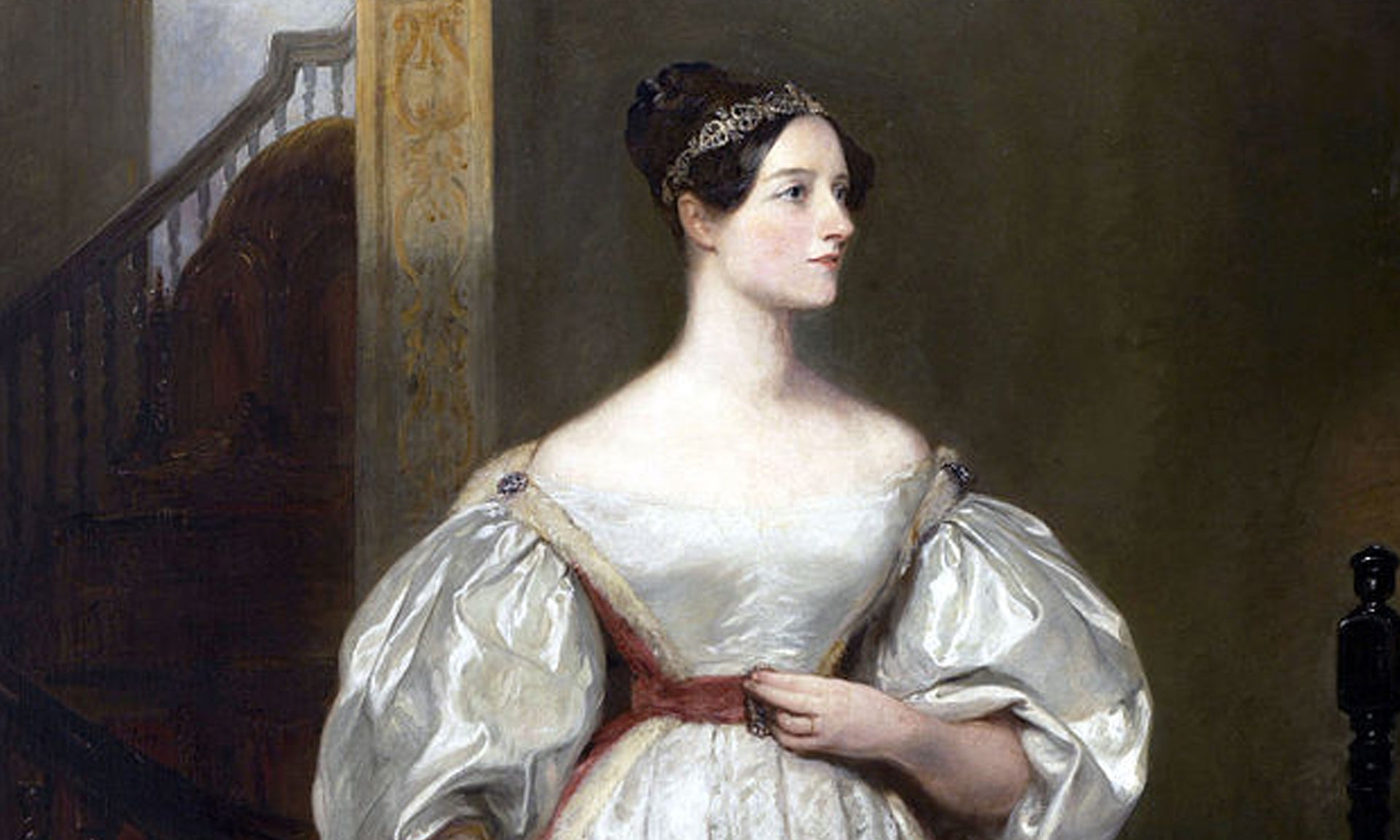
Ada Lovelace, born Augusta Ada Byron in 1815, was a 19th-century mathematician who is widely recognized as the world's first computer programmer. Through her collaboration with Charles Babbage on the Analytical Engine, she moved beyond the concept of mere mechanical calculation, theorizing that machines could process symbolic information and create complex outputs like music and graphics.
Early Life and Intellectual Formation
Ada Lovelace was the daughter of the poet Lord Byron and his wife, Annabella Milbanke. Following a short, tumultuous marriage, Lady Byron separated from Lord Byron just weeks after Ada’s birth. Determined to steer her daughter away from what she perceived as the dangerous volatility of the "Byronic" temperament, Lady Byron emphasized rigorous training in mathematics, logic, and science—subjects rarely prioritized for women in early 19th-century England.
This unconventional education proved foundational. Ada was tutored by eminent figures of her day, including the mathematician Augustus De Morgan. Her exposure to the strictures of logic and the beauty of mathematical patterns fostered a unique cognitive approach she famously dubbed "poetical science." This synthesis allowed her to perceive the potential for machines to go beyond arithmetic, envisioning a future where computational systems could manipulate symbols according to rules.
The Partnership with Charles Babbage
In 1833, at the age of 17, Ada Lovelace met Charles Babbage, the Lucasian Professor of Mathematics at Cambridge and the architect of the Difference Engine. Babbage was a brilliant but often difficult inventor who became a mentor to Ada. Their relationship was built on a shared obsession with the capabilities of calculating machines.
Babbage’s Difference Engine was designed to automate the calculation of mathematical tables, reducing human error. However, his later ambition—the Analytical Engine—represented a paradigm shift. Unlike the Difference Engine, the Analytical Engine was designed to be programmable, utilizing punched cards similar to those found in the Jacquard loom. Lovelace was one of the few individuals who grasped the theoretical implications of this design. She saw that the machine could manipulate any data represented by symbols, provided those symbols followed a logical set of instructions.
Notes on the Analytical Engine
The most significant contribution of Ada Lovelace to computer science occurred in 1843, when she translated an article about the Analytical Engine by Italian engineer Luigi Menabrea. She did not merely translate the text; she appended a series of comprehensive "Notes" that were significantly longer than the original article.
In these Notes, Lovelace provided the first published algorithm intended to be processed by a machine. Specifically, she devised a method for calculating Bernoulli numbers using the Analytical Engine. Beyond this practical application, her insights regarding the machine's potential were decades ahead of her time. She recognized that:
- Symbolic Manipulation: The machine could act on anything that could be represented by symbols, not just numbers.
- Creative Application: She speculated that if music, for instance, could be translated into scientific notations, the engine could compose complex and scientific pieces of music.
- Computational Limits: She was careful to distinguish between the machine's processing power and human consciousness, noting that the engine had "no pretensions whatever to originate anything," as it could only do what humans programmed it to do.
Comparing Mechanical Calculators and Modern Computing
To understand the scope of Lovelace's contribution, one must distinguish between the calculators of the 19th century and the concept of a "general-purpose computer." The following table outlines the foundational differences between the machines studied by Lovelace and modern computing architecture.
| Feature | Analytical Engine (Conceptual) | Modern Electronic Computers |
|---|---|---|
| Logic Basis | Mechanical gears and levers | Electronic logic gates (transistors) |
| Data Input | Punched cards | Binary code / digital input |
| Primary Goal | Mathematical table calculation | Data processing, AI, and multi-media |
| Programmability | Hard-coded via mechanical sets | Stored-program architecture |
| Symbolic Power | Theoretically infinite | Logically universal |
Legacy and Scientific Recognition
For many decades, Ada Lovelace’s contributions were largely overlooked by the mainstream scientific establishment, often dismissed as mere commentary on Babbage’s work. It was not until the mid-20th century, as electronic computing began to emerge, that her work was revisited. Computer pioneers like Alan Turing rediscovered her papers and recognized that she had anticipated the essential nature of universal computation.
In 1979, the United States Department of Defense named a high-level programming language "Ada" in her honor. Today, her legacy is celebrated globally on Ada Lovelace Day, an annual event that highlights the achievements of women in science, technology, engineering, and mathematics (STEM). Her work serves as a testament to the power of interdisciplinary thinking, bridging the gap between artistic intuition and rigorous mathematical logic.
Common Historical Misconceptions
Several myths have persisted regarding Lovelace's life and work. Clarifying these helps maintain an accurate historical record:
- The "Programmer" Label: While it is accurate to call her the "first programmer" because she created the first published machine-algorithm, it is important to remember that the Analytical Engine was never fully built during her lifetime. Her work remained largely theoretical.
- The Babbage Relationship: Some historical accounts frame her as merely a transcriber for Babbage. Contemporary research confirms that Babbage himself viewed her as an equal collaborator, referring to her as "The Enchantress of Numbers" for her ability to interpret his vision.
- Independence of Thought: While Babbage provided the hardware framework, Lovelace’s insights into the potential of the machine were distinctly hers. Babbage focused on the mechanics of calculation; Lovelace focused on the philosophy of information processing.
Frequently Asked Questions
What was the specific algorithm Ada Lovelace wrote?
The algorithm in question was designed to calculate the sequence of Bernoulli numbers. She laid out the steps logically, accounting for the variables, memory storage, and the sequence of operations the Analytical Engine would need to execute, effectively creating the first computer program.
Why is she considered the first programmer?
She is considered the first programmer because she was the first to publish an algorithm specifically written for a machine. While others had developed mechanical calculation devices, she was the first to articulate the concept of machine-processing of non-numerical symbols, which is the foundation of modern software development.
How did her background influence her work?
Her mother, Lady Byron, insisted on an intensive education in mathematics and science to suppress any potential for "poetical" instability. This rigorous training, combined with Lovelace’s own natural inclination toward imagination, allowed her to bridge the gap between hard logic and creative, conceptual thinking.
Was the Analytical Engine ever functional?
No, the Analytical Engine remained a set of complex, brilliant designs during the 19th century. Charles Babbage encountered significant funding issues and technical challenges with machining precision, preventing the physical completion of a full-scale machine.
What is the lasting impact of her "Notes"?
The "Notes" are seminal because they define the transition from "calculator" to "computer." By theorizing that a machine could manipulate symbols according to logic, she effectively predicted the role of modern software in the 21st century.
Recommended Further Study
For those interested in a deeper analysis of the technical specifications of the Analytical Engine or the personal correspondence between Babbage and Lovelace, the most reliable sources remain the primary archives. The Science Museum in London preserves many of Babbage’s original designs and correspondence. Additionally, academic biographies, such as those by Betty Alexandra Toole, provide extensive, peer-reviewed context regarding Lovelace’s contributions to the history of technology and her role as a bridge between the industrial age and the digital era.