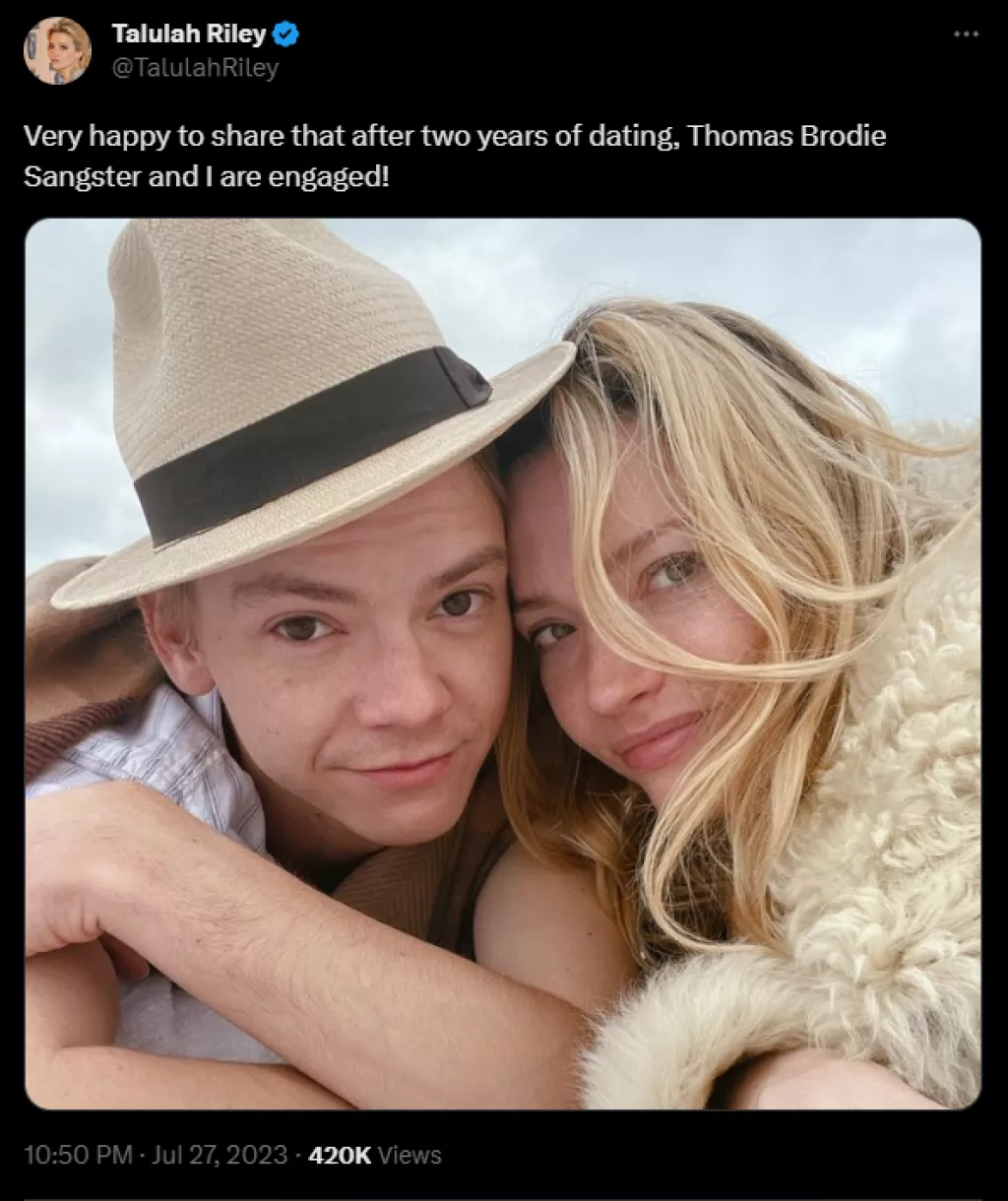
Talulah Riley’s professional trajectory is marked by a deliberate synthesis of acting and authorship, culminating in her exploration of romantic dynamics in her debut novel, "Acts of Love." This cinematic journey reflects a transition from high-profile film and television roles to the structured, character-driven storytelling of literature, offering insights into her creative process and perspective on modern relationships.
The Intersection of Performance and Prose
The concept of a "cinematic journey" regarding Talulah Riley refers to the symbiotic relationship between her background as a performer and her current pursuit as a novelist. Riley has spent over two decades navigating the intricacies of character motivations, subtext, and the visual language of storytelling on sets ranging from independent dramas to large-scale blockbusters. When she authored "Acts of Love," published in 2022, she brought a screenwriter’s eye to the page.
The book is not merely a piece of prose; it is a structural examination of contemporary romance. By utilizing her experience in front of the camera, Riley constructs scenes that feel inherently visual. Readers familiar with her work in projects like "Pride & Prejudice" or "Westworld" may notice a specific cadence in her writing—a preference for tight dialogue and sharp transitions that mirrors the pacing of a well-edited film. This is not coincidental; it is the natural extension of a career spent analyzing the internal lives of characters whose external actions must remain compelling.
Core Themes in Acts of Love
"Acts of Love" centers on the complexities of human connection, specifically the interplay between public perception and private reality. The narrative delves into the volatility of modern dating and the often-contradictory nature of desire. Riley’s approach to these themes is clinical yet deeply empathetic, grounded in a realistic appraisal of how social expectations shape our personal vulnerabilities.
The novel investigates the "acts" we perform in the name of love—how individuals tailor their personas to fit into the lives of others, and the inevitable friction that occurs when these performances begin to fray. By anchoring the story in themes of identity and authenticity, Riley addresses the fundamental question: can a relationship survive when the artifice of the initial attraction is stripped away?
Comparative Analysis: Filmography vs. Literature
To understand the evolution of Riley’s creative output, it is helpful to categorize the distinct requirements of her roles as an actress compared to those as an author. The following table highlights the differences and overlaps in her professional scope.
| Feature | Acting (Film & Television) | Literature (Acts of Love) |
|---|---|---|
| Agency | Collaborative/Interpretive | Solitary/Authoritative |
| Primary Tool | Physicality and Vocal Delivery | Syntax and Internal Monologue |
| Structural Goal | Executing a Director’s Vision | World-building and Pacing |
| Feedback Loop | Immediate (Live/Set) | Delayed (Publication/Reviews) |
| Narrative Focus | Character Perspective | Authorial Omniscience |
This comparison clarifies that while Riley remains a storyteller, the shift from acting to writing allows for a different level of control. In film, the actor provides the emotional heartbeat to an existing script. In "Acts of Love," Riley serves as both the architect of the environment and the curator of the characters' thoughts, allowing for a deeper exploration of the "cinematic" moments that define a relationship.
The Mechanics of Creative Storytelling
Writing a novel requires a transition from the episodic nature of television to the sustained arc of a book. For Riley, this meant developing a long-form narrative structure that could sustain the reader’s interest without the visual aids provided by a cinematography team. The technical depth of her writing relies on sensory details—lighting, setting, and atmosphere—to compensate for the lack of a visual medium.
In "Acts of Love," the dialogue is arguably the most polished element. Riley utilizes the "less is more" philosophy often found in high-end screenwriting. Characters do not necessarily speak their intentions; they speak around them, leaving the reader to parse the underlying tension. This technique is a hallmark of her transition, as she applies the economy of film script dialogue to the narrative richness of a novel.
Addressing Common Reader Questions
Understanding the intent and scope of Riley’s work often leads to specific inquiries regarding her process and thematic choices.
How does Riley’s acting career influence her narrative style?
Her background in acting provides her with a heightened sensitivity to dialogue rhythm and character consistency. Having played various archetypes, she possesses an intuitive understanding of why characters behave in specific ways, which she utilizes to create authentic tension in her writing. Her prose often reads like a script in its brevity, focusing on the essential movements of the story.
Is Acts of Love categorized as an autobiography?
No, the novel is a work of fiction. While authors often draw from their personal observations and the social spheres they inhabit, "Acts of Love" is structured as a narrative with invented characters. Readers should approach the text as a creative project rather than a memoir, though it undoubtedly draws on the author’s keen observations of contemporary social dynamics.
What is the primary technical focus of the novel?
The primary focus is the structural examination of romantic tropes and the subversion of traditional relationship narratives. Riley uses the "cinematic journey" of her characters to explore how societal pressure impacts the internal stability of intimate partnerships.
How does the book handle the concept of modern romance?
Riley treats modern romance as an environment filled with ambiguity and performative expectations. By placing her characters in situations that highlight the friction between societal standards and personal desire, she avoids the pitfalls of generic romantic fiction. The book focuses on the "acts" as a series of choices rather than purely emotional reactions.
Next Steps for Readers and Researchers
For those interested in exploring the work of Talulah Riley, the most logical next step is to examine "Acts of Love" alongside her recent film appearances. Comparing the two mediums provides a holistic view of her creative range. Readers looking to analyze the work from a structural perspective should focus on her use of dialogue as a tool for character revelation.
Those interested in the intersection of celebrity and literary output should monitor upcoming projects. As of 2026, the discourse surrounding "Acts of Love" continues to evolve, with critical analysis focusing on how the novel has influenced current discussions about the "performative" nature of modern social lives. Engage with the text by identifying the parallels between the visual cues she learned in the film industry and the narrative choices she makes in prose to determine how effectively she has translated her cinematic experience to the page.