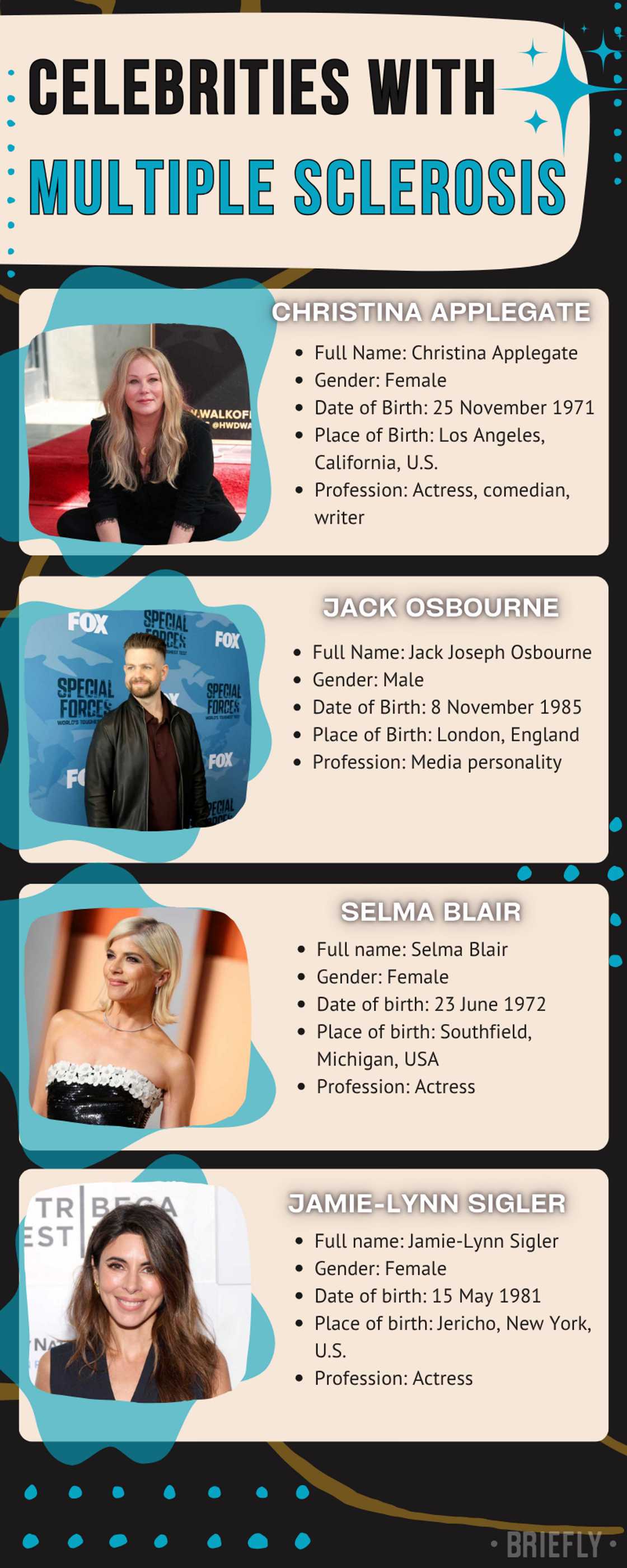
The narrative of actresses with Multiple Sclerosis (MS) in the entertainment industry has shifted from one of silence and concealment to a powerful movement of visibility, advocacy, and professional resilience. By sharing their personal health journeys, these performers have not only demystified the condition for the public but have also challenged the industry’s rigid standards of physical perfection, creating a more inclusive landscape for actors with chronic illnesses.
Understanding the Landscape of MS in Entertainment
Multiple Sclerosis is a chronic, often unpredictable disease of the central nervous system. For actresses navigating this diagnosis while working in an industry that demands high physical endurance and long hours, the challenge is twofold: managing the medical realities of the condition and overcoming the systemic barriers to employment.
Historically, Hollywood operated under a "don't ask, don't tell" policy regarding health issues. Performers often feared that disclosing a diagnosis like MS would lead to being uninsurable or passed over for roles. However, the last two decades have seen a significant change. As societal awareness of disability rights has grown, high-profile women in film and television have stepped forward to reclaim their narratives. This transition from secrecy to open discussion has fundamentally changed how audiences perceive disability on screen and how casting directors approach inclusivity.
Notable Voices and Public Journeys
Several prominent figures have been instrumental in changing the discourse around MS. Their stories are not merely accounts of illness, but documented examples of career longevity and adaptation.
Selma Blair remains perhaps the most visible advocate for the MS community. Following her diagnosis in 2018, she documented her experiences with honesty and vulnerability, most notably in the documentary Introducing, Selma Blair. By sharing the raw realities of stem cell treatment and physical limitations, she transformed the conversation. Her work has underscored that MS does not negate an actress's professional capability; rather, it highlights the need for accommodation and understanding within film production environments.
Christina Applegate has similarly leveraged her platform to advocate for accessibility. After revealing her diagnosis during the production of the final season of Dead to Me, she worked closely with the production team to adapt filming schedules and physical requirements to meet her health needs. Her public commitment to discussing her daily challenges has been vital in demonstrating that professional success is achievable when production environments prioritize accessibility over outdated industry norms.
The Evolution of On-Screen Representation
Representation is more than just visible figures; it is about how characters with disabilities are written and portrayed. The industry is gradually moving away from "inspiration porn"—where a disabled character’s only purpose is to overcome their disability—toward complex portrayals of individuals whose health is simply one facet of a multifaceted identity.
This progress is supported by increased awareness among writers, directors, and casting agents. When actresses with lived experience take on roles, they bring an authentic perspective that informs the script, the character’s movement, and the overall depiction of chronic illness. This authenticity helps replace stereotypical, one-dimensional tropes with characters who exhibit the same range of emotions, flaws, and desires as their non-disabled counterparts.
Practical Considerations for Production Accessibility
For production companies, the inclusion of actresses with MS is not just an ethical imperative but a practical one that benefits from proactive planning. Accommodating performers with chronic illnesses involves a departure from traditional, rigid production schedules.
Key Accommodation Strategies
- Flexible Scheduling: MS can be unpredictable, with symptoms often manifesting as fatigue or sensory changes. Building "rest days" or shorter working hours into actor contracts is essential.
- Environmental Adjustments: Managing temperature is critical for many individuals with MS, as heat sensitivity can exacerbate symptoms. Climate-controlled sets and cooling gear are standard, low-cost modifications.
- Infrastructure Support: Ensuring that locations are fully accessible, with ramp access and adequate space for mobility aids, is a legal and ethical requirement under disability access standards.
- Collaborative Communication: Open dialogue between the actress, the production’s health and safety representative, and the director is the most effective tool for preventing burnout and ensuring the performer feels supported.
Comparison of Advocacy and Awareness Impact
The following table summarizes the different ways public figures have influenced the discourse surrounding MS in the media industry as of 2026.
| Focus Area | Impact Strategy | Primary Outcome |
|---|---|---|
| Personal Documentation | Candidly sharing treatment paths | Demystifies the disease and reduces stigma. |
| Industry Advocacy | Negotiating for set accommodations | Normalizes the need for flexible working conditions. |
| Career Continuity | Continuing to work post-diagnosis | Challenges the "unemployable" bias in casting. |
| Public Education | Partnering with MS organizations | Increases funding and awareness for research. |
Addressing Barriers to Progress
Despite progress, significant challenges remain. The industry still frequently defaults to casting non-disabled actors in roles that involve disability, a practice often referred to as "cripface." When disabled actors are denied these roles, they lose both employment opportunities and the chance to inform the portrayal of their own lived experiences.
Furthermore, medical insurance coverage for freelance performers remains a complex landscape. Many actors in the industry rely on union-based healthcare, but the intermittent nature of acting work can create gaps in coverage that are particularly difficult for those requiring ongoing, expensive disease-modifying therapies. Advocacy efforts by unions are increasingly focused on bridging these gaps, ensuring that health status does not become a barrier to career entry or retention.
Frequently Asked Questions
H3: How does an MS diagnosis affect an actress’s ability to work?
An MS diagnosis does not inherently prevent an actress from working, but it requires that productions be flexible. Many symptoms, such as fatigue or sensory impairment, can be managed with professional accommodations, such as modified call times, temperature-controlled sets, and designated rest periods. The ability to work depends less on the condition itself and more on the production’s willingness to implement these necessary adjustments.
H3: What is meant by "authentic representation" in this context?
Authentic representation occurs when actors with lived experiences are cast in roles that reflect their reality, or when they are included in the creative process to provide input on how chronic illness is depicted. It moves the narrative away from purely medicalized or tragic interpretations, instead focusing on the character's humanity and professional life alongside their health journey.
H3: Are there unions protecting actresses with chronic illnesses?
Yes, unions such as SAG-AFTRA (Screen Actors Guild – American Federation of Television and Radio Artists) have established guidelines for disability and workplace accommodations. These organizations play a critical role in negotiating contracts that require production companies to provide reasonable accommodations for performers with disabilities, protecting them from discrimination based on their health status.
H3: How can the general public support better representation?
Supporting the work of actresses who speak openly about their MS is the most effective form of advocacy. By watching, discussing, and promoting content that features honest depictions of chronic illness, audiences signal to studios that these stories are both desirable and commercially viable. Additionally, supporting organizations that advocate for disability inclusion in the arts helps sustain the movement.
H3: Is it common for actresses to hide their MS diagnosis?
Historically, it was very common due to fears regarding insurance and hiring bias. While that climate is changing, some performers may still choose to keep their health private to maintain control over their public narrative or to avoid typecasting. The current trend is leaning toward disclosure when the individual feels comfortable, but privacy remains a personal choice that should be respected.
Moving Toward an Inclusive Future
The path forward for inclusive representation requires a commitment from studio executives, casting directors, and the audiences themselves. By prioritizing accessibility in production and championing stories that reflect the reality of living with Multiple Sclerosis, the entertainment industry can ensure that talented performers are judged on their craft rather than their health status. Moving forward, the goal is to reach a point where an actress disclosing an MS diagnosis is met with standard, well-integrated operational support rather than surprise or uncertainty. For those in the industry, the next step is to continue advocating for stronger protections within union contracts and for more nuanced, authentic storytelling that reflects the diverse reality of human capability.