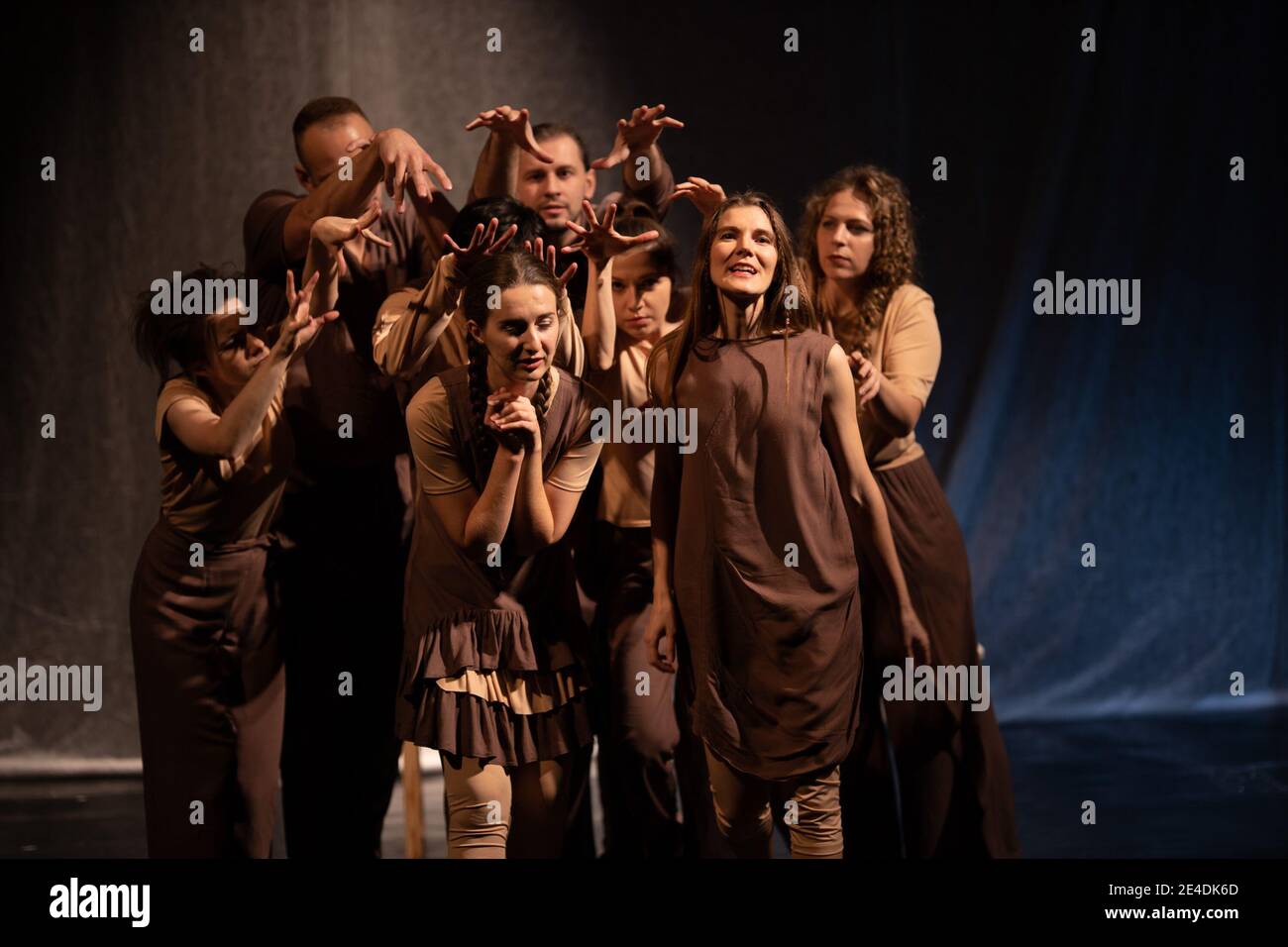
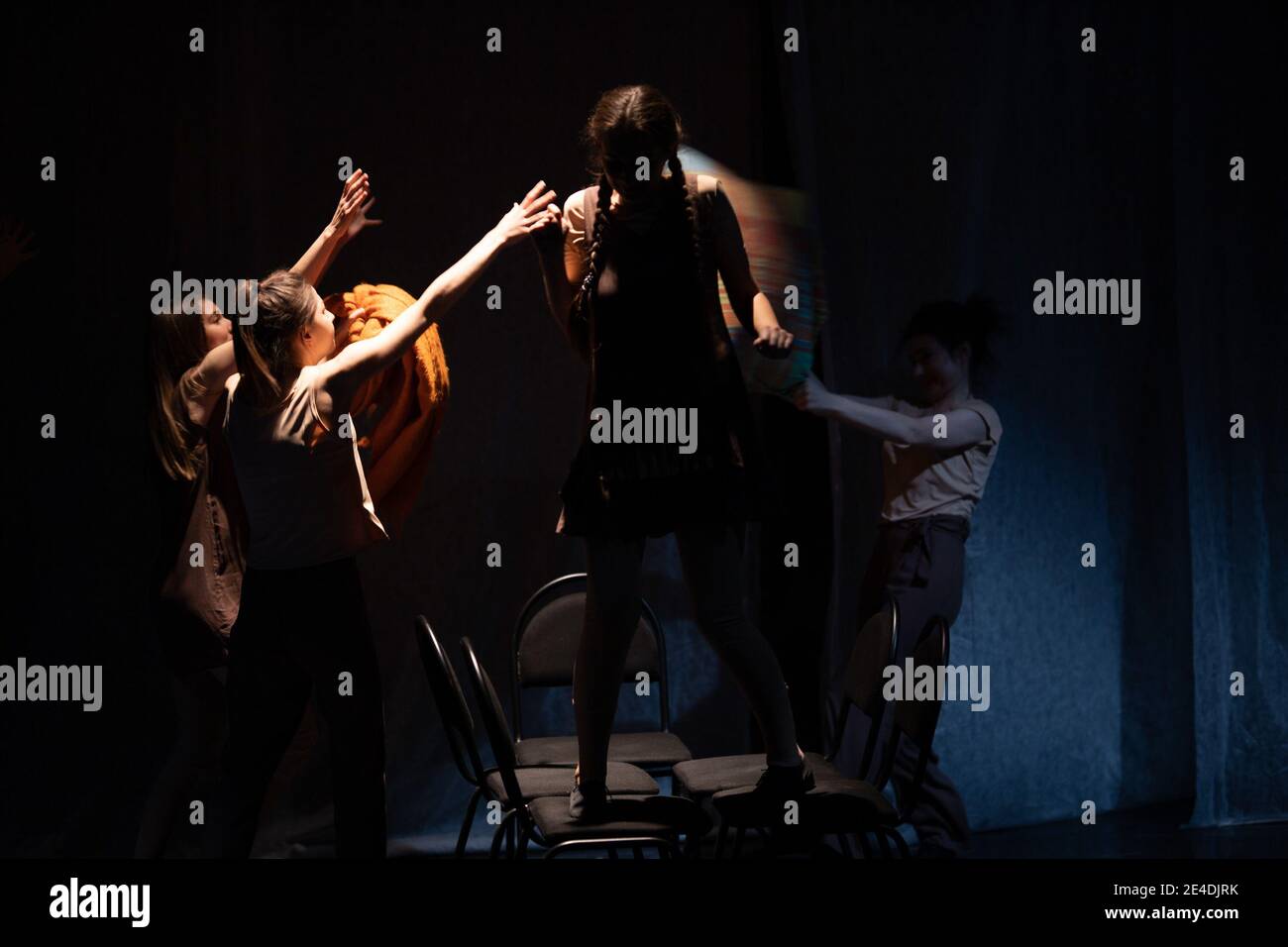
An acting performance is the synthesis of technical skill, emotional intelligence, and physical discipline used by an actor to portray a character and convey a narrative. It requires the intentional manipulation of voice, gesture, and psychology to create a believable presence that resonates with an audience across various mediums.
The relationship between actors and performance has undergone a radical transformation. As of 2026, the craft is no longer defined solely by the proscenium arch or the cinema screen; it has expanded into high-fidelity virtual environments, motion-capture volumes, and AI-integrated productions. Yet, despite these technological shifts, the core of the discipline remains rooted in human truth and the ability to simulate complex emotional states under imaginary circumstances. To understand modern performance, one must examine the intersection of traditional methodology and contemporary technical requirements.
The Foundational Methodologies of Acting
Every performance is built upon a theoretical framework. While many modern actors employ a "hybrid" approach, the history of acting theory provides the tools necessary for consistency and depth. Understanding these foundations is the first prerequisite for any professional performance.
The Stanislavski System and the Birth of Realism
Konstantin Stanislavski’s "System" remains the bedrock of modern acting. Developed in the early 20th century, it moved performance away from the declamatory, melodramatic styles of the past toward psychological realism. The system emphasizes "The Magic If"—asking what an actor would do if they were in the character's situation—and the identification of "Objectives" and "Obstacles." In 2026, these concepts are still the primary language used in rehearsal rooms worldwide to ensure that a performance is driven by internal logic rather than external affectation.
The American Method and Its Successors
The "Method," popularized by Lee Strasberg at The Actors Studio, took Stanislavski’s ideas further by focusing on emotional memory. Actors were encouraged to use their personal past experiences to fuel the character’s emotions. While revolutionary, it also sparked debate regarding actor safety and mental health. Consequently, other practitioners like Stella Adler and Sanford Meisner developed alternatives. Adler focused on the power of the imagination and sociological research, while Meisner emphasized "living truthfully under imaginary circumstances" through repetitive exercises designed to get the actor out of their head and into the moment with their partner.
Technical Pillars of an Impactful Performance
A compelling performance is rarely an accident; it is the result of rigorous training in specific technical areas. By 2026, these pillars have been refined to meet the demands of ultra-high-definition cameras and immersive theater spaces.
Vocal Resonance and Articulation
The voice is an actor’s primary tool for communication. Beyond mere volume, vocal performance involves resonance, pitch, tempo, and rhythm. In theater, actors must practice "projection without strain," ensuring the person in the last row of the balcony hears every syllable. In film and voice-over work, the focus shifts to "micro-vocalizations"—the subtle breaths, cracks, and whispers that convey intimacy and vulnerability. Training in the Linklater or Lessac methods remains essential for maintaining vocal health over long production runs.
Physicality and Embodiment
A performance is not just spoken; it is embodied. An actor’s posture, gait, and gestural language tell the audience who the character is before a single line is delivered. Techniques such as the Alexander Technique or Laban Movement Analysis help actors identify their own physical habits and strip them away to adopt the physicality of the character. This is particularly crucial in 2026’s heavy landscape of performance capture (MoCap), where an actor's physical movements are mapped onto digital avatars.
Psychological Preparation and Active Listening
One of the most common mistakes in performance is "waiting to speak" rather than listening. High-level performance requires active listening, where the actor reacts in real-time to the stimuli provided by their scene partner. This creates a sense of spontaneity and "the first time," making the performance feel alive.
Medium-Specific Performance Requirements
The venue in which a performance takes place dictates the scale and nuance required from the actor. A performance that works on a Broadway stage would likely feel "over-the-top" or "hammy" in a close-up on a 4K screen.
| Feature | Stage Performance | Screen Performance | Motion/Performance Capture |
|---|---|---|---|
| Physical Scale | Large, projected gestures to reach the back of the house. | Subtle, internalized movements; micro-expressions. | Precise, exaggerated enough for sensors but grounded in realism. |
| Vocal Delivery | Sustained projection and crisp articulation. | Naturalistic, conversational, often relying on high-quality mics. | Clear diction for data processing; often involves non-verbal "effort" sounds. |
| Consistency | Must be repeated identically for 8 shows a week. | Must be repeatable for multiple takes and different angles. | Focus on full-body data; often non-linear. |
| Audience Proximity | Distant (usually 10 to 100+ feet). | Immediate (the camera acts as the audience's eye). | Non-existent; the audience is added in post-production. |
| Preparation Time | Weeks or months of rehearsal. | Often minimal; actors must arrive "performance-ready." | Heavy technical calibration followed by intense physical work. |
The Impact of Technology and AI in 2026
As of 2026, the definition of a "performance" has expanded to include interactions between human actors and artificial intelligence. Digital doubles and AI-enhanced de-aging have become standard tools in the industry, requiring actors to adapt to new ethical and technical realities.
Acting for Virtual Production (The Volume)
The rise of LED volumes (large-scale wrap-around screens) has replaced traditional green screens. For the actor, this is a significant improvement, as they can see the environment they are supposed to be in. Performance in a "Volume" requires a blend of film technique (for the camera) and theatrical imagination, as the lighting and background are reactive to the camera's movement.
The Ethics of Digital Twins
A major discussion in 2026 involves the use of an actor's "digital twin." Performances can now be "tweaked" in post-production—changing a facial expression or a line delivery using AI without the actor being present. Professional actors now have to navigate "performance rights" in their contracts to ensure their creative intent is preserved even when digital tools are used to enhance the final product.
Safety and Professional Standards: Intimacy Coordination
Modern performance standards place a high priority on the physical and psychological safety of the actor. The role of the Intimacy Coordinator (IC) is now mandatory on most professional sets and in many theatrical productions.
Performance involving physical intimacy, nudity, or simulated violence is now choreographed with the same precision as a stunt sequence. This removes the "guesswork" and potential for harassment, allowing actors to focus on the emotional truth of the scene without fear of boundary violations. This shift has not stifled creativity; rather, it has led to more daring and authentic performances because actors feel safe enough to take genuine risks.
Building and Sustaining a Performance Career
Entering the world of professional acting requires more than talent; it requires a strategic approach to the business of performance. In the current market, the "multi-hyphenate" actor—someone who can act, produce, or write—often has the most longevity.
- Training and Accreditation: While some actors are "discovered," most successful performers have degrees from accredited conservatories or have spent years in reputable acting studios. Continuous training is expected even for established professionals.
- Digital Presence and Self-Taping: By 2026, the initial audition process is almost entirely digital. Actors must be proficient in "self-taping"—filming their own auditions with professional lighting and sound. A performance must be "camera-ready" from the very first submission.
- The Showreel: A portfolio of previous performances remains the actor's most important calling card. In the current era, these reels often include a mix of traditional film clips, voice-over samples, and even MoCap demos.
- Networking and Representation: Securing an agent or manager is still a critical step in accessing high-level performance opportunities. However, actors are also expected to manage their own brands on professional networking platforms.
Common Pitfalls in Performance
- Indication: "Showing" the emotion rather than "feeling" it. If an actor tries to look sad, the audience notices the effort; if the actor focuses on the loss the character feels, the audience feels the sadness.
- Lack of Research: Failing to understand the character's world, profession, or social status leads to a generic, ungrounded performance.
- Inconsistency: A great performance on Take 1 is useless if the actor cannot reproduce the same emotional beats for the "coverage" (different camera angles) in Take 10.
Frequently Asked Questions
What is the difference between "The Method" and "The System"?
The "System" refers to Stanislavski's original Russian teachings, which emphasize objectives and the "Magic If." "The Method" usually refers to the American adaptation by Lee Strasberg, which focuses more heavily on an actor's personal emotional memories to create a character’s internal life.
How has AI changed acting performances in 2026?
AI is used to assist in de-aging, digital doubling, and "automated dialogue replacement" (ADR). While it provides new tools, it also requires actors to be more vigilant about their likeness rights and to learn how to perform in conjunction with digital elements that might be added later.
Can anyone learn to give a professional performance?
While natural charisma helps, acting is a technical craft. Most professional performances are the result of years of study in voice, movement, script analysis, and psychology. Like any other skill, it can be developed through disciplined practice and expert guidance.
Why is active listening considered the "secret" to good acting?
Acting is essentially reacting. If an actor is truly listening to their partner, their responses will be spontaneous and authentic. This prevents the performance from feeling rehearsed or "wooden" and keeps the audience engaged in the immediate reality of the scene.
What should be included in a 2026 acting showreel?
A modern showreel should be under two minutes and feature 3-4 high-quality clips showing range. It should start with the actor's best work and include a clear "slate" (introduction). In 2026, including a short clip of a self-tape or a performance capture demo is also highly recommended if relevant to the roles being sought.
Next Steps for Aspiring Performers
To improve the quality of your performance, transition from theoretical study to practical application. Begin by enrolling in a local acting class or workshop that focuses on a specific technique, such as Meisner or Uta Hagen. Simultaneously, start building a library of "monologue work" that showcases your range. In 2026, the most successful actors are those who view themselves as lifelong students of the human condition, constantly refining their technical tools to meet the ever-evolving demands of the industry.