Actor health encompasses the integrated physical, mental, and vocal maintenance required to sustain a professional performance career. It involves proactive management of production-related physical strain, the psychological impacts of character immersion, and the nutritional demands of erratic filming schedules. Prioritizing these wellness pillars is essential for career longevity and mitigating occupational injuries.
The profession of acting is often perceived through the lens of glamour and creative expression, yet the underlying reality involves significant occupational hazards. As of 2026, the industry has increasingly recognized that an actor’s body and mind are their primary instruments. Maintaining these tools requires more than occasional exercise; it demands a disciplined, science-backed approach to health that accounts for the unique stressors of the stage and screen. From the grueling physical demands of action sequences to the delicate emotional regulation required for intense drama, "actor health" is a multifaceted discipline essential for any performer aiming for a sustainable career.
The Physicality of Performance: Preventing Occupational Injury
The physical demands of acting vary significantly between mediums, but both stage and screen work carry inherent risks of repetitive strain and acute injury. For stage actors, the primary challenge often lies in the repetitive nature of eight-show-per-week schedules. Performing the same movements, often in restrictive costumes or on raked (slanted) stages, can lead to chronic musculoskeletal issues, particularly in the lower back, knees, and ankles.
In the film and television sector of 2026, the rise of intensive motion-capture (mo-cap) and long-duration prosthetic work has introduced new physical stressors. Actors may spend hours in uncomfortable positions or carrying significant weight in gear. To mitigate these risks, the industry has seen a shift toward "performance coaching" that incorporates elements of kinesiology and physical therapy.
Biomechanical Awareness and Conditioning
Actors are increasingly adopting "pre-habilitation" routines. Rather than waiting for an injury to occur, performers engage in functional training that mimics the movements required for their specific roles. For example, an actor cast in a period piece involving heavy corsetry must strengthen their core and respiratory muscles to compensate for restricted diaphragmatic movement.
- Raked Stages: The use of slanted stages in theater creates an unnatural gait. Physical therapists recommend specific stretches for the Achilles tendon and calf muscles to prevent long-term postural misalignment.
- Stunt Safety: While stunt doubles handle high-risk maneuvers, actors are often required to perform "low-impact" stunts that, when repeated over dozens of takes, result in significant inflammation.
- Ergonomics of Waiting: A significant portion of an actor's day is spent waiting in "holding" areas. Poor posture in these intervals can lead to muscle stiffness, making the body more prone to injury once the "action" call occurs.
Psychological Resilience: Navigating the Mental Demands of the Craft
The mental health of actors has become a primary focus for industry unions and production houses in 2026. The psychological toll of the profession stems from two main sources: the external instability of the "gig economy" and the internal emotional labor required for character work.
Character Immersion and "Character Bleed"
The process of "becoming" a character, particularly one experiencing trauma or high levels of distress, can lead to what psychologists call "character bleed." This occurs when the emotions and personality traits of a role begin to affect the actor’s real-life psyche. To manage this, many modern productions now employ intimacy coordinators and mental health consultants who assist actors in "de-rolling"—the technical process of psychologically distancing oneself from a character after a scene or performance.
Managing the Rejection Cycle
The acting profession is characterized by a high frequency of rejection. The constant cycle of auditioning and not receiving callbacks can lead to chronic stress, anxiety, and depression. Developing psychological resilience is not merely a "soft skill" but a survival requirement. Peer support groups and specialized therapists who understand the nuances of the entertainment industry are now vital components of a comprehensive actor health plan.
Vocal Hygiene and Respiratory Wellness
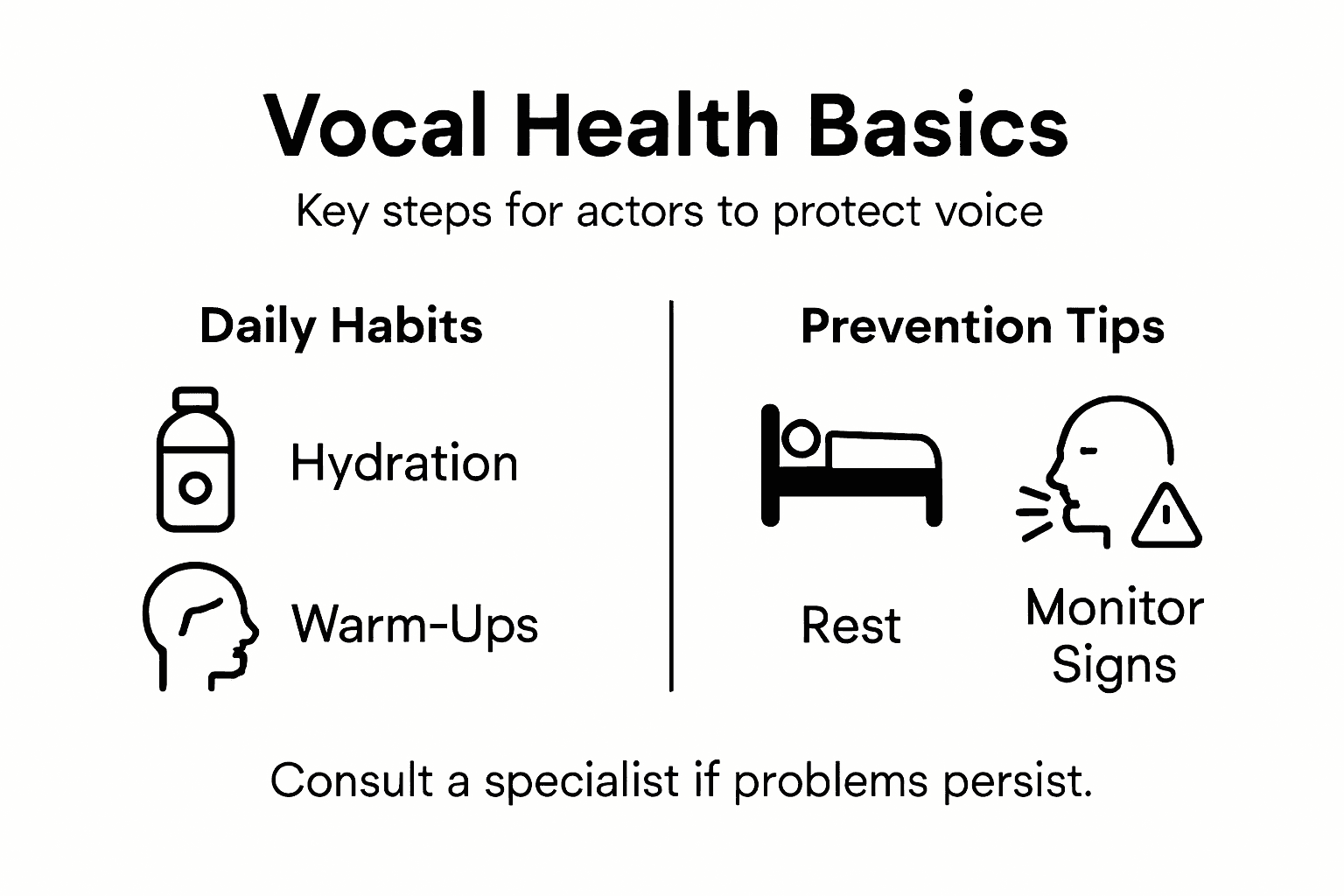
For any performer, the voice is a primary tool of the trade. Vocal health, or "vocal hygiene," involves the maintenance of the larynx and the respiratory system to ensure a clear, powerful, and sustainable voice. This is particularly critical for musical theater performers and voice actors, who may be required to scream, growl, or sing at high volumes for extended periods.
The Impact of the Performance Environment
The environments in which actors work are often detrimental to vocal health. Theaters are notoriously dusty, and film sets may use artificial fog or pyrotechnics that irritate the respiratory tract. Furthermore, the 2026 standards for set safety emphasize the importance of air filtration, yet the fundamental challenge of dry, air-conditioned environments remains.
- Hydration: Systematic hydration is essential. The vocal folds need systemic moisture to remain pliable. Drinking water immediately before a performance is less effective than maintaining high hydration levels 24 hours in advance.
- Vocal Rest: The concept of "tactical silence" is used by elite performers to preserve their voices during heavy production weeks.
- Reflux Management: Silent reflux (LPR) is a common but often undiagnosed issue among actors. The erratic eating schedules and high-stress levels of the industry contribute to stomach acid irritating the vocal cords, leading to hoarseness and "vocal fatigue."
Nutritional Optimization and Circadian Management on Set
The logistics of a film set are often at odds with basic nutritional and biological needs. "Craft services"—the catering provided on sets—often leans toward high-sugar, highly processed snacks that provide quick energy but lead to inevitable crashes. Furthermore, the "12-on, 12-off" schedule (12 hours of work followed by 12 hours of rest) often ignores the body’s natural circadian rhythms, especially during "night shoots."
The "Crafty" Trap and Blood Sugar Regulation
To maintain the focus required for complex scenes, actors must manage their blood sugar levels. Relying on simple carbohydrates leads to "brain fog," which can interfere with line retention and emotional presence. Performance-focused nutrition for actors in 2026 emphasizes:
- Complex Carbohydrates: For sustained energy during long takes.
- Lean Proteins: For muscle repair after physically demanding scenes.
- Anti-inflammatory Foods: To combat the physical toll of long days on their feet.
Circadian Displacement
Night shoots are one of the most taxing aspects of actor health. The shift in sleep patterns can disrupt hormonal balance and immune function. Actors are advised to use "blackout" environments for daytime sleep and to use light therapy to signal to the brain when it is time to be alert.
Comparing Health Challenges Across Acting Mediums
Different acting environments pose distinct threats to a performer's well-being. The following table summarizes the primary health concerns and the recommended mitigation strategies for each.
| Medium | Primary Health Risk | Physiological Impact | Mitigation Strategy |
|---|---|---|---|
| Musical Theater | Vocal strain and repetitive motion | Nodules, stress fractures, chronic fatigue | Daily vocal warm-ups, physical therapy, and "marking" during rehearsals. |
| Film & TV | Erratic schedules and "holding" time | Circadian disruption, metabolic issues | Strict meal prepping, tactical napping, and light therapy. |
| Voiceover | Vocal fold irritation and sedentary strain | Laryngeal fatigue, postural misalignment | Standing desks, humidification, and 20-minute vocal rest intervals. |
| Action/Stunts | Acute trauma and inflammation | Joint damage, concussions, muscle tears | Intensive conditioning, immediate icing/recovery protocols, and strict stunt doubling. |
Accessing Healthcare and Union Support Systems
In 2026, the landscape of healthcare for actors is heavily influenced by union membership, specifically SAG-AFTRA in the United States and Equity in the United Kingdom. These organizations provide access to specialized health plans that recognize the non-traditional nature of acting work.
Union Health Credits
Eligibility for union health insurance is typically based on earnings or "days worked" within a calendar year. This creates a unique stressor where actors may feel pressured to take any job—regardless of its impact on their health—simply to maintain their insurance coverage. Navigating these requirements requires careful financial and career planning.
Specialized Clinics
There has been a rise in clinics dedicated solely to the "performing arts medicine" niche. These facilities understand that an actor cannot simply "take two weeks off" in the middle of a Broadway run or a film shoot. They offer accelerated recovery protocols, such as laser therapy for vocal folds or specialized physical therapy for stage-related injuries, aimed at getting the performer back to work safely and quickly.
FAQ
How do actors protect their mental health when playing dark or traumatic roles?
Actors utilize a technique known as "boundary work" or "de-rolling." This involves specific rituals at the end of a workday to signal to the brain that the performance is over. This might include physical actions like showering and "washing off" the character, or psychological exercises like journaling and focusing on their own personal identity. Intimacy coordinators also play a role in ensuring that scenes involving vulnerability are choreographed in a way that minimizes real-world psychological distress.
What is the most common physical injury for stage actors?
Musculoskeletal injuries of the lower extremities—specifically the ankles and knees—are the most common. These are often caused by performing on "raked" (inclined) stages, which force the body into an unnatural alignment. Over time, this leads to tendonitis, ligament strain, and chronic lower back pain.
How does "vocal rest" actually work?
True vocal rest involves total silence—no speaking, no whispering, and no singing. Whispering is actually more stressful for the vocal folds than normal speech because it requires more muscle tension to restrict the air. Actors may be put on vocal rest for 24 to 72 hours to allow inflammation of the vocal folds to subside, often using text-to-speech apps to communicate.
Are there specific diets recommended for actors on set?
While there is no one-size-fits-all "actor diet," the general recommendation is a high-protein, moderate-fat, and low-glycemic index diet. This prevents the energy spikes and crashes associated with set catering. Many actors in 2026 utilize "meal delivery services" that ship calorie-controlled, nutrient-dense meals directly to their filming locations to avoid the "craft services" trap.
How has the industry changed its approach to actor health since 2020?
Since the pandemic, there has been a permanent shift toward prioritizing respiratory health and mental well-being. Productions now frequently include "Health and Safety" supervisors whose roles have expanded from simple infection control to broader oversight of set conditions, including air quality, hydration access, and mental health support.
Implementing a Sustainable Health Routine
To ensure a long and healthy career, performers must treat their health with the same professional rigor they apply to their acting craft. This starts with a baseline medical evaluation that includes a laryngeal exam (vocal fold check) and a baseline psychological assessment.
The next step is the creation of a "Performance Wellness Kit" that accompanies the actor to every job. This kit should include items for immediate physical recovery (such as resistance bands and foam rollers), vocal maintenance tools (personal humidifiers and herbal teas), and nutritional backups (high-protein, non-perishable snacks). Most importantly, actors should establish a relationship with a primary care physician who understands the specific demands of the entertainment industry and can provide guidance that accounts for the unconventional lifestyle of a professional performer.