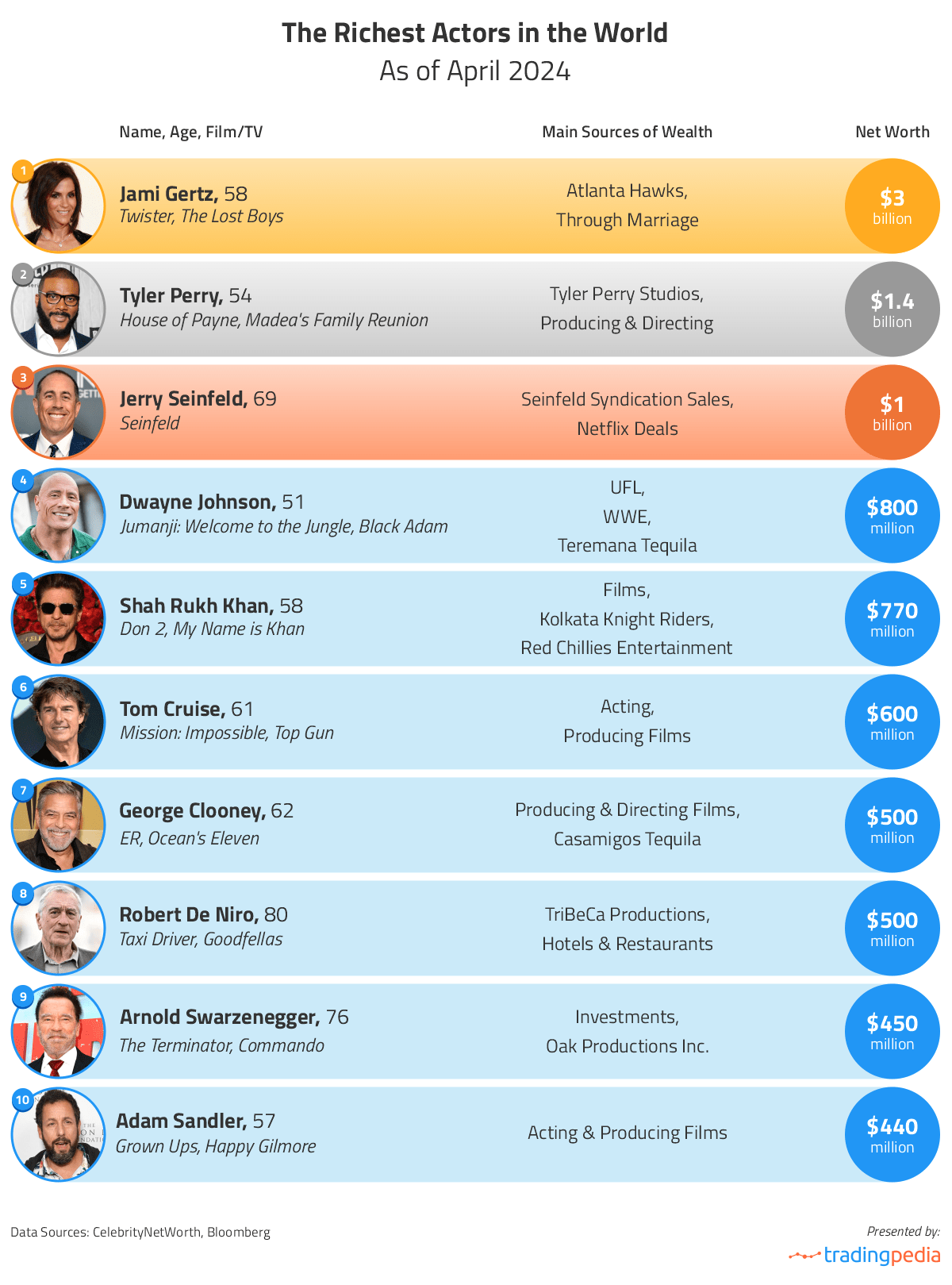
An actor’s earnings breakdown reveals that "take-home" pay typically ranges from 40% to 60% of the gross contract value. After accounting for mandatory agency commissions (10%), management fees (10–15%), legal fees (5%), union dues (approx. 1.57%), and federal and state taxes, a $100,000 contract often results in roughly $50,000 in actual net income.
The Foundation of Actor Compensation: Gross vs. Net
In the entertainment industry, the "headline" figure reported in trade publications or listed on a contract is the gross compensation. For a professional actor, this figure is rarely reflective of their actual financial liquid assets. Unlike a traditional W-2 employee whose employer might cover the bulk of payroll taxes and benefits, an actor operates as a small business entity—often literally through a "loan-out" corporation.
The journey from a studio cutting a check to the money landing in an actor's personal savings account involves a series of sequential "haircuts." These deductions are not optional; they are contractual and legal obligations required to maintain professional standing and representation. In 2026, with the evolution of streaming residuals and updated SAG-AFTRA (Screen Actors Guild - American Federation of Television and Radio Artists) rate cards, understanding this breakdown is vital for anyone navigating a career in film, television, or digital media.
The "Ten Percenters" and Professional Representation Fees
The most immediate deductions from an actor's paycheck are the commissions paid to their representation team. These individuals are responsible for procuring work, negotiating contracts, and managing the actor's long-term brand.
Talent Agents (10%)
Under union regulations, specifically those set by SAG-AFTRA, a franchised talent agent is capped at a 10% commission on the actor’s gross earnings. If an actor is working at "scale" (the minimum wage set by the union), the production often pays an additional 10% on top of the salary to cover the agency fee, known as "Scale plus 10." However, for any contract above scale, the 10% is deducted directly from the actor's negotiated salary.
Personal Managers (10% to 15%)
Unlike agents, managers are not always strictly capped by union rules, though the industry standard remains 10% to 15%. Managers focus on the broader trajectory of an actor's career rather than just the day-to-day booking of jobs. Because managers often work with an actor before they are successful, their commission is frequently viewed as a "loyalty" payment that remains consistent across all earnings, including residuals and endorsements.
Attorneys (5%)
For major contracts, particularly series regular roles or lead film roles, an entertainment attorney is required to review the "long-form" agreement. Attorneys typically charge a flat 5% of the gross contract value. While some actors prefer an hourly rate, the percentage model is standard for high-level talent because it aligns the lawyer's incentives with the actor’s success.
Union Dues and Pension & Health (P&H)
To remain a member in good standing with SAG-AFTRA, actors must contribute a portion of their earnings to the union. This ensures access to collective bargaining, standardized working conditions, and robust health and pension benefits.
- Annual Base Dues: As of 2026, members pay a fixed annual base fee (approximately $230).
- Work Dues: In addition to the base fee, actors pay 1.575% of their individual gross earnings up to a specific cap (currently around $1,000,000).
- Pension and Health Contributions: It is a common misconception that these are deducted from the actor's salary. In most SAG-AFTRA contracts, the producer pays an additional percentage (roughly 20% to 21%) on top of the actor's gross salary directly into the P&H funds. While this doesn't reduce the actor's take-home pay, it is a critical part of the total compensation package that provides the actor with medical insurance and retirement security.
The Tax Burden: A Multi-Jurisdictional Challenge
Taxation is the single largest deduction for any high-earning actor. Because actors often film in various locations, their tax situation is significantly more complex than the average worker.
Federal and State Income Tax
Actors in the highest tax brackets face a federal rate of 37%. Furthermore, since the majority of the industry is based in California or New York, they are subject to some of the highest state income taxes in the United States—often exceeding 10% to 13%.
"Jock Taxes" and Nexus
If an actor films a project in Georgia, Louisiana, or internationally (e.g., London or Vancouver), they may be subject to "non-resident" income tax in those specific jurisdictions. This requires filing multiple state tax returns. While tax credits usually prevent "double taxation," the administrative costs of specialized entertainment accountants to manage these filings can range from $2,000 to $10,000 annually.
Loan-Out Corporations
To mitigate some of these costs, many actors form a S-Corp or LLC known as a "loan-out" corporation. The studio pays the corporation, and the actor then pays themselves a salary. This allows the actor to deduct business expenses (like acting coaches, travel, and home offices) before paying personal income tax. However, the IRS maintains strict rules regarding "reasonable salary" and corporate transparency.
Comprehensive Breakdown Table: $100,000 Gross Salary
The following table illustrates the hypothetical breakdown of a $100,000 earnings event for a professional actor represented by an agent, manager, and lawyer.
| Deduction Category | Percentage | Estimated Cost | Remaining Balance |
|---|---|---|---|
| Gross Contract Value | 100% | $100,000 | $100,000 |
| Talent Agent Commission | 10% | $10,000 | $90,000 |
| Personal Manager Fee | 10% | $10,000 | $80,000 |
| Legal Counsel Fee | 5% | $5,000 | $75,000 |
| SAG-AFTRA Work Dues | 1.57% | $1,570 | $73,430 |
| Federal Income Tax (Est.) | ~24% | $24,000 | $49,430 |
| State Income Tax (CA Est.) | ~9% | $9,000 | $40,430 |
| Estimated Net Take-Home | ~40.4% | $40,430 | $40,430 |
Note: Tax estimates are simplified for illustrative purposes and vary based on total annual income, filing status, and deductions.
Residuals and the 2026 Streaming Landscape
Residuals are payments made to actors for the reuse of their work after the initial exhibition. In the era of linear television, these were substantial "mailbox money" checks that arrived whenever a show was syndicated or sold to a new network.
In 2026, the residual landscape is dominated by streaming (SVOD). Following the landmark labor agreements of the mid-2020s, residuals are now more closely tied to transparent viewership metrics on platforms like Netflix, Disney+, and Amazon Prime.
- Initial Fixed Residuals: Paid for the first few years a program is available on a platform.
- Success-Based Bonuses: Introduced in 2024 and expanded by 2026, these are triggers that pay out additional sums if a program reaches a certain threshold of "views" (total hours watched divided by runtime) within a specific timeframe.
- Deductions on Residuals: It is important to note that agents and managers also take their 10% commissions on residuals. For many legacy actors, these checks have dwindled to cents, yet the administrative burden of tracking them remains.
The Hidden Operating Costs of an Acting Career
Beyond the checks written to the "team," an actor has significant overhead costs that are essential for maintaining their "product"—themselves.
- Publicity: Mid-to-high-level actors often employ a publicist, especially during "award seasons" or project launches. Monthly retainers for reputable firms in 2026 typically range from $3,500 to $7,000.
- Grooming and Styling: For red carpets, junkets, and public appearances, actors are often expected to provide their own "glam squad" (hair, makeup, and stylists) if the studio does not cover it. A single event can cost between $1,500 and $5,000.
- Self-Tape Infrastructure: In 2026, nearly all first-round auditions are self-tapes. Professional actors invest in high-quality 4K cameras, sound-dampening environments, and ring lights, costing upwards of $2,000 in initial setup.
- Professional Training: Even established actors frequently work with dialect coaches or acting teachers for specific roles, often at rates of $150 to $300 per hour.
Frequently Asked Questions
Do actors get paid all at once?
No. For film, pay is typically staggered: a portion upon signing, a portion during principal photography, and the remainder upon completion of "post-production" services (like looping/ADR). For television series regulars, they are paid per episode produced, often on a weekly schedule during filming.
Can an actor fire their manager to save the 10% commission?
An actor can terminate the relationship, but most management contracts include a "sunset clause." This means the manager continues to receive commissions on any projects that were negotiated or "engaged" during the time they represented the actor, sometimes for years after the split.
Why is the legal fee a percentage instead of an hourly rate?
The percentage model (usually 5%) is standard because it allows the attorney to handle endless revisions, phone calls, and "back-and-forth" with studio legal departments without the actor worrying about a mounting hourly bill. For a $1 million deal, a $50,000 legal fee is often more cost-effective than hundreds of hours of high-rate litigation-style billing.
Are "per diems" included in the earnings breakdown?
Per diems (daily allowances for food and incidentals when filming on location) are generally treated as non-taxable reimbursements rather than income, provided they do not exceed federal "GSA" rates. They are not typically subject to agency or management commissions.
How do international actors handle US taxes?
Non-US actors working on American productions usually have 30% of their gross pay withheld for the IRS immediately unless there is a specific tax treaty between the US and their home country. This is managed through a W-8BEN form.
Managing Financial Stability as a Professional
Given the high percentage of deductions, the most critical next action for any actor is establishing a robust financial management system early in their career. Because acting income is sporadic—characterized by "feast and famine" cycles—successful professionals prioritize the following:
- Establishing a Business Entity: Consulting with an entertainment-specialist CPA to determine if a "Loan-Out" corporation is tax-advantageous for your current income level (usually recommended once gross earnings consistently exceed $75,000–$100,000 annually).
- Separate Tax Accounts: Setting aside at least 40% of every gross check into a high-yield savings account immediately upon receipt to ensure tax liabilities are covered at the end of the fiscal year.
- Residual Tracking: Utilizing digital tools or the SAG-AFTRA Residuals Portal to monitor payments and ensure production companies are adhering to the latest 2026 viewership-based payout schedules.
Professional acting is not just an art; it is a high-overhead business. By understanding the granular breakdown of where every dollar goes, actors can better negotiate their worth and protect their long-term financial health.