The role of the actor and director encompasses two distinct but deeply interconnected crafts within the film and theater industries. Successfully navigating this dual path requires an individual to bridge the gap between internal emotional performance and external technical vision. In 2026, the rise of independent production and digital distribution has made this "multi-hyphenate" approach more accessible, though it demands a rigorous mastery of leadership, narrative structure, and technical literacy.
Understanding the Multi-Hyphenate Synergy
The transition from acting to directing—or balancing both simultaneously—is a natural evolution for many artists. Actors spend thousands of hours on sets observing the mechanics of storytelling, which provides a unique foundation for leadership. However, the shift in perspective is profound. While an actor focuses on the "truth" of a single character’s journey, a director is responsible for the "truth" of the entire world, including visual style, pacing, and the integration of all creative departments.
In the current 2026 landscape, the "Actor-Director" is no longer a rarity reserved for Hollywood royalty. Mid-career professionals use this dual capacity to maintain creative control over their projects and ensure that the thematic integrity of a script is preserved from page to screen. The synergy lies in the actor’s innate understanding of performance; a director who has acted knows how to communicate with the cast in a language they understand, avoiding results-oriented coaching in favor of actionable, emotional objectives.
Essential Skills for the Transitioning Artist
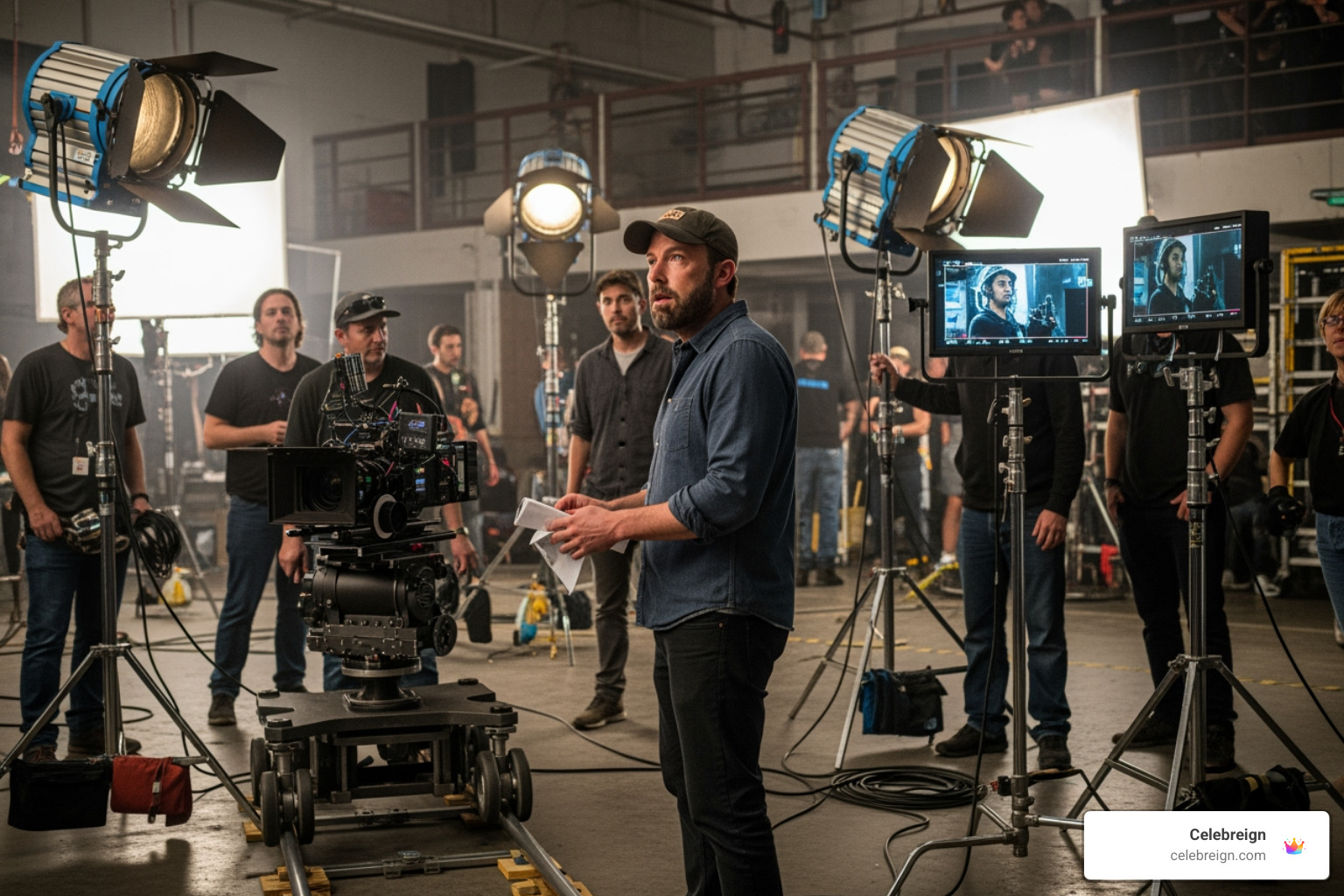
Moving behind the camera requires more than a "good eye." It demands a comprehensive understanding of the technical languages spoken by various departments. An actor-director must be able to communicate effectively with the Director of Photography (DP), the Gaffer, and the Editor.
Technical Literacy and Visual Language
An actor is often shielded from the complexities of focal lengths, sensor sizes, and lighting ratios. As a director, these become your primary tools. You must understand how a 35mm lens affects the intimacy of a close-up compared to an 85mm lens. In 2026, proficiency with AI-driven pre-visualization tools has become a standard prerequisite, allowing directors to map out shots and lighting setups before arriving on set, which is especially critical when the director is also appearing in the scene.
Leadership and Decisiveness
The set is an environment of constant friction where time is the most expensive commodity. An actor is used to being directed; a director must be the source of direction. This requires a shift from a collaborative, receptive state to one of assertive decision-making. You are the final arbiter of every creative choice, from the color of a background extra’s shirt to the timing of a practical explosion.
Narrative Structural Awareness
Directors must view the script as a blueprint for a three-dimensional experience. This involves understanding the "arc" of the entire film, not just the emotional beats of a character. It requires knowledge of shot listing, blocking for the camera (rather than just for the performance), and understanding how a scene will eventually be assembled in the edit suite.
The Logistics of Directing Yourself
Directing oneself is perhaps the greatest challenge of the multi-hyphenate career. It requires a bifurcated brain: one half must stay present and vulnerable in the scene, while the other half must remain analytical and observant of the frame.
The Use of "Video Village" and Playback
In 2026, high-definition wireless monitoring allows actor-directors to review takes instantly on handheld devices. However, the trap is over-reviewing. Successful actor-directors often set a "two-take rule" for their own performances to avoid slowing down the production. They rely on "playback" only when technical precision is in question, trusting their gut for the emotional content of the performance.
The Role of the Stand-In
To direct yourself effectively, you must utilize a stand-in during the lighting and blocking phases. This allows you to stand next to the DP and see the frame exactly as it will appear. You can adjust the composition and lighting without being physically stuck in the shot. Only when the frame is perfected do you swap places with the stand-in to perform.
Trusted Collaborators: The Director’s "Eyes"
When you are in front of the lens, you cannot see the nuances of the background or the subtle movements of the camera. You must have a "core circle" of trusted collaborators—usually the First Assistant Director (1AD) and the DP—who know your vision so well they can give you an honest "thumbs up" or "thumbs down" on your own performance.
Core Responsibilities: Acting vs. Directing
The following table outlines the diverging and overlapping responsibilities of the dual role to help aspiring multi-hyphenates manage their workload.
| Responsibility Area | Focus as an Actor | Focus as a Director |
|---|---|---|
| Perspective | Internal/Subjective | External/Objective |
| Primary Goal | Character Truth and Objective | Narrative Cohesion and Vision |
| Preparation | Line memorization, Character Backstory | Shot listing, Storyboarding, Budgeting |
| On-Set Interaction | Collaborative with Cast/Director | Leadership of all Departments |
| Post-Production | Minimal involvement (ADR) | Overseeing Edit, Sound, and Color |
| Time Commitment | Production Phase | Pre-production through Distribution |
Common Pitfalls for the Actor-Director
Even experienced professionals can stumble when balancing these roles. Awareness of these common mistakes is essential for maintaining production quality.
- Performance Blindness: It is remarkably easy to be so focused on the technical aspects of a shot (lighting, focus, camera movement) that you fail to notice a flat or dishonest performance—including your own.
- The "Ego" Trap: Some directors cast themselves because they want control, but this can lead to a lack of objectivity. If the story would be better served by another actor, the director's first duty is to the story.
- Time Mismanagement: Directing yourself takes longer. The constant switching between "Actor Mode" and "Director Mode" consumes mental energy and literal minutes on the clock. Productions often fall behind schedule when the lead is also the person calling "Cut."
- Neglecting the Other Actors: A director who is also the lead actor may unintentionally spend more time focusing on their own performance or the technical setup, leaving the rest of the cast feeling unsupported. It is vital to maintain a "Director-first" mentality during rehearsals.
Practical Steps to Transition
If you are an actor looking to step into the director's chair in 2026, the path involves a mix of formal education and "guerrilla" experience.
- Direct a Short Film: Do not wait for a feature-length opportunity. Use modern, accessible technology to direct a 5-minute short. This forces you to handle the entire pipeline: casting, location scouting, shooting, and editing.
- Shadow Experienced Directors: If you are currently working as an actor, spend your "downtime" on set at the monitor. Observe how the director handles a crisis, how they talk to the DP, and how they manage the clock.
- Learn to Edit: Editing is where the film is truly made. An actor who understands the "cut" will be a much more efficient director. Learn software like DaVinci Resolve or Adobe Premiere to understand how coverage translates into a story.
- Study the Directors Guild of America (DGA) Guidelines: Even for independent projects, following the professional standards set by the Directors Guild of America provides a framework for set safety, creative rights, and professional conduct.
The Industry Outlook in 2026
The entertainment industry in 2026 is defined by a "creator-led" economy. Platforms are prioritizing unique, singular visions over committee-driven projects. For the actor-director, this means there is a significant market for niche, high-quality content produced outside the traditional studio system.
The convergence of acting and directing is also being influenced by "Virtual Production" (Volumes). Actor-directors who can navigate these digital environments—where the background reacts in real-time to the camera—are in high demand. This technology allows for a level of visual control that was previously impossible for small-scale productions, further empowering the multi-hyphenate artist.
Frequently Asked Questions
Do I need to go to film school to become a director if I’m already an actor?
While film school provides a structured environment and networking, it is not a mandatory requirement. Many successful actor-directors are "set-taught." However, you must proactively seek out technical knowledge in cinematography, lighting, and editing. Resources like the American Film Institute (AFI) offer intensive programs for working professionals looking to pivot.
How do I handle the union requirements for both roles?
If you are a member of SAG-AFTRA and are directing a project, you must ensure the production adheres to union contracts for the actors, including yourself. If you join the DGA, you will have separate sets of rules and pension/health contributions. It is common for professionals to hold dual membership, but it requires careful management of contracts and residuals.
Can I direct a project I am not acting in?
Absolutely. In fact, many actors find that directing projects they aren't in is the best way to learn the craft. It allows you to focus 100% of your attention on the visual storytelling and the other actors without the distraction of your own performance. This is often the most respected way to prove your capabilities as a director.
What is the most important piece of equipment for an actor-director?
Beyond the camera, the most important tool is a high-quality, low-latency field monitor with a "record/playback" function. This allows you to immediately see what the camera saw without waiting for a digital transfer. In 2026, tablet-integrated monitoring systems have become the standard for this purpose.
How do I find a producer as a first-time actor-director?
Producers look for "packaged" projects. If you have a script, a clear visual plan (lookbook), and your own attachment as the lead, you are presenting a more complete package than someone with just a script. Leverage your existing industry contacts from your acting career to find line producers who can help manage the logistics.
Strategic Recommendation for Aspiring Multi-Hyphenates
To succeed as both an actor and director, you must prioritize pre-production above all else. When you are on set, your "actor brain" will naturally want to take over. By having a meticulously detailed shot list, a pre-viz for every complex scene, and a shorthand communication style with your DP, you free up the mental bandwidth necessary to deliver a compelling performance while still guiding the ship. Start small, build a trusted "below-the-line" team, and never stop studying the technical advancements of the craft. Your ultimate goal is to make the transition between the two roles so seamless that the crew forgets you are wearing two hats.