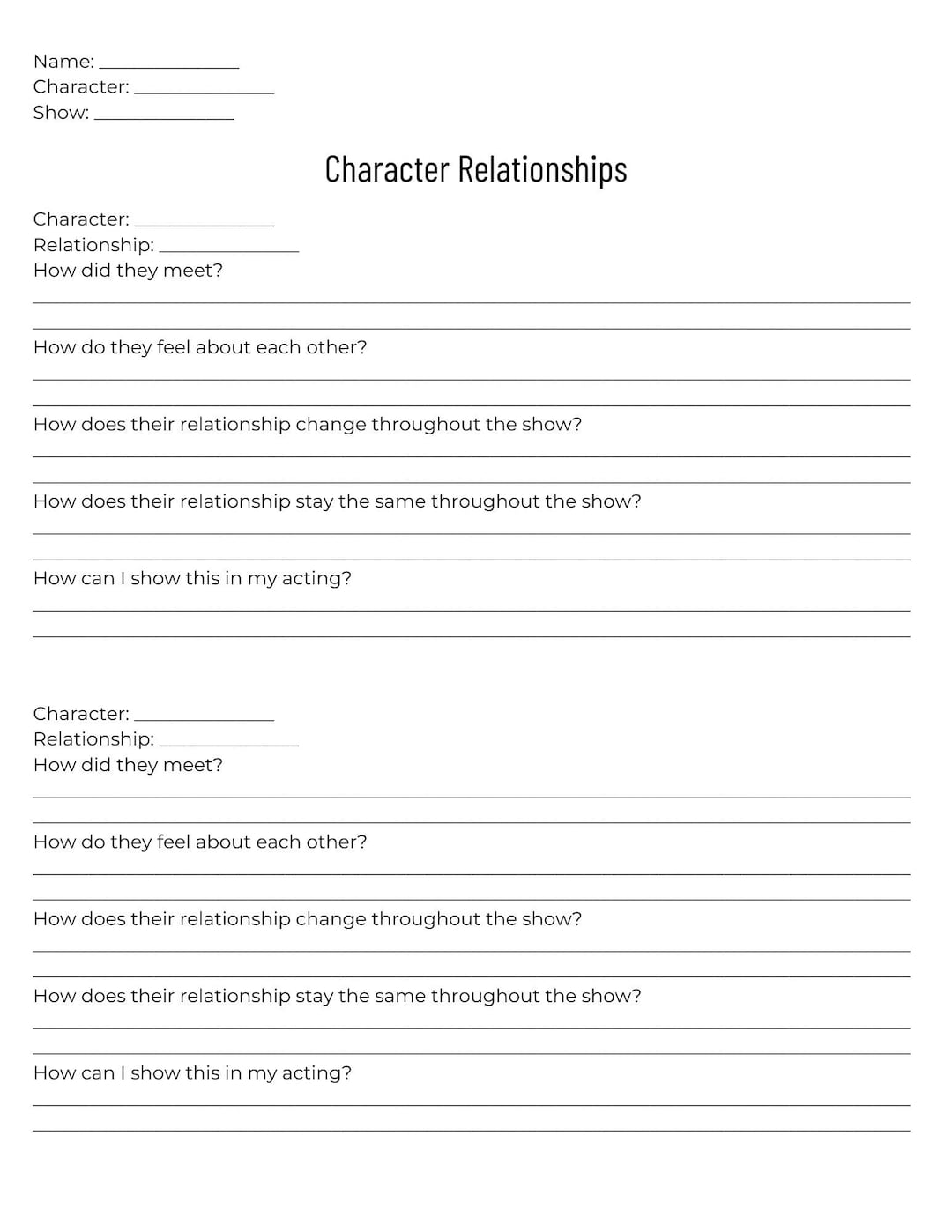
The actor character relationship is the psychological and creative bridge between a performer’s identity and a fictional persona. It involves a sophisticated interplay of empathy, technical skill, and psychological boundary-setting. Success requires the actor to synthesize their personal experiences with the script’s requirements to create a coherent, believable presence while maintaining professional and mental distance.
The Foundations of the Actor-Character Connection
The relationship between an actor and their character is rarely a simple act of mimicry. It is a collaborative construction where the actor’s physical body and emotional history serve as the raw material for the character’s life. At the heart of this connection lies the concept of "dual consciousness," a state where the performer remains aware of the technical requirements of the stage or set—such as lighting cues, camera angles, and safety protocols—while simultaneously experiencing the character's internal emotional reality.
In 2026, the industry has moved toward a more nuanced understanding of this bond. We no longer view the "disappearance" of the actor into the role as the only hallmark of quality. Instead, the focus has shifted toward "integrated performance," where the actor uses their own temperament to illuminate the character's specific traits. This relationship is built on rigorous script analysis, where the actor identifies the character's "Super Objective"—the primary goal that drives the character through the entire story. By aligning their own creative energy with this objective, the actor establishes a functional partnership with the role.
Methodological Approaches to Building the Relationship
Different acting schools offer varying frameworks for how an actor should relate to their character. These methodologies dictate the depth of the immersion and the specific tools used to bridge the gap between the self and the "other."
The Stanislavski System and the "Magic If"
Constantin Stanislavski’s system remains the bedrock of modern acting. The core of the actor-character relationship here is the "Magic If." The actor asks, "What would I do if I were in this character's situation?" This approach encourages a relationship based on logic and personal substitution, ensuring that the character's actions remain grounded in human truth rather than theatrical cliché.
Lee Strasberg and "The Method"
Often misunderstood, Strasberg’s Method emphasizes "affective memory." This requires the actor to cultivate a relationship with the character by mining their own past traumas and joys to trigger real emotions. While this can lead to intense, visceral performances, it also requires the most stringent boundaries to prevent the actor’s personal psyche from becoming inextricably tangled with the character's suffering.
Stella Adler and the Power of Imagination
Adler diverged from Strasberg by suggesting that the actor-character relationship should be built on imagination and sociological research rather than personal trauma. She believed that "the actor’s reach must exceed their grasp," suggesting that by researching the character's world—their class, their education, and their era—the actor builds a relationship of respect and external understanding that protects their own mental health.
Sanford Meisner and the "Reality of Doing"
For Meisner, the relationship is not found in the actor's head but in the space between performers. The actor relates to the character by focusing entirely on their scene partner. This creates a relationship defined by spontaneity and reaction, where the character is "born" in the moment of interaction rather than being a pre-planned internal construct.
Navigating the Spectrum of Immersion
The depth of the actor-character relationship exists on a spectrum. On one end is the "Technical Actor," who views the character as a series of external choices—accents, gestures, and movements. On the other is the "Immersive Actor," who may choose to stay in character even when the cameras are not rolling.
In contemporary practice, the "middle path" is most common. This involves deep emotional preparation followed by a conscious "stepping out" of the role. The relationship is treated as a professional engagement. The actor "visits" the character’s headspace during the workday but maintains a clear exit strategy. This distinction is vital for long-running television series or theater residencies, where sustaining a high-intensity relationship with a troubled character for months or years can lead to significant burnout.
Managing Character Bleed and Psychological Boundaries
"Character bleed" occurs when the emotions, thoughts, or personality traits of a character begin to affect the actor’s real life. In 2026, the industry has prioritized "psychological safety" to manage this phenomenon. The actor-character relationship is now often mediated by "de-roling" techniques—structured exercises used at the end of a rehearsal or performance to help the actor detach from the character's emotional state.
The risks of an unregulated relationship include:
- Emotional Contagion: The brain's inability to distinguish between the cortisol produced during a simulated argument and a real one.
- Identity Confusion: Difficulty returning to one's own personality after intense, long-term immersion.
- Relationship Strain: The actor’s personal circle may find it difficult to interact with the residue of a character’s negative traits.
To mitigate these, modern productions often employ intimacy coordinators and movement coaches who help define the physical boundaries of the character, ensuring the relationship remains a "work-based" entity.
Comparison of Major Acting Techniques and Relationship Styles
The following table summarizes how different established techniques define the relationship between the performer and the role.
| Technique | Primary Architect | Relationship Style | Core Mechanism |
|---|---|---|---|
| The System | Constantin Stanislavski | Empathetic/Logical | The "Magic If" and Given Circumstances. |
| The Method | Lee Strasberg | Introspective/Deep | Affective Memory and Emotional Recall. |
| Adler Technique | Stella Adler | Research-Based | Sociological study and creative imagination. |
| Meisner Technique | Sanford Meisner | Reactive/Spontaneous | Repetition and "Living Truthfully" in the moment. |
| Practical Aesthetics | David Mamet/W.H. Macy | Analytical/Detached | Objective-based action without emotional focus. |
| Chekhov Technique | Michael Chekhov | Physical/Archetypal | Psychological Gesture and the "Imaginary Body." |
The Role of the Director and Script in Shaping the Bond
The actor does not develop their relationship with the character in a vacuum. The script serves as the "constitution" of the character, providing the rules and history that the actor must follow. A director acts as a mirror, helping the actor see where the relationship is becoming too self-indulgent or where it lacks the necessary depth.
In 2026, the collaborative nature of this relationship has expanded. Actors often participate in "character workshops" early in pre-production, where the director, writer, and actor negotiate the character’s boundaries. This ensures that the actor’s personal interpretation aligns with the narrative's needs. Furthermore, technological advancements in performance capture mean that actors must now form relationships with characters that may not even look human, requiring a bridge built purely on movement and vocal intent.
Practical Exercises for Enhancing the Actor-Character Relationship
To build a healthy and effective relationship with a role, actors often employ specific, repeatable exercises. These move the relationship from an abstract concept to a physical reality.
- The Character Journal: Writing in the first person as the character helps define their "voice" and internal logic. This exercise explores the character's life before the script begins.
- Hot-Seating: The actor sits in a chair while other cast members or a coach ask them questions. The actor must answer instantly, staying in character. This tests the "muscle memory" of the relationship.
- Third-Person Observation: The actor observes people in public who share traits with the character. By watching these strangers, the actor can adopt physical "borrowings" that help separate the character’s movements from their own.
- The "Check-In" Ritual: A physical movement or vocal warm-up that signifies the start of the "character time." Conversely, a "Check-Out" ritual (like washing the face or changing clothes) signals the end of the relationship for the day.
Why Is Character "Consistency" More Important Than "Feeling"?
A common mistake is believing that the actor must "feel" the emotion for the relationship to be valid. In professional settings, the relationship must be sustainable. If an actor relies purely on feeling, they may be unable to perform on days when they are tired or ill. A healthy actor-character relationship is built on repeatable actions—knowing that if the actor performs a specific physical or mental task, the character’s essence will be communicated to the audience, regardless of the actor’s personal mood.
How to Build a Relationship with an Antagonist
Developing a relationship with a "villainous" character requires finding the character's "inner justification." No character believes they are the villain of their own story. The actor must form a relationship based on the character’s specific logic and needs, often finding a "point of sympathy" or a shared human vulnerability. This prevents the performance from becoming a caricature and creates a more complex, frighteningly human antagonist.
H3: How does "character bleed" differ from "method acting"?
Character bleed is an unintended psychological side effect where a role's emotions leak into an actor's personal life. Method acting is a specific set of techniques designed to create emotional authenticity. While Method acting can increase the risk of character bleed, the two are not the same; any actor, regardless of their technique, can experience bleed if they do not have proper psychological boundaries.
H3: Can an actor have a "bad" relationship with a character?
Yes. A "bad" relationship occurs when an actor feels disconnected from the role, leading to a wooden performance, or when they feel overwhelmed by the role, leading to emotional distress. This usually stems from a lack of clear objectives or a failure to find a personal "hook" into the character's motivations. Professional guidance from a coach or director is often needed to reset this dynamic.
H3: How has technology changed the actor-character relationship in 2026?
Technological shifts, particularly in AI-assisted performance and high-fidelity motion capture, require actors to maintain a relationship with a digital "avatar." This adds a layer of abstraction, where the actor must relate to the character's digital proportions and capabilities, often requiring a more technical and physically disciplined approach than traditional stage or screen acting.
H3: What is the "Third Presence" in an acting partnership?
The "Third Presence" is a concept where the relationship between two actors creates a unique energy that belongs to neither individual but to the characters' interaction. It is the result of two well-defined actor-character relationships colliding. In this state, the actors stop "acting" and begin "living" the scene, relying on the solid foundation of their preparation to carry them through the performance.
Developing a Personal Protocol for Character Integration
To ensure a productive and safe relationship with any role, actors should develop a personal "Integration Protocol." This starts with a deep dive into the script to find the "Universal Truth" in the character—something the actor knows to be true about human nature. Once this anchor is established, the actor should define the character’s physical "mask" (their walk, posture, and rhythm).
Finally, every performer must implement a "De-roling" procedure. This could be as simple as a five-minute meditation, a physical "shaking off" of the character's tension, or a specific transition activity like listening to personal music. By treating the actor-character relationship as a sacred but bounded space, the performer can achieve the highest levels of artistic excellence without sacrificing their personal well-being.