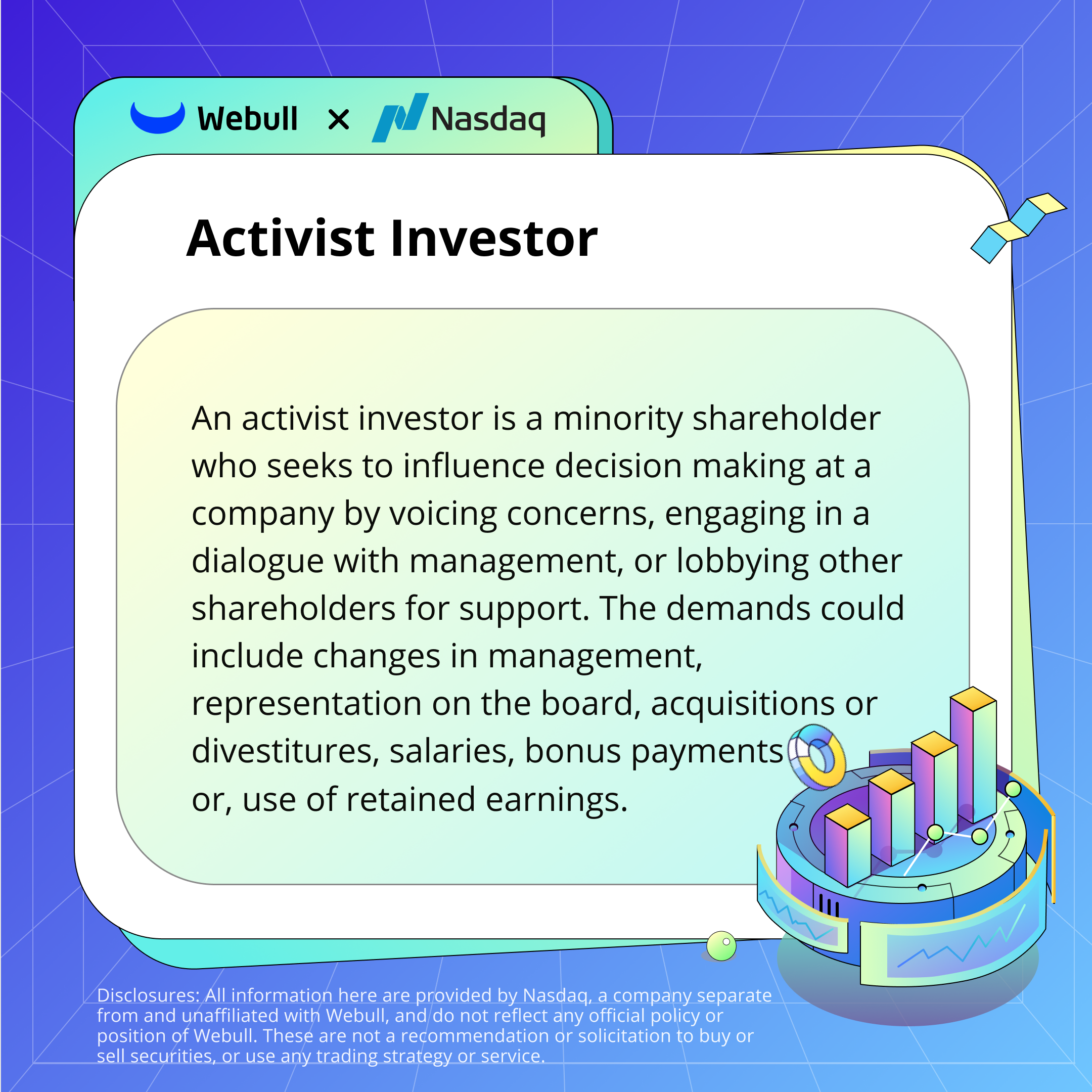
An activist investor is an individual or institutional shareholder who acquires a significant minority stake in a public company to influence its management, operations, or corporate strategy. By leveraging their ownership and voting rights, these investors aim to unlock shareholder value, improve governance, or advocate for specific environmental and social changes.
The Core Mechanics of Shareholder Activism
Shareholder activism represents a proactive approach to investment that departs from the traditional "buy and hold" or passive indexing strategies. Unlike passive investors, who track market performance, activist investors believe that a company is underperforming its potential due to poor management, inefficient capital allocation, or an outdated business model. By accumulating enough shares to command attention—often ranging from 1% to 10% of total equity—they gain a seat at the table, or at least the leverage to demand one.
In 2026, the regulatory landscape for activism has been shaped by years of refined SEC disclosure rules. When an investor acquires more than 5% of a company's voting class of stock, they must file a Schedule 13D with the Securities and Exchange Commission (SEC). This filing is a "shot across the bow," notifying the market and the company’s board of the investor’s intent to influence or change control of the issuer. The speed of these filings has increased significantly following the SEC’s 2023 amendments, which shortened the filing deadline to five business days, making "stealth" stake-building more challenging but also more transparent for the broader market.
The ultimate goal of an activist is to catalyze a specific event—such as a spin-off of a non-core business unit, a change in the CEO, or a return of capital through dividends and buybacks—that will cause the stock price to rise. While they are often associated with hedge funds, activism can also be practiced by pension funds, individual wealthy investors, and even retail "coordinated" groups using digital platforms.
The Lifecycle of an Activist Campaign
A successful activist campaign rarely happens overnight. It follows a deliberate progression that balances private negotiation with public pressure.
1. Target Identification and Thesis Development
Activists use sophisticated data analytics to identify companies that are "undervalued" compared to their peers. Common red flags include declining margins, excessive executive compensation despite poor performance, or a "conglomerate discount," where the sum of the company’s parts is worth more than the whole. In 2026, many funds utilize proprietary AI models to scan global markets for governance loopholes or operational inefficiencies that might have been overlooked by traditional analysts.
2. Stake Building and Initial Outreach
Once a target is selected, the activist begins accumulating shares. To avoid driving the price up too quickly, this is often done quietly until the disclosure threshold is met. The first formal step is typically a "private letter" to the Board of Directors. This letter outlines the investor’s concerns and suggests a path forward. If the board is receptive, changes may occur behind closed doors, avoiding the costs and reputational damage of a public battle.
3. Public Escalation and "White Papers"
If the board ignores the private outreach or refuses to engage, the activist goes public. This often involves publishing a detailed "White Paper"—a comprehensive report that critiques the current management and proposes a granular turnaround plan. These reports are designed to win the hearts and minds of other institutional shareholders, such as BlackRock or Vanguard, whose votes are necessary to win a proxy contest.
4. The Proxy Contest
If negotiations remain at a stalemate, the activist may launch a proxy fight. This is a formal solicitation of shareholder votes to replace some or all of the existing board members with the activist’s hand-picked nominees. Since the implementation of the Universal Proxy Card rules in late 2022, shareholders can now "mix and match" nominees from both the company’s and the activist’s slates on a single ballot, which has significantly increased the success rate of activists seeking minority representation on boards.
Major Categories of Activist Investors
Not all activists have the same motivations. Their strategies can be broadly categorized into four primary types, each with different implications for the company and its long-term health.
- Operational Activists: These investors focus on the "how" of the business. They look for ways to improve profit margins, streamline supply chains, or invest in R&D. They often bring in their own industry experts to consult with the company.
- Financial/Capital Allocation Activists: These are the most common and often the most controversial. They push for immediate actions that return cash to shareholders, such as massive share buybacks, increased dividends, or the sale of the entire company to a private equity firm.
- Strategic Activists: These investors focus on corporate structure. They might demand that a company sell off a struggling subsidiary or merge with a competitor to gain market share. Their goal is to maximize the value of the corporate portfolio.
- ESG (Environmental, Social, and Governance) Activists: Increasingly prominent in 2026, these activists argue that failing to address climate change, diversity, or ethical standards poses a long-term financial risk. Their campaigns are often framed as "value-based" rather than "values-based," arguing that better ESG practices lead to better financial returns.
Comparing Investment Styles: Activism vs. Passive vs. Private Equity
Understanding where activist investing fits in the broader financial ecosystem requires a comparison with other common styles.
| Feature | Activist Investor | Passive Investor (Index) | Private Equity (PE) |
|---|---|---|---|
| Ownership Stake | Significant Minority (1-10%) | Proportional to Index | Controlling Interest (51-100%) |
| Primary Method | Public Pressure & Voting Rights | Automated Tracking | Full Operational Control |
| Investment Horizon | Medium-term (2-5 years) | Long-term (Indefinite) | Medium-term (5-7 years) |
| Governance Role | Influences from the Board | Passive/Rarely Votes Dissident | Replaces Board & Management |
| Exit Strategy | Sale of public shares | Maintaining index weight | IPO or sale to another firm |
| Publicity Level | High / Often Combative | Low / Systematic | Low (Private Transactions) |
Impact on Corporate Performance and Shareholder Value
The debate over the utility of activist investors is one of the most polarized topics in corporate finance. Proponents argue that activists serve as a necessary "check and balance" against entrenched management teams that have become complacent. By forcing companies to justify their existence and their capital expenditures, activists can revitalize stagnant industries.
Research from the Harvard Law School Forum on Corporate Governance has historically shown that companies targeted by activists often experience a short-term boost in stock price. However, the long-term effects are more nuanced. Critics argue that the pressure for immediate results leads to "short-termism." This occurs when a company cuts R&D spending or ignores long-term infrastructure needs to fund the buybacks demanded by an activist, potentially hollowing out the company’s future competitive advantage.
In 2026, the market has seen a rise in "constructive activism," where the focus is on long-term operational turnarounds rather than quick financial engineering. This shift is partly due to the increased influence of large index funds, which are the ultimate "permanent" capital and are increasingly unwilling to support activists who prioritize quarterly gains over decade-long stability.
Defensive Measures: How Boards Respond to Activism
As activists have become more sophisticated, so too have corporate defenses. Boards of directors now employ "activism defense" teams—typically a mix of investment bankers, specialized lawyers, and PR firms—to monitor their shareholder registers for any unusual activity.
One classic defense is the Shareholder Rights Plan, popularly known as a "Poison Pill." This allows existing shareholders (except the activist) to buy more shares at a discount if any one investor crosses a certain ownership threshold (e.g., 15%). This dilutes the activist's stake and makes a hostile takeover prohibitively expensive. However, in the current 2026 environment, poison pills are viewed with skepticism by proxy advisory firms like ISS and Glass Lewis, who often recommend voting against directors who implement them without shareholder approval.
Instead of "hard" defenses, many boards now prefer "soft" defenses. This includes proactive board refreshment (bringing in new, independent directors before an activist suggests them) and improved shareholder engagement. By maintaining an open dialogue with their largest investors, companies can often preempt an activist campaign by addressing concerns before they reach a boiling point.
Common Activist Tactics and Responses
- The "Wolf Pack": Multiple independent hedge funds buy into the same stock simultaneously. While they do not formally "coordinate" (to avoid SEC group-filing rules), they move in unison to amplify pressure.
- The "Golden Leash": A controversial practice where an activist pays their board nominees a bonus if the campaign is successful. Many companies have amended their bylaws to prohibit directors from receiving such payments from third parties.
- Litigation: Both sides may use lawsuits—the activist suing for access to "books and records," and the company suing the activist for allegedly false or misleading statements in their proxy materials.
Frequently Asked Questions
Are activist investors the same as corporate raiders?
No, while the terms are sometimes used interchangeably, they represent different eras and methods. Corporate raiders of the 1980s typically used high-interest "junk bonds" to acquire a controlling interest in a company, often with the intent to "strip and flip"—selling off assets and liquidating the firm. Modern activist investors usually seek a minority stake and aim to influence the company from within the existing corporate structure while remaining a shareholder.
Can an individual retail investor be an activist?
Yes, though it is difficult. Most activism requires significant capital to buy a meaningful stake and hire legal counsel. However, retail investors can practice "social activism" by submitting shareholder proposals (under SEC Rule 14a-8) on topics like environmental disclosures or executive pay. In recent years, retail coordination on social media has also forced boards to address specific retail-driven concerns, a phenomenon sometimes called "meme-driven activism."
What is a "Settlement Agreement" in activism?
A settlement agreement occurs when the company and the activist reach a compromise before a proxy vote takes place. Typically, the company agrees to appoint one or two of the activist's nominees to the board and perhaps implement some of the suggested strategic changes. In exchange, the activist agrees to a "standstill" period—usually 12 to 24 months—during which they cannot buy more shares or criticize the company publicly.
How do activists make money if the stock price doesn't go up?
They generally don't. Unlike some hedge fund strategies that profit from a stock’s decline (short selling), most activists are "long" on the stock. They only profit if the share price increases. This aligns their interests with other shareholders, though the timeframe for that profit remains a point of contention. Some activists may use "hedging" strategies to protect their downside, but their primary "win" is an appreciation in the company’s equity value.
What is the role of Proxy Advisory Firms?
Firms like Institutional Shareholder Services (ISS) and Glass Lewis play a crucial role. They provide voting recommendations to large institutional investors who own thousands of different stocks and cannot research every single proxy contest themselves. An activist who wins an "ISS Recommendation" for their board slate has a much higher probability of winning the actual vote.
Strategic Alignment for Future Corporate Governance
For corporate leaders and investors in 2026, the presence of activist investors is a permanent feature of the financial landscape. The most resilient companies are those that act as their own activists—continuously scrutinizing their operations, refreshing their boards, and ensuring that their capital allocation strategy is transparent and effective.
Investors looking to understand or participate in this space should focus on the Schedule 13D filings as a primary source of information. These documents provide the most direct insight into an activist's thesis and are essential for any due diligence process. Whether viewed as market disruptors or essential disciplinarians, activist investors remain the most powerful catalyst for change in the modern public corporation.