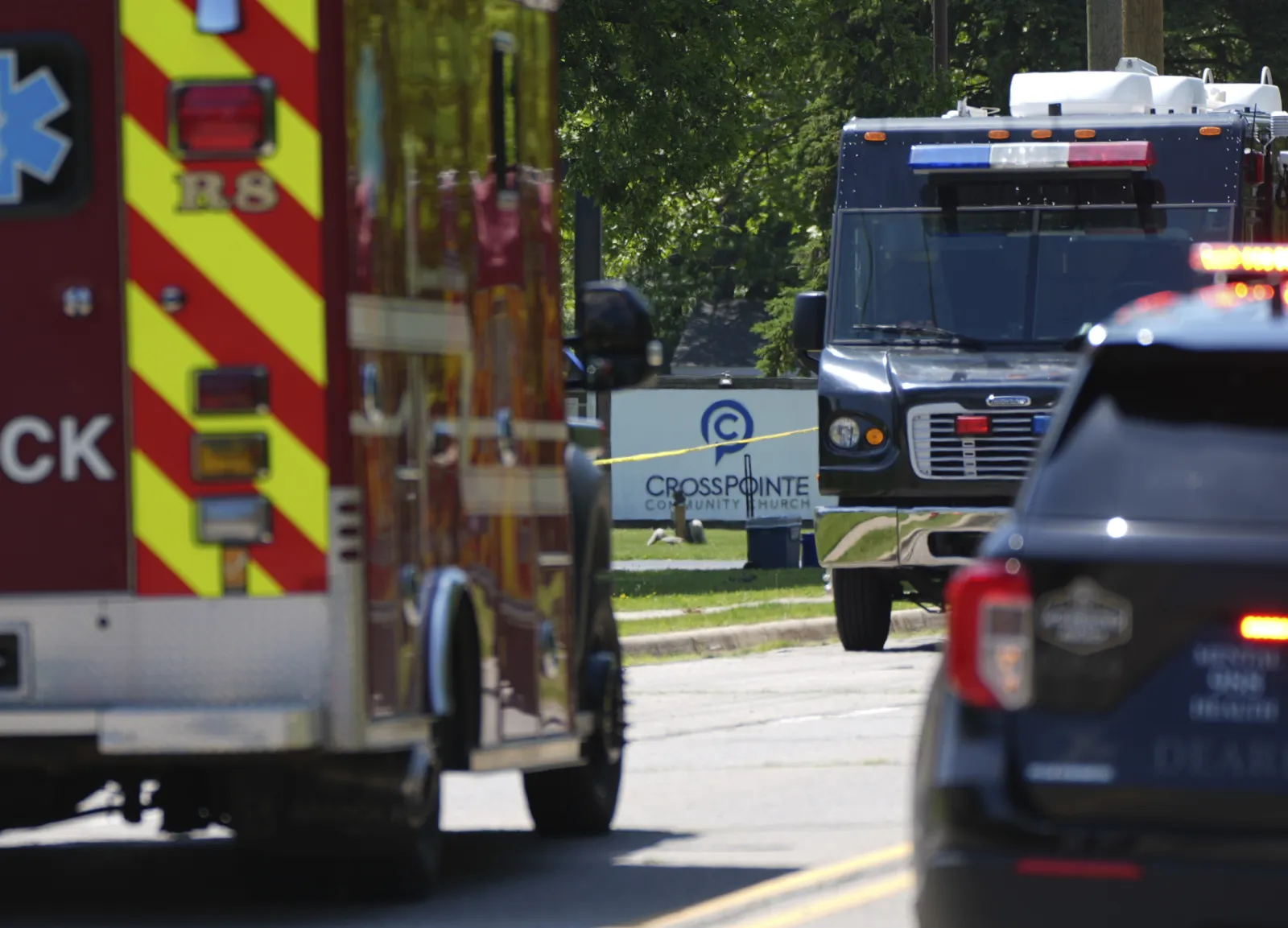
Ensuring safety in Michigan houses of worship during active shooter events requires a dual-track approach: establishing rigorous physical security protocols and maintaining the theological integrity of a welcoming faith community. By integrating Michigan-specific legal requirements with tactical survival strategies and spiritual readiness, congregations can protect their members while upholding their core mission of ministry and peace.
The reality for faith leaders in 2026 is that houses of worship are classified by security experts as "soft targets" due to their public accessibility and predictable schedules. In Michigan, the legal landscape surrounding firearms in churches, coupled with the unique architectural challenges of historic and modern sanctuaries, necessitates a specialized survival plan. This guide examines how to navigate these complexities through the lens of both safety and faith.
The Michigan Legal Landscape for Church Security in 2026
Navigating Michigan’s laws regarding firearm possession and self-defense within religious institutions is the first step for any security team. Under Michigan Compiled Laws (MCL) 28.425o, houses of worship are generally considered "pistol-free zones." However, there is a significant caveat: an individual with a valid Concealed Pistol License (CPL) may carry a concealed weapon on church property if they have the express permission of the presiding official or the church's governing body.
As of 2026, many Michigan congregations have formalized this process by creating written security policies that grant specific, vetted individuals the authority to carry. This legal framework places a heavy responsibility on church leadership. Decisions regarding "armed vs. unarmed" security must be documented in official board minutes to mitigate liability and ensure clarity for local law enforcement.
Beyond firearm statutes, Michigan’s "Stand Your Ground" law (MCL 780.972) applies to individuals who are in a place where they have a legal right to be. This means that if a congregant or security team member is faced with the immediate threat of great bodily harm or death during a service, they are not legally required to retreat before using deadly force. Understanding these jurisdictional nuances is critical for training security teams to act decisively without fear of improper legal repercussions.
Developing a Faith-Based Emergency Operations Plan (EOP)
A comprehensive Emergency Operations Plan (EOP) for a Michigan church is not merely a binder on a shelf; it is a living document that aligns tactical response with the church's values. The Federal Emergency Management Agency (FEMA) and the Michigan State Police (MSP) recommend a "Whole Community" approach to security planning.
Site Assessment and Vulnerability Mapping
Before drafting protocols, leadership must conduct a thorough site assessment. Michigan churches vary from the dense urban cathedrals of Detroit to the rural, wood-framed chapels of the Upper Peninsula. Each presents unique vulnerabilities. An EOP should map all entry and exit points, identifying "hard rooms" (offices or classrooms with solid-core doors and locks) and "dead zones" where cellular reception might fail during an emergency.
The Security Team: Ministry of Protection
A church security team should be viewed as a ministry, often referred to as the "Watchman Ministry." In 2026, the trend has shifted away from "incognito" guards toward a tiered system:
- Greeters and Ushers: The first line of defense, trained in behavioral observation and situational awareness.
- Safety Team: Non-armed volunteers trained in medical response and de-escalation.
- Security Detail: Vetted, often armed individuals (where legal) focused solely on threat detection and neutralization.
Communication Protocols
During an active shooter event, clear communication is the difference between order and chaos. Michigan churches are increasingly adopting "silent" notification systems, such as vibration-based pagers for nursery workers or encrypted mobile apps, to alert leadership of a threat without causing a mass stampede in the sanctuary.
Survival Strategies: Run, Hide, Fight in a Sanctuary Setting
The "Run, Hide, Fight" protocol remains the gold standard for active shooter response, but it must be adapted for the specific environment of a religious service.
Run (Escape)
If there is an accessible escape path, the priority is to lead the congregation out. In a church setting, this is complicated by the presence of elderly members and children. Leadership must designate "assembly points" away from the building but within a safe distance. In Michigan’s winter months, these points should ideally be pre-arranged indoor locations, such as a neighboring business or community center, to prevent exposure injuries.
Hide (Barricade)
When escape is impossible, "hiding" in a church involves more than just silence. It requires "hardening" the space. Modern Michigan building codes for newer religious structures often include reinforced doors for classrooms. For older sanctuaries, pews can be used as concealment, though they offer little ballistic protection. The goal is to move out of the shooter’s line of sight and silence all electronic devices.
Fight (Defend)
As a last resort, when life is in imminent danger, the congregation must be prepared to disrupt or incapacitate the shooter. This involves using "improvised weapons"—fire extinguishers, heavy hymnals, or chairs. The psychological shift from "victim" to "defender" is difficult for many in a faith context, but it is a necessary component of survival when no other options remain.
Reconciling Faith and Force: The Theological Perspective
For many Michigan believers, the concept of bringing security protocols into a "sanctuary" feels like a contradiction of faith. However, a robust theological framework supports the protection of the flock.
Many pastors point to Nehemiah 4:17-18, where those rebuilding the walls of Jerusalem worked with one hand and held a weapon in the other. This "sword and trowel" approach suggests that spiritual work and physical protection are not mutually exclusive. Similarly, the "Good Shepherd" imagery in the New Testament depicts a leader who is willing to lay down his life and use his staff to fend off wolves.
Theology in 2026 emphasizes that "loving your neighbor" includes ensuring their physical safety while they are under your roof. A church that is unprepared for violence is, in a sense, failing in its duty of stewardship. By integrating safety into the church's culture, leadership demonstrates a holistic care for the body, soul, and spirit.
Practical Security Enhancements for Houses of Worship
Implementing physical security measures does not have to turn a church into a fortress. Effective security is often subtle and layered.
| Layer | Actionable Step | Theological Connection | Michigan Resource |
|---|---|---|---|
| Perimeter | Improved outdoor lighting and clear signage for entrances. | "Walking in the Light" (Visibility) | Local Police Dept. Security Surveys |
| Access Control | Limiting Sunday entry to two monitored doors after service begins. | Stewardship of the "Gates" | MSP Office of School Safety |
| Surveillance | High-definition cameras with remote cloud access for 2026 standards. | The Watchman’s Duty | Michigan Retailers Association (Vendors) |
| Medical | Placing Stop the Bleed kits and AEDs in the sanctuary and nursery. | Healing and Mercy | Michigan DHHS / Red Cross |
| Communication | Equipping ushers with discreet two-way radios. | Corporate Unity | FCC Licensing Guidelines |
Training and Drills: Moving from Theory to Action
Knowledge without practice is ineffective during the "adrenaline dump" of a real-world crisis. Michigan churches should conduct regular drills, but these must be handled with extreme sensitivity to avoid traumatizing the congregation.
- Tabletop Exercises: Leadership and the security team sit down to walk through "what if" scenarios. This identifies gaps in the EOP without requiring a physical drill.
- Walk-Throughs: After a service, volunteers can walk the escape routes to ensure doors aren't blocked and gates are functional.
- Active Simulation: In coordination with local Michigan law enforcement (such as County Sheriffs), the security team can run a full-scale simulation during off-hours.
It is vital to inform the surrounding neighborhood before any drill involving simulated gunfire or heavy police presence to prevent false alarms. In 2026, many Michigan law enforcement agencies offer "Active Shooter Response" training specifically tailored for faith-based organizations at no cost.
Frequently Asked Questions
Can anyone with a CPL carry a gun in a Michigan church?
No. Under Michigan law, a house of worship is a prohibited zone unless the individual has the explicit permission of the church’s presiding official or governing body. Carrying without this permission, even with a CPL, can lead to criminal charges and the revocation of the license.
How do we handle security in the children’s ministry or nursery?
The nursery should be the "hardest" part of the building. This includes high-security electronic access, "check-in/check-out" software to prevent unauthorized pickups, and specialized evacuation cribs. In an active shooter event, the nursery is often a "Lockdown" zone rather than an "Evacuation" zone unless a safe exit is immediate.
Does having a security team increase our church's insurance premiums?
Surprisingly, many insurance providers in 2026 offer discounts or specialized "Peace of Mind" riders for churches that have a documented EOP and a trained security team. However, unvetted or "cowboy" security teams can increase liability. Always consult with an insurance agent specializing in non-profits.
How can we keep the church "welcoming" if we have security?
Security should be "concierge-style." A well-trained security member looks like a helpful greeter. They hold doors, offer directions, and smile, all while scanning waistlines for concealed weapons and observing body language for signs of distress or aggression.
What should we do if a "suspicious" person enters during a service?
Use the "Rule of Three": Two ushers or security members should approach the individual together while a third observes from a distance. The approach should be helpful and soft ("How can we serve you today?") to determine the person’s intent without escalating a potential situation.
Implementing a Culture of Preparedness
The most effective way to protect a Michigan congregation is to transition from a mindset of "it won't happen here" to one of "we are ready if it does." Start by appointing a Safety Director—someone with a background in emergency management or law enforcement who also shares the church's heart for ministry.
This Director should lead the effort to finalize the 2026 Emergency Operations Plan, coordinate with the Michigan State Police for a site audit, and begin the vetting process for a Watchman Ministry. By taking these practical steps, a church does not show a lack of faith in God's protection; rather, it acts as a faithful steward of the lives entrusted to its care. Preparedness is an act of love, ensuring that the sanctuary remains a place of peace, even in a troubled world.
Note: This article provides general information and does not constitute legal or professional safety advice. Michigan laws are subject to change; always consult with legal counsel and local law enforcement when developing security protocols.