Active listening is a structured communication technique that requires the listener to fully concentrate, understand, respond, and then remember what is being said. Unlike passive hearing, it involves providing verbal and non-verbal feedback to confirm comprehension, thereby building trust, resolving conflicts, and fostering meaningful connections in both professional and personal environments.
The Foundations of Active Listening in 2026
In the current professional landscape of 2026, communication is more fragmented than ever due to the proliferation of short-form digital interactions and asynchronous workflows. Consequently, active listening has transitioned from a "soft skill" to a critical cognitive competency. At its core, active listening is the intentional process of silencing one's internal monologue to provide a speaker with undivided attention. This process is governed by three primary pillars: cognitive processing, emotional regulation, and behavioral output.
Cognitive processing involves the mental effort required to parse the speaker's words while simultaneously identifying the underlying intent. This is difficult because of the "speech-thought gap." The average person speaks at a rate of 125 to 150 words per minute, yet the human brain can process information at speeds exceeding 400 to 600 words per minute. Active listening requires the listener to use this "extra" mental bandwidth to synthesize the message rather than allowing the mind to wander or formulate a rebuttal.
Emotional regulation is the second pillar. It requires the listener to remain objective and empathetic, even when the subject matter is challenging or contradicts their personal beliefs. By suspending judgment, the listener creates a "psychological safety" zone, encouraging the speaker to be more transparent. Behavioral output, the final pillar, involves the external signals—both verbal and non-verbal—that indicate to the speaker that their message is being successfully received and processed.
Essential Non-Verbal Cues and Body Language
Non-verbal communication often carries more weight than the spoken word. In an active listening context, your body language serves as a continuous feedback loop that tells the speaker whether you are engaged or merely waiting for your turn to speak. Mastering these cues is the first step in establishing rapport.
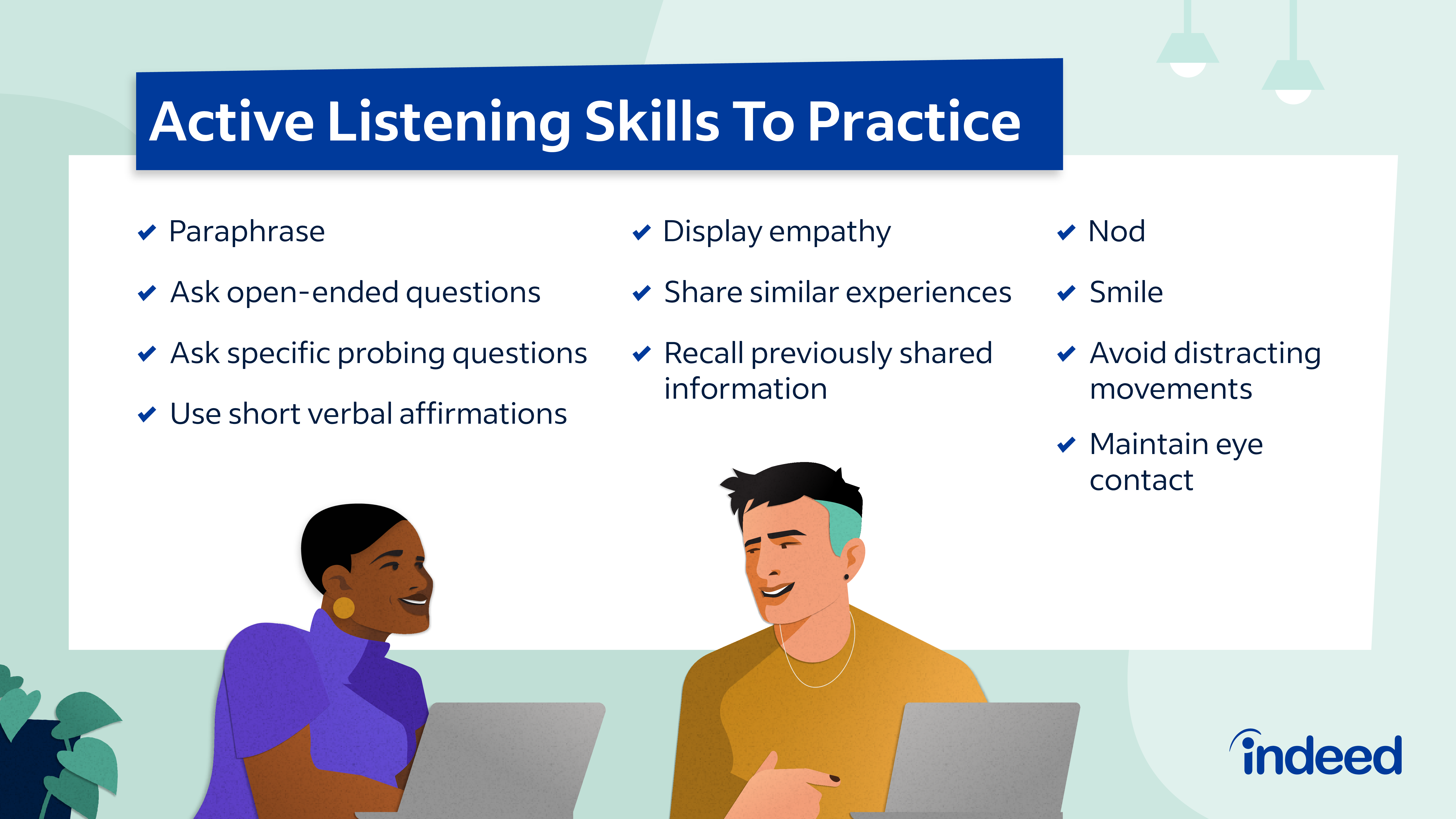
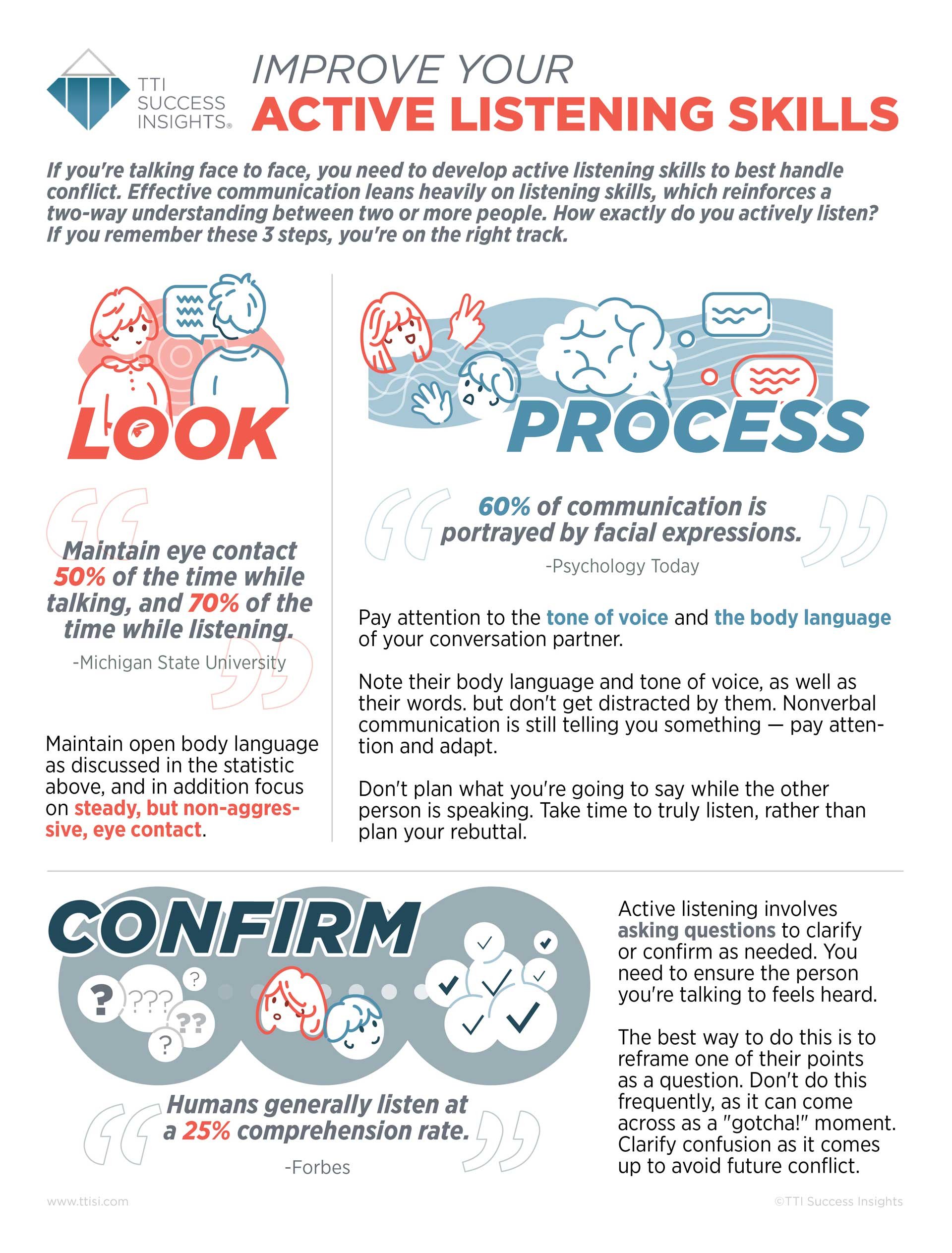
Eye Contact and Facial Expressions Maintaining consistent, yet natural, eye contact is fundamental. It signals focus and respect. However, it is important to avoid a "fixed stare," which can be perceived as aggressive or intimidating. In 2026, even in high-definition video conferencing, the direction of one's gaze and the subtle movements of the facial muscles—such as a slight nod or a soft smile—communicate empathy and agreement. Facial expressions should reflect the tone of the conversation; if a speaker is discussing a serious challenge, a neutral or concerned expression is more appropriate than a generic "polite" smile.
Posture and Proximity An open posture—uncrossed arms and legs—suggests receptivity. Leaning slightly forward toward the speaker indicates interest and engagement. Conversely, leaning back or looking at a clock or device signals boredom or a desire to exit the conversation. In physical settings, respecting personal space while remaining close enough to hear nuances in tone is vital. In digital settings, "posture" translates to being centered in the frame and minimizing background distractions that might draw the listener’s eyes away from the screen.
Minimal Encouragers These are short sounds or gestures that signal you are still "with" the speaker without interrupting their flow. Examples include nodding or saying "I see," "Mmhmm," or "Right." These cues act as the "oil" in the machinery of conversation, keeping the dialogue moving forward smoothly.
Verbal Techniques: Paraphrasing, Reflecting, and Clarifying
While non-verbal cues show you are paying attention, verbal techniques prove you have understood the content and the emotion behind the message. These strategies prevent misunderstandings and ensure that both parties are aligned before the conversation moves toward a conclusion or action plan.
Paraphrasing for Clarity Paraphrasing involves restating the speaker's main points in your own words. It is not "parroting," which is the literal repetition of words. Effective paraphrasing often starts with phrases like, "So, if I understand correctly, the main concern is..." or "In other words, you’re saying that..." This allows the speaker to either confirm your understanding or correct a misconception immediately, saving time and preventing future errors.
Reflecting Feelings Reflecting goes a step beyond the literal facts to acknowledge the emotional state of the speaker. For example, saying "It sounds like you’re feeling frustrated by the lack of resources for this project" validates the speaker’s experience. This technique is particularly powerful in conflict resolution or high-stakes negotiations, as it demonstrates a high level of emotional intelligence and empathy.
The Art of Clarifying Questions Active listeners ask open-ended questions to gather more information and encourage the speaker to expand on their thoughts. Open-ended questions typically begin with "How," "What," or "Why" (though "Why" should be used cautiously to avoid sounding accusatory). For instance, asking "What specific steps led to this outcome?" is more productive than a closed question like "Did this happen because of the deadline?" which only yields a yes or no answer.
Identifying and Overcoming Listening Barriers
Even the most well-intentioned listeners face barriers that can degrade the quality of communication. These barriers can be categorized into environmental, physiological, and psychological factors. Identifying these obstacles is the first step toward neutralizing them.
| Barrier Type | Description | Mitigation Strategy |
|---|---|---|
| Environmental | External noise, digital notifications, or physical interruptions. | Silence devices, move to a quiet space, or schedule dedicated "deep-talk" time. |
| Physiological | Fatigue, hunger, or hearing impairments. | Ensure basic needs are met before important meetings; use assistive audio technology if needed. |
| Cognitive Load | Preoccupation with other tasks or "information overload." | Practice mindfulness; take brief notes to stay grounded in the present conversation. |
| Psychological | Internal biases, emotional triggers, or the urge to "fix" things. | Practice "suspension of judgment"; focus on understanding before problem-solving. |
| Selective Listening | Only hearing what confirms existing beliefs (confirmation bias). | Actively look for information that challenges your current perspective. |
Psychological barriers are often the most insidious. Many people listen with the intent to respond rather than the intent to understand. This is known as "rebuttal tendency." To overcome this, one must consciously decide to wait until the speaker has completely finished their thought before evaluating the information. In the high-pressure environments of 2026, the ability to delay judgment is a hallmark of senior leadership and effective mentorship.
Active Listening in Professional and Personal Contexts
The application of active listening varies depending on the setting, but its core value remains the same: the preservation of relational integrity. In the workplace, active listening is a tool for productivity. When a manager listens actively to their team, they identify "weak signals" of burnout or project misalignment early. This leads to higher retention rates and better project outcomes. In a 2026 study by the Society for Human Resource Management (SHRM), effective communication—anchored by active listening—was cited as the top skill needed for mid-to-upper-level management.
In personal relationships, active listening serves as the foundation for intimacy and trust. Often, in personal disputes, individuals do not necessarily want a solution; they want to feel heard and seen. By using reflection and paraphrasing, partners can navigate disagreements without escalating into defensive cycles. This fosters a sense of being valued, which is essential for long-term relational stability.
Measuring and Refining Your Listening Skills
Improving active listening is a lifelong process of refinement. Because it is an internal cognitive process, it can be difficult to measure. However, there are several "proxy metrics" you can use to assess your progress:
- Reduction in Misunderstandings: Do you find yourself having to redo tasks less frequently because you "got it right the first time"?
- Increased Trust: Do colleagues and friends approach you more often with sensitive or complex information?
- Conflict Duration: Are your disagreements resolved more quickly and with less emotional residue?
- Information Retention: Can you recall the key points of a conversation held three days ago without checking your notes?
To refine these skills, consider practicing "deliberate listening." During your next low-stakes conversation, pick one specific technique—such as asking three open-ended questions before making a statement—and focus entirely on that. Over time, these techniques will move from conscious efforts to subconscious habits.
Frequently Asked Questions
Is active listening the same as empathy?
Active listening and empathy are related but distinct. Active listening is the mechanism or the set of techniques used to communicate, while empathy is the emotional state of feeling or understanding another person's experience. You can use active listening techniques to demonstrate empathy, but you can also use them in a neutral, professional context where deep emotional connection is not the primary goal.
Can active listening be "faked"?
While one can perform the non-verbal actions of active listening—such as nodding and eye contact—without truly listening, this is usually discovered quickly. If the listener cannot paraphrase the speaker’s points or asks questions that were already answered, the "fake" listening becomes apparent. Genuine active listening requires the cognitive effort of processing the information, which cannot be easily simulated over a long duration.
How do I handle a speaker who is overly repetitive?
When a speaker repeats themselves, it is often a sign that they do not feel heard. The most effective way to stop the repetition is to use a strong paraphrasing statement. By saying, "I want to make sure I’ve captured this because it seems very important: you are concerned that the current timeline is unrealistic because of the Q3 budget cuts. Is that right?" you provide the "closure" the speaker needs to move on to the next point.
What is the "70/30 Rule" in active listening?
The 70/30 rule is a guideline for balanced communication, particularly in coaching or discovery meetings. It suggests that the listener should spend 70% of the time listening and only 30% of the time speaking (mostly asking questions or clarifying). This ensures the speaker has ample space to fully explore their thoughts without the listener dominating the narrative.
How do I practice active listening if I have ADHD or a short attention span?
For those with attention challenges, active listening requires external aids. Taking "active notes" (mapping concepts rather than transcribing) can keep the hands and mind engaged. Additionally, being transparent with the speaker by saying, "I want to make sure I’m giving you my full attention, so let’s move to a quiet room," can help set the stage for success. Breaking long conversations into shorter, focused segments can also mitigate the effects of a wandering mind.
Developing a Sustainable Listening Practice
To integrate active listening into your daily life throughout 2026 and beyond, start with a "listening audit." For one day, track how many times you interrupt others or how often you are thinking about your response while they are still talking. Once you have a baseline of your current habits, commit to one "active" interaction per day where your only goal is to understand the other person’s perspective completely.
Next, seek feedback. After an important meeting or personal conversation, ask the other person: "Did you feel like I fully understood your point of view today?" This vulnerability not only provides you with valuable data but also reinforces the trust you are trying to build. Over time, the cognitive load required for active listening will decrease, and it will become a natural, effortless part of your communication repertoire, distinguishing you as a thoughtful and effective communicator in an increasingly distracted world.